Afful Philip, Abotsi Godwin Kwami, Adu-Gyamfi Czarina Owusua, Benyem George, Katawa Gnatoulma, Kyei Samuel, Arndts Kathrin, Ritter Manuel, Asare Kwame Kumi
Biomedical and Clinical Research Centre, College of Health and Allied Sciences, University of Cape Coast, Cape Coast, Ghana.
Unité de Recherche en Immunologie et Immunomodulation (UR2IM)/Laboratoire de Microbiologie et de Contrôle de Qualité des Denrées Alimentaires (LAMICODA), Ecole Supérieure des Techniques Biologiques et Alimentaires, Université de Lomé, Lomé, Togo.
Pathogens. 2024 Oct 16;13(10):906. doi: 10.3390/pathogens13100906.
Schistosomiasis, a tropical disease affecting humans and animals, affected 251.4 million people in 2021. , , , and are primary human schistosomes, causing tissue damage, granulomas, ulceration, hemorrhage, and opportunistic pathogen entry. The gut and urinary tract microbiota significantly impact a host's susceptibility to schistosomiasis, disrupting microbial balance; however, this relationship is not well understood. This systematic review and meta-analysis explores the intricate relationship between schistosomiasis and the host's microbiota, providing crucial insights into disease pathogenesis and management.
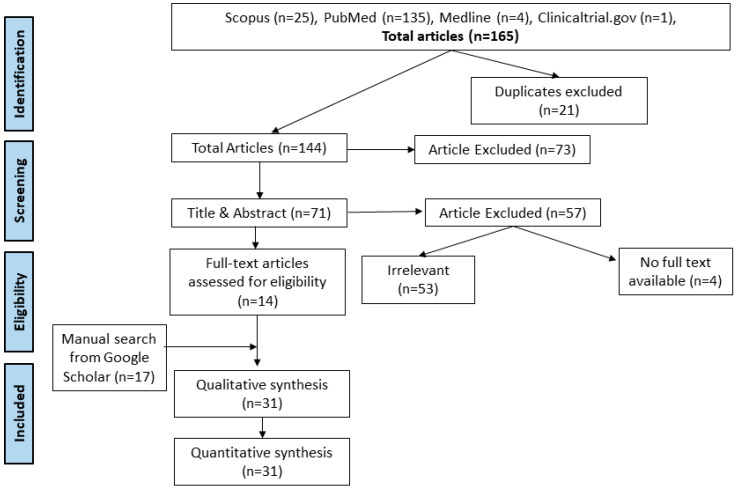
This systematic review used PRISMA guidelines to identify peer-reviewed articles on schistosomiasis and its interactions with the host microbiome, using multiple databases and Google Scholar, providing a robust dataset for analysis. The study utilized Meta-Mar v3.5.1; descriptive tests, random-effects models, and subgroups were analyzed for the interaction between Schistosomiasis and the microbiome. Forest plots, Cochran's Q test, and Higgins' inconsistency statistic (I) were used to assess heterogeneity.
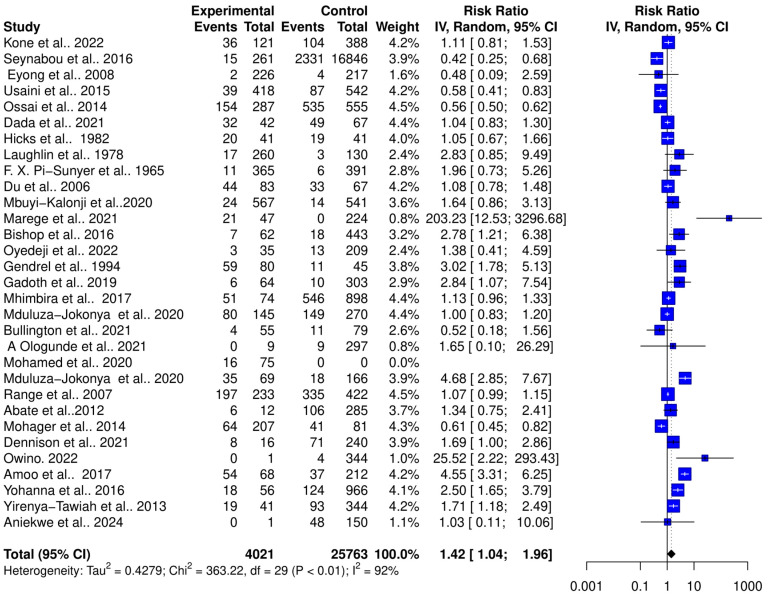
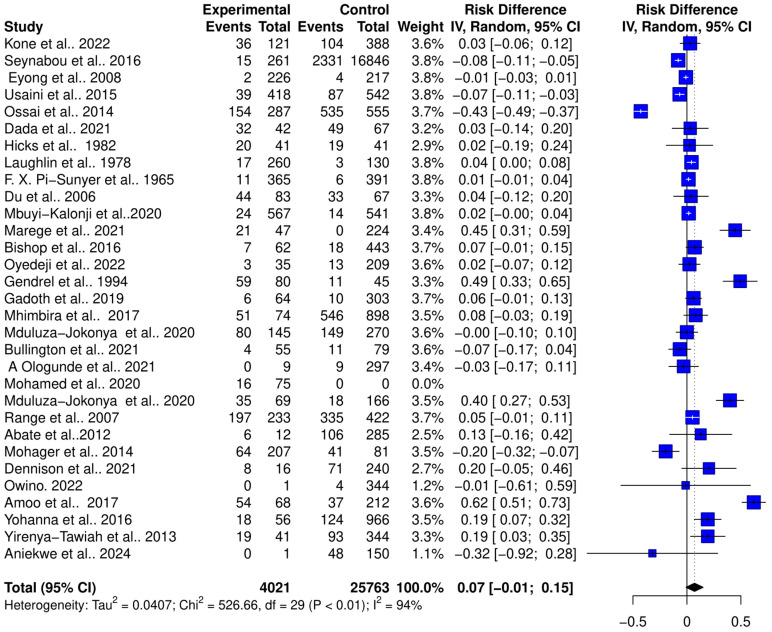
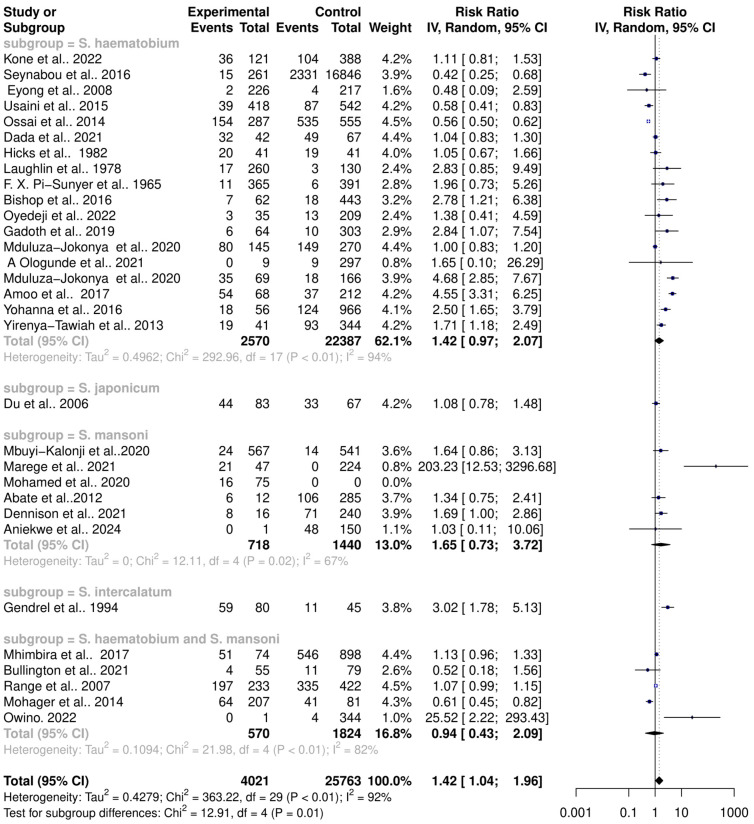
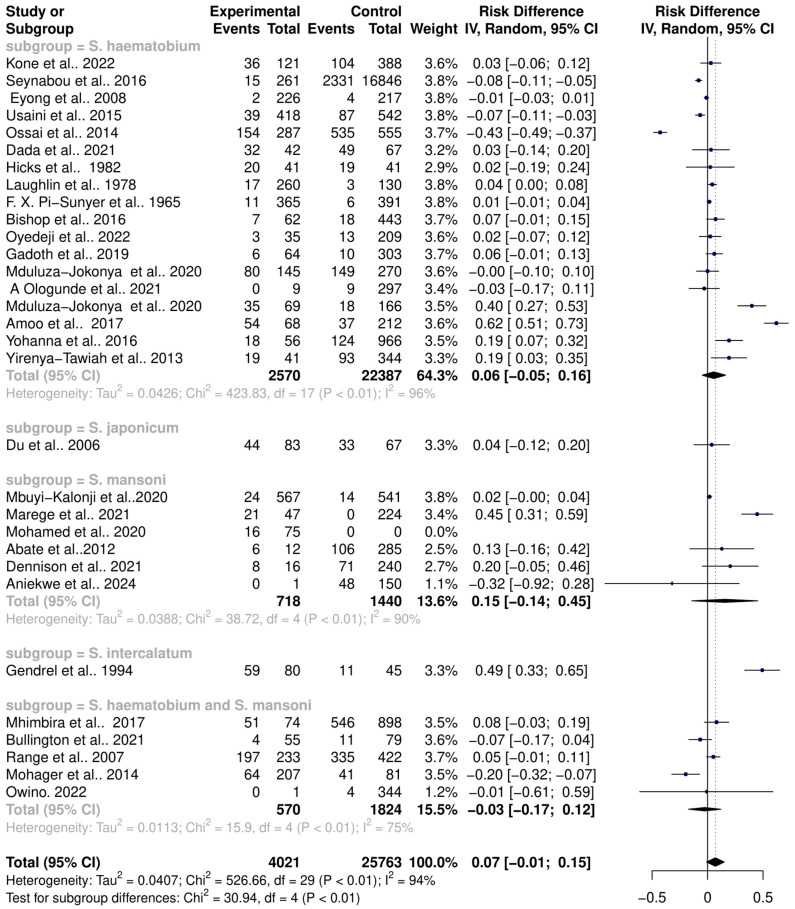
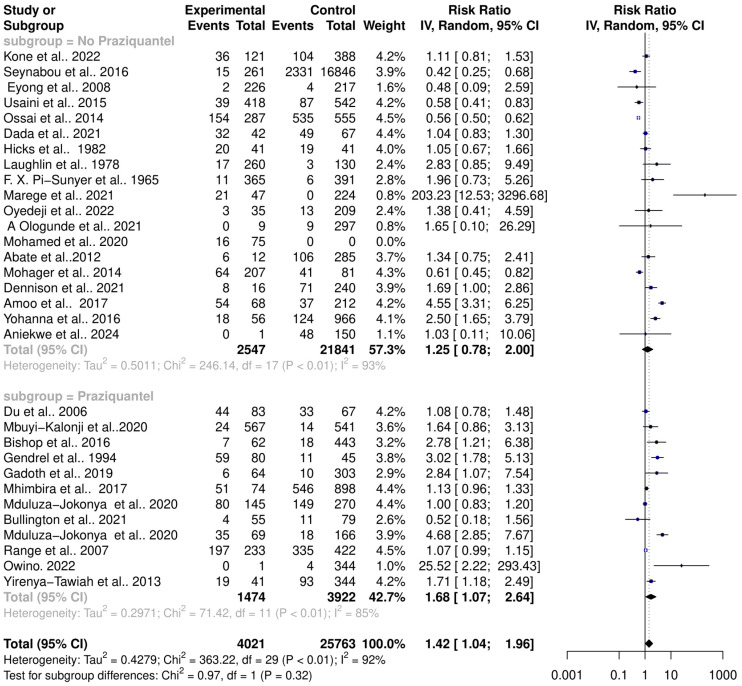
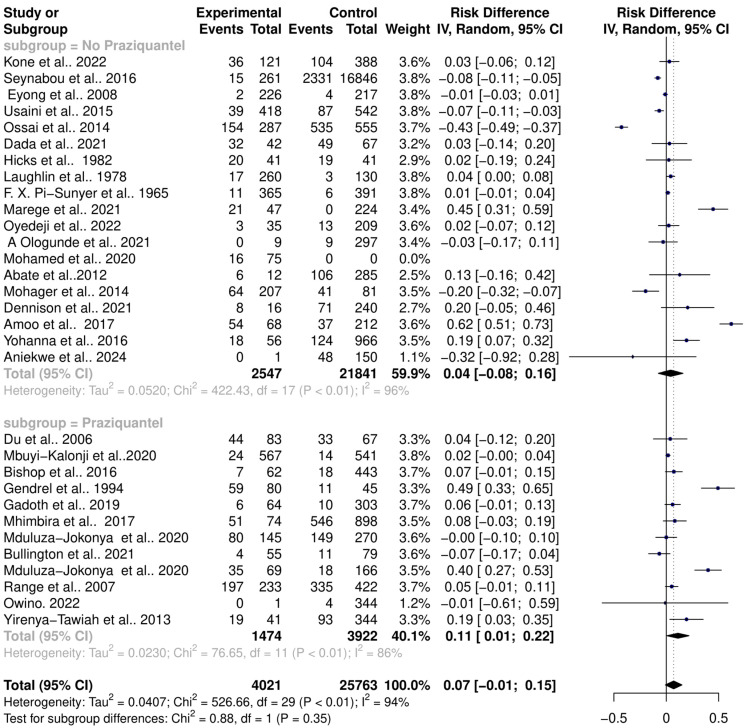
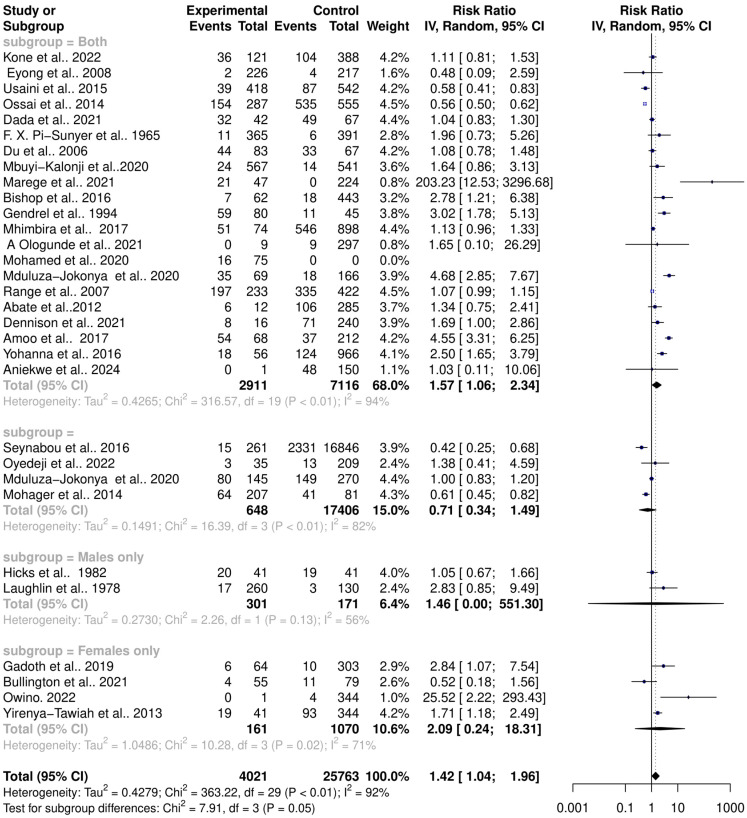
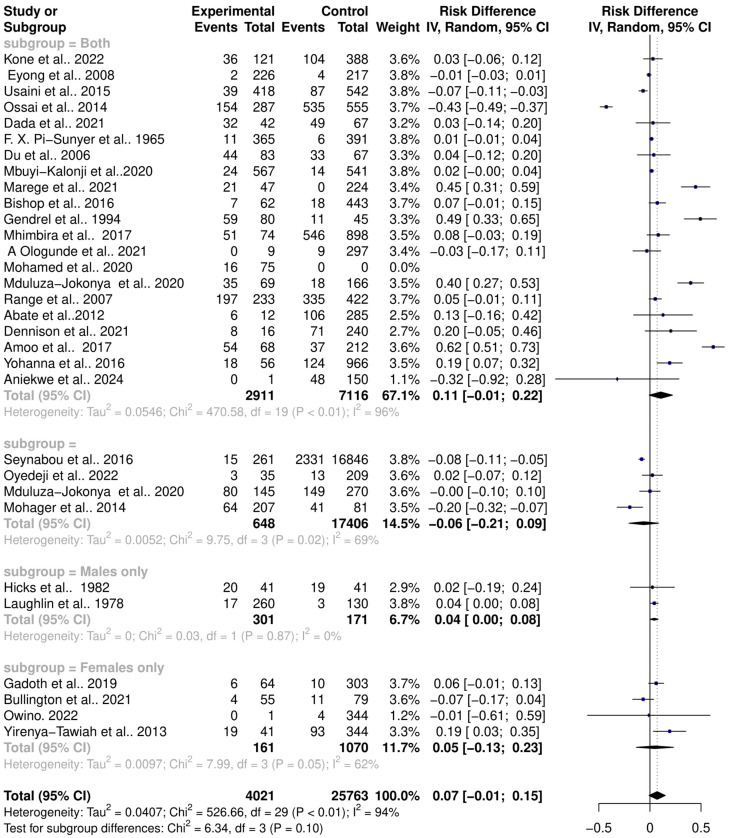
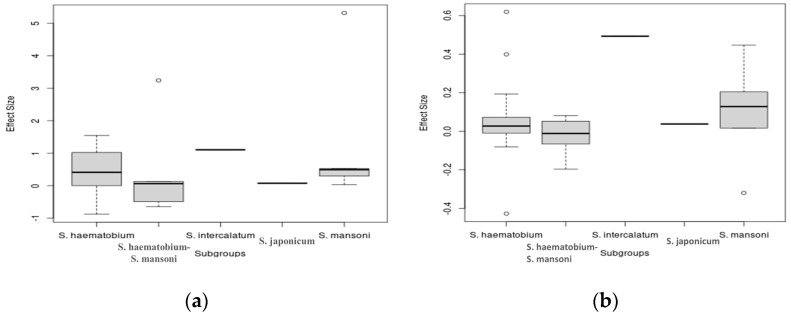
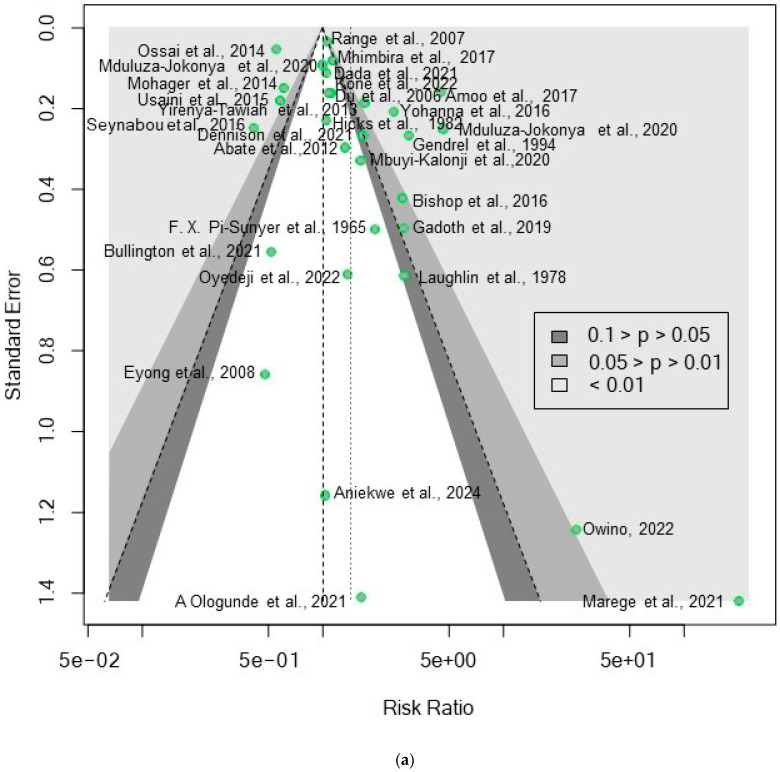
The human species were observed to be associated with various bacterial species isolated from blood, stool, urine, sputum, skin, and vaginal or cervical samples. A meta-analysis of the interaction between schistosomiasis and the host microbiome, based on 31 studies, showed 29,784 observations and 5871 events. The pooled estimates indicated a significant association between schistosomiasis and changes in the microbiome of infected individuals. There was considerable heterogeneity with variance effect sizes ( < 0.0001). Subgroup analysis of species demonstrated that was the most significant contributor to the overall heterogeneity, accounting for 62.1% ( < 0.01). contributed 13.0% ( = 0.02), and the coinfection of and accounted for 16.8% of the heterogeneity ( < 0.01), contributing to the variability seen in the pooled analysis. Similarly, praziquantel treatment (RR = 1.68, 95% CI: 1.07-2.64) showed high heterogeneity (Chi = 71.42, df = 11, < 0.01) and also indicated that infections in males (RR = 1.46, 95% CI: 0.00 to 551.30) and females (RR = 2.09, 95% CI: 0.24 to 18.31) have a higher risk of altering the host microbiome.
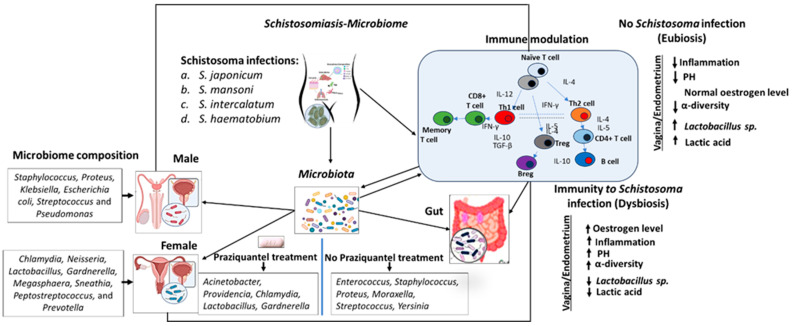
Schistosomiasis significantly disrupts the host microbiota across various bodily sites, leading to increased susceptibility to different bacterial taxa such as , , , , , , , and species ( and ). This disruption enables these bacteria to produce toxic metabolites, which in turn cause inflammation and facilitate the progression of disease. The impact of schistosomiasis on the vaginal microbiome underscores the necessity for gender-specific approaches to treatment and prevention. Effective management of female genital schistosomiasis (FGS) requires addressing both the parasitic infection and the resulting microbiome imbalances. Additionally, praziquantel-treated individuals have different microbiome compositions compared to individuals with no praziquantel treatment. This suggests that combining praziquantel treatment with probiotics could potentially decrease the disease severity caused by an altered microbiome.
血吸虫病是一种影响人类和动物的热带疾病,2021年有2.514亿人感染。曼氏血吸虫、埃及血吸虫、日本血吸虫和湄公血吸虫是主要的人体血吸虫,会导致组织损伤、肉芽肿、溃疡、出血以及机会性病原体入侵。肠道和泌尿道微生物群会显著影响宿主对血吸虫病的易感性,破坏微生物平衡;然而,这种关系尚未得到充分理解。本系统评价和荟萃分析探讨了血吸虫病与宿主微生物群之间的复杂关系,为疾病的发病机制和管理提供了关键见解。
本系统评价采用PRISMA指南,通过多个数据库和谷歌学术搜索,识别关于血吸虫病及其与宿主微生物组相互作用的同行评审文章,为分析提供了一个强大的数据集。该研究使用了Meta-Mar v3.5.1;对血吸虫病与微生物组之间的相互作用进行了描述性测试、随机效应模型分析和亚组分析。森林图、 Cochr an Q检验和Higgins不一致性统计量(I²)用于评估异质性。
观察到人体血吸虫物种与从血液、粪便、尿液、痰液、皮肤以及阴道或宫颈样本中分离出的各种细菌物种有关。基于31项研究对血吸虫病与宿主微生物组之间相互作用的荟萃分析显示,有29784条观察结果和5871个事件。汇总估计表明,血吸虫病与受感染个体微生物组的变化之间存在显著关联。方差效应大小存在相当大的异质性(I²<0.0001)。对血吸虫物种的亚组分析表明,曼氏血吸虫是总体异质性的最主要贡献者,占62.1%(P<0.01)。埃及血吸虫贡献了13.0%(P = 0.02),曼氏血吸虫和埃及血吸虫的合并感染占异质性的16.8%(P<0.01),这导致了汇总分析中所见的变异性。同样,吡喹酮治疗(RR = 1.68,95%CI:1.07 - 2.64)显示出高度异质性(Chi² = 71.42,df = 11,P<0.01),并且还表明男性(RR = 1.46,95%CI:0.00至551.30)和女性(RR = 2.09,95%CI:0.24至18.31)感染血吸虫后改变宿主微生物组的风险更高。
血吸虫病会显著破坏宿主在各个身体部位的微生物群,导致对不同细菌类群(如双歧杆菌属、拟杆菌属、梭菌属、肠杆菌属、葡萄球菌属、链球菌属、韦荣球菌属和普雷沃菌属物种(尤其是普雷沃菌属和韦荣球菌属))的易感性增加。这种破坏使这些细菌能够产生有毒代谢产物,进而引发炎症并促进疾病进展。血吸虫病对阴道微生物组的影响凸显了针对性别进行治疗和预防的必要性。有效管理女性生殖器血吸虫病(FGS)需要同时解决寄生虫感染和由此导致的微生物组失衡问题。此外,与未接受吡喹酮治疗的个体相比,接受吡喹酮治疗的个体具有不同的微生物组组成。这表明将吡喹酮治疗与益生菌相结合可能会降低因微生物组改变而导致的疾病严重程度。