Dos Santos Jennifer Barbosa, Choueri Rodrigo Brasil, Dos Santos Francisco Eduardo Melo, Santos Laís Adrielle de Oliveira, da Silva Letícia Fernanda, Nobre Caio Rodrigues, Cardoso Milton Alexandre, de Britto Mari Renata, Simões Fábio Ruiz, Delvalls Tomas Angel, Gusso-Choueri Paloma Kachel
Laboratório de Ecotoxicologia, Universidade Santa Cecília (Unisanta), Rua Oswaldo Cruz, 266, Santos 11045-907, São Paulo, Brazil.
MarineTox_Lab, Departamento de Ciências do Mar, Instituto do Mar, Universidade Federal de São Paulo, Campus Santos (Unifesp), Rua Carvalho de Mendonça, 144, Santos 11070-102, São Paulo, Brazil.
Toxics. 2024 Oct 17;12(10):753. doi: 10.3390/toxics12100753.
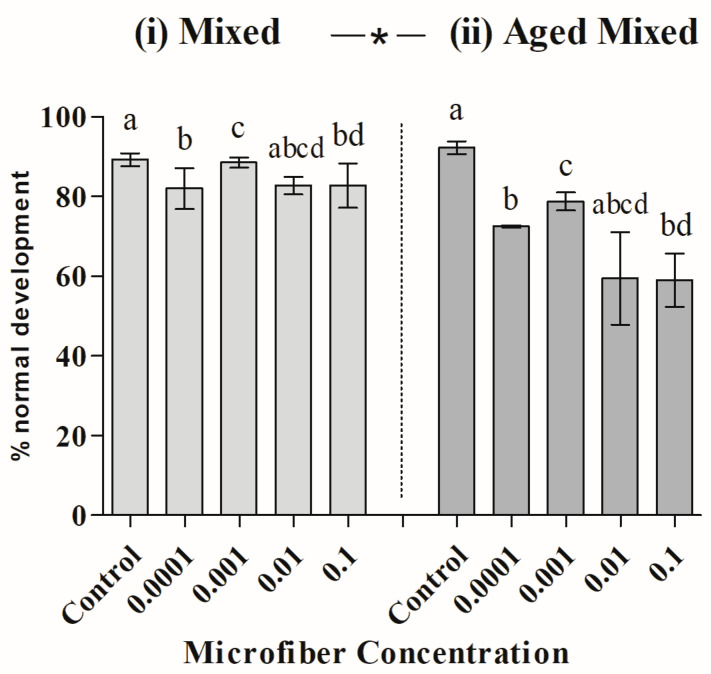
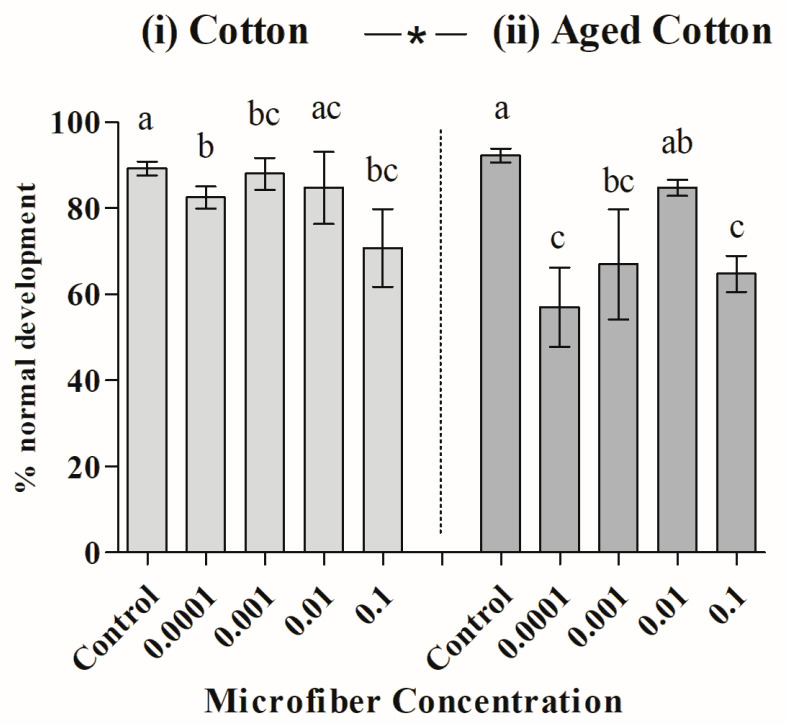
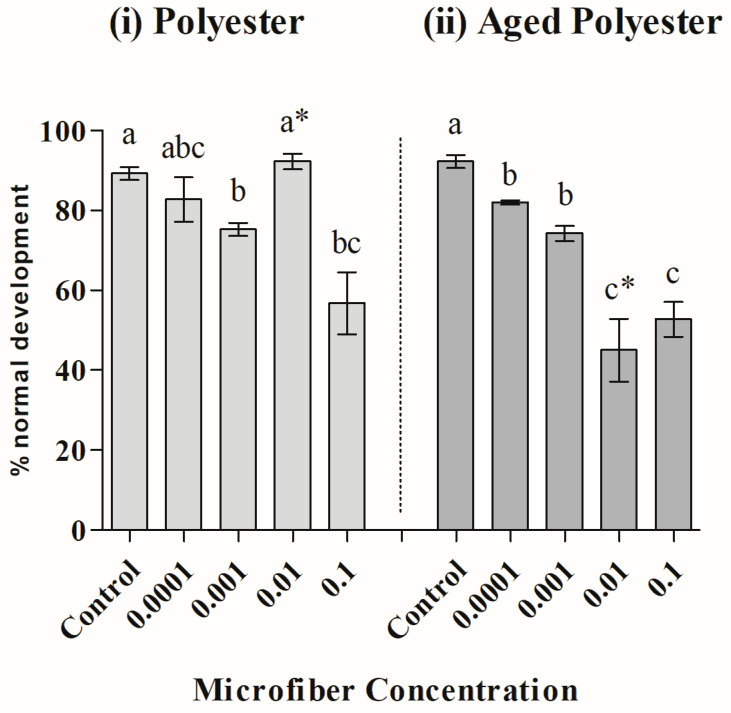
The rise of "fast fashion" has driven up the production of low-cost, short-lived clothing, significantly increasing global textile fiber production and, consequently, exacerbating environmental pollution. This study investigated the ecotoxicological effects of different types of anthropogenic microfibers-cotton, polyester, and mixed fibers (50% cotton: 50% polyester)-on marine organisms, specifically sea urchin embryos. All tested fibers exhibited toxicity, with cotton fibers causing notable effects on embryonic development even at environmentally relevant concentrations. The research also simulated a scenario where microfibers were immersed in seawater for 30 days to assess changes in toxicity over time. The results showed that the toxicity of microfibers increased with both concentration and exposure duration, with polyester being the most toxic among the fibers tested. Although synthetic fibers have been the primary focus of previous research, this study highlights that natural fibers like cotton, which are often overlooked, can also be toxic due to the presence of harmful additives. These natural fibers, despite decomposing faster than synthetic ones, can persist in aquatic environments for extended periods. The findings underline the critical need for further research on both natural and synthetic microfibers to understand their environmental impact and potential threats to marine ecosystems and sea urchin populations.
“快时尚”的兴起推动了低成本、短命服装的生产,显著增加了全球纺织纤维产量,进而加剧了环境污染。本研究调查了不同类型的人为微纤维——棉、聚酯和混合纤维(50%棉:50%聚酯)——对海洋生物,特别是海胆胚胎的生态毒理学影响。所有测试纤维均表现出毒性,即使在与环境相关的浓度下,棉纤维也对胚胎发育产生了显著影响。该研究还模拟了微纤维在海水中浸泡30天的情景,以评估毒性随时间的变化。结果表明,微纤维的毒性随浓度和暴露时间的增加而增加,聚酯是测试纤维中毒性最强的。尽管合成纤维一直是先前研究的主要焦点,但本研究强调,像棉这样经常被忽视的天然纤维,由于存在有害添加剂,也可能具有毒性。这些天然纤维尽管比合成纤维分解得更快,但仍能在水生环境中长期存在。研究结果强调了对天然和合成微纤维进行进一步研究的迫切需要,以了解它们对海洋生态系统和海胆种群的环境影响及潜在威胁。