Ramalingam Prasanna Srinivasan, Premkumar T, Sundararajan Vino, Hussain Md Sadique, Arumugam Sivakumar
Protein Engineering Lab, School of Biosciences and Technology, Vellore Institute of Technology, Vellore, Tamil Nadu, India.
Integrative Multiomics Lab, School of Bio-Sciences & Technology, Vellore Institute of Technology, Vellore, Tamil Nadu, India.
Discov Oncol. 2024 Oct 25;15(1):592. doi: 10.1007/s12672-024-01455-6.
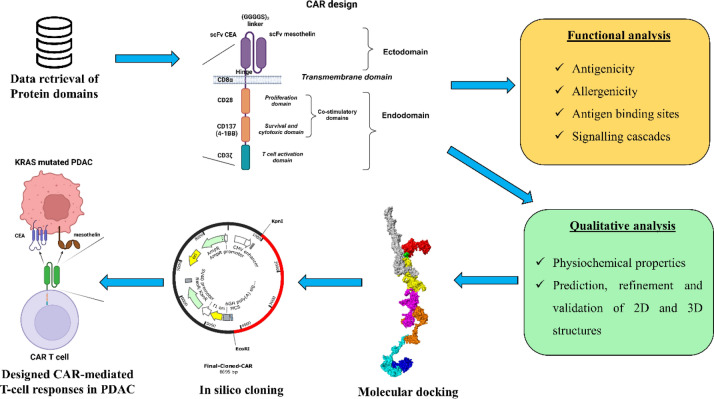
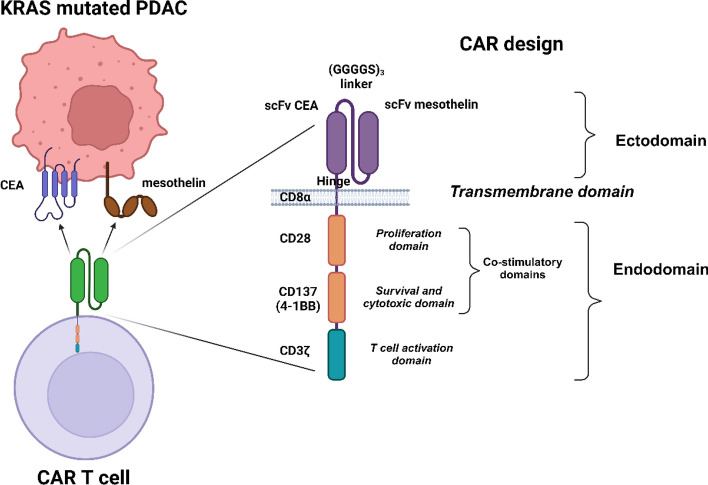
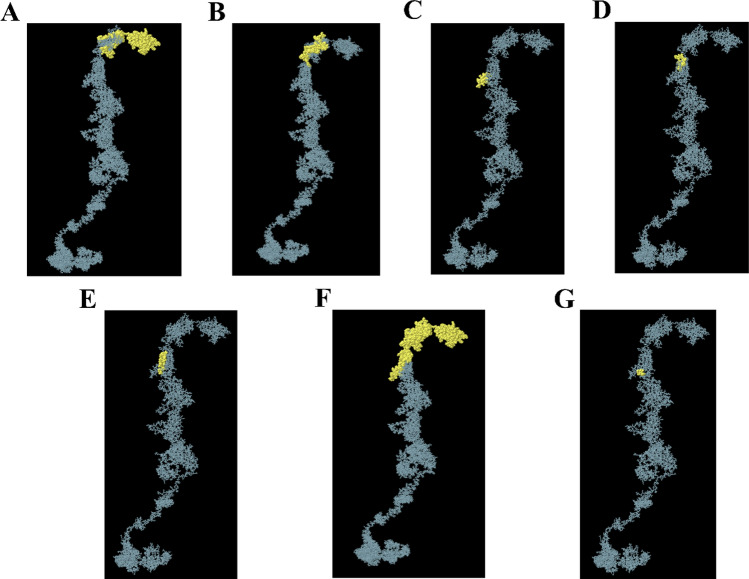
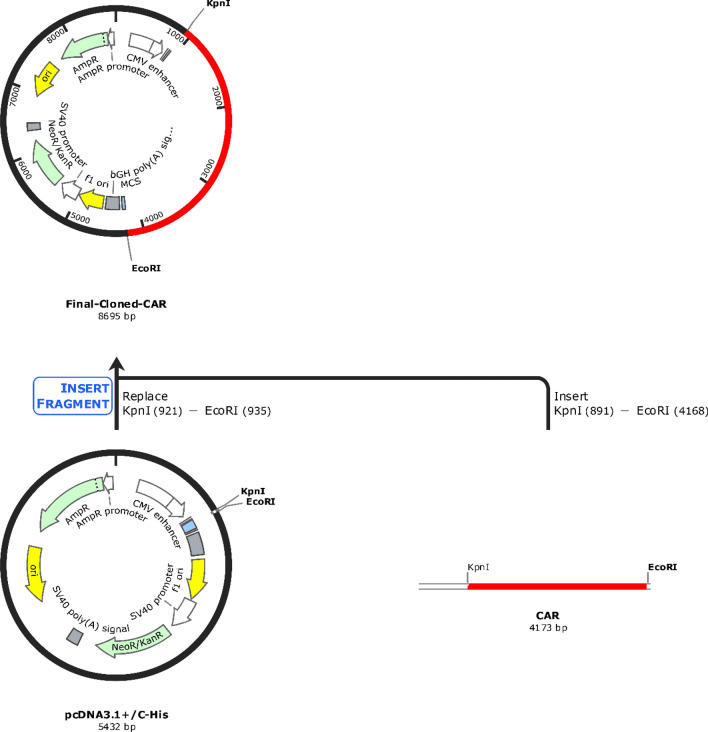
Mutant KRAS promotes the proliferation, metastasis, and aggressiveness of various cancers including pancreatic ductal adenocarcinoma (PDAC), non-small cell lung cancer (NSCLC), and colorectal adenocarcinoma (CRC) respectively. Mutant KRAS therapeutics are limited, while Sotorasib and Adagrasib were the only FDA-approved drugs for the treatment of KRAS mutated NSCLC. Chimeric antigen receptor (CAR) T-cell therapy has been emerged as an effective strategy against hematological malignancies and being extended towards solid cancers including PDAC. mesothelin (MSLN) and Carcinoembryonic Antigen (CEA) were reported to be highly overexpressed in KRAS-mutated PDAC. Meanwhile, in clinical trials, several CAR T-cell therapy studies are mainly focused towards these two cancer antigens in PDAC, however, the dual targeting of these two neoantigens is not reported. In the present study, we have designed and developed a novel dual-targeting CAR protein by employing various bioinformatics approaches such as functional analysis (antigenicity, allergenicity, antigen binding sites & signalling cascades), qualitative analysis (physicochemical, prediction, refinement & validation of 2D and 3D structures), molecular docking, and in silico cloning. Our results revealed that the designed CAR protein specifically binds with both MSLN & CEA with significant binding affinities, and was predicted to be stable & non-allergenic. Additionally, the protein-protein interaction network reveals the T-cell mediated antitumor responses of each domain in the designed CAR. Conclusively, we have designed and developed a dual targeting (MSLN & CEA) CAR protein towards KRAS-mutated PDAC using computational approaches. Alongside, we further recommend to engineer this designed CAR in T-cells and evaluating their therapeutic efficiency in in vitro and in vivo studies in the near future.
突变型KRAS分别促进包括胰腺导管腺癌(PDAC)、非小细胞肺癌(NSCLC)和结直肠癌(CRC)在内的多种癌症的增殖、转移和侵袭性。针对突变型KRAS的治疗方法有限,而索托拉西布和阿达格拉西布是美国食品药品监督管理局(FDA)批准的仅有的用于治疗KRAS突变型NSCLC的药物。嵌合抗原受体(CAR)T细胞疗法已成为一种针对血液系统恶性肿瘤的有效策略,并正在扩展至包括PDAC在内的实体癌。据报道,间皮素(MSLN)和癌胚抗原(CEA)在KRAS突变的PDAC中高度过表达。同时,在临床试验中,几项CAR T细胞疗法研究主要针对PDAC中的这两种癌症抗原,然而,尚未有关于这两种新抗原双靶点治疗的报道。在本研究中,我们通过采用各种生物信息学方法,如功能分析(抗原性、致敏性、抗原结合位点和信号级联)、定性分析(二维和三维结构的物理化学性质、预测、优化和验证)、分子对接和计算机克隆,设计并开发了一种新型双靶点CAR蛋白。我们的结果表明,所设计的CAR蛋白与MSLN和CEA均特异性结合,且具有显著的结合亲和力,预计该蛋白稳定且无致敏性。此外,蛋白质-蛋白质相互作用网络揭示了所设计的CAR中每个结构域的T细胞介导的抗肿瘤反应。总之,我们利用计算方法设计并开发了一种针对KRAS突变型PDAC的双靶点(MSLN和CEA)CAR蛋白。此外,我们进一步建议在T细胞中构建这种设计好的CAR,并在不久的将来在体外和体内研究中评估其治疗效果。