Institute of Biomedical Engineering, Department of Engineering Science, University of Oxford, Oxford OX3 7LD, U.K.
Institute of Applied Mechanics, National Taiwan University, Taipei 10617, Taiwan.
Langmuir. 2024 Nov 5;40(44):23259-23267. doi: 10.1021/acs.langmuir.4c02546. Epub 2024 Oct 25.
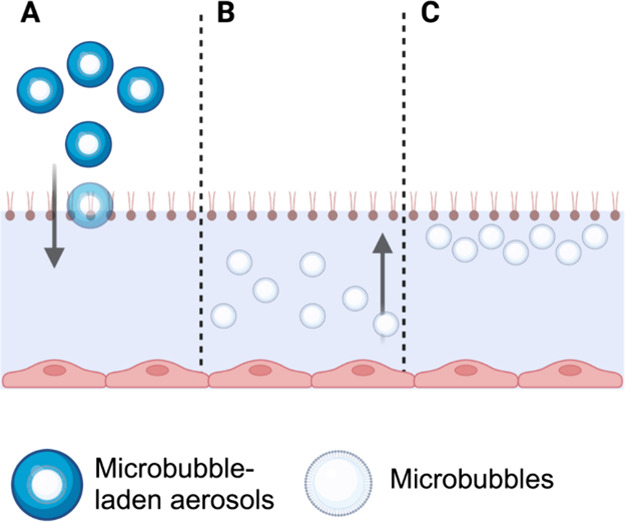
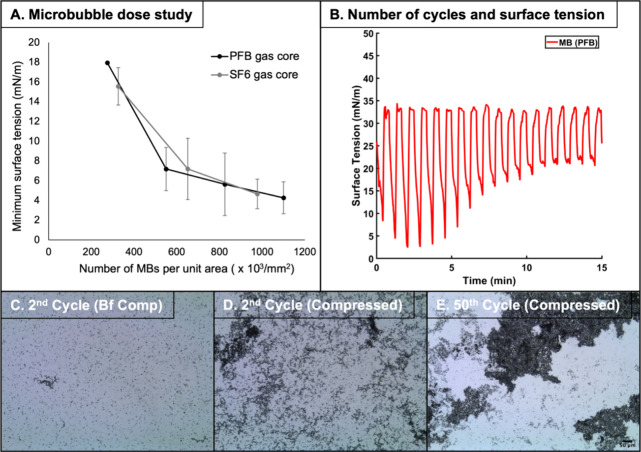
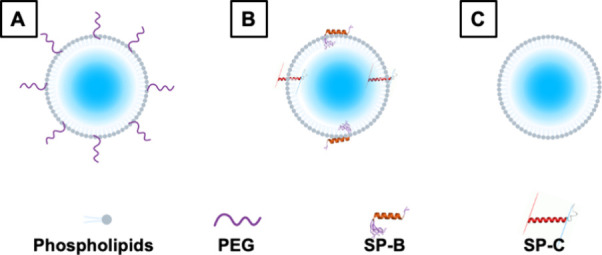
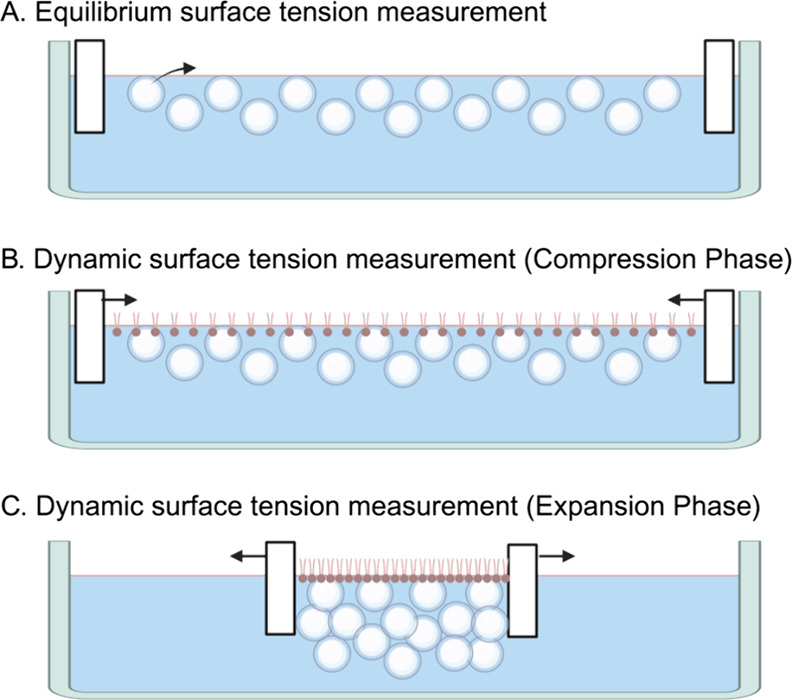
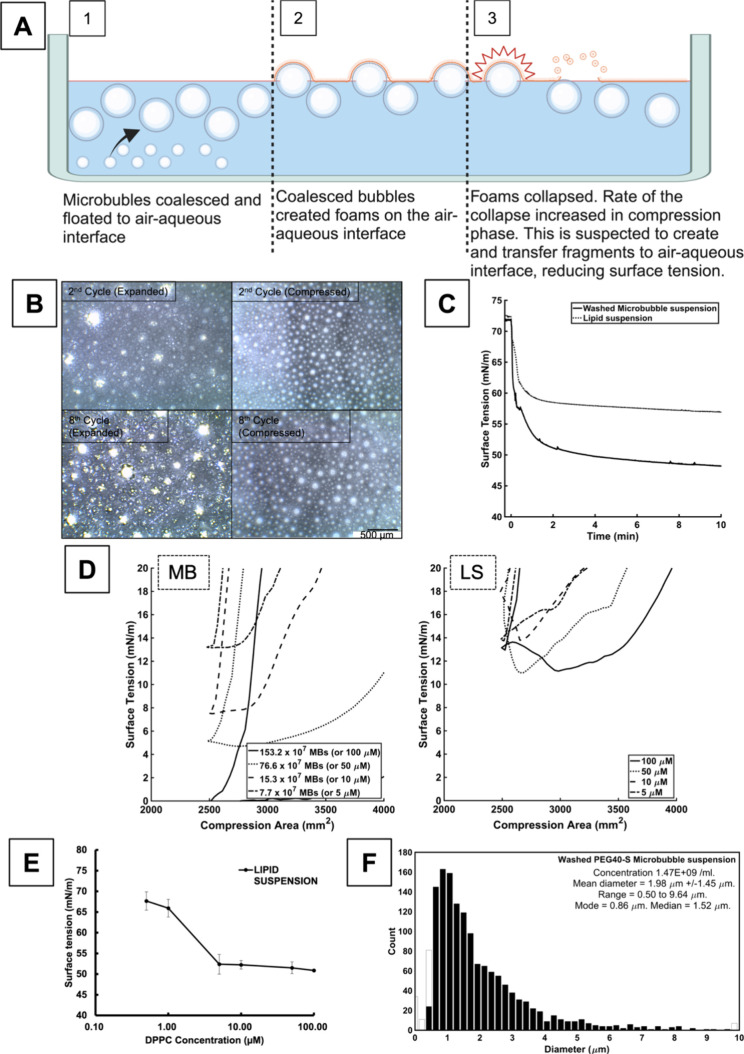
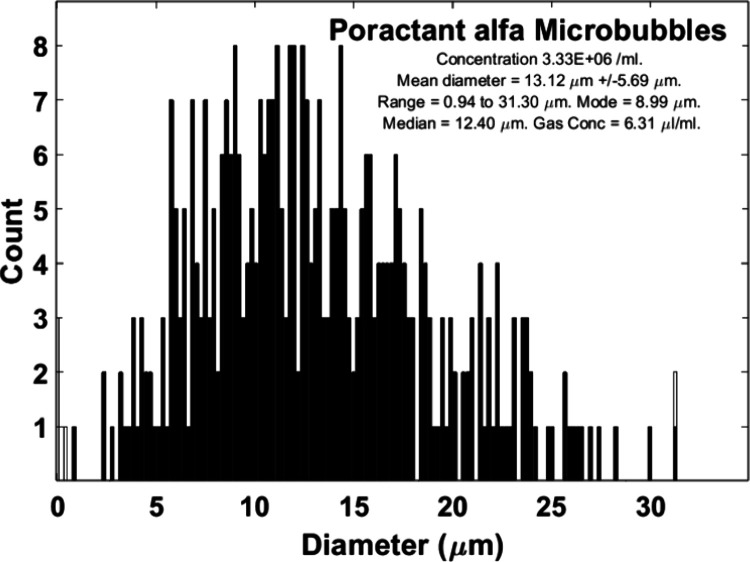
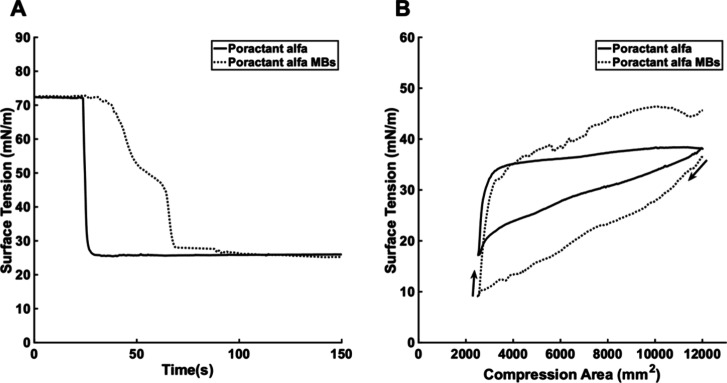
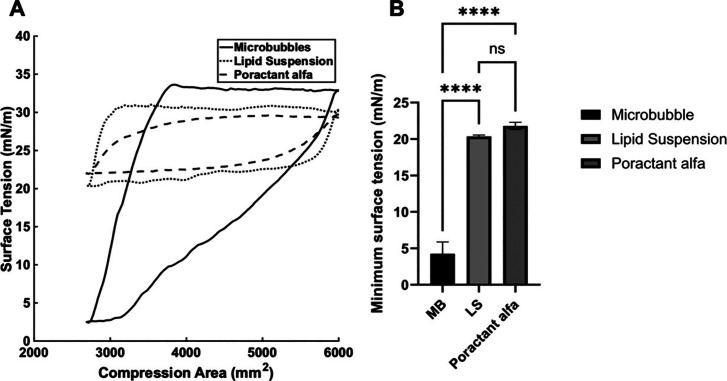
Animal-derived lung surfactants have saved millions of lives of preterm neonates with neonatal Respiratory Distress Syndrome (nRDS). However, a replacement for animal-derived lung surfactants has been sought for decades due to its high manufacturing cost, inaccessibility in low-income countries, and failure to show efficacy when nebulized. This study investigated the use of lipid-coated microbubbles as potential replacements for exogenous lung surfactants. Three different formulations of microbubbles (DPPC with/out PEG40-stearate and poractant alfa) were prepared, and their equilibrium and dynamic surface tensions were tested on a clean air-saline interface or a simulated air-lung fluid interface using a Langmuir-Blodgett trough. In dynamic surface measurements, microbubbles reduced the minimum surface tension compared with the equivalent composition lipid suspension: e.g., PEG-free microbubbles had a minimum surface tension of 4.3 mN/m while the corresponding lipid suspension and poractant alfa had 20.4 ( ≤ 0.0001) and 21.8 mN/m ( ≤ 0.0001), respectively. Two potential mechanisms for the reduction of surface tension were found: Fragmentation of the foams created by microbubble coalescence; and clustering of microbubbles in the aqueous subphase disrupting the interfacial phospholipid monolayer. The predominant mechanism appears to depend on the formulation and/or the environment. The use of microbubbles as a replacement for exogenous lung surfactant products thus shows promise and further work is needed to evaluate efficacy in vivo.
动物源性肺表面活性剂已经拯救了数百万患有新生儿呼吸窘迫综合征(nRDS)的早产儿的生命。然而,由于其制造成本高、在低收入国家无法获得以及雾化时效果不佳,几十年来一直有人在寻找动物源性肺表面活性剂的替代品。本研究探讨了使用脂质包覆的微泡作为外源性肺表面活性剂替代品的可能性。制备了三种不同配方的微泡(DPPC 与/或 PEG40-硬脂酸和猪肺磷脂),并使用 Langmuir-Blodgett 槽在清洁空气-盐水界面或模拟空气-肺液界面上测试了它们在平衡和动态表面张力下的性能。在动态表面测量中,与等效组成的脂质悬浮液相比,微泡降低了最小表面张力:例如,无 PEG 的微泡的最小表面张力为 4.3 mN/m,而相应的脂质悬浮液和猪肺磷脂的最小表面张力分别为 20.4(≤0.0001)和 21.8 mN/m(≤0.0001)。发现了两种降低表面张力的潜在机制:微泡聚结产生的泡沫的破裂;以及微泡在水亚相中聚集,破坏界面磷脂单层。主要机制似乎取决于配方和/或环境。因此,微泡作为外源性肺表面活性剂产品的替代品具有广阔的应用前景,需要进一步研究以评估其体内疗效。