Department of Pulmonary and Critical Care Medicine, Shanghai Fifth People's Hospital, Center of Community-Based Health Research, Fudan University, Shanghai, China.
Section of Pulmonary, Critical Care and Sleep Medicine, Yale School of Medicine, New Haven, Connecticut, USA.
Physiol Rep. 2024 Oct;12(20):e70104. doi: 10.14814/phy2.70104.
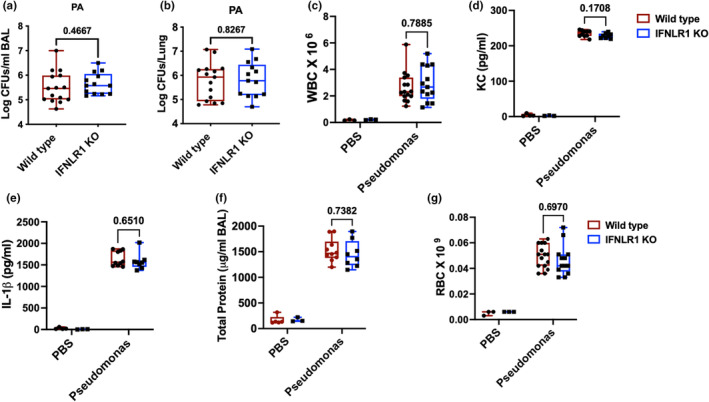
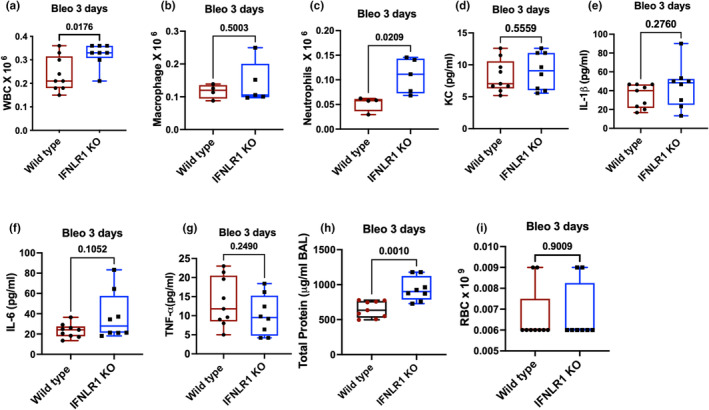
Type III interferons (λ1, λ2, and λ3) are potent antiviral cytokines in the lung. However, their roles in nonviral lung injuries are less well understood. This study investigates the activation of type III interferon signaling in three distinct models of lung injuries caused by diverse stimuli: the bacterial pathogen Pseudomonas aeruginosa, bacterial endotoxin LPS, and the chemotherapeutic agent bleomycin. Our data show that, despite inducing a potent inflammatory response, Pseudomonas and LPS did not increase IFNλ secretion. In contrast, bleomycin instillation increased secretion of IFNλ in the airways at both early and late time points. Consistent with limited secretion, type III interferon signaling had a minimal role in the host response to both Pseudomonas and LPS, as measured by pathogen burden, inflammatory response, and lung injury. Conversely, a deficiency in type III interferon signaling led to increased inflammatory signaling and elevated acute lung injury in the bleomycin model on day 3. This elevated early injury resulted in impaired recovery in IFNLR1 knockout mice, as evidenced by their recovery from bleomycin-induced weight loss. Taken together, these data suggest a context-specific activation of type III interferon signaling, where it plays an anti-inflammatory role in the lung.
III 型干扰素(λ1、λ2 和 λ3)是肺部强有力的抗病毒细胞因子。然而,它们在非病毒性肺损伤中的作用还不太清楚。本研究探讨了在三种不同的肺损伤模型中,由不同刺激物引起的 III 型干扰素信号的激活:细菌病原体铜绿假单胞菌、细菌内毒素 LPS 和化疗药物博来霉素。我们的数据表明,尽管诱导了强烈的炎症反应,但铜绿假单胞菌和 LPS 并没有增加 IFNλ 的分泌。相比之下,博来霉素滴注在早期和晚期都会增加气道中 IFNλ 的分泌。与有限的分泌一致,III 型干扰素信号在宿主对铜绿假单胞菌和 LPS 的反应中作用不大,这可以通过病原体负担、炎症反应和肺损伤来衡量。相反,在博来霉素模型中,III 型干扰素信号的缺乏导致炎症信号增加和急性肺损伤加重,第 3 天尤为明显。这种早期损伤导致 IFNLR1 基因敲除小鼠的恢复受损,这可以从它们从博来霉素引起的体重减轻中恢复得到证明。综上所述,这些数据表明 III 型干扰素信号的激活具有特定的上下文依赖性,在肺部发挥抗炎作用。