The Steve and Cindy Rasmussen Institute for Genomic Medicine, Abigail Wexner Research Institute at Nationwide Children's Hospital, Columbus, OH, USA.
Department of Pediatrics, The Ohio State University College of Medicine, Columbus, OH, USA.
Sci Rep. 2024 Oct 25;14(1):25440. doi: 10.1038/s41598-024-72167-8.
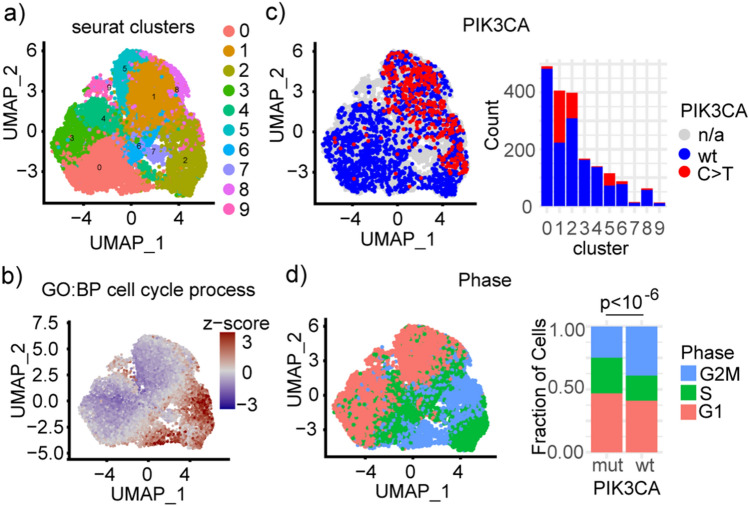
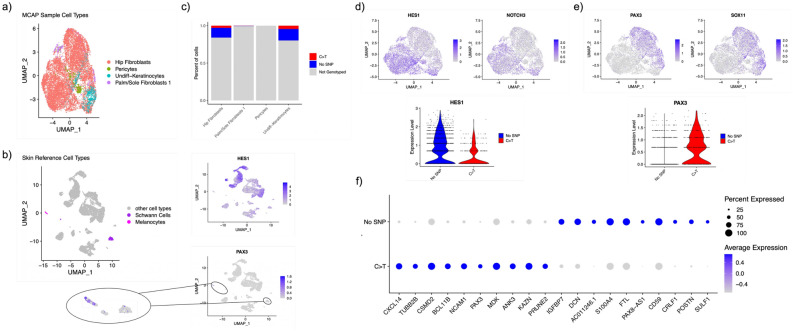
PIK3CA-related overgrowth spectrum (PROS) disorders are caused by somatic mosaic variants that result in constitutive activation of the phosphatidylinositol-3-kinase/AKT/mTOR pathway. Promising responses to molecularly targeted therapy have been reported, although identification of an appropriate agent can be hampered by the mosaic nature and corresponding low variant allele frequency of the causal variant. Moreover, our understanding of the molecular consequences of these variants-for example how they affect gene expression profiles-remains limited. Here we describe in vitro expansion of a human capillary malformation followed by molecular characterization using exome sequencing, single cell gene expression, and targeted long-read single cell RNA-sequencing in a patient with clinical features consistent with Megalencephaly-Capillary Malformation Syndrome (MCAP, a PROS condition). These approaches identified a targetable PIK3CA variant with expression restricted to PAX3+ fibroblast and undifferentiated keratinocyte populations. This study highlights the innovative combination of next-generation single cell sequencing methods to better understand unique transcriptomic profiles and cell types associated with MCAP, revealing molecular intricacies of this genetic syndrome.
PI3KCA 相关过度生长谱(PROS)疾病是由体细胞镶嵌变体引起的,导致磷脂酰肌醇-3-激酶/AKT/mTOR 通路的组成性激活。已经报道了对分子靶向治疗的有希望的反应,尽管由于致病变体的镶嵌性质和相应的低变异等位基因频率,可能会阻碍合适药物的鉴定。此外,我们对这些变体的分子后果的理解(例如,它们如何影响基因表达谱)仍然有限。在这里,我们描述了一例人类毛细血管畸形的体外扩增,然后使用外显子组测序、单细胞基因表达和靶向长读长单细胞 RNA 测序对具有与巨脑-毛细血管畸形综合征(MCAP,一种 PROS 病症)一致的临床特征的患者进行分子特征分析。这些方法鉴定了一种可靶向的 PIK3CA 变体,其表达仅限于 PAX3+成纤维细胞和未分化角蛋白细胞群体。这项研究突出了下一代单细胞测序方法的创新组合,以更好地了解与 MCAP 相关的独特转录组谱和细胞类型,揭示了这种遗传综合征的分子复杂性。