Institute of Biomedical Sciences (ICB), Faculty of Medicine & Faculty of Life Sciences, Universidad Andres Bello, Santiago, Chile.
Center for Exercise, Metabolism and Cancer, Facultad de Medicina, Instituto de Ciencias Biomédicas, Universidad de Chile, Santiago, Chile.
Mol Med. 2024 Oct 25;30(1):185. doi: 10.1186/s10020-024-00942-4.
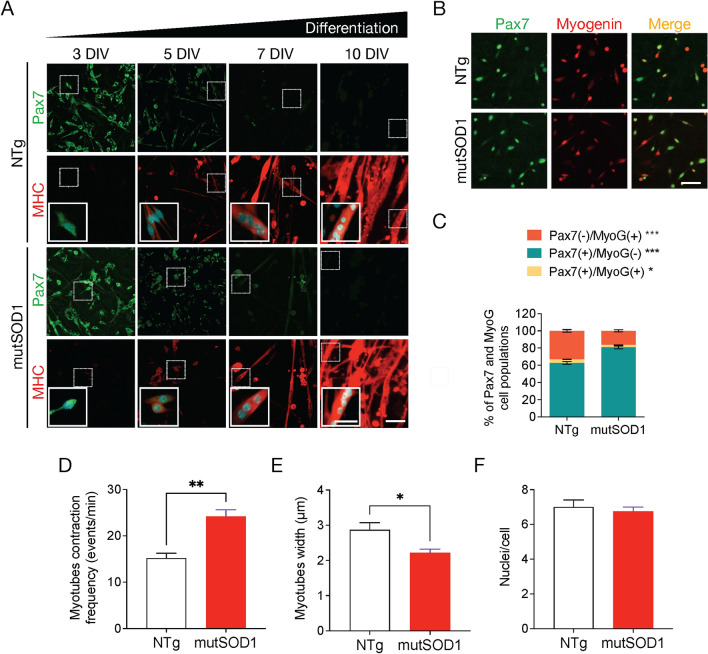
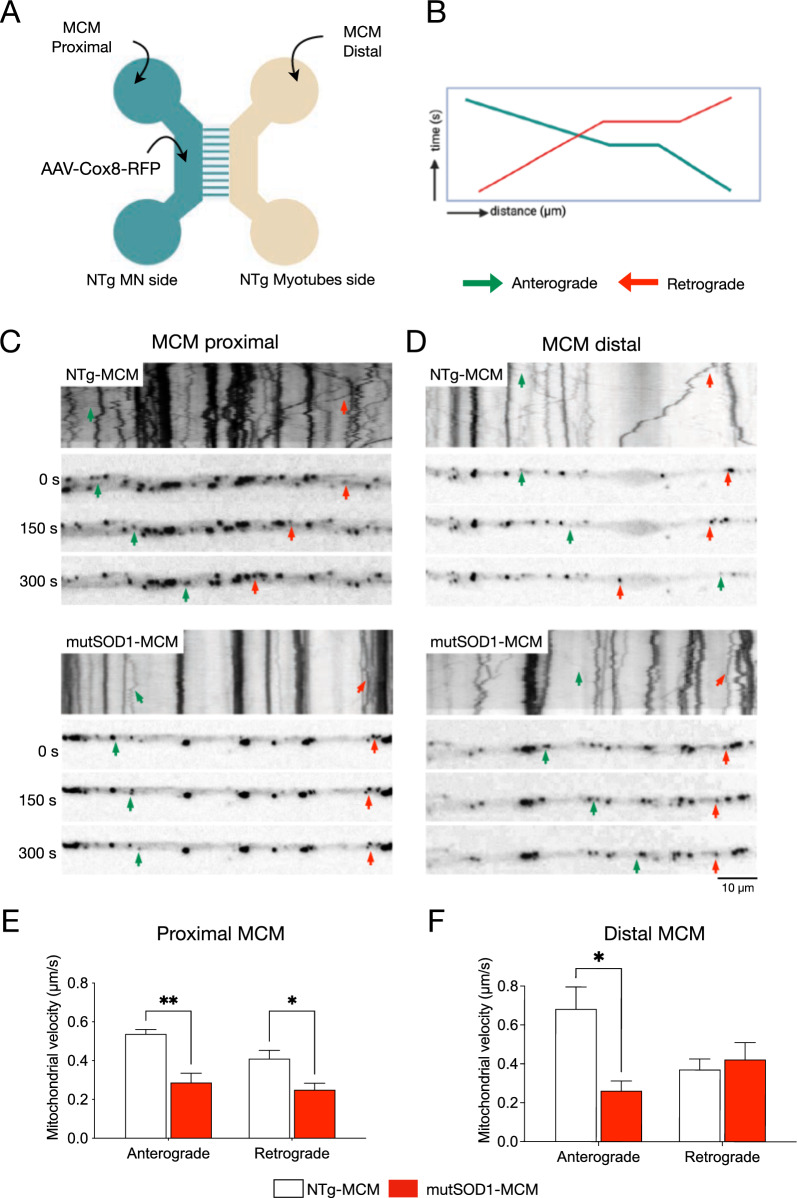
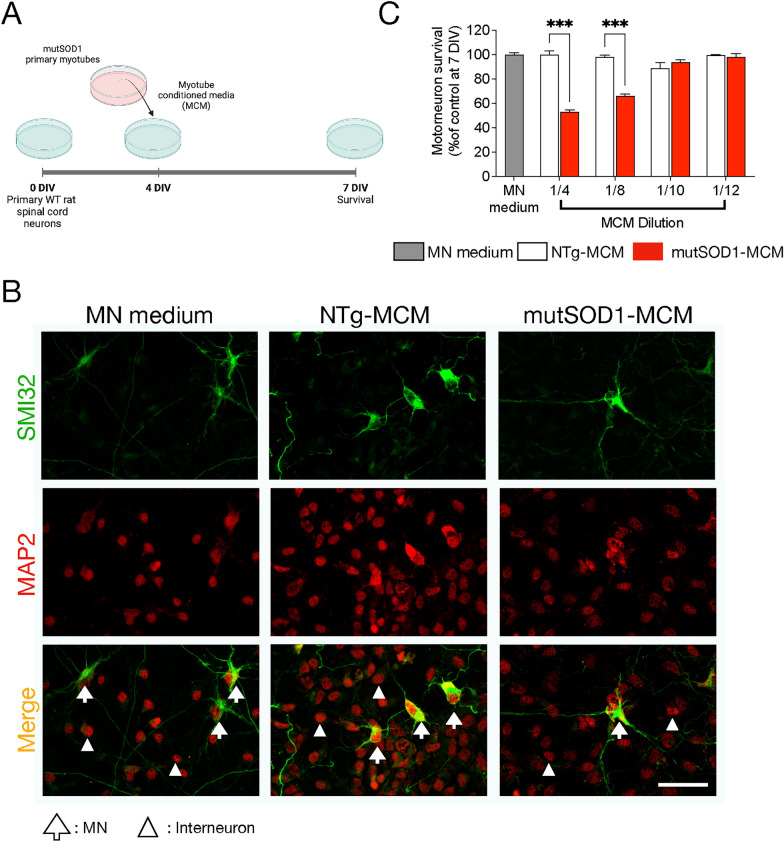
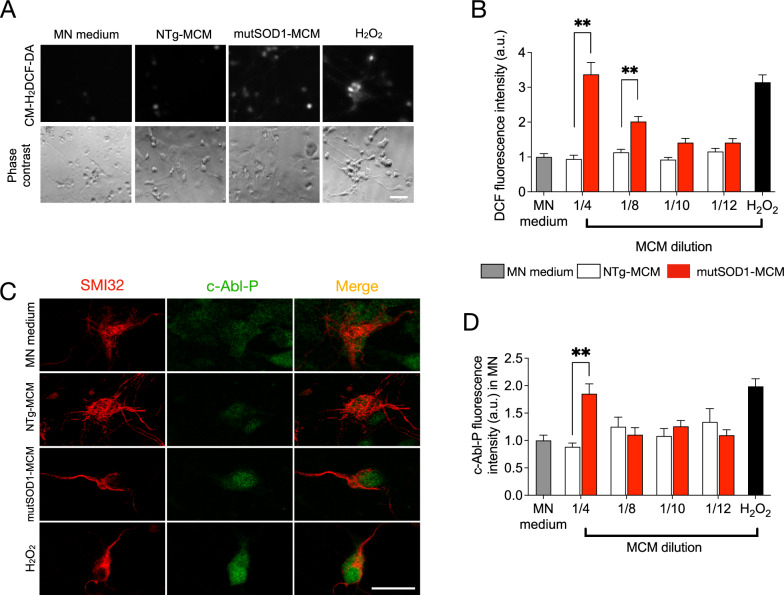
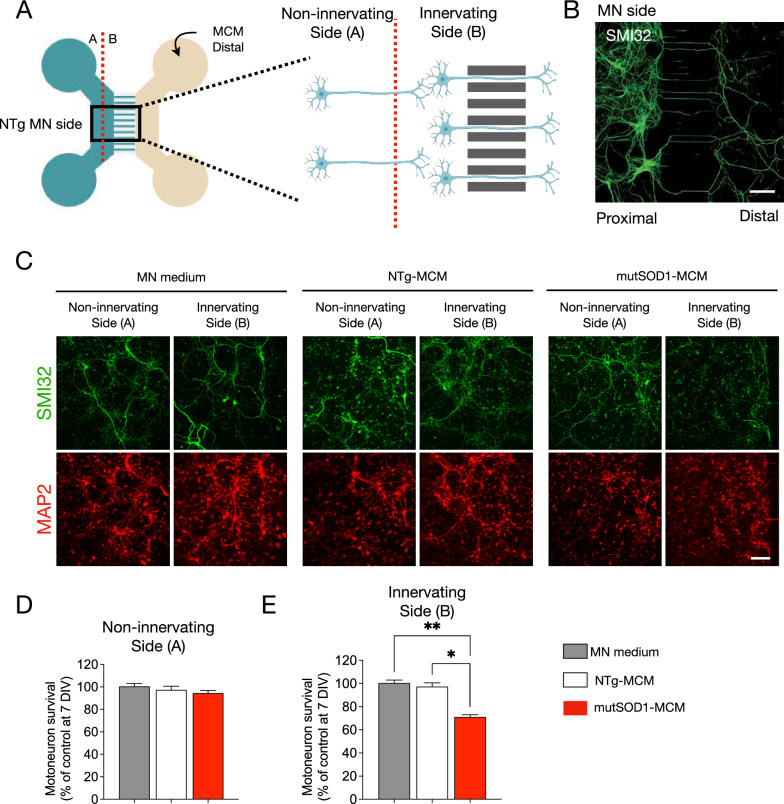
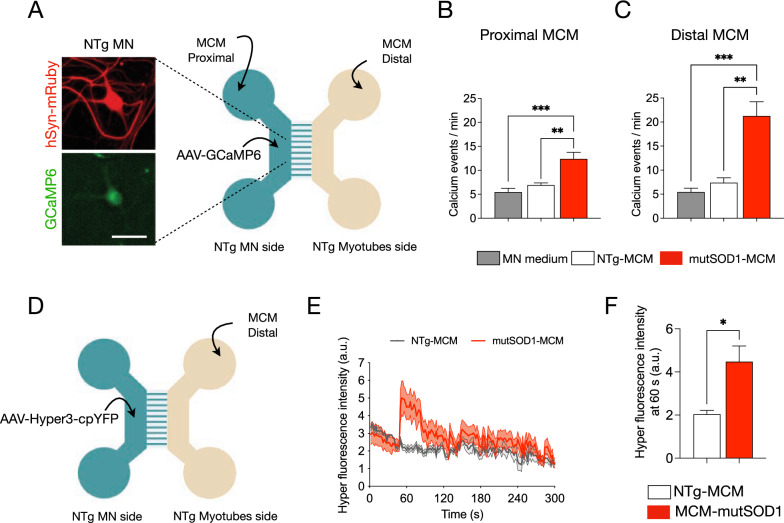
Amyotrophic lateral sclerosis (ALS) is a fatal neurodegenerative disease characterized by the loss of motoneurons (MNs), and despite progress, there is no effective treatment. A large body of evidence shows that astrocytes expressing ALS-linked mutant proteins cause non-cell autonomous toxicity of MNs. Although MNs innervate muscle fibers and ALS is characterized by the early disruption of the neuromuscular junction (NMJ) and axon degeneration, there are controversies about whether muscle contributes to non-cell-autonomous toxicity to MNs. In this study, we generated primary skeletal myotubes from myoblasts derived from ALS mice expressing human mutant SOD1 (termed hereafter mutSOD1). Characterization revealed that mutSOD1 skeletal myotubes display intrinsic phenotypic and functional differences compared to control myotubes generated from non-transgenic (NTg) littermates. Next, we analyzed whether ALS myotubes exert non-cell-autonomous toxicity to MNs. We report that conditioned media from mutSOD1 myotubes (mutSOD1-MCM), but not from control myotubes (NTg-MCM), induced robust death of primary MNs in mixed spinal cord cultures and compartmentalized microfluidic chambers. Our study further revealed that applying mutSOD1-MCM to the MN axonal side in microfluidic devices rapidly reduces mitochondrial axonal transport while increasing Ca2 + transients and reactive oxygen species (i.e., HO). These results indicate that soluble factor(s) released by mutSOD1 myotubes cause MN axonopathy that leads to lethal pathogenic changes.
肌萎缩侧索硬化症(ALS)是一种致命的神经退行性疾病,其特征是运动神经元(MNs)的丧失,尽管取得了进展,但目前尚无有效的治疗方法。大量证据表明,表达 ALS 相关突变蛋白的星形胶质细胞会导致 MN 的非细胞自主毒性。尽管 MN 支配肌肉纤维,并且 ALS 的特征是早期破坏神经肌肉接头(NMJ)和轴突退化,但关于肌肉是否对 MN 的非细胞自主毒性有贡献仍存在争议。在这项研究中,我们从表达人类突变 SOD1 的 ALS 小鼠的成肌细胞中生成了原代骨骼肌肌管(以下简称 mutSOD1)。特征分析显示,与非转基因(NTg)同窝仔代生成的对照肌管相比,mutSOD1 骨骼肌肌管表现出内在的表型和功能差异。接下来,我们分析了 ALS 肌管是否对 MN 产生非细胞自主毒性。我们报告称,来自 mutSOD1 肌管的条件培养基(mutSOD1-MCM),而不是来自对照肌管的条件培养基(NTg-MCM),可在混合脊髓培养物和分隔式微流控室中诱导原代 MN 发生强烈死亡。我们的研究进一步表明,在微流控装置中将 mutSOD1-MCM 施加到 MN 轴突侧可迅速降低线粒体轴突运输,同时增加 Ca2+瞬变和活性氧物质(即 HO)。这些结果表明,mutSOD1 肌管释放的可溶性因子(s)导致 MN 轴突病,从而导致致命的发病变化。