Byeon Yang Soo, Oh Jungmin, Ku Kyung-Hyung, Kim Mi Jeong, Kim Sang Sook
Research Group of Food Processing, Korea Food Research Institute, Wanju-gun 55365, Republic of Korea.
Enterprise Solution Research Center, Korea Food Research Institute, Wanju-gun 55365, Republic of Korea.
Foods. 2024 Oct 20;13(20):3326. doi: 10.3390/foods13203326.
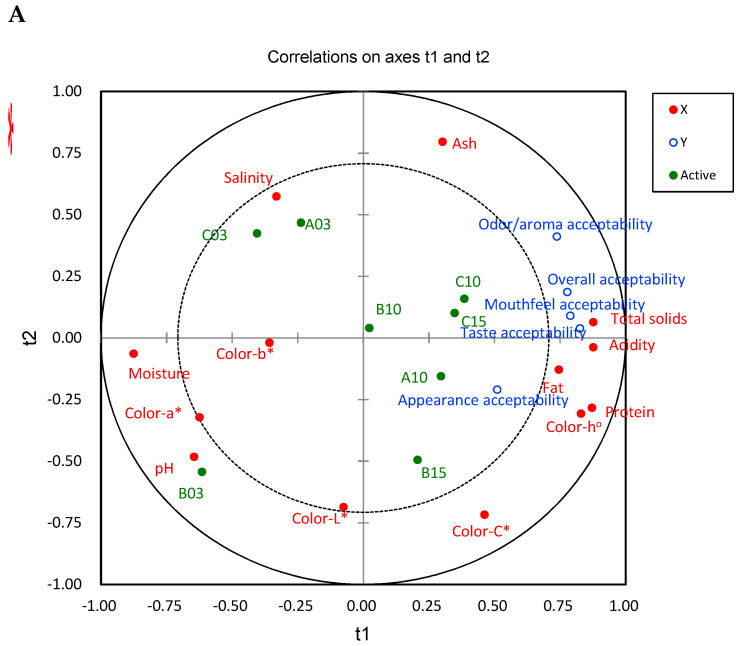
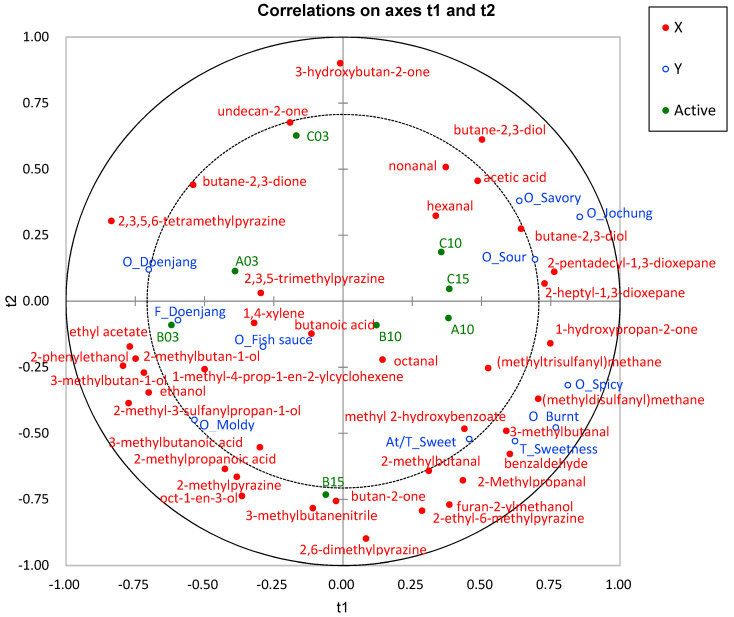
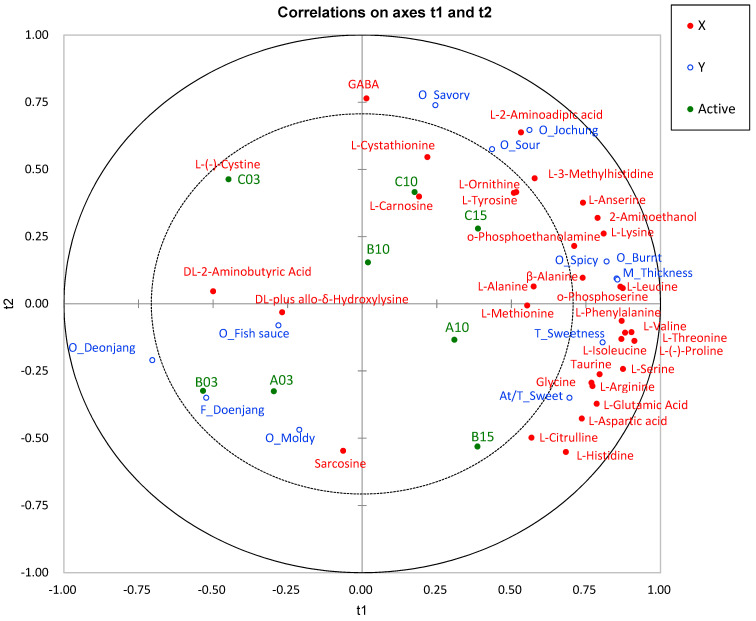
This study investigated the physicochemical properties influencing the sensory characteristics of long-term aged ganjang. Eight ganjang samples aged 3, 10, and 15 years were obtained from three different manufacturers and analyzed for physicochemical characteristics, sensory profiles, and consumer acceptability. The proximate composition (moisture, ash, protein, and crude fat), total solids, salinity, acidity, pH, color (L, a, b, chrome, and hue), 27 free amino acids (FAAs), and volatile compounds were analyzed. Quantitative descriptive analysis was performed by 11 trained panelists for sensory profiles and 102 consumers evaluated consumer acceptability (overall, appearance, odor, taste/flavor, and mouthfeel). The results demonstrated a positive correlation between the aging period and increases in total solids, proteins, crude fat, acidity, color hue, FAA, major volatile compounds, and overall consumer acceptability. Specifically, correlation maps by partial least squares regression between descriptive attributes and FAAs or volatile compounds revealed that these components significantly affected consumer acceptability. Furthermore, sensory attributes such as color intensity, viscosity, sweetness, umami, and aftertaste were positively correlated with consumer preference, whereas attributes such as greenish-brown color, fish sauce-like flavor, and moldy notes were negatively correlated. Overall, these findings could be utilized to enhance the marketability and consumer appeal of long-term aged ganjang products by providing objective information supporting premium values.
本研究调查了影响长期陈酿酱油感官特性的物理化学性质。从三个不同制造商处获取了陈酿3年、10年和15年的8个酱油样品,并对其物理化学特性、感官特征和消费者接受度进行了分析。分析了其近似成分(水分、灰分、蛋白质和粗脂肪)、总固形物、盐度、酸度、pH值、颜色(L、a、b、色度和色调)、27种游离氨基酸(FAA)以及挥发性化合物。由11名经过培训的评判员进行定量描述分析以确定感官特征,102名消费者对消费者接受度(总体、外观、气味、味道/风味和口感)进行了评估。结果表明,陈酿期与总固形物、蛋白质、粗脂肪、酸度、颜色色调、FAA、主要挥发性化合物以及消费者总体接受度的增加呈正相关。具体而言,通过偏最小二乘回归得到的描述性属性与FAA或挥发性化合物之间的相关图表明,这些成分对消费者接受度有显著影响。此外,颜色强度、粘度、甜度、鲜味和余味等感官属性与消费者偏好呈正相关,而绿棕色、鱼露样风味和霉味等属性与消费者偏好呈负相关。总体而言,这些发现可用于通过提供支持高品质价值的客观信息来提高长期陈酿酱油产品的市场适销性和消费者吸引力。