Department of Nutrition, University of California, Davis, CA 95616, USA.
Department of Internal Medicine, Division of Cardiovascular Medicine, University of California, Davis, CA 95616, USA.
Int J Mol Sci. 2024 Oct 17;25(20):11169. doi: 10.3390/ijms252011169.
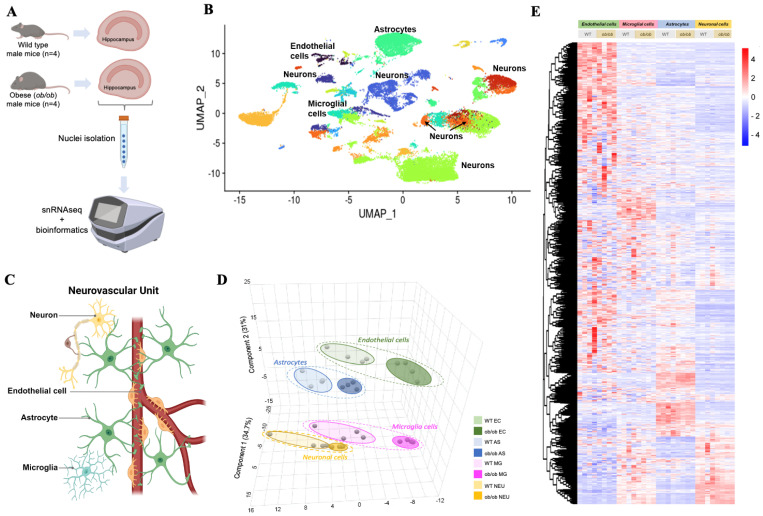
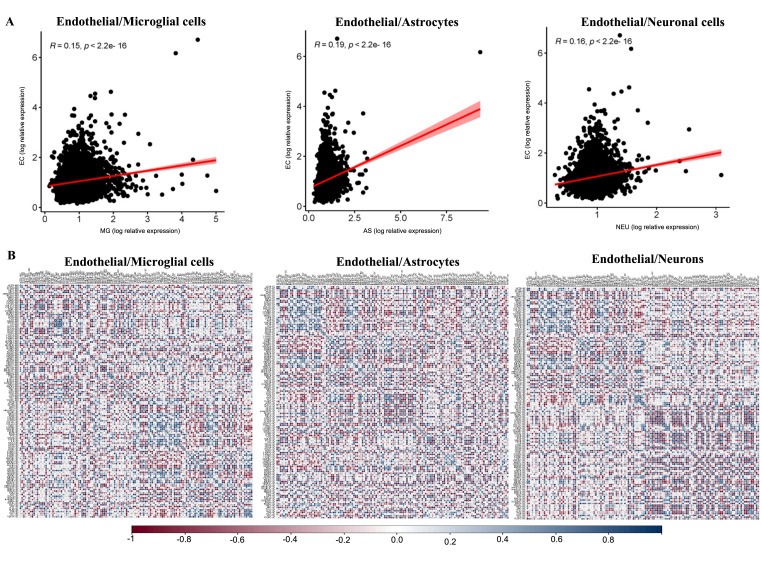
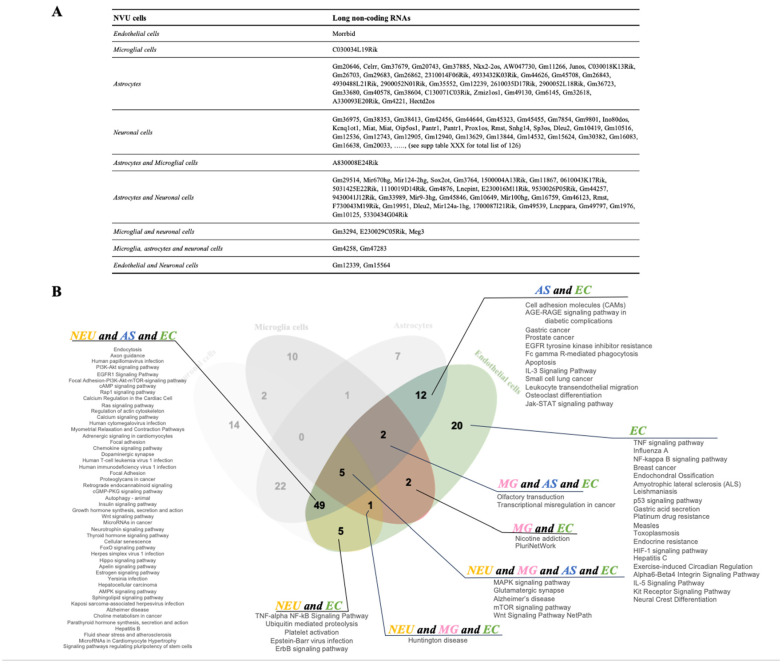
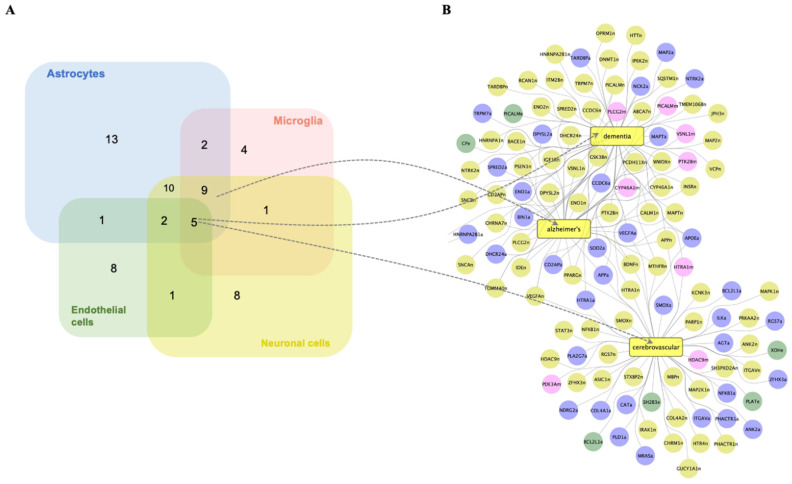
Obesity confers risk for cardiovascular disease and vascular dementia. However, genomic alterations modulated by obesity in endothelial cells in the brain and their relationship to other neurovascular unit (NVU) cells are unknown. We performed single nuclei RNA sequencing (snRNAseq) of the NVU (endothelial cells, astrocytes, microglia, and neurons) from the hippocampus of obese (/) and wild-type (WT) male mice to characterize obesity-induced transcriptomic changes in a key brain memory center and assessed blood-brain barrier permeability (BBB) by gadolinium-enhanced magnetic resonance imaging (MRI). / mice displayed obesity, hyperinsulinemia, and impaired glucose tolerance. snRNAseq profiled 14 distinct cell types and 32 clusters within the hippocampus of / and WT mice and uncovered differentially expressed genes (DEGs) in all NVU cell types, namely, 4462 in neurons, 1386 in astrocytes, 125 in endothelial cells, and 154 in microglia. Gene ontology analysis identified important biological processes such as angiogenesis in endothelial cells and synaptic trafficking in neurons. Cellular pathway analysis included focal adhesion and insulin signaling, which were common to all NVU cell types. Correlation analysis revealed significant positive correlations between endothelial cells and other NVU cell types. Differentially expressed long non-coding RNAs (lncRNAs) were observed in cells of the NVU-affecting pathways such as TNF and mTOR. BBB permeability showed a trend toward increased signal intensity in / mice. Taken together, our study provides in-depth insight into the molecular mechanisms underlying cognitive dysfunction in obesity and may have implications for therapeutic gene targeting.
肥胖会增加心血管疾病和血管性痴呆的风险。然而,肥胖在大脑内皮细胞中调节的基因组改变及其与其他神经血管单元 (NVU) 细胞的关系尚不清楚。我们对肥胖(/)和野生型(WT)雄性小鼠海马体的 NVU(内皮细胞、星形胶质细胞、小胶质细胞和神经元)进行了单核 RNA 测序 (snRNAseq),以描述肥胖在关键脑记忆中心引起的转录组变化,并通过钆增强磁共振成像 (MRI) 评估血脑屏障通透性 (BBB)。/ 小鼠表现出肥胖、高胰岛素血症和葡萄糖耐量受损。snRNAseq 对 / 和 WT 小鼠海马体中的 14 种不同细胞类型和 32 个簇进行了分析,揭示了所有 NVU 细胞类型中差异表达的基因 (DEG),即神经元中有 4462 个、星形胶质细胞中有 1386 个、内皮细胞中有 125 个和小胶质细胞中有 154 个。基因本体分析确定了重要的生物学过程,如内皮细胞中的血管生成和神经元中的突触运输。细胞途径分析包括粘着斑和胰岛素信号,这在所有 NVU 细胞类型中都是共同的。相关性分析显示内皮细胞与其他 NVU 细胞类型之间存在显著的正相关。在影响 TNF 和 mTOR 等途径的 NVU 细胞中观察到差异表达的长非编码 RNA (lncRNA)。BBB 通透性在 / 小鼠中显示出信号强度增加的趋势。总之,我们的研究深入了解了肥胖导致认知功能障碍的分子机制,可能对治疗性基因靶向具有重要意义。