Cao Huynh, Xiao Jeffrey, Baylink David J, Nguyen Vinh, Shim Nathan, Lee Jae, Mallari Dave J R, Wasnik Samiksha, Mirshahidi Saied, Chen Chien-Shing, Abdel-Azim Hisham, Reeves Mark E, Xu Yi
Division of Hematology and Oncology, Department of Medicine, School of Medicine, Loma Linda University, Loma Linda, CA 92354, USA.
Cancer Center, Loma Linda University, Loma Linda, CA 92354, USA.
Biomedicines. 2024 Oct 3;12(10):2250. doi: 10.3390/biomedicines12102250.
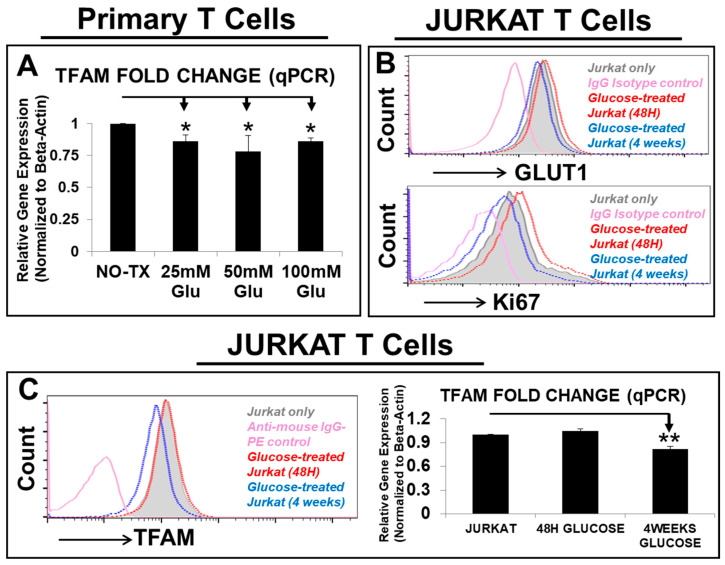
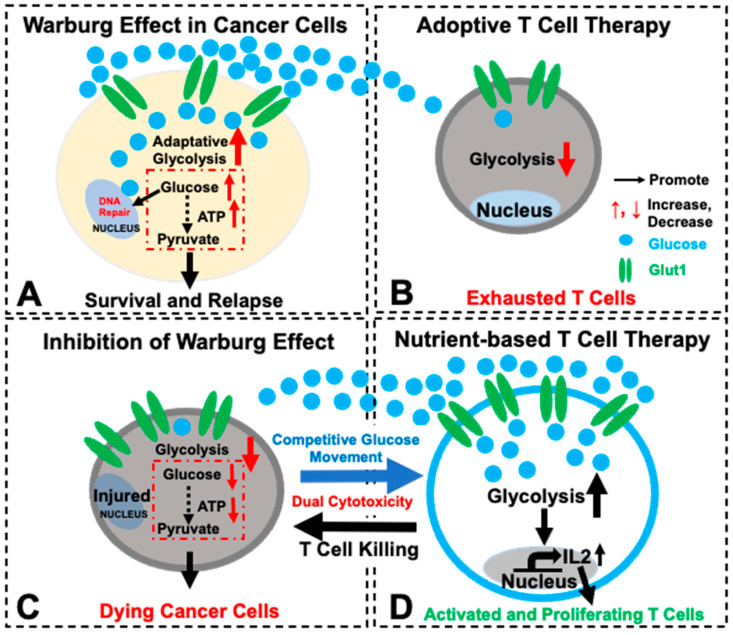
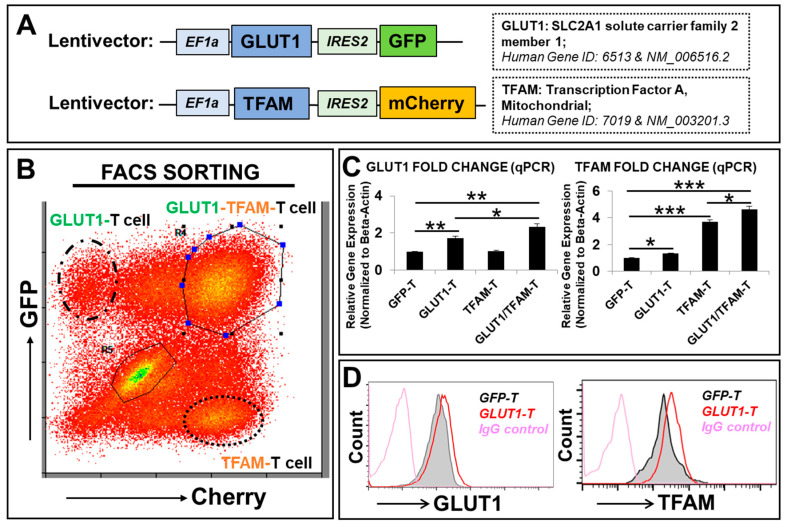
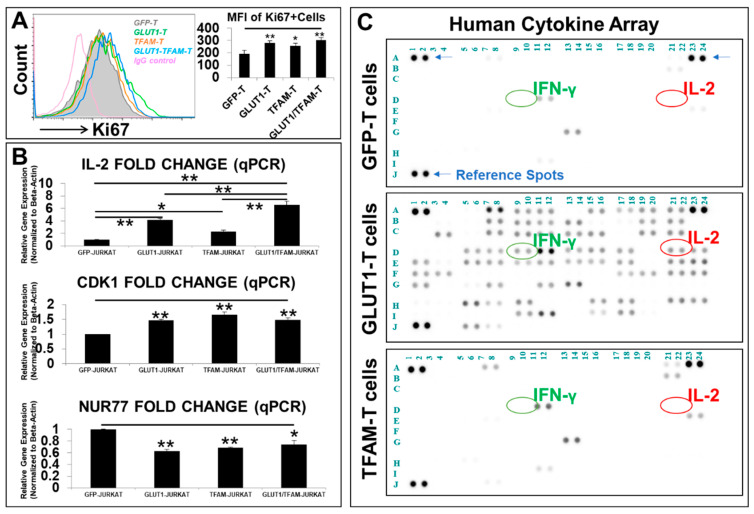
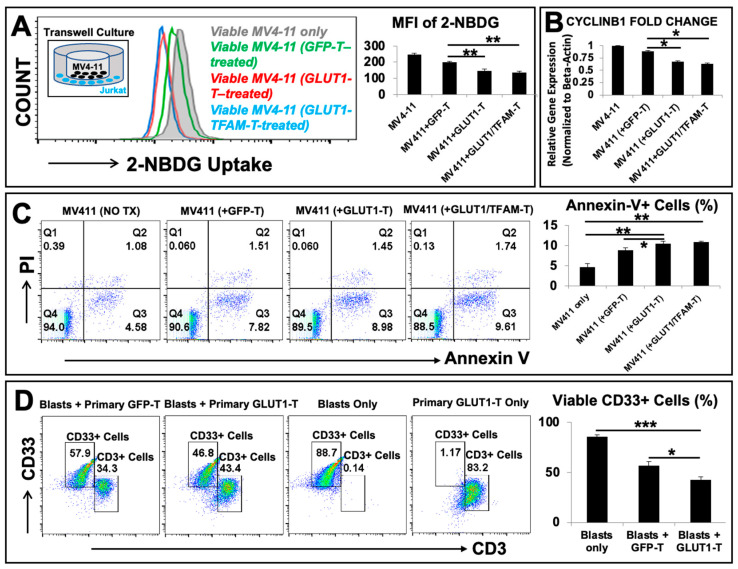
T-cell-based adoptive cell therapies have emerged at the forefront of cancer immunotherapies; however, failed long-term survival and inevitable exhaustion of transplanted T lymphocytes in vivo limits clinical efficacy. Leukemia blasts possess enhanced glycolysis (Warburg effect), exploiting their microenvironment to deprive nutrients (e.g., glucose) from T cells, leading to T-cell dysfunction and leukemia progression. Thus, we explored whether genetic reprogramming of T-cell metabolism could improve their survival and empower T cells with a competitive glucose-uptake advantage against blasts and inhibit their uncontrolled proliferation. Here, we discovered that high-glucose concentration reduced the T-cell expression of glucose transporter GLUT1 () and (mitochondrion transcription factor A), an essential transcriptional regulator of mitochondrial biogenesis, leading to their impaired expansion ex vivo. To overcome the glucose-induced genetic deficiency in metabolism, we engineered T cells with lentiviral overexpression of and/or transgene. Multi-omics analyses revealed that metabolic reprogramming promoted T-cell proliferation by increasing IL-2 release and reducing exhaustion. Moreover, the engineered T cells competitively deprived glucose from allogenic blasts and lessened leukemia burden in vitro. Our findings propose a novel T-cell immunotherapy that utilizes a dual strategy of starving blasts and cytotoxicity for preventing uncontrolled leukemia proliferation.
基于T细胞的过继性细胞疗法已成为癌症免疫疗法的前沿领域;然而,移植的T淋巴细胞在体内长期存活失败以及不可避免的耗竭限制了临床疗效。白血病母细胞具有增强的糖酵解作用(瓦伯格效应),利用其微环境从T细胞中剥夺营养物质(如葡萄糖),导致T细胞功能障碍和白血病进展。因此,我们探讨了T细胞代谢的基因重编程是否可以提高其存活率,并赋予T细胞相对于母细胞具有竞争性的葡萄糖摄取优势,从而抑制其不受控制的增殖。在此,我们发现高葡萄糖浓度降低了葡萄糖转运蛋白GLUT1和线粒体转录因子A(线粒体生物发生的关键转录调节因子)的T细胞表达,导致其在体外的扩增受损。为了克服葡萄糖诱导的代谢基因缺陷,我们通过慢病毒过表达和/或转基因来改造T细胞。多组学分析表明,代谢重编程通过增加白细胞介素-2释放和减少耗竭来促进T细胞增殖。此外,改造后的T细胞在体外竞争性地从同种异体母细胞中摄取葡萄糖,并减轻白血病负担。我们的研究结果提出了一种新型的T细胞免疫疗法,该疗法利用使母细胞饥饿和细胞毒性的双重策略来防止白血病不受控制的增殖。