Department of Stem Cell Transplantation and Cellular Therapy, The University of Texas MD Anderson Cancer Center, Houston, TX, USA.
Department of Bioinformatics and Computational Biology, The University of Texas MD Anderson Cancer Center, Houston, TX, USA.
Sci Adv. 2023 Jul 28;9(30):eadd6997. doi: 10.1126/sciadv.add6997. Epub 2023 Jul 26.
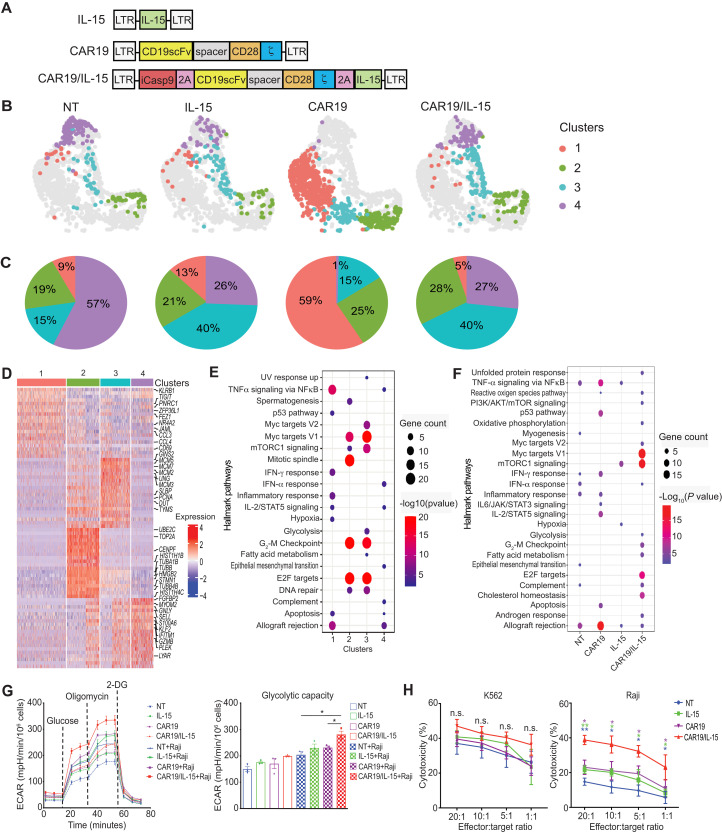
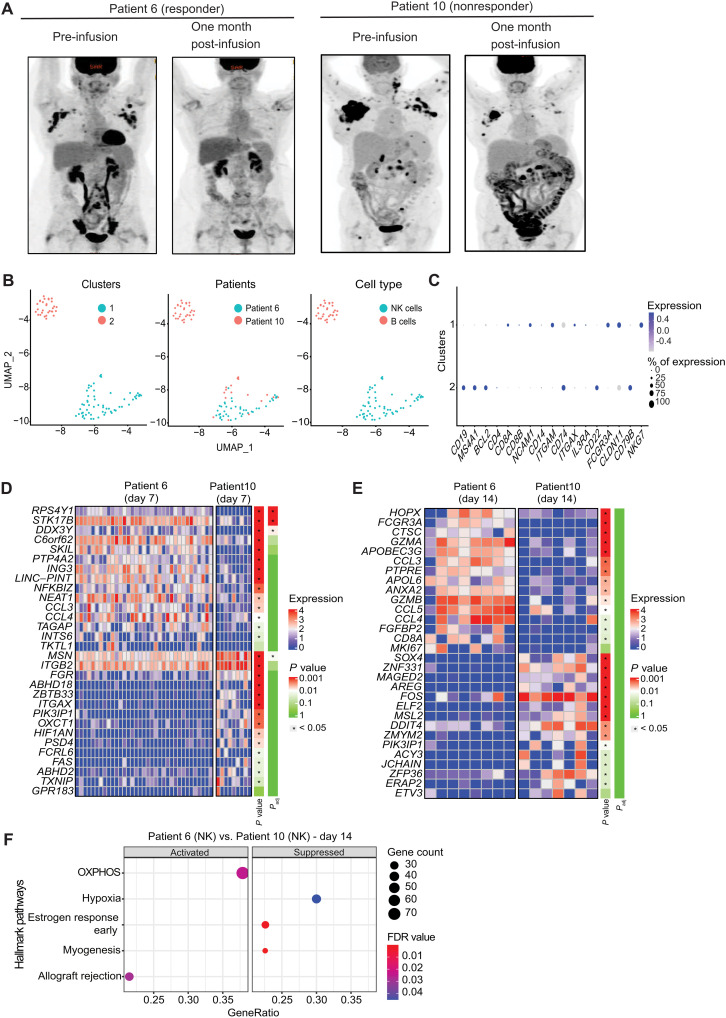
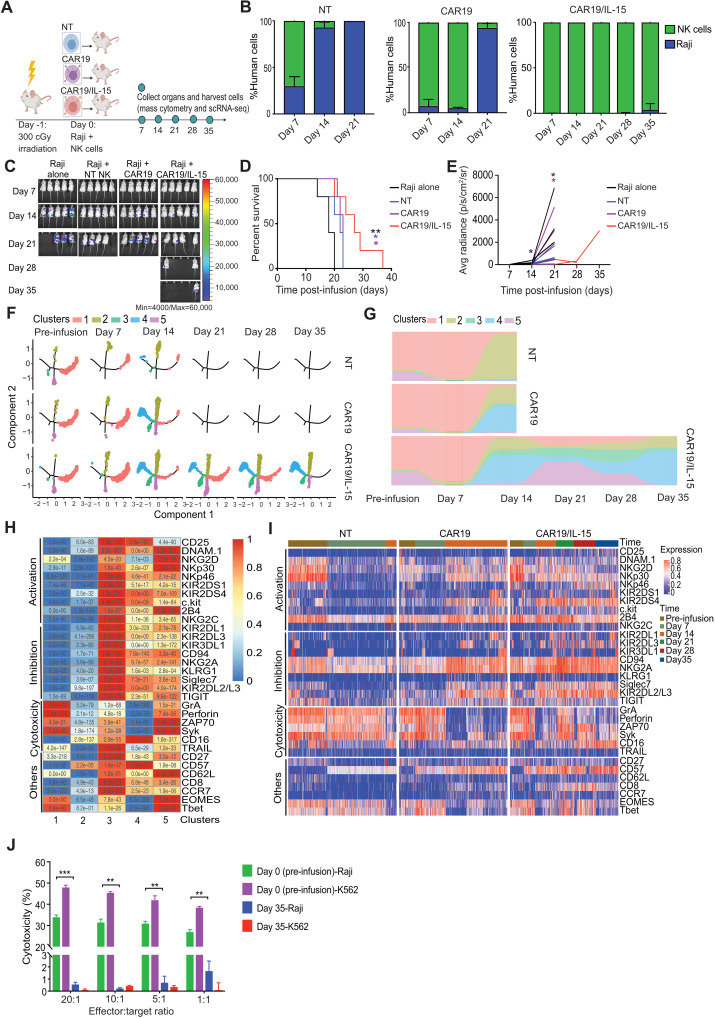
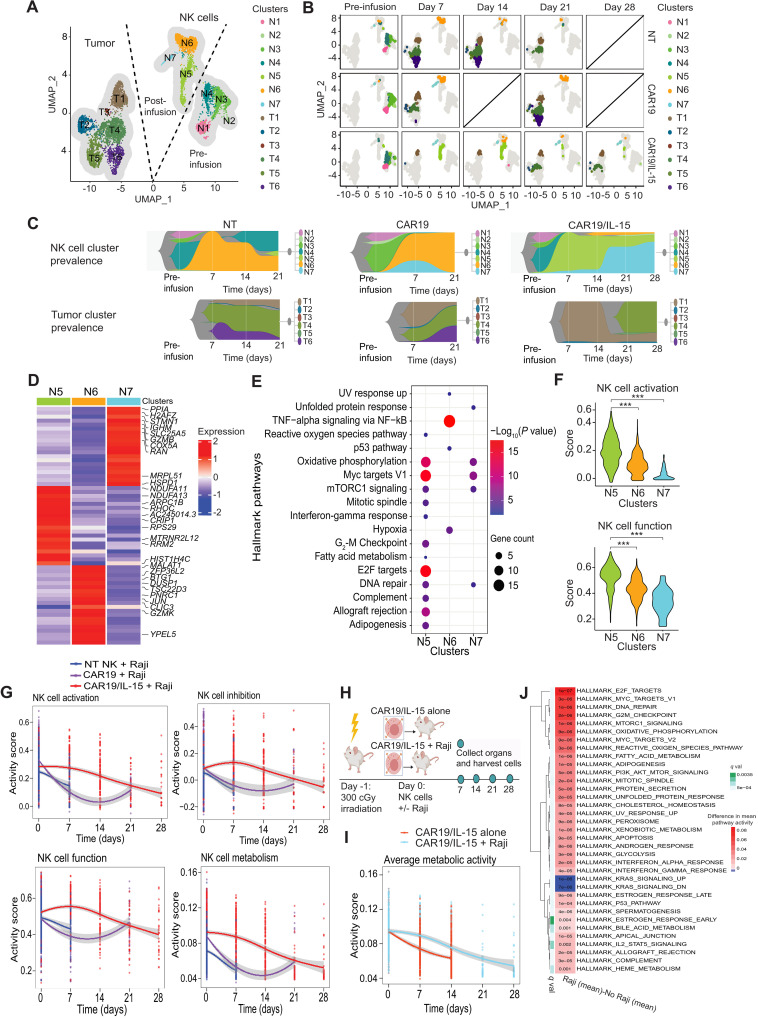
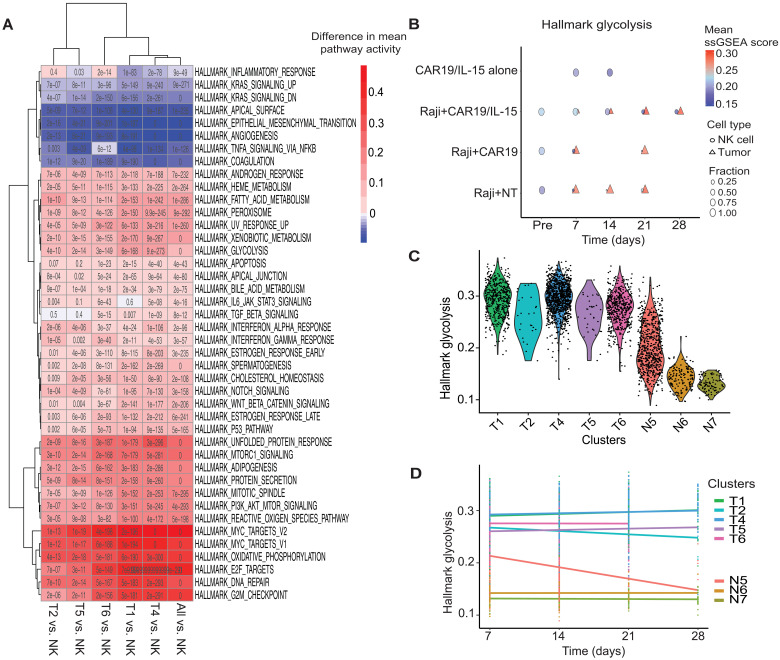
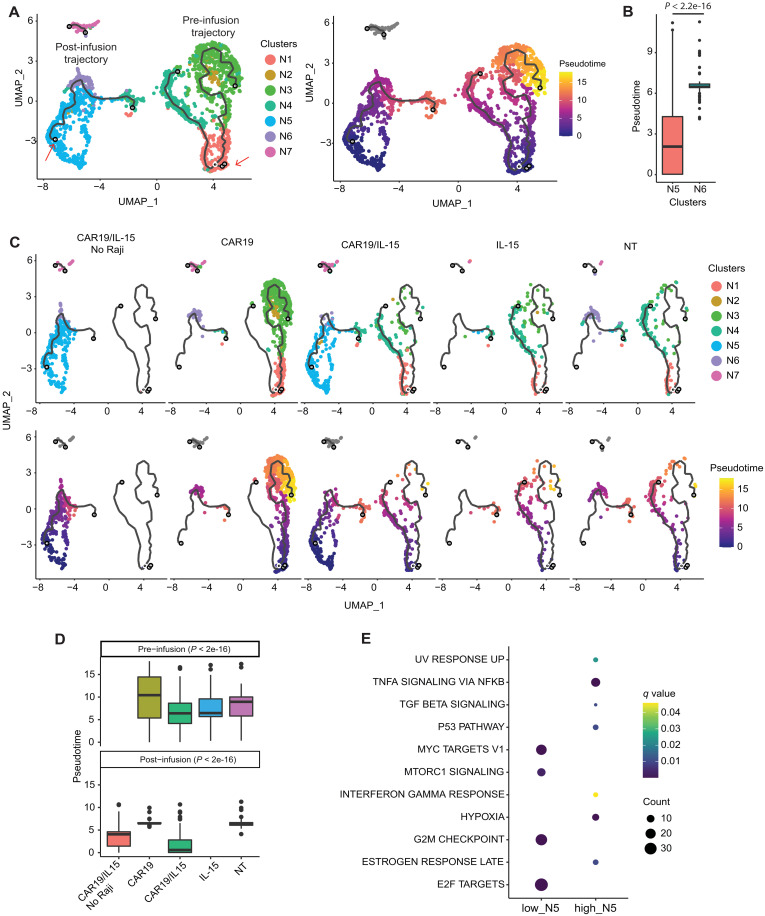
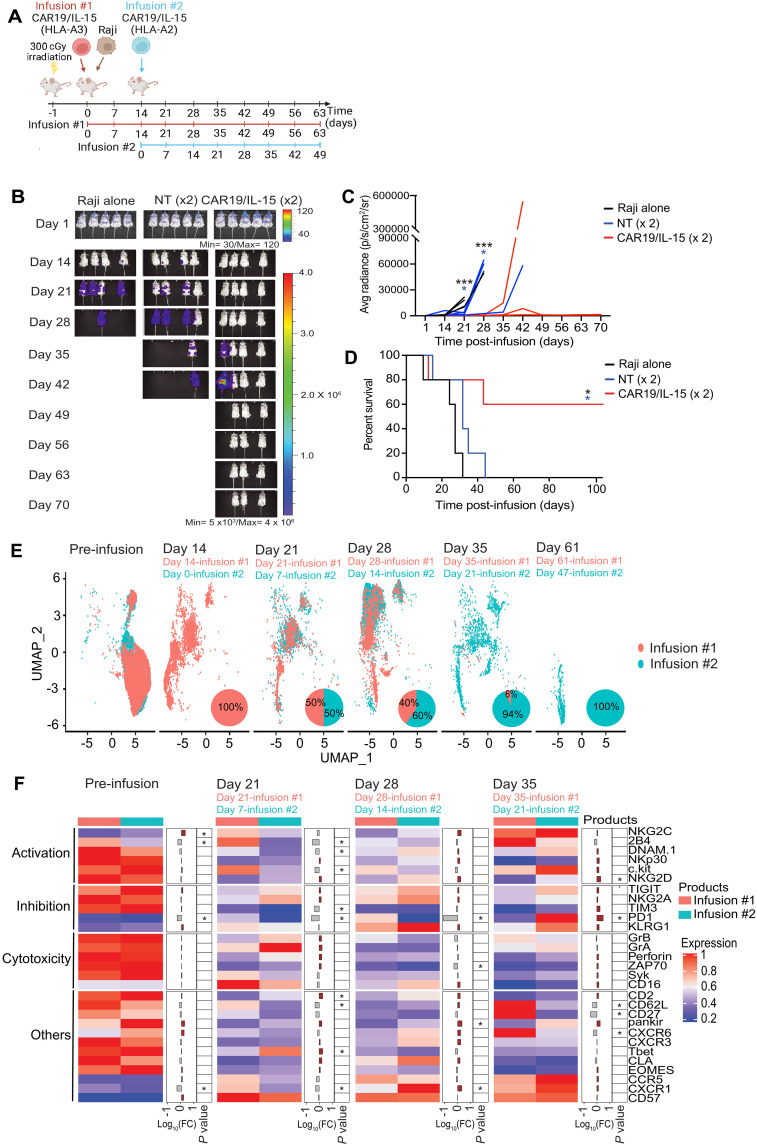
Chimeric antigen receptor (CAR) engineering of natural killer (NK) cells is promising, with early-phase clinical studies showing encouraging responses. However, the transcriptional signatures that control the fate of CAR-NK cells after infusion and factors that influence tumor control remain poorly understood. We performed single-cell RNA sequencing and mass cytometry to study the heterogeneity of CAR-NK cells and their in vivo evolution after adoptive transfer, from the phase of tumor control to relapse. Using a preclinical model of noncurative lymphoma and samples from a responder and a nonresponder patient treated with CAR19/IL-15 NK cells, we observed the emergence of NK cell clusters with distinct patterns of activation, function, and metabolic signature associated with different phases of in vivo evolution and tumor control. Interaction with the highly metabolically active tumor resulted in loss of metabolic fitness in NK cells that could be partly overcome by incorporation of IL-15 in the CAR construct.
嵌合抗原受体 (CAR) 修饰的自然杀伤 (NK) 细胞具有广阔的应用前景,早期临床研究显示出可喜的反应。然而,输注后控制 CAR-NK 细胞命运的转录特征以及影响肿瘤控制的因素仍知之甚少。我们通过单细胞 RNA 测序和质谱细胞术来研究过继转移后 CAR-NK 细胞的异质性及其体内演变,从肿瘤控制到复发的阶段。我们使用非治愈性淋巴瘤的临床前模型以及接受 CAR19/IL-15 NK 细胞治疗的应答者和无应答者患者的样本,观察到具有不同激活、功能和代谢特征的 NK 细胞簇的出现,这些特征与体内演变和肿瘤控制的不同阶段相关。与高度代谢活跃的肿瘤相互作用导致 NK 细胞代谢适应性丧失,而在 CAR 构建中加入 IL-15 可以在一定程度上克服这一问题。