Hwang Ju-Won, Jo Yeong-Seok
Department of Biology Education, Daegu University, Gyeongsan 38453, Republic of Korea.
Animals (Basel). 2024 Oct 18;14(20):3012. doi: 10.3390/ani14203012.
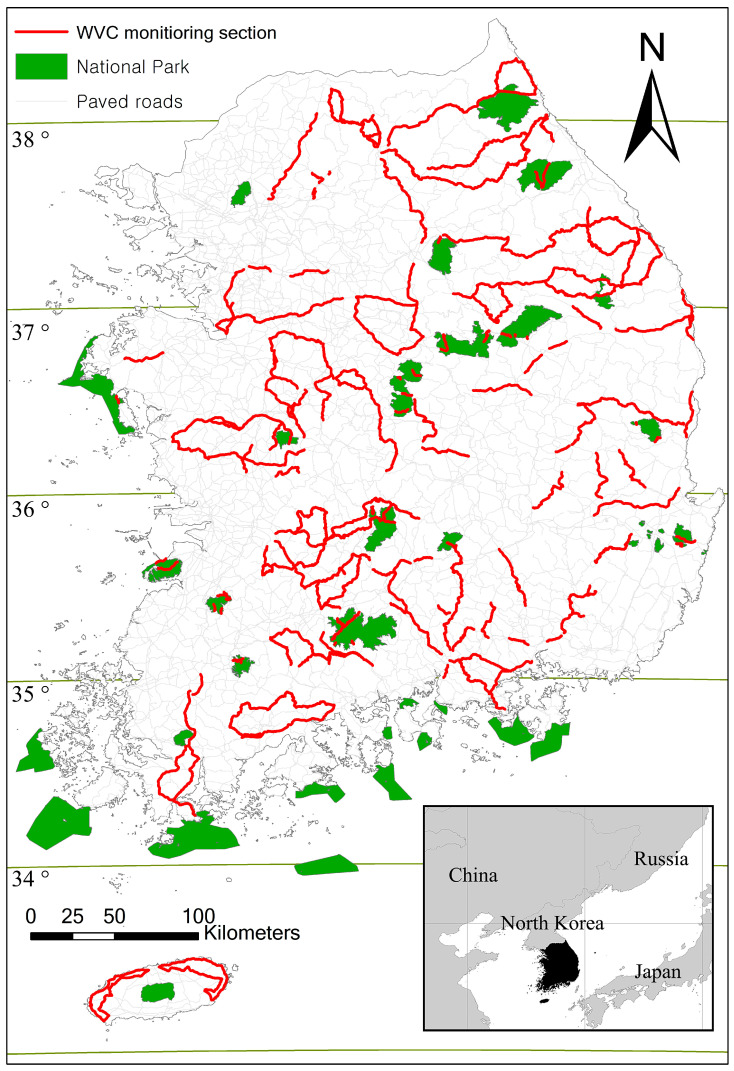
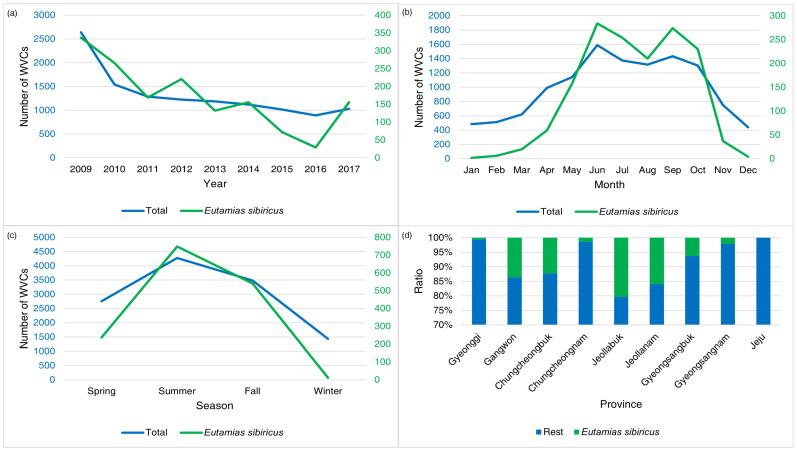
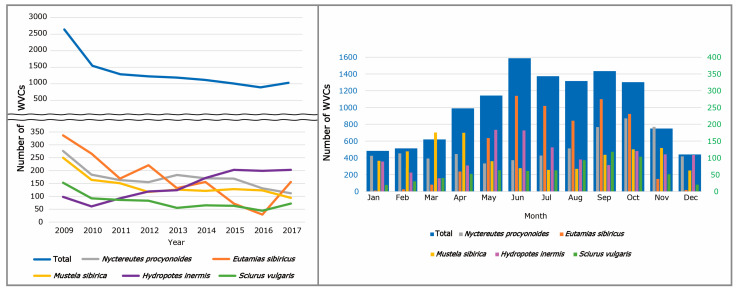
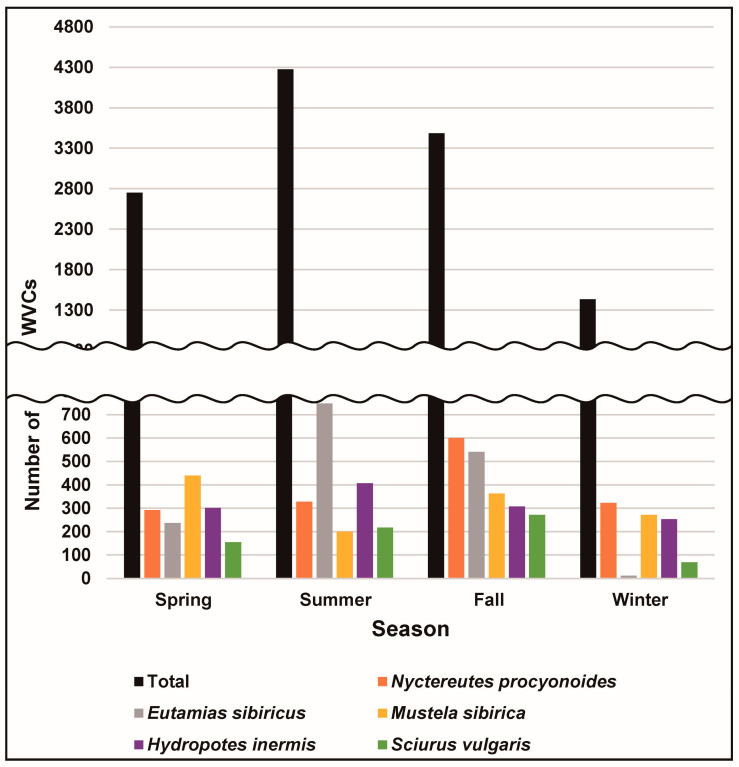
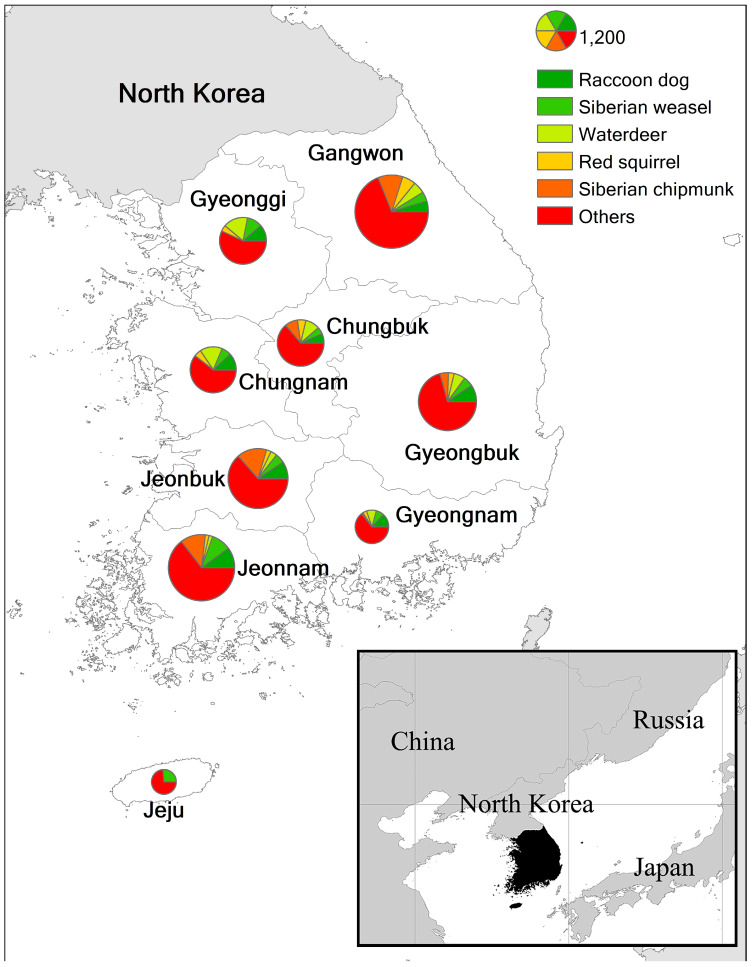
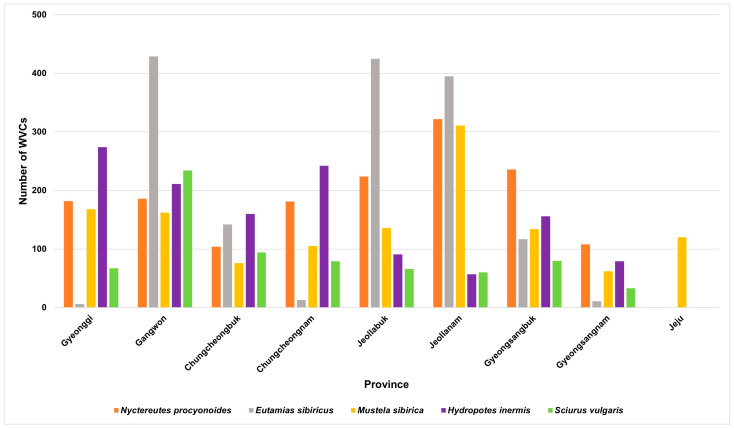
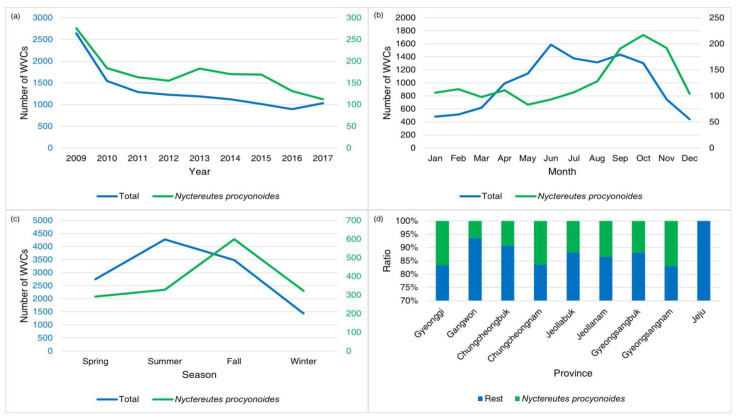
Severe habitat loss and fragmentation due to extensive road development have escalated wildlife-vehicle collisions (WVCs) as one of the major causes of wildlife mortality. This study, spanning 9 years from 2009 to 2017, presents comprehensive WVC data in South Korea, including species composition, seasonal and regional patterns, and road factors influencing WVCs, aiming to analyze their impact and propose effective mitigation strategies. We collected WVC data with road variables for 9 years from 4561 km of nationwide monitoring road sections and analyzed the data to understand the relationship between WVCs and road characteristics, as well as species-specific patterns. A nationwide survey identified 13,606 WVCs involving 143 terrestrial vertebrate species, and patterns and models of the top seven mammal species (raccoon dog (), Siberian chipmunk (), Siberian weasel (), water deer (), red squirrel (), Korean hare (), and leopard cat ()) were presented. Patterns revealed declines in WVCs overall, except for water deer. Although spatial differences in WVCs seemed linked more to wildlife habitats, certain road features correlated both positively or negatively with WVC frequency, highlighting complexities in the effectiveness of preventative measures. For effective mitigation and prevention of WVCs, comprehensive strategies considering species traits, seasonality, and road types should be implemented.
由于大规模道路建设导致的严重栖息地丧失和破碎化,使野生动物与车辆碰撞(WVCs)成为野生动物死亡的主要原因之一。这项研究涵盖了从2009年到2017年的9年时间,呈现了韩国全面的WVC数据,包括物种组成、季节和区域模式以及影响WVCs的道路因素,旨在分析其影响并提出有效的缓解策略。我们从全国4561公里的监测路段收集了9年的WVC数据及道路变量,并对数据进行分析,以了解WVCs与道路特征之间的关系以及特定物种的模式。一项全国性调查确定了13606起涉及143种陆生脊椎动物物种的WVCs,并呈现了前七种哺乳动物物种(貉、西伯利亚花栗鼠、黄鼬、獐、红松鼠、朝鲜野兔和豹猫)的模式和模型。模式显示,除了獐之外,WVCs总体上呈下降趋势。尽管WVCs的空间差异似乎更多地与野生动物栖息地有关,但某些道路特征与WVC频率呈正相关或负相关,这突出了预防措施有效性的复杂性。为了有效缓解和预防WVCs,应实施考虑物种特征、季节性和道路类型的综合策略。