Dermatology, Sexually Transmitted Diseases and Clinical Immunology, School of Medicine, University Warmia and Mazury in Olsztyn, 10-719, Olsztyn, Poland.
Department of Dermatology, Venerology, Allergology - Section for Inflammatory Diseases, UKSH, Campus Lübeck, Lübeck, Germany; Lübeck Institute of Experimental Dermatology, University of Lübeck, Lübeck, Germany.
EBioMedicine. 2024 Nov;109:105423. doi: 10.1016/j.ebiom.2024.105423. Epub 2024 Oct 25.
Vitiligo is an autoimmune disease, characterized by specific destruction of melanocytes. While associations with numerous comorbid conditions, which potentially increase the risk of cardiovascular diseases have been described, data on the risk for cardiovascular disease is inconclusive. To address this relevant knowledge gap, this study aims to identify the risk of cardiovascular disease in vitiligo.
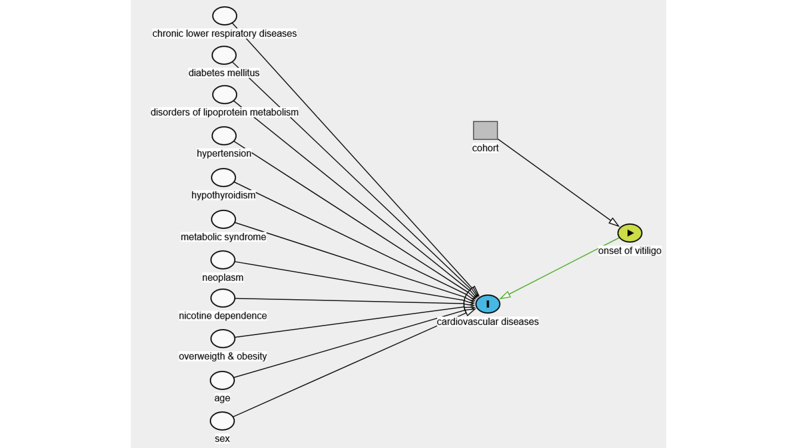
The US Collaborative Network was accessed using the TriNetX platform, allowing retrospective data retrieval from electronic health records (EHRs) from 57 US based health care organizations (HCOs). Patients with vitiligo and controls were identified by their respective ICD10 codes. Risk of onset of several cardiovascular diseases was determined in patients within 15 years after diagnoses.
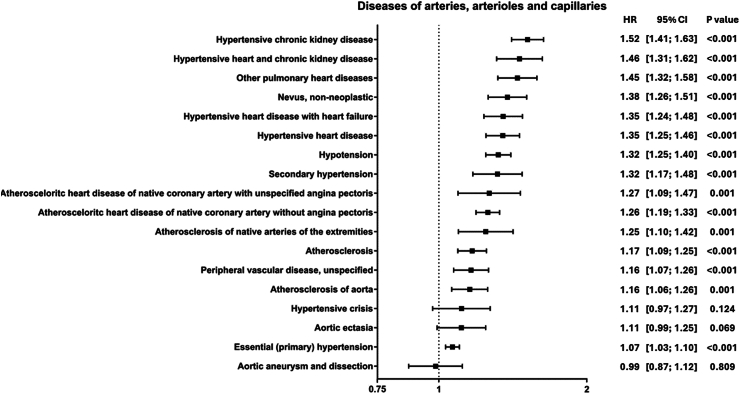
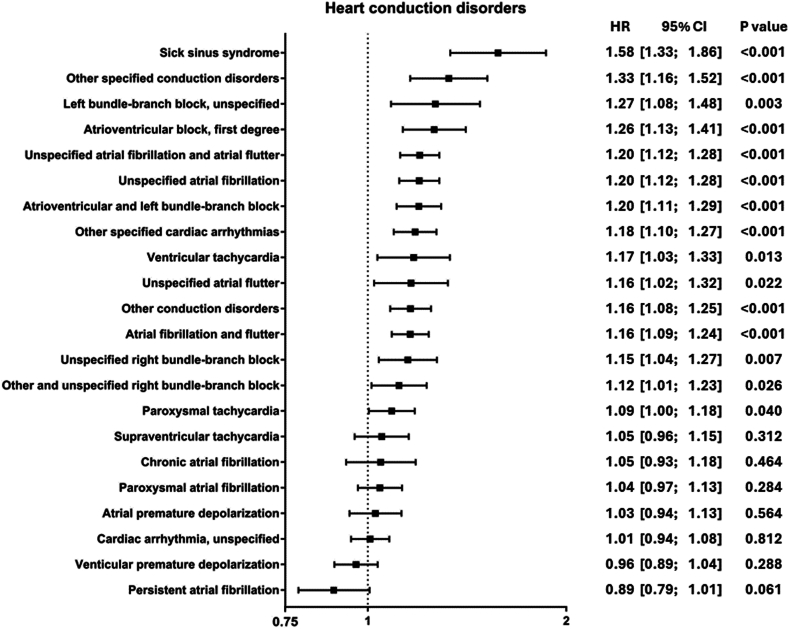
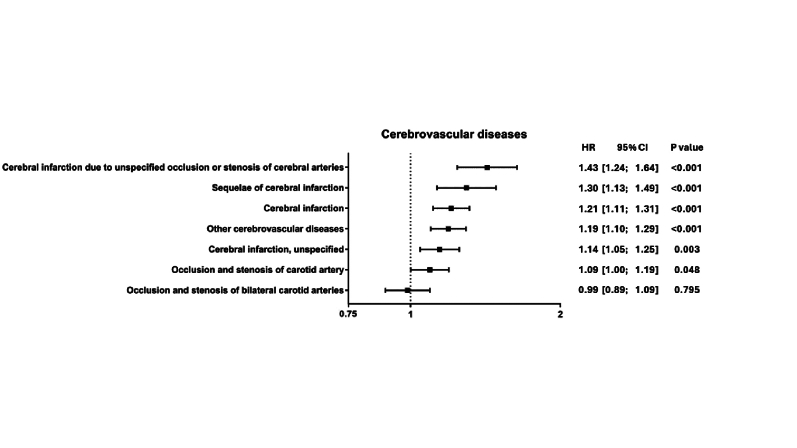
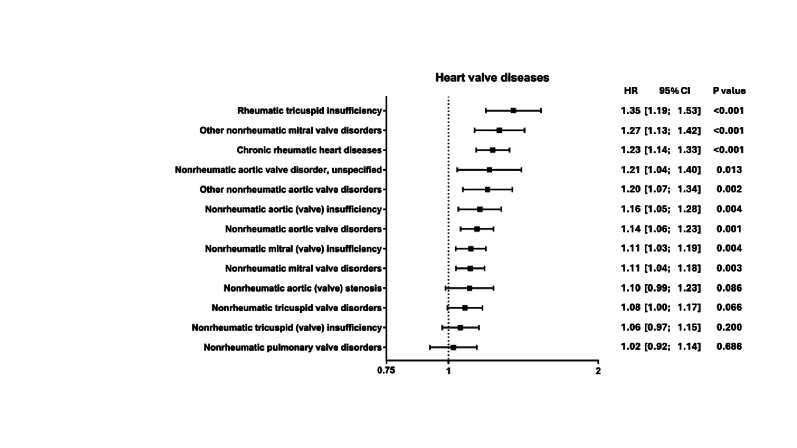
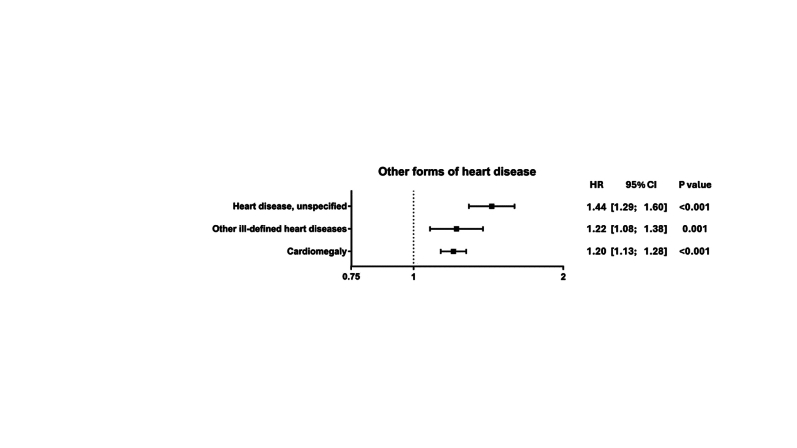
A total of 94 diagnoses with a prevalence of ≥1% in both cohorts, which consisted of 96,581 individuals per group after propensity-score-matching, were identified. Of those, 54 displayed an increased risk in vitiligo. None of the cardiovascular diseases investigated were associated with a decreased risk in patients with vitiligo. Specifically, cerebral infarction occurred in 1.3% of patients with vitiligo, and 1.0% in controls. This difference translated into a hazard ratio (HR) of 1.21 (95% confidence interval [CI] 1.11-1.32, p < 0.001). Venous thromboembolism was recorded in 1.34% of cases and 1.02% of controls without vitiligo, resulting in an increased HR of 1.27 (95% CI 1.171-1.38, p < 0.001). Further, major adverse cardiovascular events (MACE) as a composite endpoint was evaluated. The risk for MACE was increased following a vitiligo diagnosis (HR 1.28, 95% CI 1.22-1.35, p < 0.001), which persisted in both sensitivity analyses.
Patients with vitiligo display an increased risk of onset of cardiovascular diseases as compared to healthy individuals. Thus, vitiligo might require more precise monitoring and systemic treatment.
This research was supported by the Schleswig-Holstein Excellence-Chair Program from the State of Schleswig Holstein, by the Excellence Cluster Precision Medicine in Chronic Inflammation (DFG, EXC 2167), and by DFG Individual Grant LU 877/25-1.
白癜风是一种自身免疫性疾病,其特征是黑色素细胞的特异性破坏。虽然已经描述了与许多合并症的关联,这些合并症可能会增加心血管疾病的风险,但关于心血管疾病风险的数据尚无定论。为了解决这一相关知识空白,本研究旨在确定白癜风患者患心血管疾病的风险。
利用 TriNetX 平台访问美国协作网络,可从 57 家美国医疗保健组织(HCO)的电子健康记录(EHR)中进行回顾性数据检索。通过各自的 ICD10 代码识别白癜风患者和对照组。在诊断后 15 年内,确定患者发生几种心血管疾病的发病风险。
在两个队列中均有 94 种患病率≥1%的诊断,经倾向评分匹配后,每组有 96581 人。其中 54 种在白癜风患者中显示出更高的风险。在所研究的心血管疾病中,没有一种与白癜风患者的风险降低相关。具体来说,脑梗死在白癜风患者中的发生率为 1.3%,对照组为 1.0%。这一差异转化为 1.21 的风险比(95%置信区间[CI]1.11-1.32,p<0.001)。静脉血栓栓塞在病例中记录为 1.34%,无白癜风对照组为 1.02%,这导致风险比增加到 1.27(95%CI1.171-1.38,p<0.001)。此外,评估了主要不良心血管事件(MACE)作为复合终点。与健康个体相比,白癜风诊断后发生 MACE 的风险增加(HR1.28,95%CI1.22-1.35,p<0.001),这在两项敏感性分析中均持续存在。
与健康个体相比,白癜风患者患心血管疾病的发病风险增加。因此,白癜风可能需要更精确的监测和系统治疗。
这项研究得到了石勒苏益格-荷尔斯泰因州卓越主席计划、德国卓越集群精准医学在慢性炎症(DFG,EXC 2167)和 DFG 个人资助 LU 877/25-1 的支持。