Wu Chih-Shou, Lee Tsung-Xiang, Lin Shih-Kang, Cai Jhih-You, Yang Tsung-Hsun, Yu Yeh-Wei, Sun Ching-Cherng
Department of Optical and Photonics, National Central University, Chung-Li, 320317, Taiwan.
Graduate Institute of Color and Illumination Technology, National Taiwan University of Science and Technology, Taipei, 10607, Taiwan.
Sci Rep. 2024 Oct 27;14(1):25665. doi: 10.1038/s41598-024-77235-7.
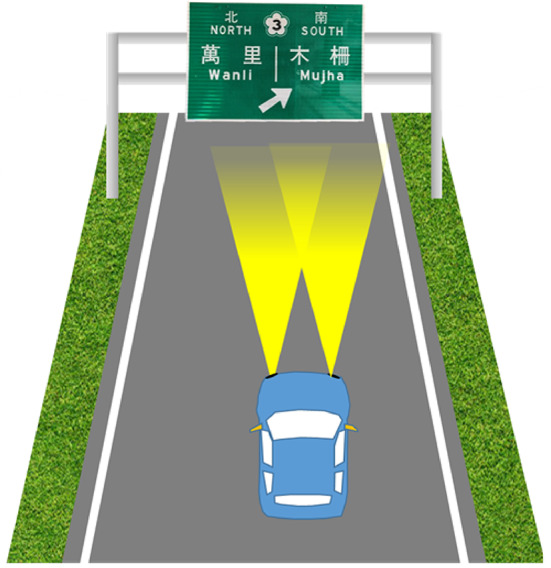
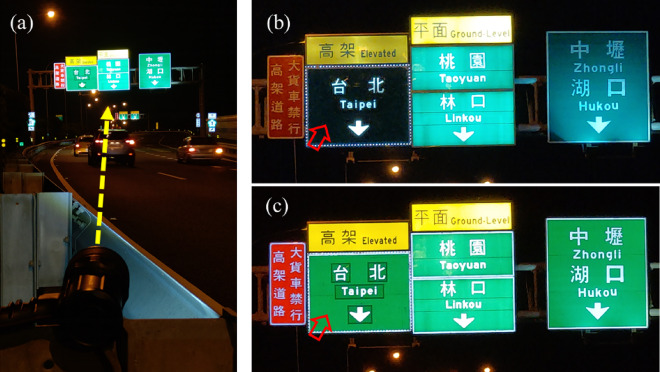
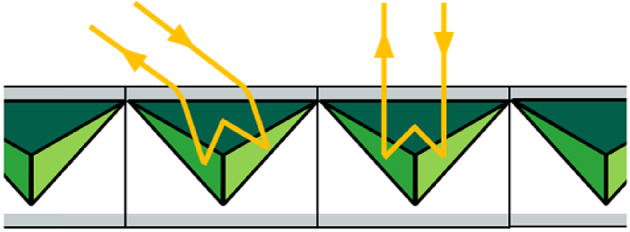
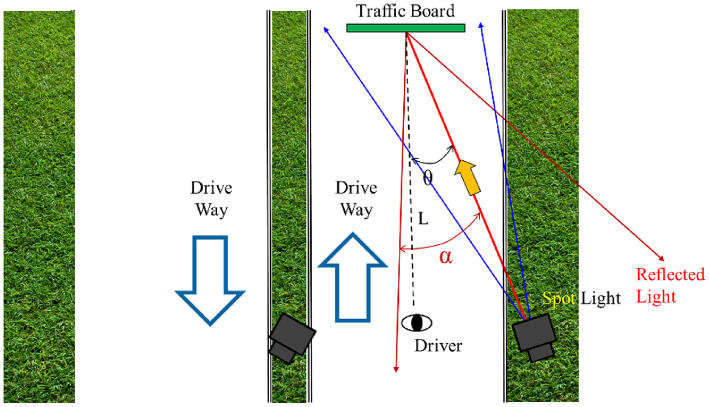
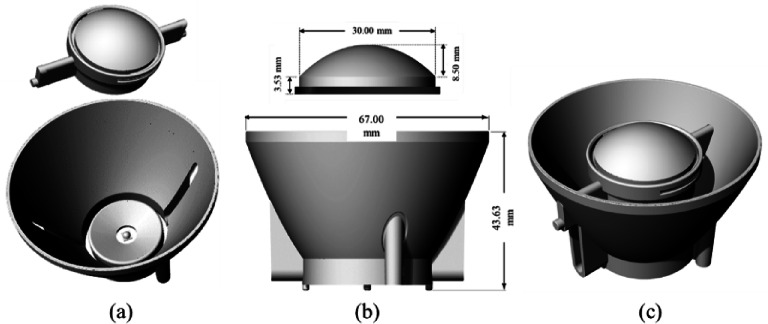
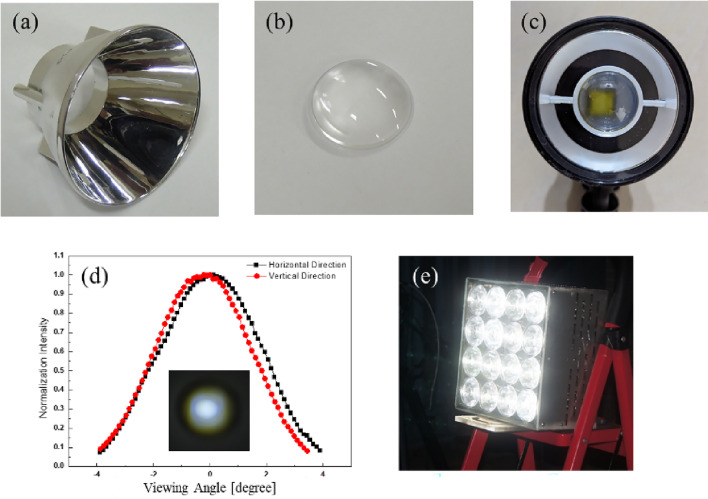
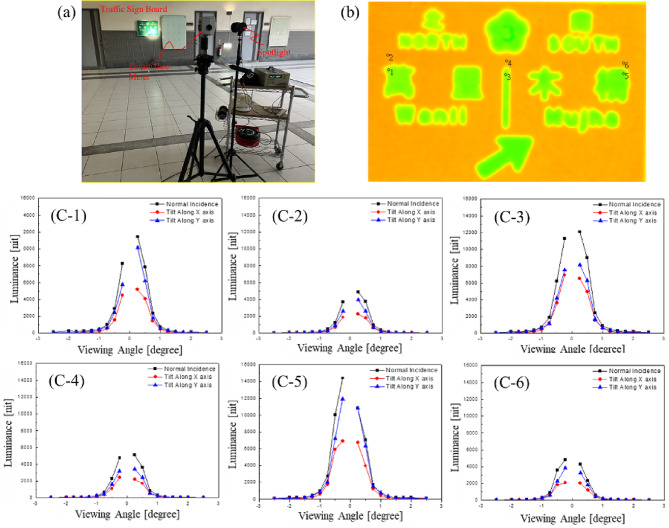
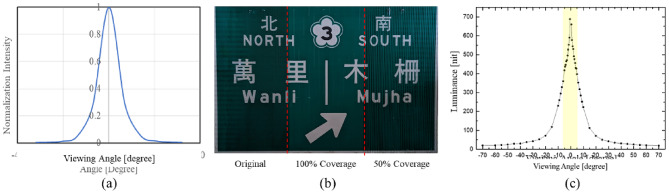
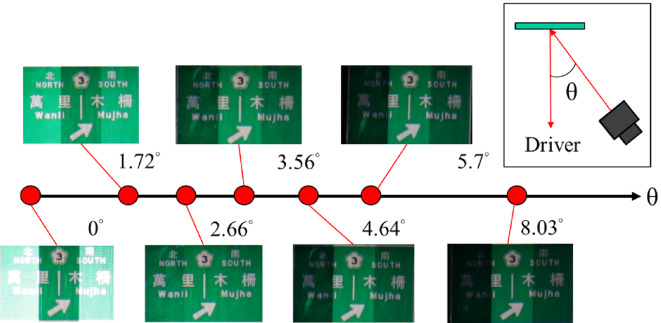
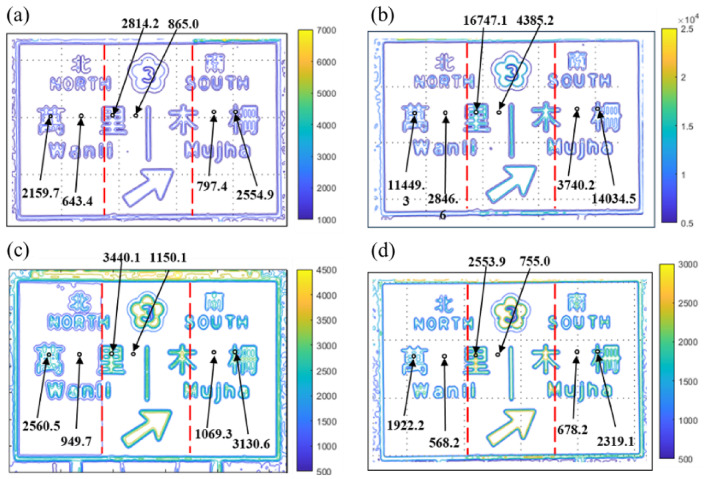
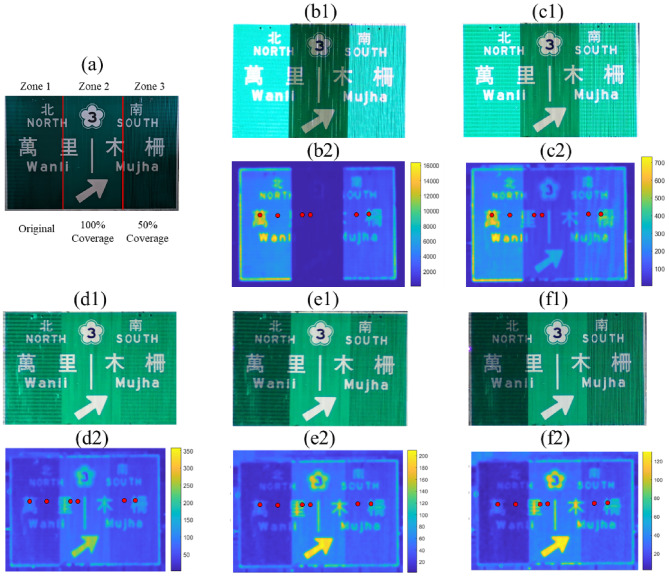
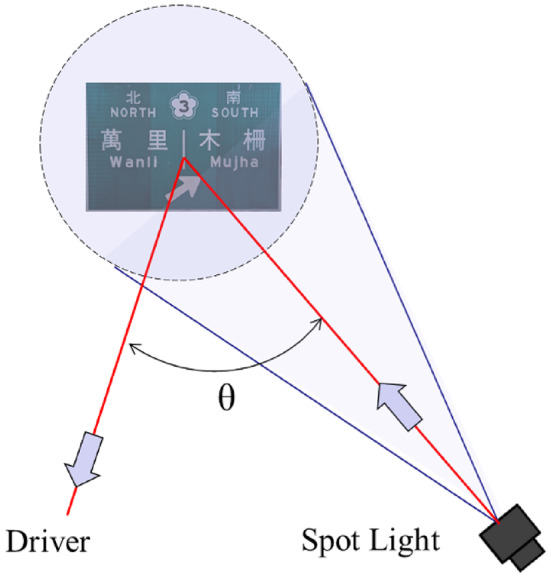
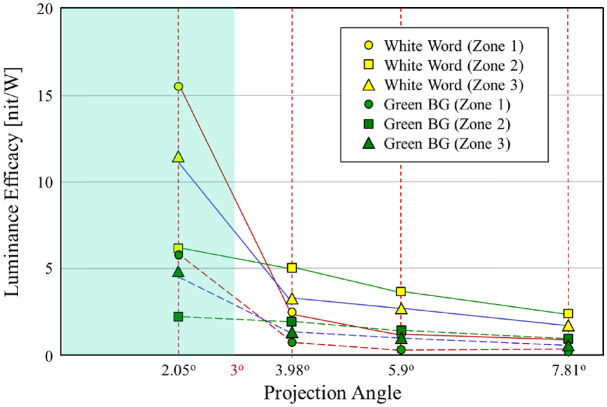
In this paper, we present a groundbreaking approach to enhance the illumination of traffic boards along superhighways, addressing significant challenges associated with conventional lighting systems. Our innovative method revolves around the strategic placement of remote spotlights at the side of the roadway to illuminate traffic signs equipped with retroreflector film (RTRF). The essence of our approach lies in remote illumination, which requires meticulous adjustment of the divergence angle of the spotlights to match the size of the signs and their distance from the projection source. To achieve the desired spotlight configuration, we have developed a hybrid optical system that incorporates a paraboloid reflector and a lens mounted on a bridge holder situated on top of the mirror. Through spot light illumination, we discovered that the initial divergence angle of the RTRF was too narrow. To improve projection angle tolerance, we recommend attaching a light diffuser film onto the surface of the RTRF. The coverage area ratio of the diffuser film can be adjusted to select the desired divergence angle for the reflected light. Our experimental measurements have yielded significant results, showcasing the half-divergent angle of the RTRF ranging from 3° to 7° for different coverage area ratios of the diffuser. In practical terms, with a target luminance of 300 nits at the white word on the traffic board, the power consumption of the spotlight fixture of the roadway was only 40 W, representing over 75% power savings when compared to traditional lighting methods. Consequently, our approach opts to utilize spotlights for illuminating specific traffic boards on superhighways, offering a more efficient and manageable lighting solution that greatly benefits both motorists and road maintenance personnel.
在本文中,我们提出了一种开创性的方法来增强高速公路上交通标志的照明,解决与传统照明系统相关的重大挑战。我们的创新方法围绕着在道路一侧战略性地放置远程聚光灯,以照亮配备了反光膜(RTRF)的交通标志。我们方法的核心在于远程照明,这需要精心调整聚光灯的发散角度,以匹配标志的尺寸及其与投影源的距离。为了实现所需的聚光灯光配置,我们开发了一种混合光学系统,该系统结合了一个抛物面反射器和一个安装在镜子顶部桥架上的透镜。通过聚光照明,我们发现RTRF的初始发散角太窄。为了提高投影角度容差,我们建议在RTRF表面附上一层光扩散膜。可以调整扩散膜的覆盖面积比,以选择反射光所需的发散角。我们的实验测量取得了显著成果,展示了不同扩散膜覆盖面积比下RTRF的半发散角在3°到7°之间。实际上,在交通标志上白色文字的目标亮度为300尼特时,道路聚光灯装置的功耗仅为40瓦,与传统照明方法相比,节能超过75%。因此,我们的方法选择使用聚光灯来照亮高速公路上的特定交通标志,提供了一种更高效、更易于管理的照明解决方案,这对驾车者和道路维护人员都大有裨益。