Lee Minju, Schimek Alice, Cicone Claudia, Andreani Paola, Popping Gergo, Sommovigo Laura, Appleton Philip N, Bischetti Manuela, Cantalupo Sebastiano, Chen Chian-Chou, Dannerbauer Helmut, De Breuck Carlos, Di Mascolo Luca, Emonts Bjorn H C, Hatziminaoglou Evanthia, Pensabene Antonio, Rizzo Francesca, Rybak Matus, Shen Sijing, Lundgren Andreas, Booth Mark, Klaassen Pamela, Mroczkowski Tony, Cordiner Martin A, Johnstone Doug, van Kampen Eelco, Liu Daizhong, Maccarone Thomas, Saintonge Amelie, Smith Matthew, Thelen Alexander E, Wedemeyer Sven
Cosmic Dawn Center (DAWN), Copenhagen, Denmark.
DTU-Space, Technical University of Denmark, Lyngby, Capital Region of Denmark, Denmark.
Open Res Eur. 2024 Jun 13;4:117. doi: 10.12688/openreseurope.17452.1. eCollection 2024.
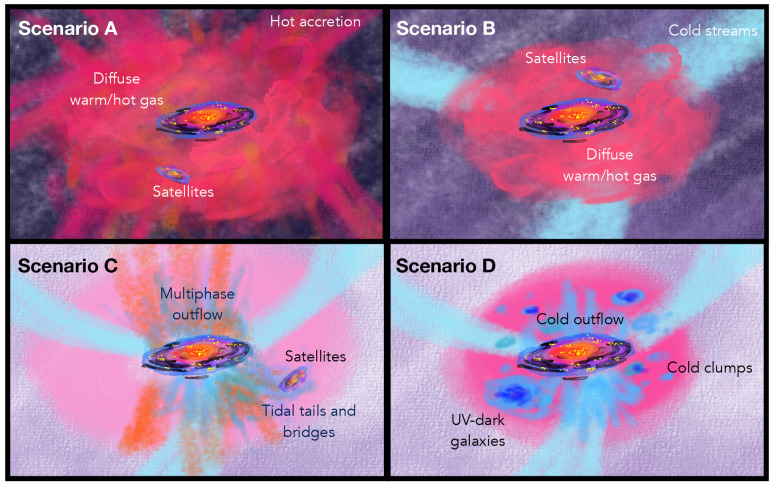
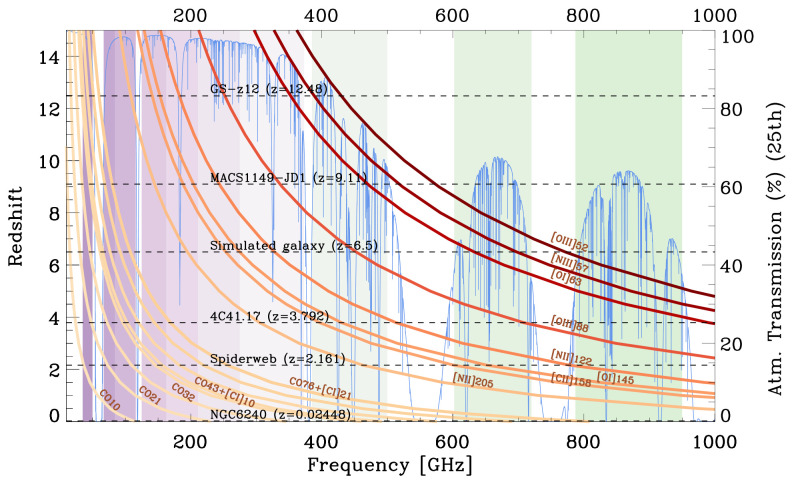
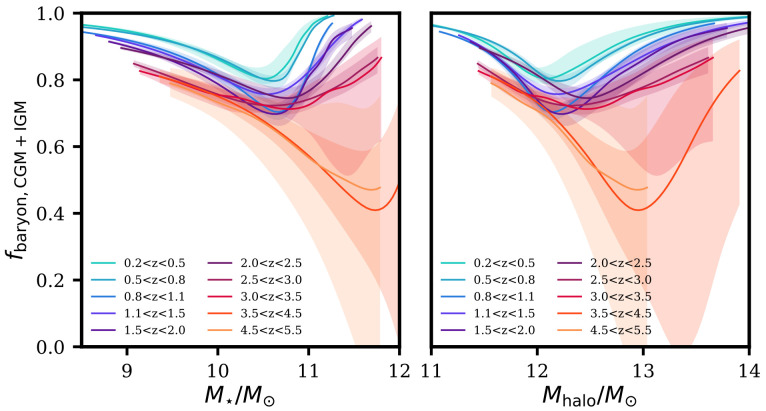
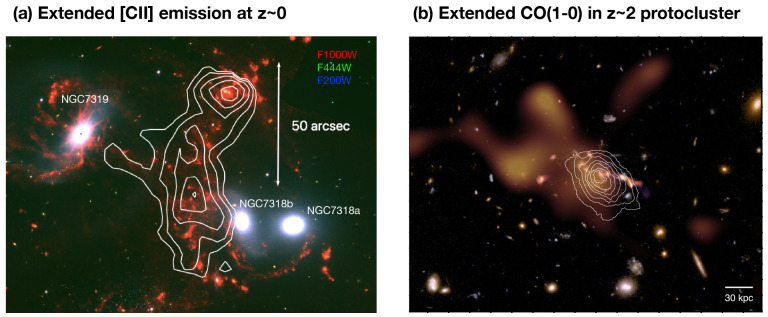
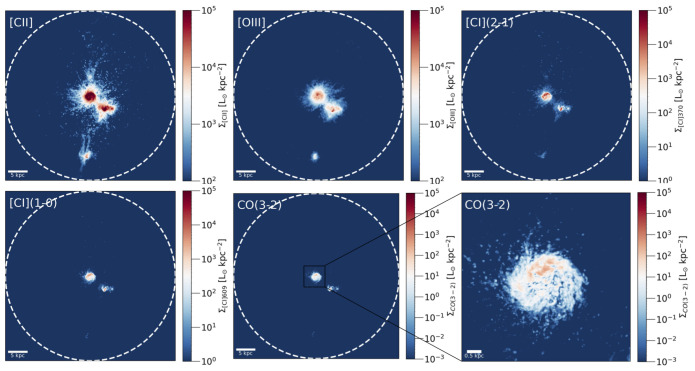
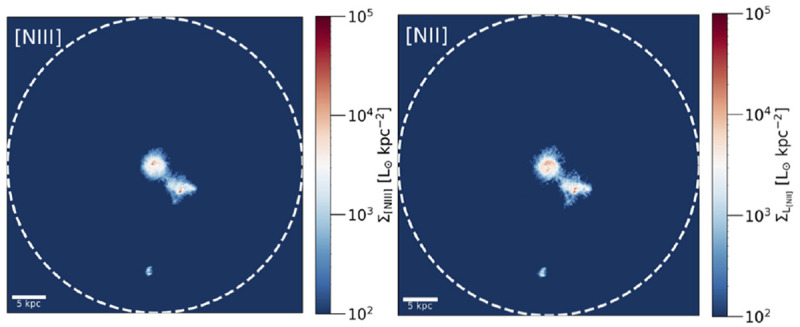
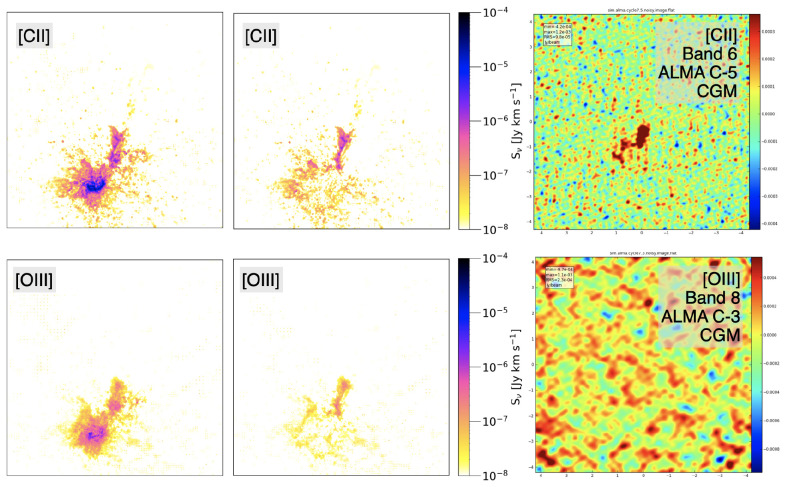
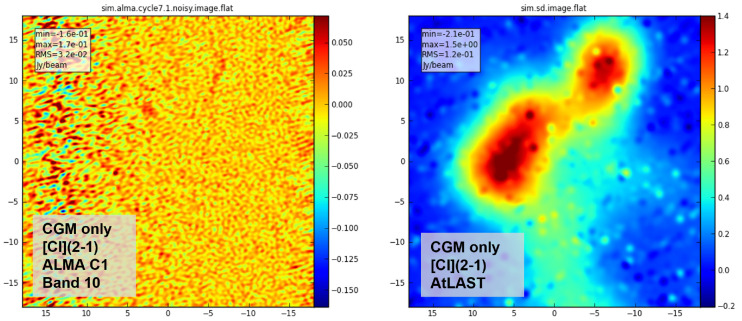
Our knowledge of galaxy formation and evolution has incredibly progressed through multi-wavelength observational constraints of the interstellar medium (ISM) of galaxies at all cosmic epochs. However, little is known about the physical properties of the more diffuse and lower surface brightness reservoir of gas and dust that extends beyond ISM scales and fills dark matter haloes of galaxies up to their virial radii, the circumgalactic medium (CGM). New theoretical studies increasingly stress the relevance of the latter for understanding the feedback and feeding mechanisms that shape galaxies across cosmic times, whose cumulative effects leave clear imprints into the CGM. Recent studies are showing that a - so far unconstrained - fraction of the CGM mass may reside in the cold ( < 10 K) molecular and atomic phase, especially in high-redshift dense environments. These gas phases, together with the warmer ionised phase, can be studied in galaxies from ∼ 0 to ∼ 10 through bright far-infrared and sub-millimeter emission lines such as [C ii] 158 m, [O iii] 88 m, [C I] 609 m, [C i] 370 m, and the rotational transitions of CO. Imaging such hidden cold CGM can lead to a breakthrough in galaxy evolution studies but requires a new facility with the specifications of the proposed Atacama Large Aperture Submillimeter Telescope (AtLAST). In this paper, we use theoretical and empirical arguments to motivate future ambitious CGM observations with AtLAST and describe the technical requirements needed for the telescope and its instrumentation to perform such science.
通过对所有宇宙时期星系星际介质(ISM)的多波段观测限制,我们对星系形成和演化的认识取得了令人难以置信的进展。然而,对于更弥散、表面亮度更低的气体和尘埃储库的物理性质,我们却知之甚少。这些气体和尘埃延伸超出了ISM尺度,填充了星系的暗物质晕直至其质心半径,即星系际介质(CGM)。新的理论研究越来越强调后者对于理解跨越宇宙时间塑造星系的反馈和物质供应机制的相关性,这些机制的累积效应在CGM中留下了清晰的印记。最近的研究表明,CGM质量中一个迄今未受限制的部分可能存在于冷(<10 K)分子和原子相中,特别是在高红移致密环境中。这些气相,连同温度较高的电离相,可以通过明亮的远红外和亚毫米发射线,如[C ii]158μm、[O iii]88μm、[C I]609μm、[C i]370μm以及CO的转动跃迁,在红移约为0至约10的星系中进行研究。对这种隐藏的冷CGM进行成像可能会在星系演化研究中带来突破,但需要一个具备拟议中的阿塔卡马大型毫米波望远镜(AtLAST)规格的新设施。在本文中,我们使用理论和经验论据来推动未来利用AtLAST进行雄心勃勃的CGM观测,并描述望远镜及其仪器进行此类科学研究所需的技术要求。