From the Sorbonne Université (J.F., C.B., L.G.-N., E.M., A.T., F.M., C.L., V.Z.), Institut du Cerveau - Paris Brain Institute - ICM, Inserm, CNRS, APHP, Hôpital Pitié Salpétrière Univ. Hosp., DMU Neuroscience 6; Inst. of Cardiometabolism and Nutrition (F.I., M.P.), Sorbonne-universités-Upmc 06, INSERM, CNRS; Laboratoire des Signaux et Systèmes (L2S) (A.G., A.T.), CNRS-CentraleSupélec, Université Paris-Saclay; Sorbonne Université (B.S.), Institut du Cerveau - Paris Brain Institute - ICM, Inserm, CNRS, APHP, Hôpital St. Antoine-HUEP; and INSERM (B.F.), SU, AP-HP, Centre de recherche en Myologie-UMR974 and Service of Neuro-Myology, Institute of Myology, University hospital Pitié-Salpêtriere.
Neurol Neuroimmunol Neuroinflamm. 2024 Nov;11(6):e200312. doi: 10.1212/NXI.0000000000200312. Epub 2024 Oct 28.
In multiple sclerosis (MS), immune cells invade the CNS and destroy myelin. Macrophages contribute to demyelination and myelin repair, and their role in each process depends on their ability to acquire specific phenotypes in response to external signals. In this article, we assess whether defects in MS patient macrophage responses may lead to increased inflammation or lack of neuroregenerative effects.
CD14CD16 monocytes from patients with MS and healthy controls (HCs) were activated in vitro to obtain homeostatic-like, proinflammatory, and proregenerative macrophages. Macrophage activation profiles were assessed through RNA sequencing and metabolomics. Surface molecule expression of CD14, CD16, and HLA-DR and myelin phagocytic capacity were evaluated with flow cytometry. Macrophage supernatant capacity to influence oligodendrocyte precursor cell differentiation toward an astrocytic or oligodendroglia fate was also tested.
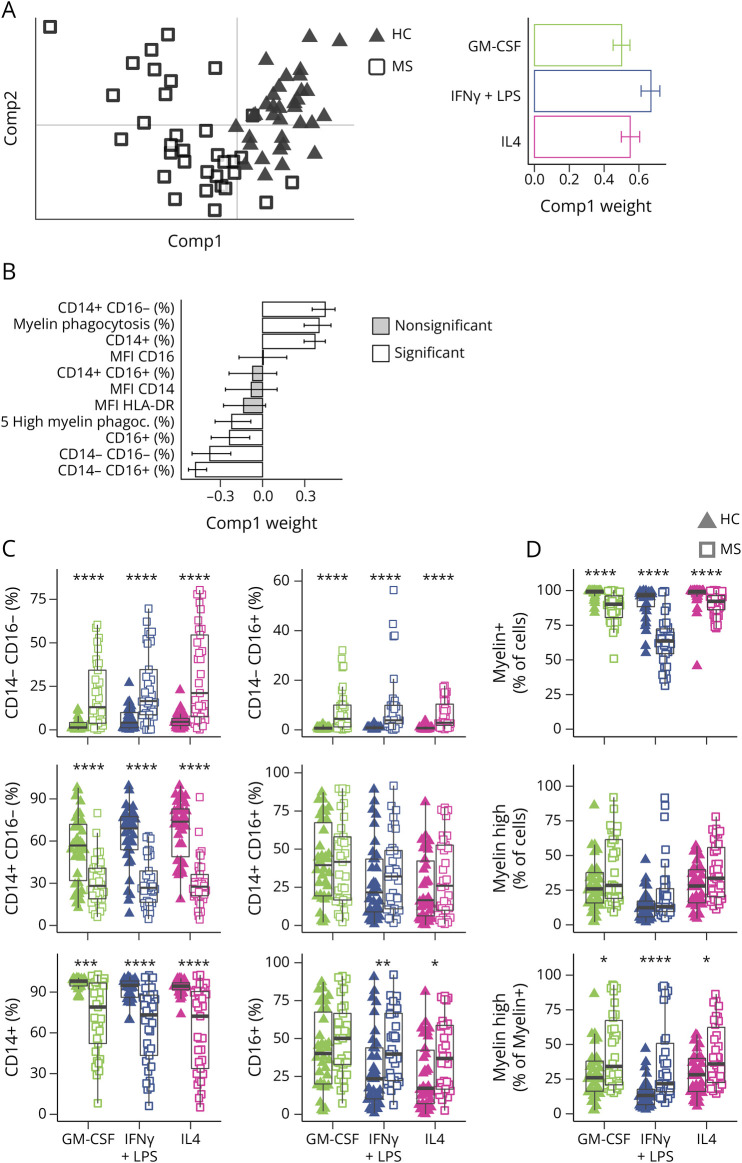
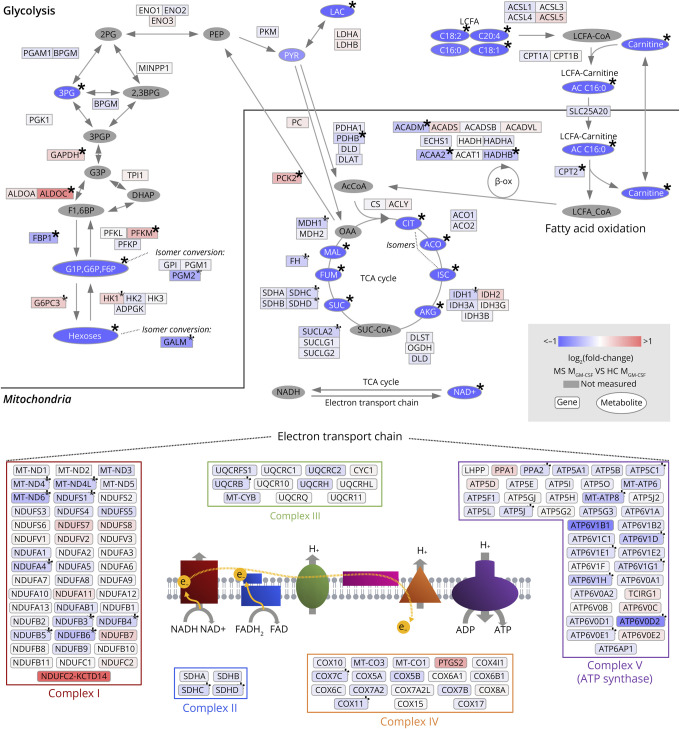
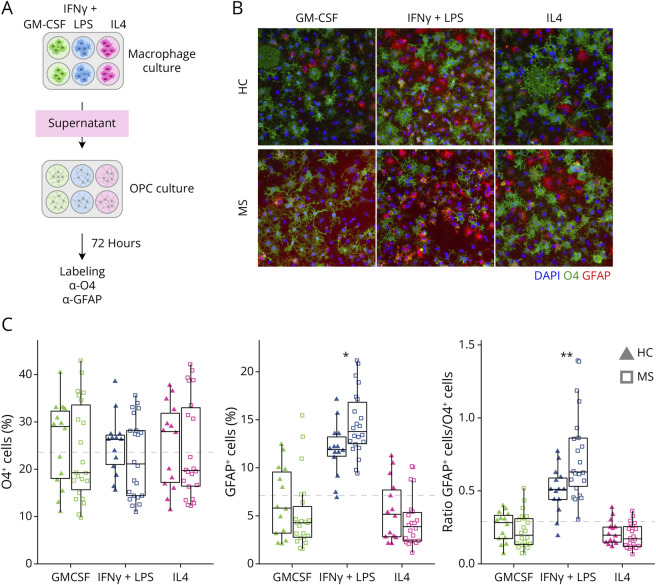
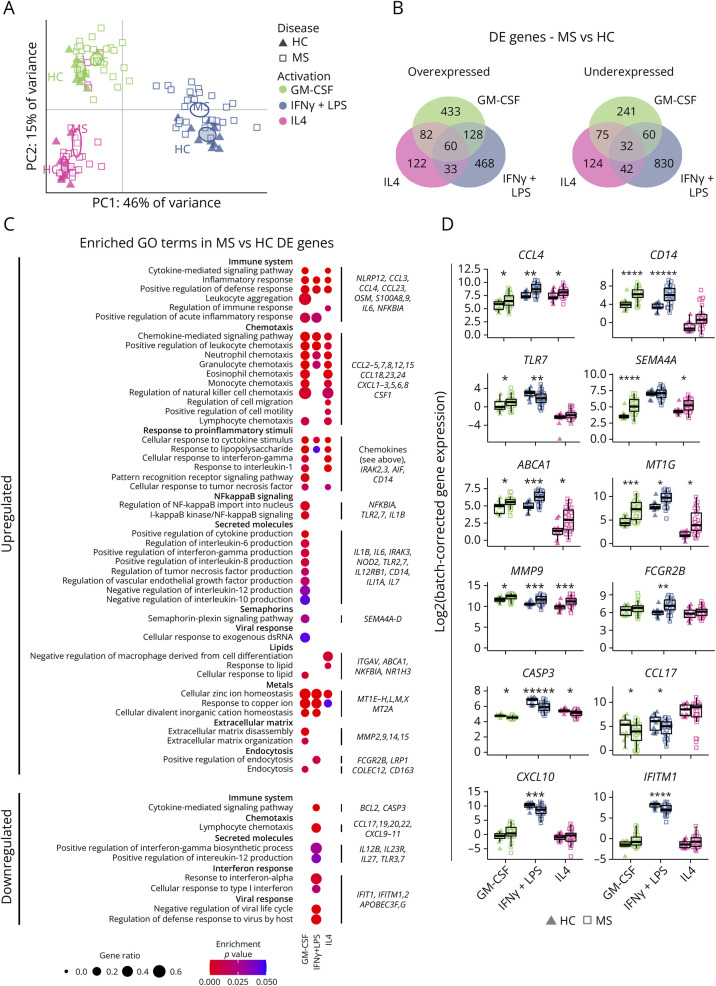
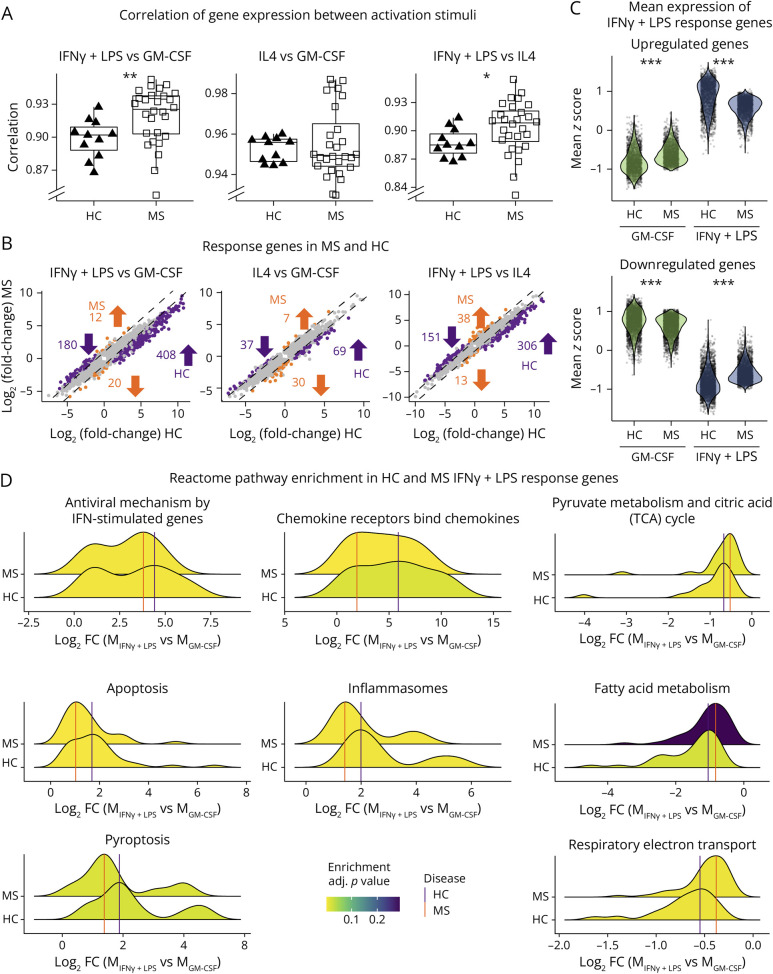
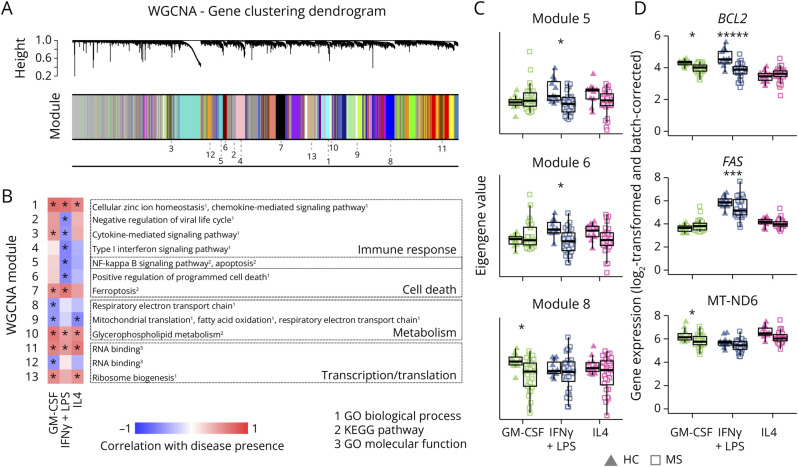
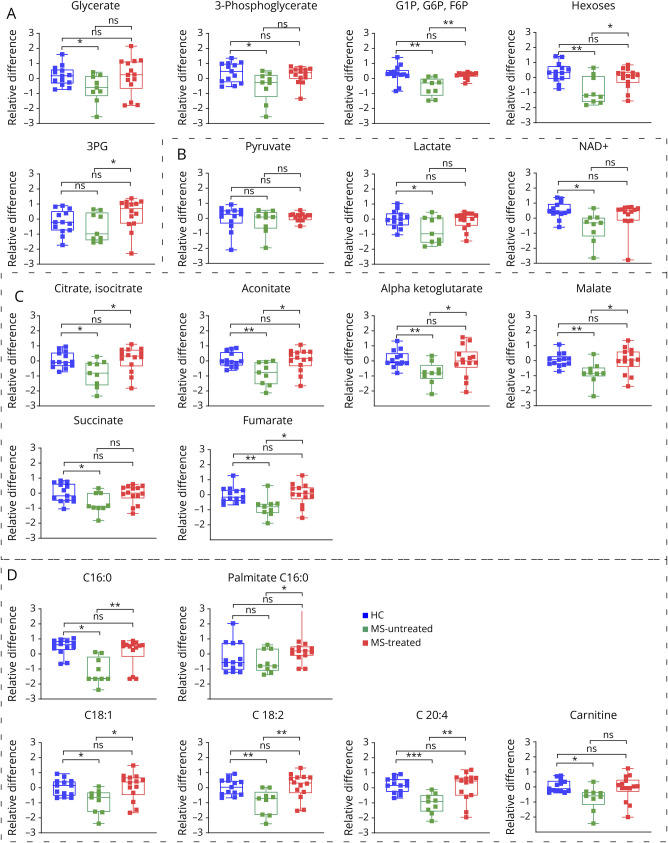
We observed that MS patient monocytes ex vivo recapitulate their preferential activation toward the CD16 phenotype, a subset of proinflammatory cells overrepresented in MS lesions. Functionally, MS patient macrophages display a decreased capacity to phagocytose human myelin and a deficit of processing myelin after ingestion. In addition, MS patient macrophage supernatant favors astrocytes over oligodendrocyte differentiation when compared with HC macrophage supernatant. Furthermore, even when exposed to homeostatic or proregenerative stimuli, MS patient macrophages uphold a proinflammatory transcriptomic profile with higher levels of cytokine/chemokine. Of interest, MS patient macrophages exhibit a distinct metabolic signature with a mitochondrial energy metabolism blockage. Transcriptomic data are further substantiated by metabolomics studies that reveal perturbations in the corresponding metabolic pathways.
Our results show an intrinsic defect of MS patient macrophages, reminiscent of innate immune cell memory in MS, lifting macrophage importance in the disease and as potential therapeutic targets.
在多发性硬化症(MS)中,免疫细胞侵入中枢神经系统并破坏髓鞘。巨噬细胞有助于脱髓鞘和髓鞘修复,其在每个过程中的作用取决于它们在响应外部信号时获得特定表型的能力。在本文中,我们评估了 MS 患者巨噬细胞反应的缺陷是否会导致炎症增加或缺乏神经再生作用。
从 MS 患者和健康对照(HC)的 CD14+CD16−单核细胞中体外激活获得稳态样、促炎和促修复巨噬细胞。通过 RNA 测序和代谢组学评估巨噬细胞激活谱。用流式细胞术评估 CD14、CD16 和 HLA-DR 的表面分子表达和吞噬髓鞘的能力。还测试了巨噬细胞上清液影响少突胶质细胞前体细胞向星形胶质细胞或少突胶质细胞命运分化的能力。
我们观察到,MS 患者的单核细胞在体外重现了它们向 CD16 表型的优先激活,而 CD16 表型是 MS 病变中过度表达的促炎细胞亚群。功能上,MS 患者的巨噬细胞吞噬人髓鞘的能力降低,并且在吞噬后处理髓鞘的能力受损。此外,与 HC 巨噬细胞上清液相比,MS 患者巨噬细胞上清液有利于星形胶质细胞而不是少突胶质细胞分化。此外,即使暴露于稳态或促修复刺激物,MS 患者的巨噬细胞仍保持促炎转录组谱,细胞因子/趋化因子水平更高。有趣的是,MS 患者的巨噬细胞表现出独特的代谢特征,存在线粒体能量代谢障碍。代谢组学研究进一步证实了转录组数据,揭示了相应代谢途径的扰动。
我们的结果表明 MS 患者的巨噬细胞存在内在缺陷,类似于 MS 中的固有免疫细胞记忆,凸显了巨噬细胞在疾病中的重要性及其作为潜在治疗靶点的潜力。