Department of Bioinformatics, Matthias Schleiden Institute, Friedrich Schiller University Jena, Ernst-Abbe-Pl. 2, Jena, 07743, Thuringia, Germany.
International Max Planck Research School 'Chemical Communication in Ecological Systems', Jena, 07745, Thuringia, Germany.
Sci Rep. 2024 Oct 28;14(1):25771. doi: 10.1038/s41598-024-74771-0.
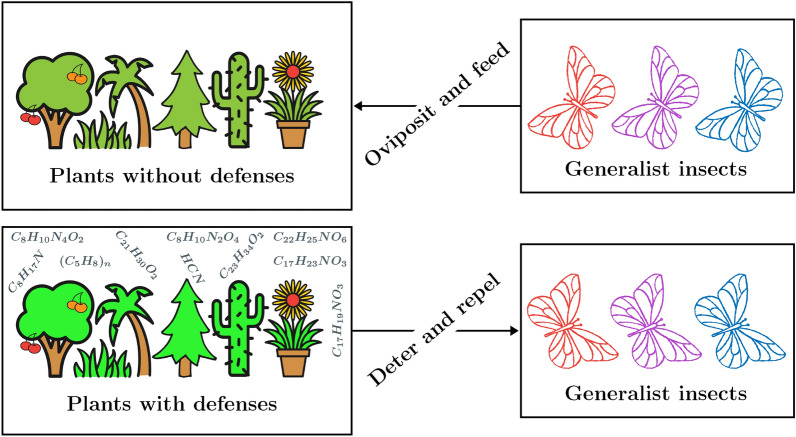
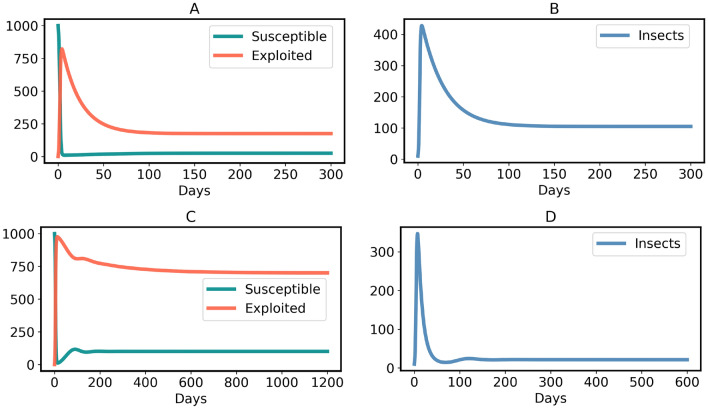
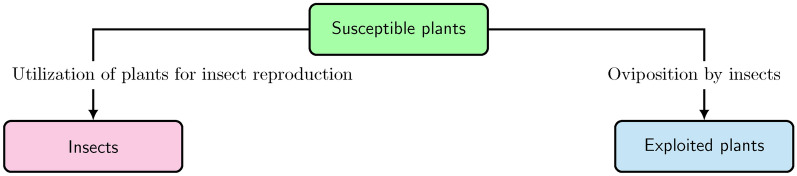
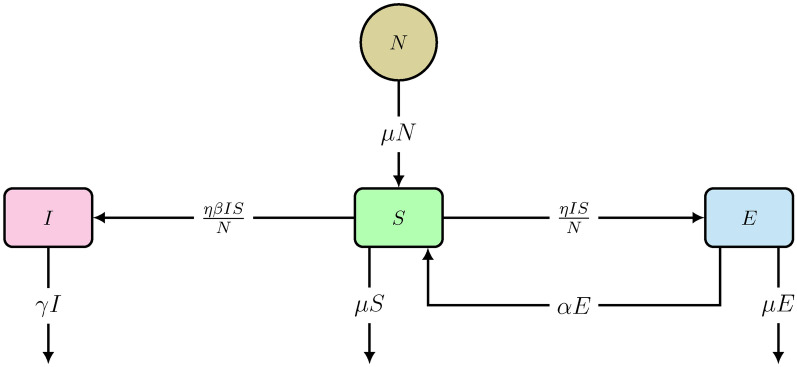
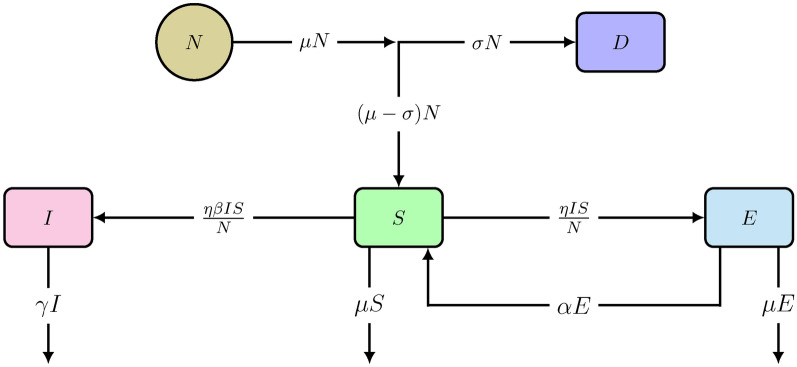
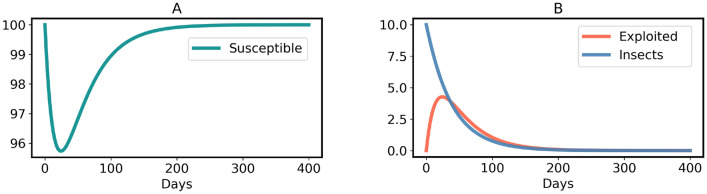
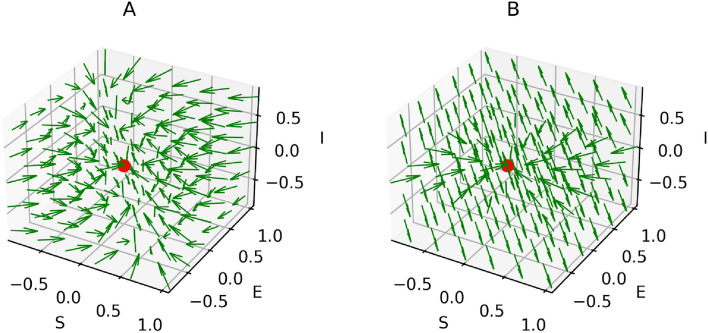
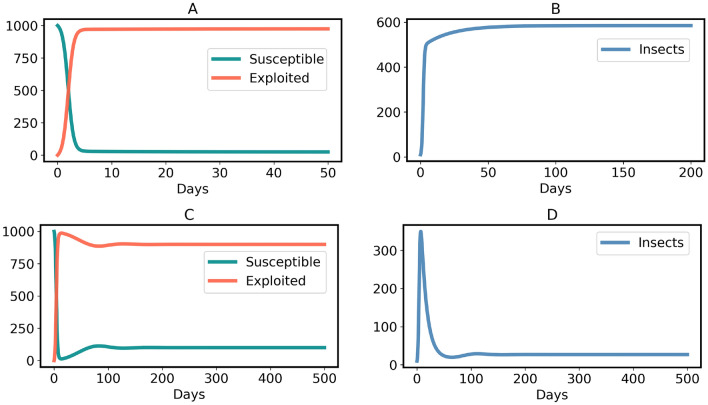
Plants with constitutive defense chemicals exist widely in nature. The phenomenon is backed by abundant data from plant chemical ecology. Sufficient data are also available to conclude that plant defenses act as deterrent and repellent to attacking herbivores, particularly deleterious generalist insects. In the wild, generalist species are usually not endemic, meaning they are not restricted to certain plant species in a region. Therefore, our objective is to inspect theoretically whether evolution of chemical defenses in all plant species eradicate an endemic by any generalist species. The objective is addressed by developing deterministic ordinary differential equations under the following conditions: Plants without constitutive defenses are susceptible to oviposition by generalist insects, while they become defended against generalists by storing chemical defenses. From the models, we explicitly obtain that a generalist-free stable state is only possible if the vast majority of all plant individuals have chemical defenses. The model also allows one to predict the highest possible percentage of undefended plant individuals, which may be considered as free-riders.
自然界中广泛存在具有组成型防御化学物质的植物。植物化学生态学的大量数据支持这一现象。也有足够的数据得出结论,植物防御对攻击食草动物,特别是有害的一般性昆虫具有威慑和排斥作用。在野外,一般性物种通常不是地方性的,这意味着它们并不局限于某一地区的某些植物物种。因此,我们的目标是从理论上检验所有植物物种的化学防御进化是否会通过任何一般性物种消灭一个地方性物种。通过在以下条件下开发确定性常微分方程来解决这个目标:没有组成型防御的植物容易受到一般性昆虫的产卵,而它们通过储存化学防御来防御一般性昆虫。从模型中,我们明确地得到,如果绝大多数的植物个体都具有化学防御,那么只有在没有一般性物种的稳定状态下才是可能的。该模型还可以预测可能被视为免费搭车者的无防御植物个体的最高可能百分比。