Department of Cardiology, The First Affiliated Hospital of Nanchang University, Jiangxi Medical College, Nanchang University, Nanchang, 330006, China.
Jiangxi Cardiovascular Research Institute, Jiangxi Provincial People's Hospital, The First Affiliated Hospital of Nanchang Medical College, Nanchang, 330006, China.
BMC Endocr Disord. 2024 Oct 28;24(1):229. doi: 10.1186/s12902-024-01764-5.
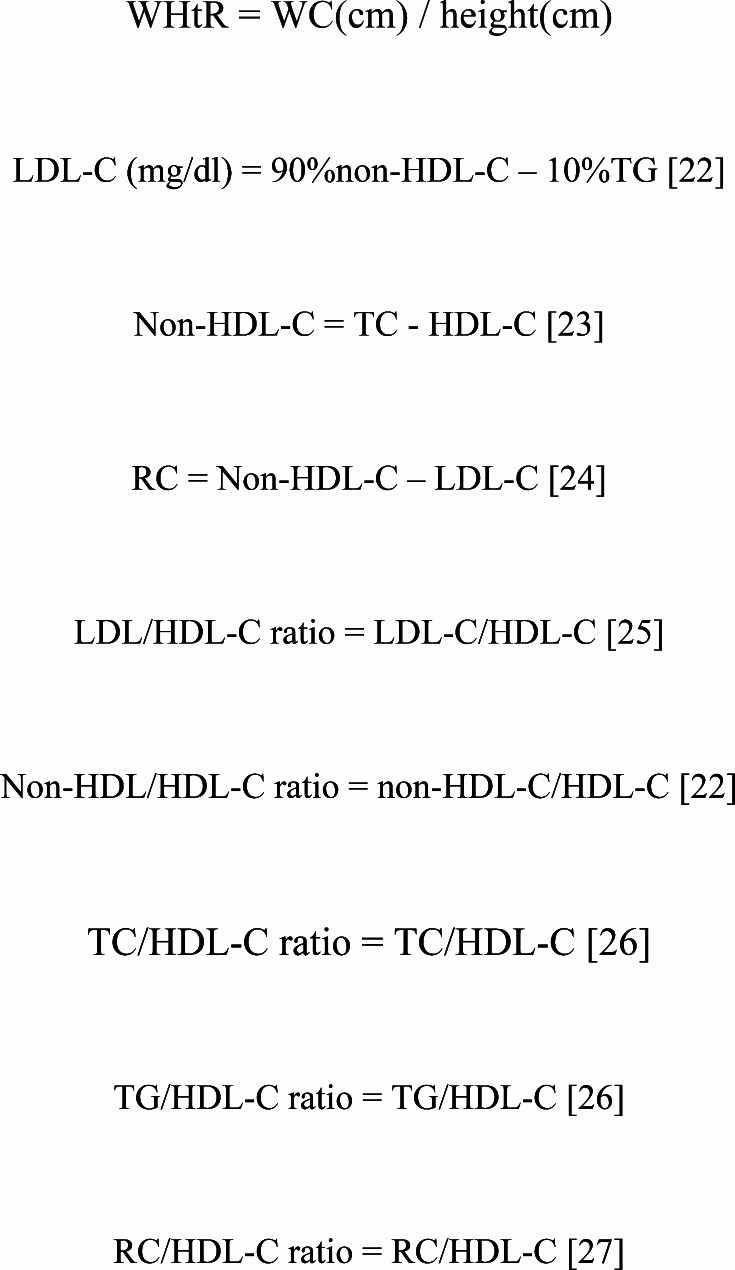
Central obesity is a well-recognized risk factor for diabetes, yet the potential role of lipids in the diabetes risk associated with central obesity remains unclear. This study aimed to explore the possible mediating role of 11 lipid parameters [high-density lipoprotein cholesterol (HDL-C), total cholesterol (TC), non-high-density lipoprotein cholesterol (Non-HDL-C), low-density lipoprotein cholesterol (LDL-C), triglycerides (TG), remnant cholesterol (RC), and ratios of Non-HDL-C/HDL-C, RC/HDL-C, LDL/HDL-C, TG/HDL-C, TC/HDL-C] in the association of central obesity with diabetes risk.
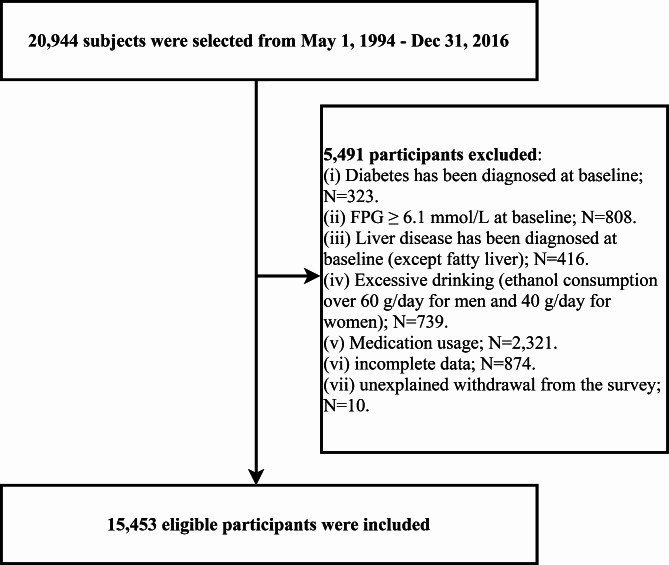
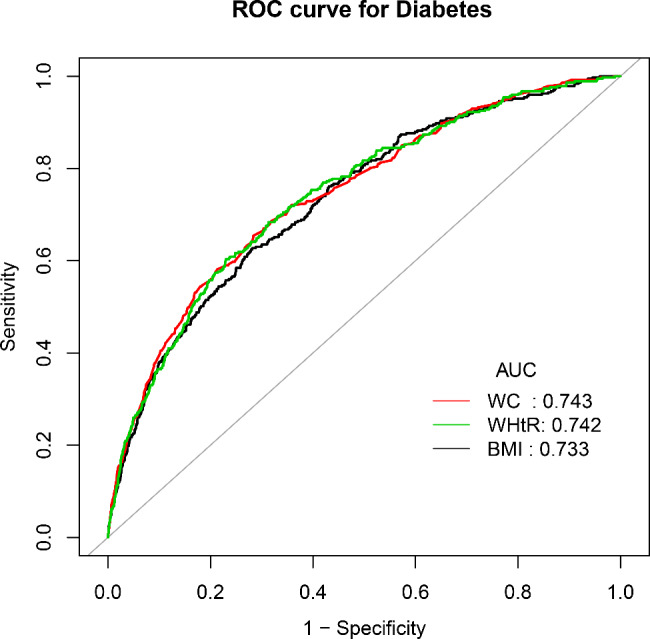
We utilized data from 15,453 participants in the NAGALA longitudinal cohort to assess the association of baseline central obesity indicators [waist-height ratio (WHtR), waist circumference (WC)] and the 11 lipid parameters with diabetes risk. Mediation analysis models were constructed to explore the mediating role of lipid parameters in the association of WC/WHtR with diabetes.
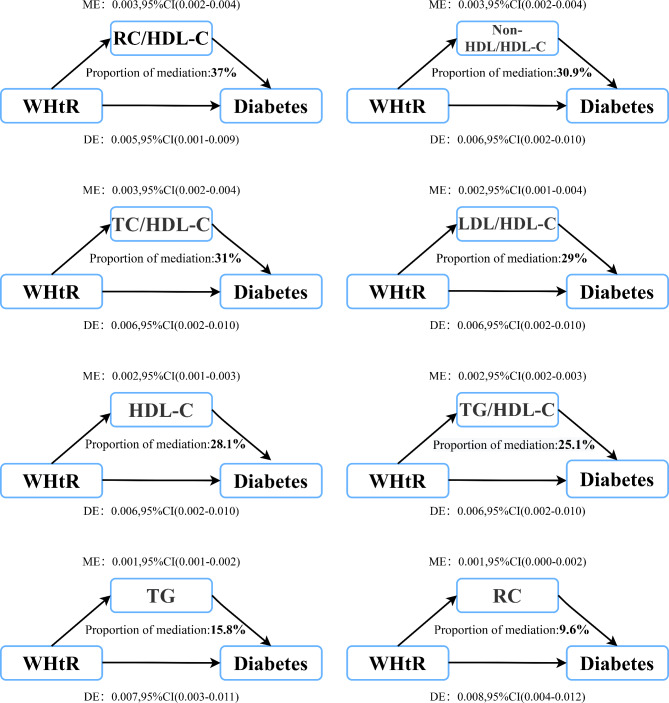
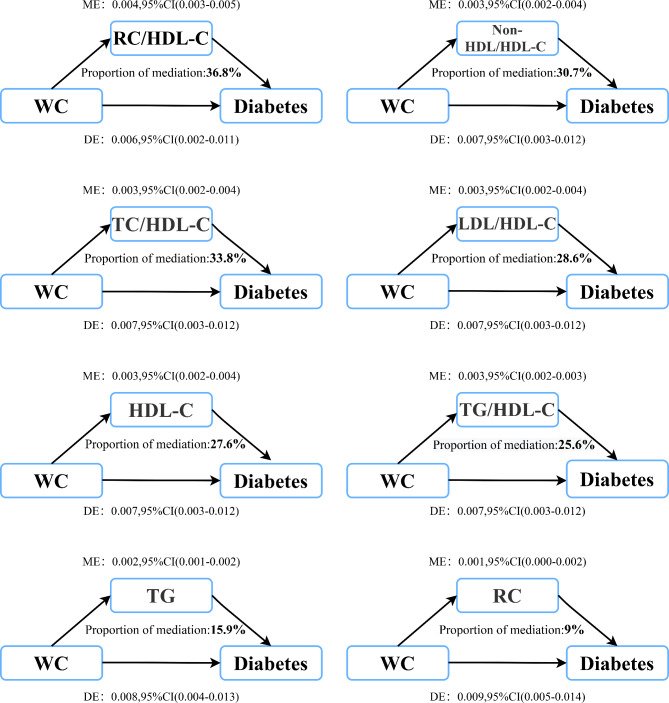
Confirmatory associative analysis using multivariable Cox regression showed that, except for Non-HDL-C, TC and LD-C, the remaining eight lipid parameters were significantly associated with WC/WHtR and diabetes risk. Mediation analysis indicated that TG, RC, HDL-C, and lipid ratios such as Non-HDL-C/HDL-C ratio, RC/HDL-C ratio, TG/HDL-C ratio, TC/HDL-C ratio and LDL/HDL-C ratio are potential lipids affecting the diabetes risk related to central obesity. Among these, the RC/HDL-C ratio seemed to contribute the most in the WC/WHtR-related diabetes risk association, with a mediation percentage of about 37%. Additionally, lipid ratio parameters appeared to play a more mediating role in the association of central obesity-related diabetes risk than individual lipids.
In central obesity-related diabetes risk, most lipids, especially lipid ratio parameters, play a significant mediating role. Given these findings, we advocate for increased efforts in multifactorial risk monitoring and joint management of diabetes. The evaluation of lipids, particularly lipid ratio parameters, may be holds substantial value in the prevention and management of diabetes risk under close monitoring of central obesity.
中心性肥胖是糖尿病的公认危险因素,但脂质在中心性肥胖相关糖尿病风险中的潜在作用仍不清楚。本研究旨在探讨 11 项脂质参数[高密度脂蛋白胆固醇(HDL-C)、总胆固醇(TC)、非高密度脂蛋白胆固醇(Non-HDL-C)、低密度脂蛋白胆固醇(LDL-C)、甘油三酯(TG)、残余胆固醇(RC)以及 Non-HDL-C/HDL-C、RC/HDL-C、LDL/HDL-C、TG/HDL-C、TC/HDL-C 比值]在中心性肥胖与糖尿病风险之间的关联中可能的中介作用。
我们利用 NAGALA 纵向队列研究中的 15453 名参与者的数据,评估基线中心性肥胖指标[腰高比(WHtR)、腰围(WC)]和 11 项脂质参数与糖尿病风险的关系。构建中介分析模型,探讨脂质参数在 WC/WHtR 与糖尿病关系中的中介作用。
多变量 Cox 回归的验证性关联分析表明,除了 Non-HDL-C、TC 和 LD-C 外,其余 8 项脂质参数与 WC/WHtR 和糖尿病风险显著相关。中介分析表明,TG、RC、HDL-C 以及脂质比值如 Non-HDL-C/HDL-C 比值、RC/HDL-C 比值、TG/HDL-C 比值、TC/HDL-C 比值和 LDL/HDL-C 比值是潜在的影响中心性肥胖相关糖尿病风险的脂质。在这些因素中,RC/HDL-C 比值在 WC/WHtR 相关糖尿病风险关联中似乎贡献最大,中介百分比约为 37%。此外,与单个脂质相比,脂质比值参数在中心性肥胖相关糖尿病风险的关联中发挥了更重要的中介作用。
在中心性肥胖相关的糖尿病风险中,大多数脂质,尤其是脂质比值参数,起着重要的中介作用。鉴于这些发现,我们主张加强对糖尿病的多因素风险监测和联合管理。在密切监测中心性肥胖的情况下,评估脂质,特别是脂质比值参数,可能对糖尿病风险的预防和管理具有重要价值。