School of Psychology, Deakin University, Geelong, VIC, Australia.
The Australian Centre for Behavioural Research in Diabetes, Diabetes Victoria, Melbourne, VIC, Australia.
Trials. 2024 Oct 29;25(1):725. doi: 10.1186/s13063-024-08556-1.
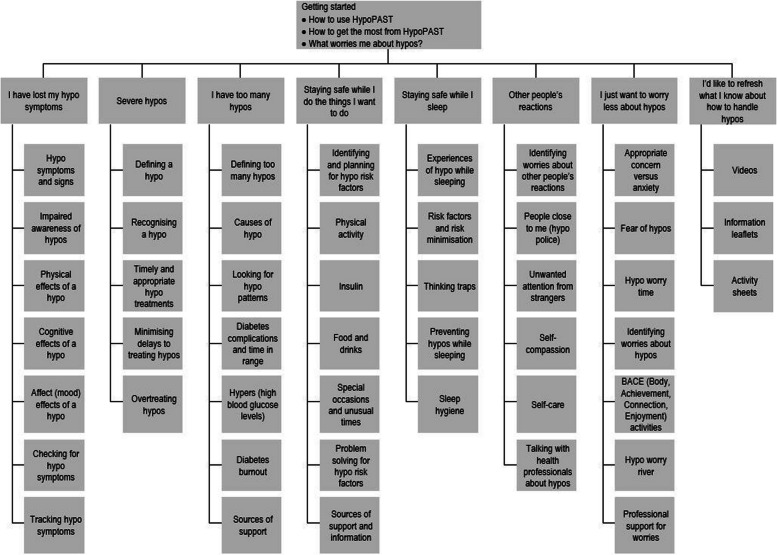
Management of type 1 diabetes (T1D) requires the use of insulin, which can cause hypoglycaemia (low blood glucose levels). While most hypoglycaemic episodes can be self-treated, all episodes can be sudden, inconvenient, challenging to prevent or manage, unpleasant and/or cause unwanted attention or embarrassment. Severe hypoglycaemic episodes, requiring assistance from others for recovery, are rare but potentially dangerous. Repeated exposure to hypoglycaemia can reduce classic warning symptoms ('awareness'), thereby increasing risk of severe episodes. Thus, fear of hypoglycaemia is common among adults with T1D and can have a negative impact on how they manage their diabetes, as well as on daily functioning, well-being and quality of life. While advances in glycaemic technologies and group-based psycho-educational programmes can reduce fear, frequency and impact of hypoglycaemia, they are not universally or freely available, nor do they fully resolve problematic hypoglycaemia or associated worries. This study aims to determine the effectiveness of a fully online, self-directed, scalable, psycho-educational intervention for reducing fear of hypoglycaemia: the Hypoglycaemia Prevention, Awareness of Symptoms, and Treatment (HypoPAST) programme.
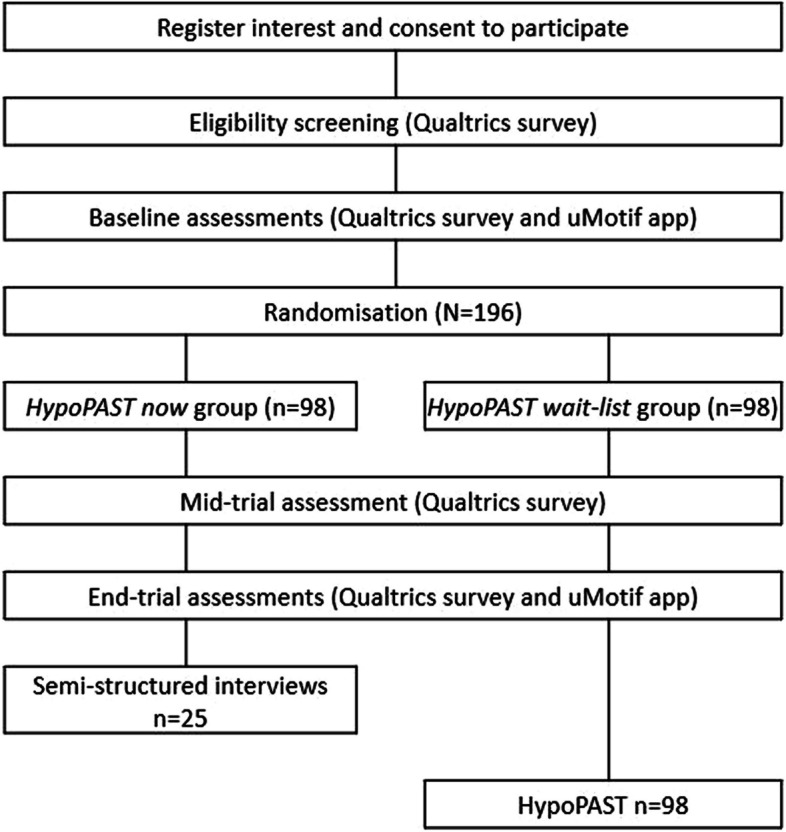
A 24-week, two-arm, parallel-group, hybrid type 1 randomised controlled trial, conducted remotely (online and telephone). Australian adults (≥ 18 years) with self-reported T1D and fear of hypoglycaemia will be recruited, and allocated at random (1:1) to HypoPAST or control (usual care). The primary outcome is the between-group difference in fear of hypoglycaemia (assessed using HFS-II Worry score) at 24 weeks. A sample size of N = 196 is required to detect a 9-point difference, with 90% power and allowing for 30% attrition. Multiple secondary outcomes include self-reported psychological, behavioural, biomedical, health economic, and process evaluation data. Data will be collected at baseline, 12 and 24 weeks using online surveys, 2-week ecological momentary assessments, website analytics and semi-structured interviews.
This study will provide evidence regarding the effectiveness, cost-effectiveness and acceptability of a novel, online psycho-educational programme: HypoPAST. Due to the fully online format, HypoPAST is expected to provide an inexpensive, convenient, accessible and scalable solution for reducing fear of hypoglycaemia among adults with T1D.
Australian and New Zealand Clinical Trials Registry (ANZCTR): ACTRN12623000894695 (21 August 2023).
1 型糖尿病(T1D)的管理需要使用胰岛素,这可能导致低血糖(低血糖水平)。虽然大多数低血糖发作可以自我治疗,但所有发作都可能突然发生、不便、难以预防或管理、不愉快和/或引起不必要的关注或尴尬。需要他人帮助恢复的严重低血糖发作很少见,但可能很危险。反复发生低血糖会降低典型的警告症状(“意识”),从而增加严重发作的风险。因此,T1D 成年人普遍存在对低血糖的恐惧,这可能对他们的糖尿病管理以及日常功能、幸福感和生活质量产生负面影响。虽然血糖技术和基于小组的心理教育计划的进步可以降低对低血糖的恐惧、频率和影响,但它们并非普遍或免费提供,也不能完全解决有问题的低血糖或相关担忧。本研究旨在确定一种完全在线、自我指导、可扩展的心理教育干预措施对降低低血糖恐惧的有效性:低血糖预防、症状意识和治疗(HypoPAST)计划。
一项为期 24 周、双臂、平行组、混合 1 型随机对照试验,远程进行(在线和电话)。将招募澳大利亚成年人(≥18 岁),他们自我报告患有 T1D 和对低血糖的恐惧,并随机(1:1)分配到 HypoPAST 或对照组(常规护理)。主要结局是 24 周时组间恐惧的差异(使用 HFS-II 担忧评分评估)。需要 N=196 的样本量来检测 9 分的差异,具有 90%的功效并允许 30%的失访率。多个次要结局包括自我报告的心理、行为、生物医学、健康经济学和过程评估数据。基线、12 周和 24 周时将通过在线调查、2 周生态瞬时评估、网站分析和半结构化访谈收集数据。
本研究将提供关于一种新型在线心理教育计划的有效性、成本效益和可接受性的证据:HypoPAST。由于完全在线的格式,HypoPAST 有望为减少 T1D 成年人对低血糖的恐惧提供一种廉价、方便、可及且可扩展的解决方案。
澳大利亚和新西兰临床试验注册处(ANZCTR):ACTRN12623000894695(2023 年 8 月 21 日)。