Department of Microbiology and Immunology, Indiana University School of Medicine, Fort Wayne, IN, United States.
Department of Anatomy, Cell Biology and Physiology, Indiana University School of Medicine, Fort Wayne, IN, United States.
Front Immunol. 2024 Oct 14;15:1440592. doi: 10.3389/fimmu.2024.1440592. eCollection 2024.
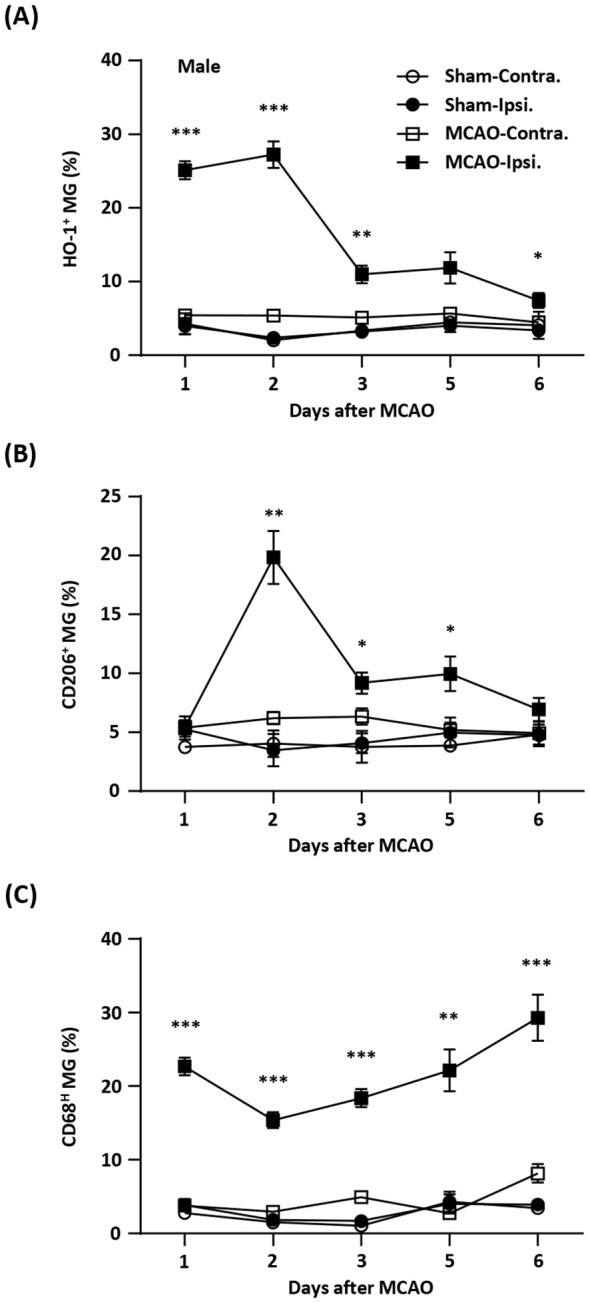
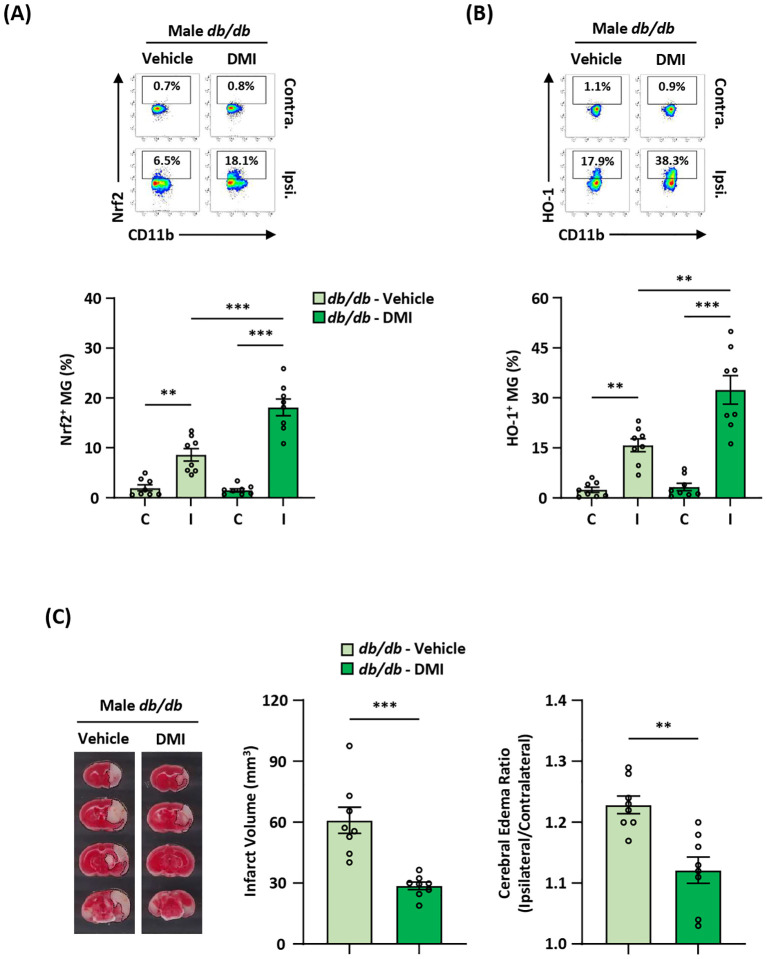
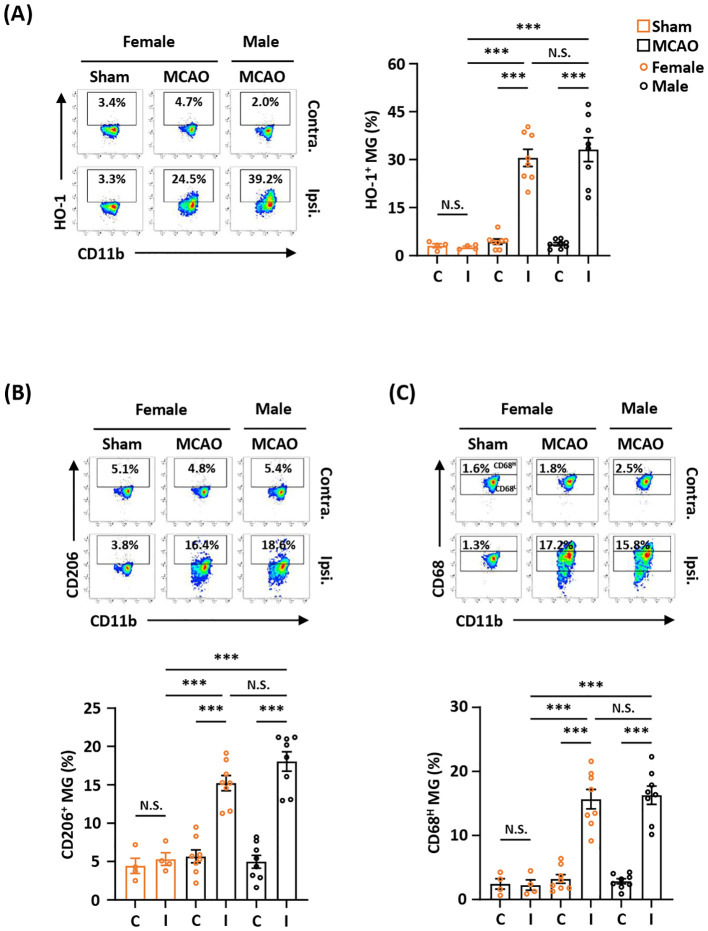
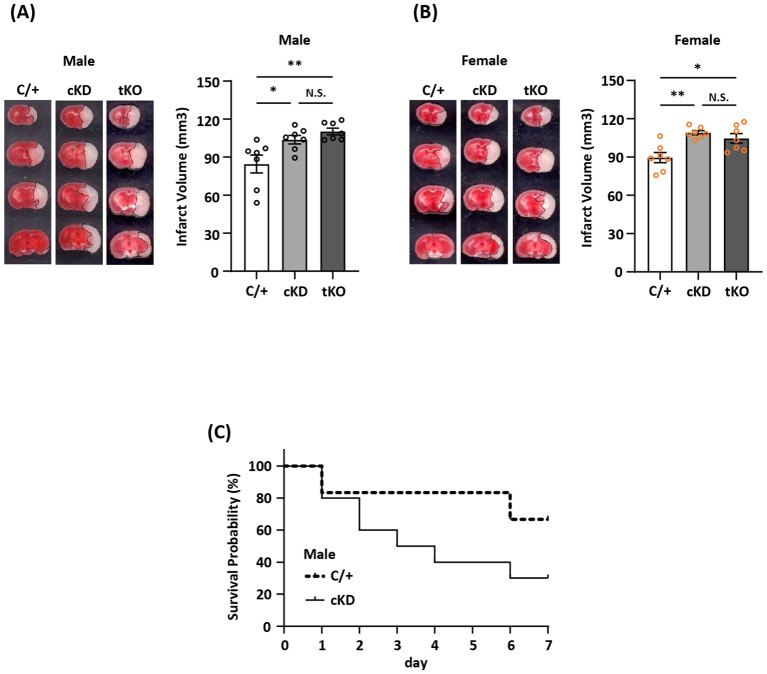
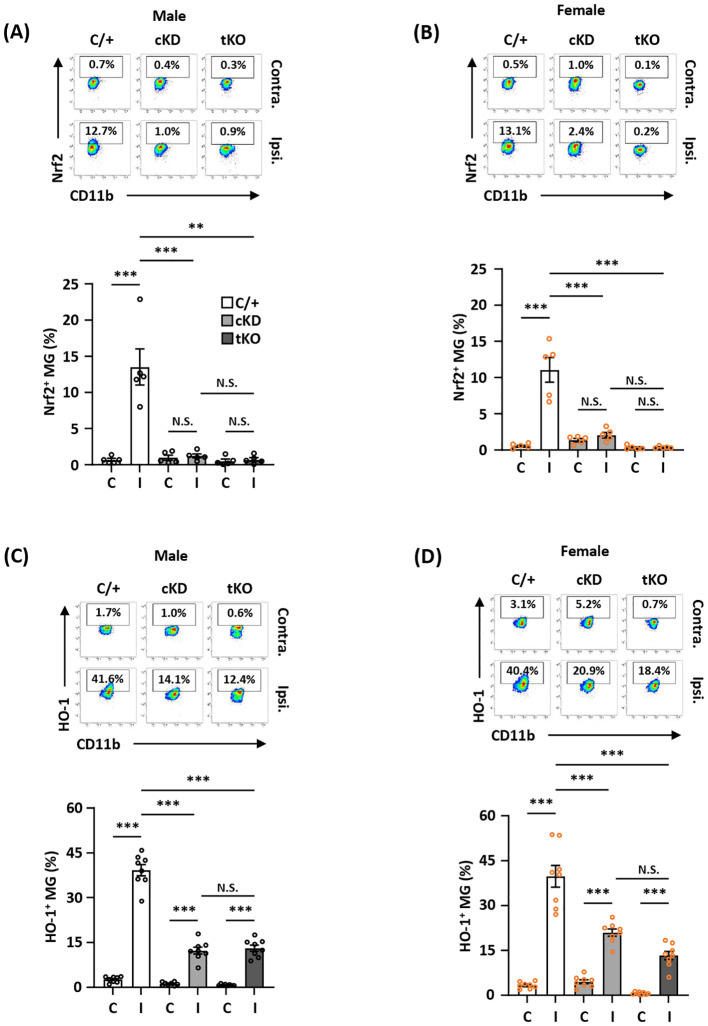
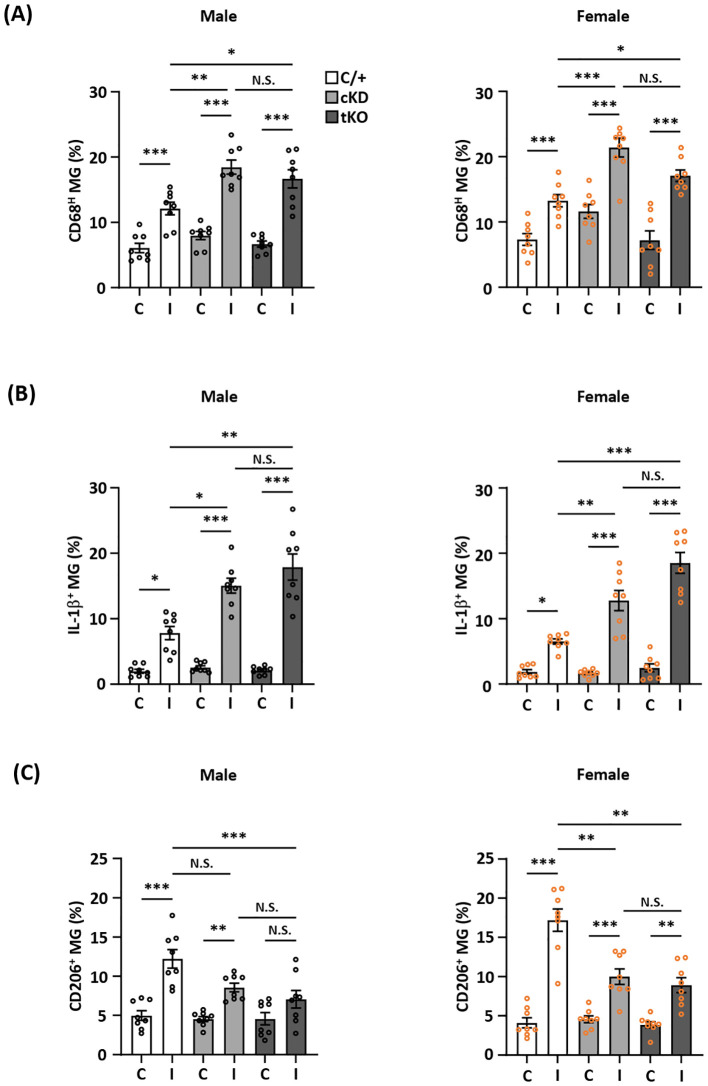
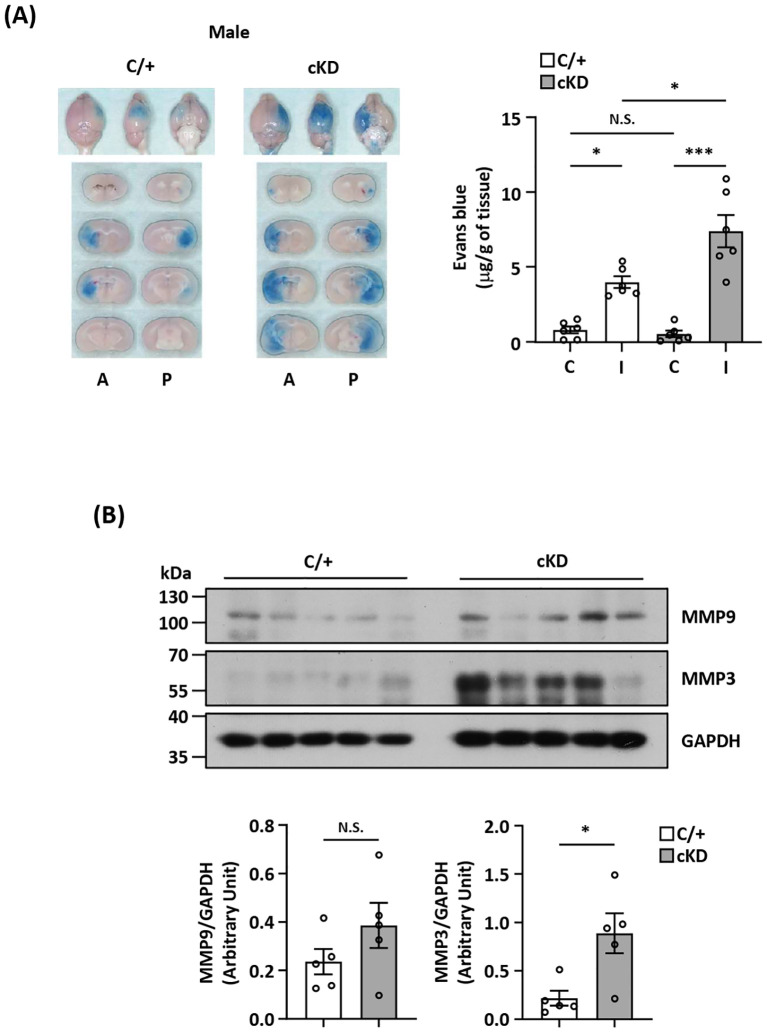
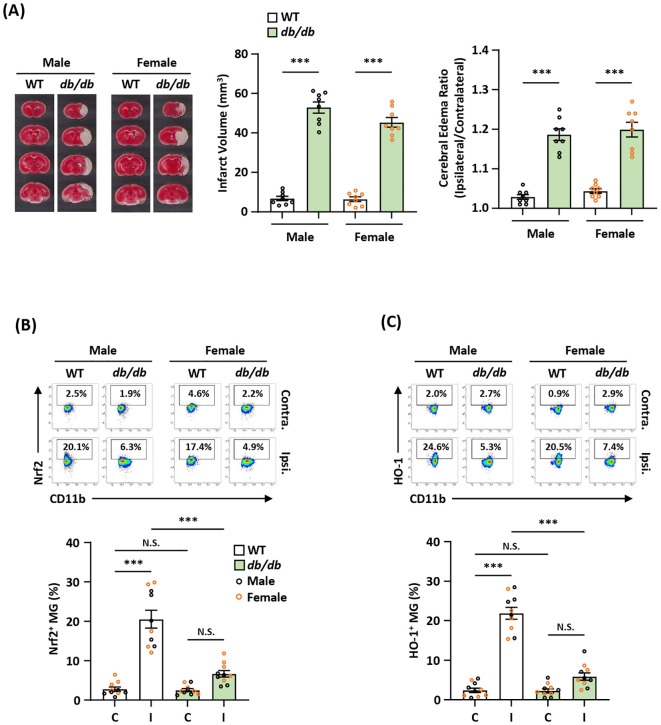
Cerebral ischemic stroke accounts for more than 80% of all stroke cases. During cerebral ischemia, reactive oxygen species produced in the ischemic brain induce oxidative stress and inflammatory responses. Nrf2 is a transcription factor responsible for regulating cellular redox balance through the induction of protective antioxidant and phase II detoxification responses. Although the induction of endogenous Nrf2/HO-1 axis activation has been observed in the ischemic brain, whether ischemia-induced endogenous Nrf2/HO-1 axis activation plays a role in modulating microglia (MG) phenotypes and restraining ischemic brain injury is not characterized and requires further exploration. To investigate that, we generated mice with Nrf2 knockdown specifically in MG to rigorously assess the role of endogenous Nrf2 activation in ischemic brain injury after stroke. Our results showed that MG-specific Nrf2 knockdown exacerbated ischemic brain injury after stroke. We found that Nrf2 knockdown altered MG phenotypes after stroke, in which increased frequency of inflammatory MG and decreased frequency of anti-inflammatory MG were detected in the ischemic brain. Moreover, we identified attenuated Nrf2/HO-1 axis activation led to increased CD68/IL-1β and suppressed CD206 expression in MG, resulting in aggravated inflammatory MG in MG-specific Nrf2 knockdown mice after stroke. Intriguingly, using type II diabetic preclinical models, we revealed that diabetic mice exhibited attenuated Nrf2/HO-1 axis activation in MG and exacerbated ischemic brain injury after stroke that phenocopy mice with MG-specific Nrf2 knockdown. Finally, the induction of exogenous Nrf2/HO-1 axis activation in MG through pharmacological approaches ameliorated ischemic brain injury in diabetic mice. In conclusion, our findings provide cellular and molecular insights demonstrating ischemia-induced endogenous Nrf2/HO-1 axis activation modulates MG phenotypes and restrains ischemic brain injury. These results further strengthen the therapeutic potential of targeting Nrf2/HO-1 axis in MG for the treatment of ischemic stroke and diabetic stroke.
脑缺血性脑卒中占所有脑卒中病例的 80%以上。在脑缺血期间,缺血大脑中产生的活性氧物质诱导氧化应激和炎症反应。Nrf2 是一种转录因子,通过诱导保护性抗氧化和 II 相解毒反应来负责调节细胞氧化还原平衡。尽管在缺血性大脑中观察到内源性 Nrf2/HO-1 轴的诱导,但缺血诱导的内源性 Nrf2/HO-1 轴激活是否在调节小胶质细胞 (MG) 表型和抑制缺血性脑损伤中发挥作用尚未得到表征,需要进一步探索。为了研究这一点,我们生成了特异性在 MG 中敲低 Nrf2 的小鼠,以严格评估缺血后内源性 Nrf2 激活在缺血性脑损伤中的作用。我们的结果表明,MG 特异性 Nrf2 敲低加重了缺血性脑卒中后的脑损伤。我们发现,Nrf2 敲低改变了脑卒中后的 MG 表型,在缺血性大脑中检测到炎症性 MG 的频率增加和抗炎性 MG 的频率降低。此外,我们发现,Nrf2/HO-1 轴激活减弱导致 MG 中 CD68/IL-1β增加和 CD206 表达抑制,导致缺血性脑卒中后 MG 特异性 Nrf2 敲低小鼠炎症性 MG 加重。有趣的是,使用 2 型糖尿病临床前模型,我们揭示了糖尿病小鼠在 MG 中表现出 Nrf2/HO-1 轴激活减弱,以及缺血性脑卒中后脑损伤加重,这与 MG 特异性 Nrf2 敲低小鼠相似。最后,通过药理学方法在 MG 中诱导外源性 Nrf2/HO-1 轴激活可改善糖尿病小鼠的缺血性脑损伤。总之,我们的研究结果提供了细胞和分子方面的见解,表明缺血诱导的内源性 Nrf2/HO-1 轴激活调节 MG 表型并抑制缺血性脑损伤。这些结果进一步加强了针对 MG 中的 Nrf2/HO-1 轴治疗缺血性中风和糖尿病性中风的治疗潜力。