Department of Biology, Boston College, Chestnut Hill, Massachusetts, USA.
Dana-Farber Cancer Institute, Boston, Massachusetts, USA.
J Virol. 2024 Nov 19;98(11):e0098924. doi: 10.1128/jvi.00989-24. Epub 2024 Oct 29.
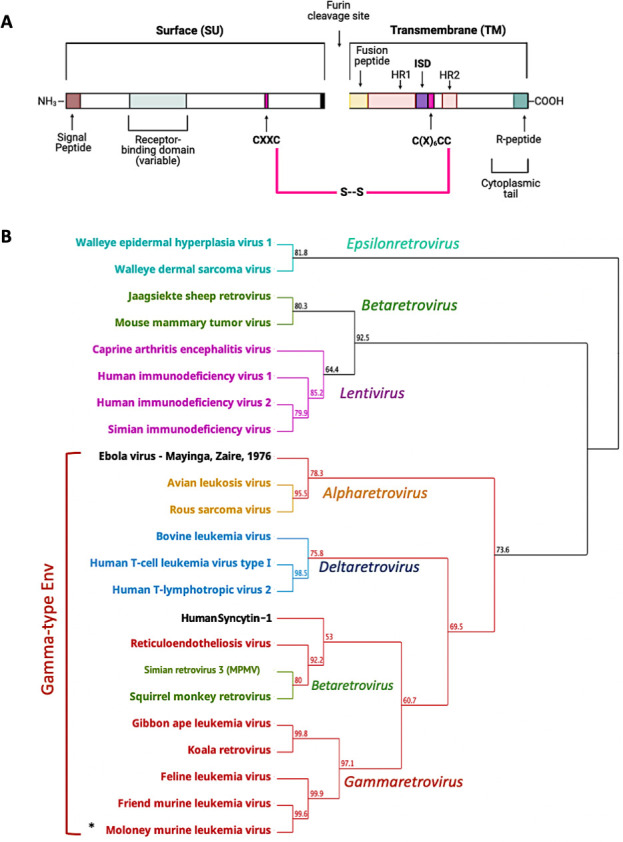
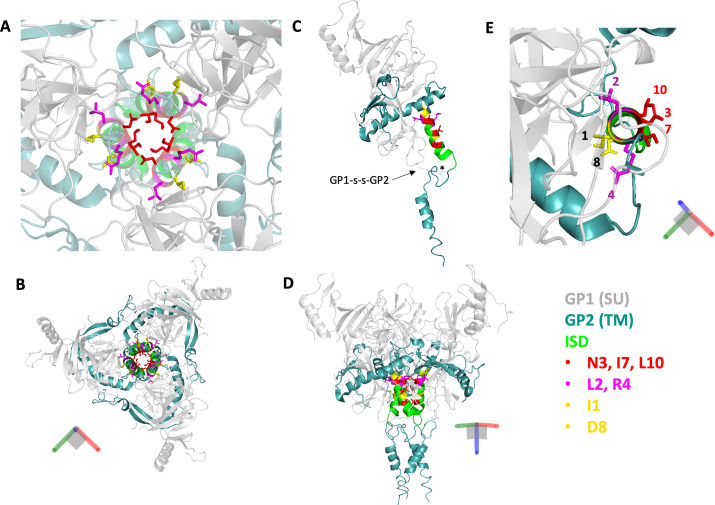
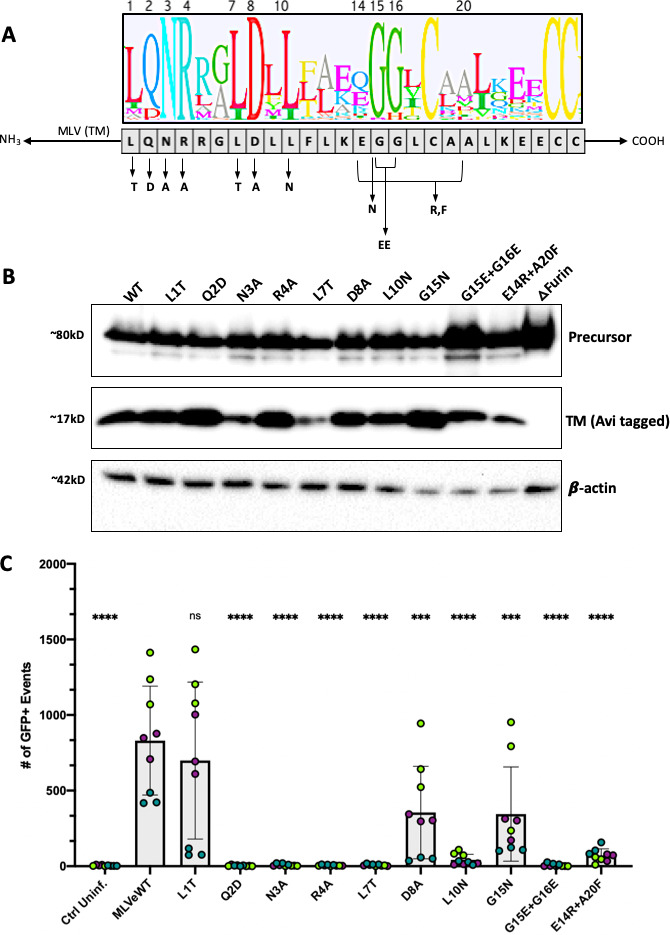
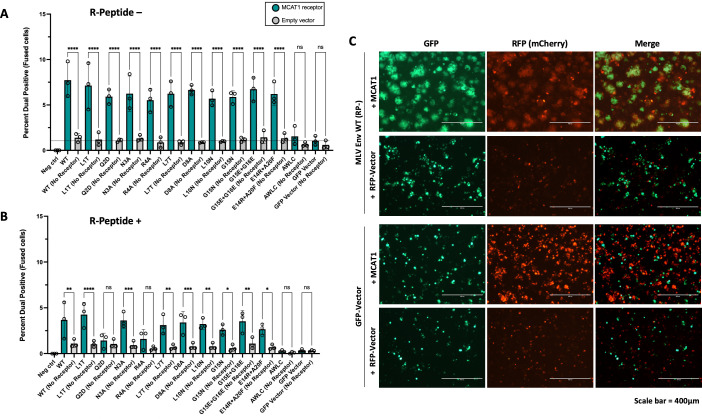
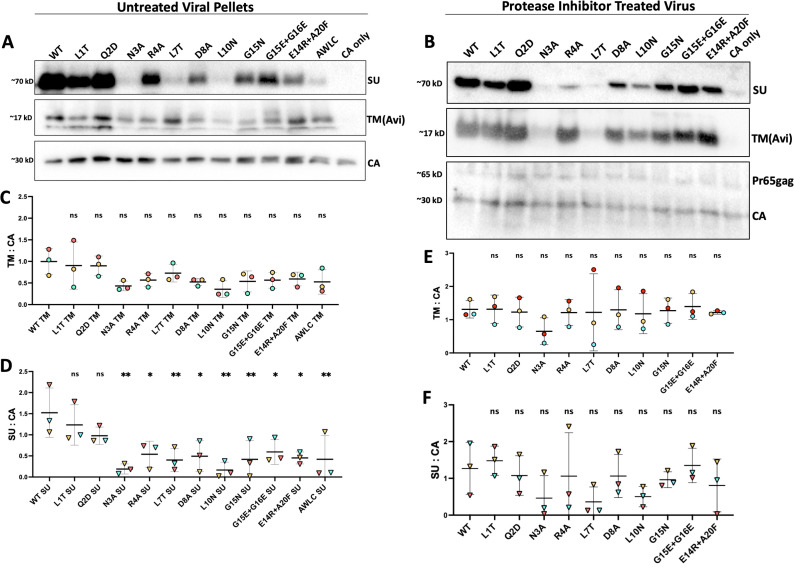
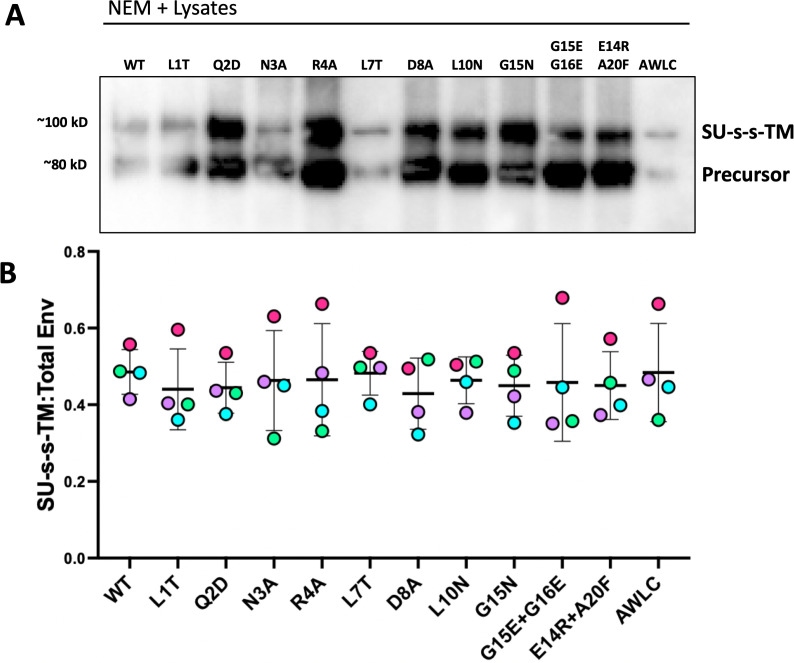
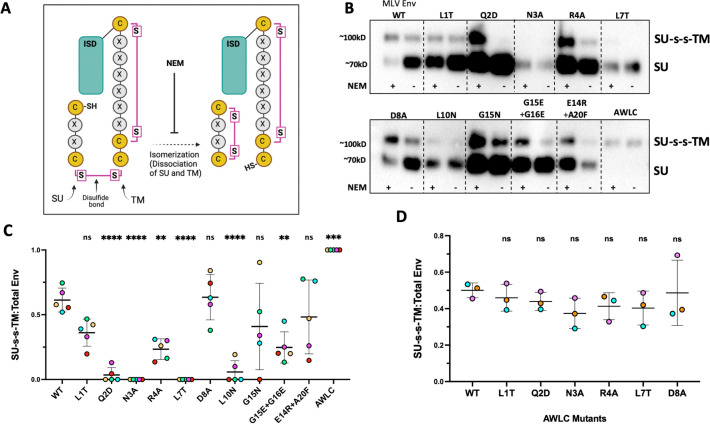
The Env protein of murine leukemia virus (MLV) is the prototype of a large clade of retroviral fusogens, collectively known as gamma-type Envs. Gamma-type Envs are found in retroviruses and endogenous retroviruses (ERVs) representing a broad range of vertebrate hosts. All gamma-type Envs contain a highly conserved stretch of 26-residues in the transmembrane subunit (TM) comprising two motifs, a putative immunosuppressive domain (ISD) and a CXCC motif. Extraordinary conservation of the ISD and its invariant association with the CXCC suggests a fundamental contribution to Env function. To investigate ISD function, we characterized several mutants with single amino acid substitutions at conserved positions in the MLV ISD. A majority abolished infectivity, although we did not observe a corresponding loss in intrinsic ability to mediate membrane fusion. Ratios of the surface subunit (SU) to capsid protein (CA) in virions were diminished for a majority of the ISD mutants, while TM:CA ratios were similar to wild type. Specific loss of SU reflected premature isomerization of the labile disulfide bond that links SU and TM prior to fusion. Indeed, all non-infectious mutants displayed significantly lower disulfide stability than wild-type Env. These results reveal a role for ISD positions 2, 3, 4, 7, and 10 in regulating a late step in entry after fusion peptide insertion but prior to creation of the fusion pore. This implies that the ISD is part of a larger domain, comprising the ISD and CXCC motifs, that is critical for the formation and regulation of the metastable, intersubunit disulfide bond.IMPORTANCEThe gamma-type Env is a prevalent viral fusogen, found within retroviruses and endogenous retroviruses across vertebrate species and in filoviruses such as Ebolavirus. The fusion mechanism of gamma-type Envs is unique from other Class I fusogens such as those of influenza A virus and HIV-1. Gamma-type Envs contain a hallmark feature known as the immunosuppressive domain (ISD) that has been the subject of some controversy in the literature surrounding its putative immunosuppressive effects. Despite the distinctive conservation of the ISD, little has been done to investigate the role of this region for the function of this widespread fusogen. Our work demonstrates the importance of the ISD for the function of gamma-type Envs in infection, particularly in regulating the intermediate steps of membrane fusion. Understanding the fusion mechanism of gamma-type Envs has broad implications for understanding the entry of extant viruses and aspects of host biology connected to co-opted endogenous gamma-type Envs.
鼠白血病病毒 (MLV) 的 Env 蛋白是一大类逆转录病毒融合蛋白的原型,统称为γ型 Env。γ型 Env 存在于逆转录病毒和内源性逆转录病毒 (ERV) 中,代表了广泛的脊椎动物宿主。所有的γ型 Env 都包含一个高度保守的 26 个残基的跨膜亚基 (TM),其中包含两个基序,一个假定的免疫抑制结构域 (ISD) 和一个 CXCC 基序。ISD 的惊人保守性及其与 CXCC 的不变关联表明其对 Env 功能具有基础性贡献。为了研究 ISD 的功能,我们对 MLV ISD 中保守位置的单个氨基酸替换的几种突变体进行了特征描述。大多数突变体丧失了感染性,尽管我们没有观察到与之相对应的内在介导膜融合能力的丧失。大多数 ISD 突变体的病毒粒子表面亚基 (SU)与衣壳蛋白 (CA) 的比值降低,而 TM:CA 比值与野生型相似。SU 的特异性缺失反映了在融合前 SU 和 TM 之间的不稳定二硫键的过早异构化。事实上,所有非感染性突变体的二硫键稳定性都明显低于野生型 Env。这些结果揭示了 ISD 位置 2、3、4、7 和 10 在融合肽插入后融合之前的晚期进入步骤中调节的作用,但在融合孔形成之前。这意味着 ISD 是一个更大的结构域的一部分,包含 ISD 和 CXCC 基序,对于形成和调节亚单位间的亚稳定二硫键至关重要。
重要性γ型 Env 是一种普遍存在的病毒融合蛋白,存在于逆转录病毒和内源性逆转录病毒中,跨越脊椎动物物种,并存在于埃博拉病毒等丝状病毒中。γ型 Env 的融合机制与其他 I 类融合蛋白(如流感 A 病毒和 HIV-1)不同。γ型 Env 包含一个被称为免疫抑制结构域 (ISD) 的标志特征,该特征在其假定的免疫抑制作用的文献中一直存在争议。尽管 ISD 的保守性明显,但对该区域在这种广泛的融合蛋白功能中的作用进行研究的却很少。我们的工作表明,ISD 对 γ型 Env 感染功能的重要性,特别是在调节膜融合的中间步骤。了解 γ型 Env 的融合机制对理解现有病毒的进入以及与被内源性 γ型 Env 共进化的宿主生物学方面具有广泛的意义。