Simmonds Peter
Nuffield Department of Medicine, Peter Medawar Building for Pathogen Research, University of Oxford, Oxford, United Kingdom.
mBio. 2024 Dec 11;15(12):e0249324. doi: 10.1128/mbio.02493-24. Epub 2024 Oct 30.
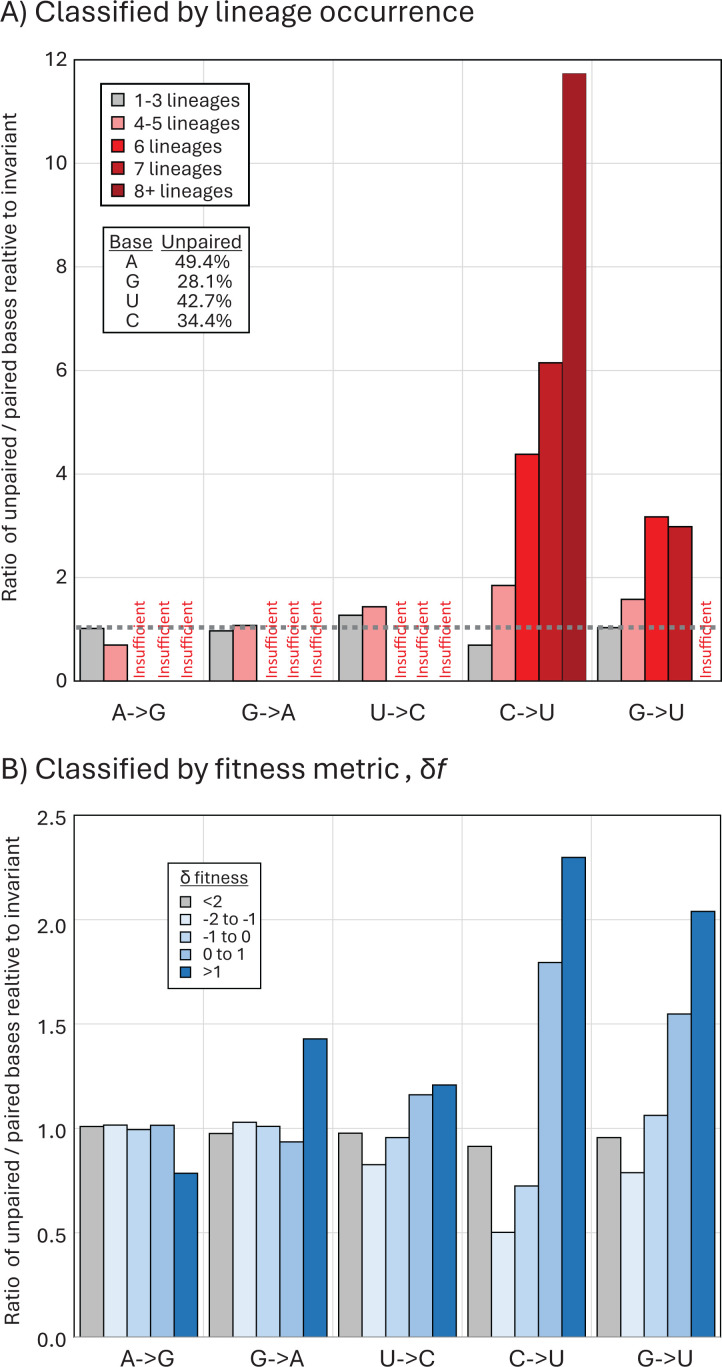
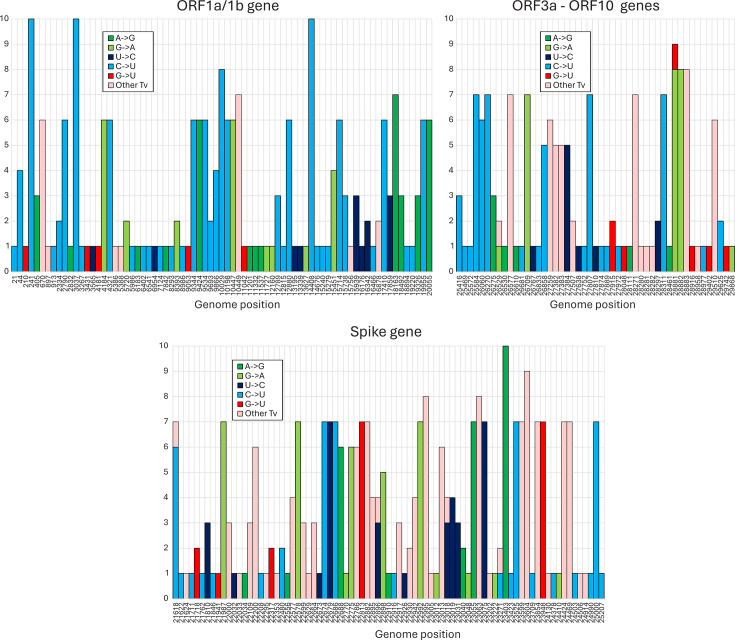
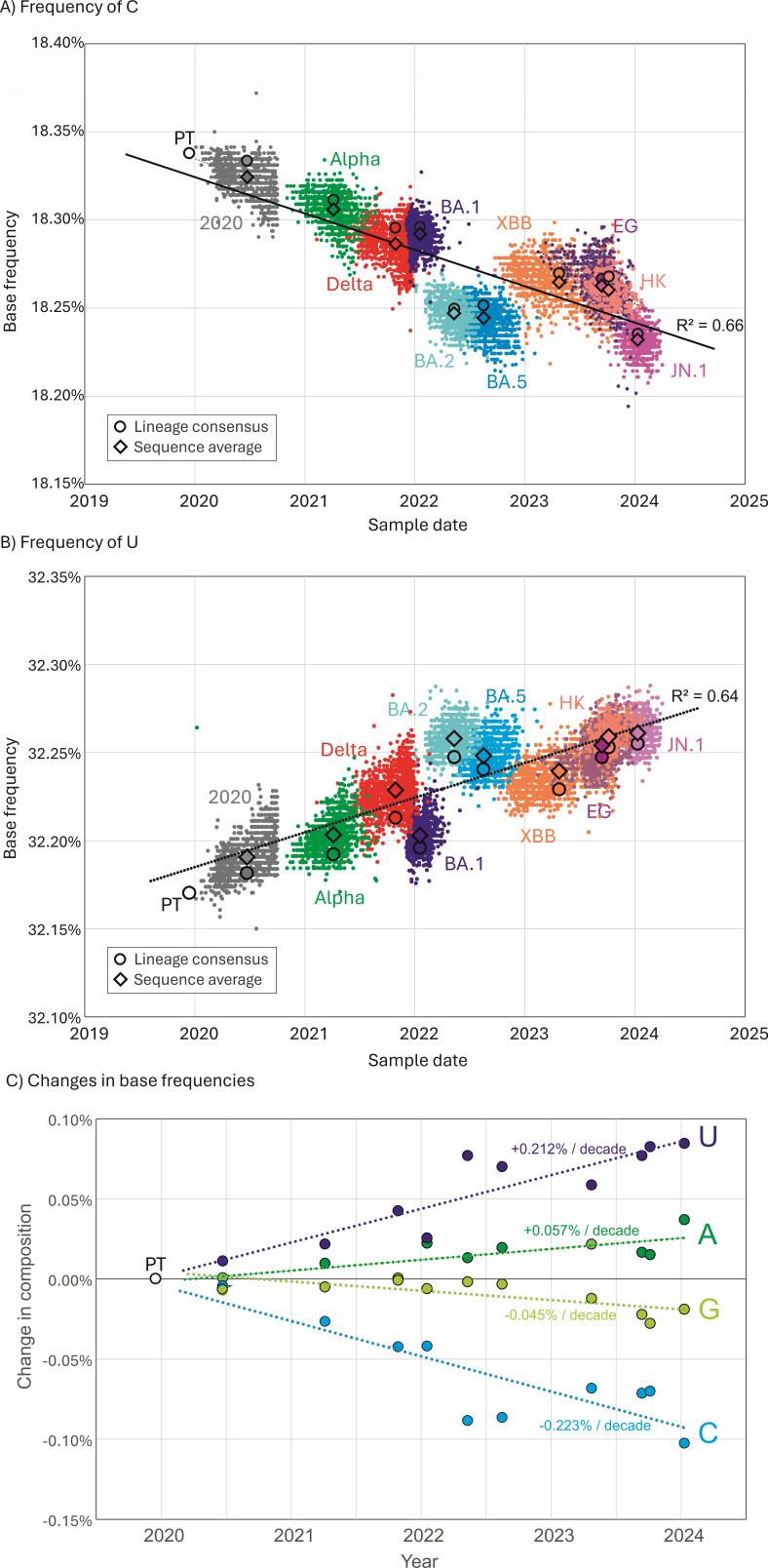
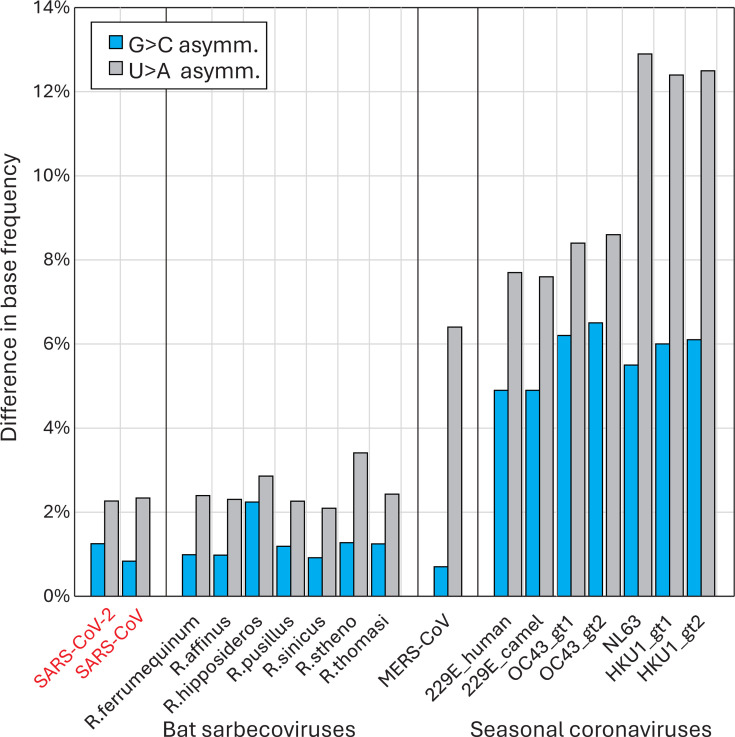
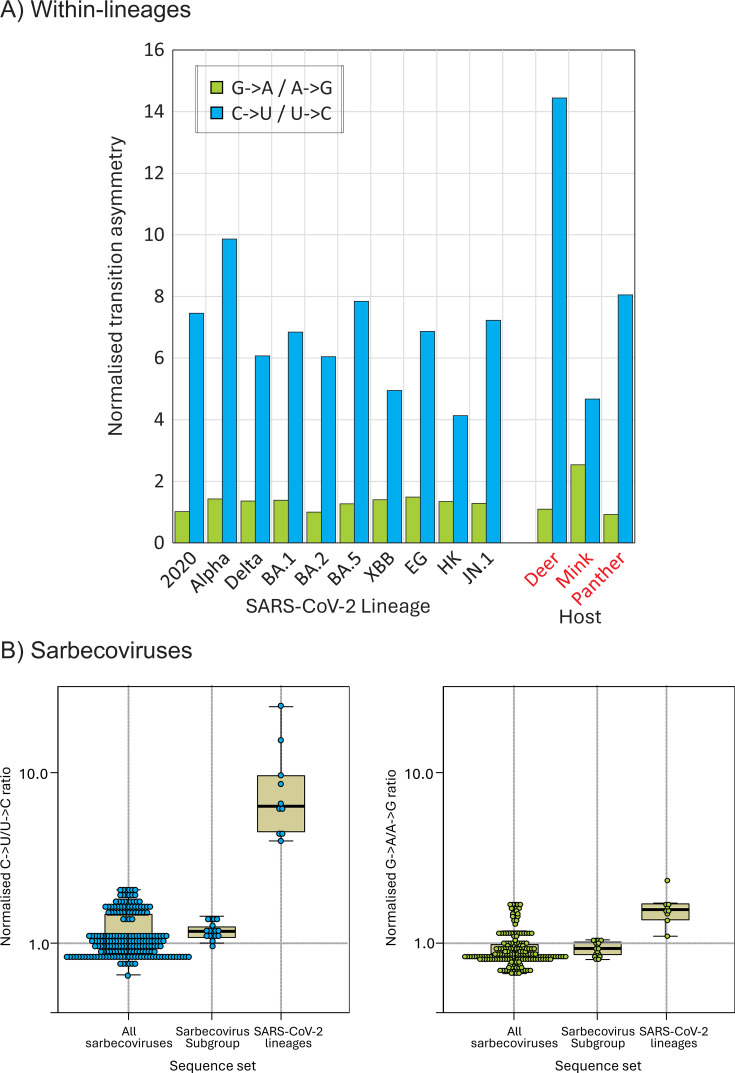
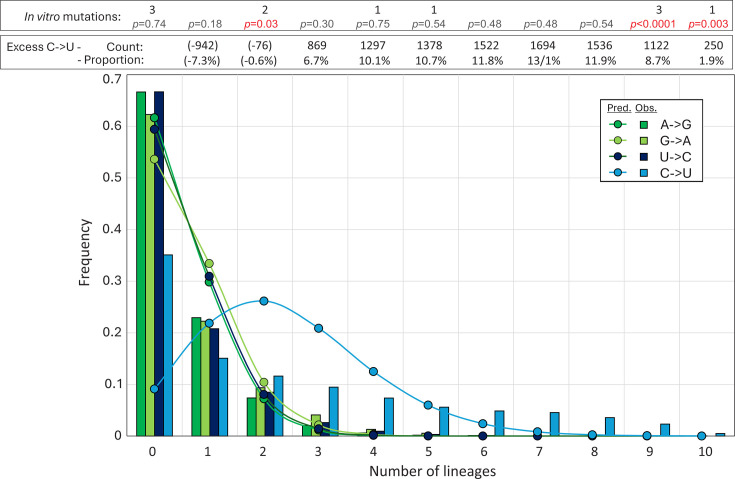
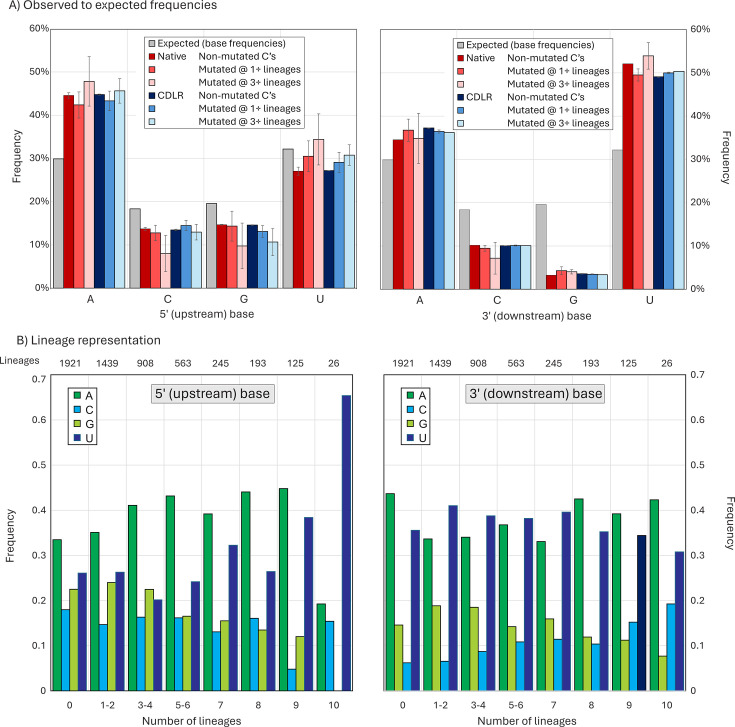
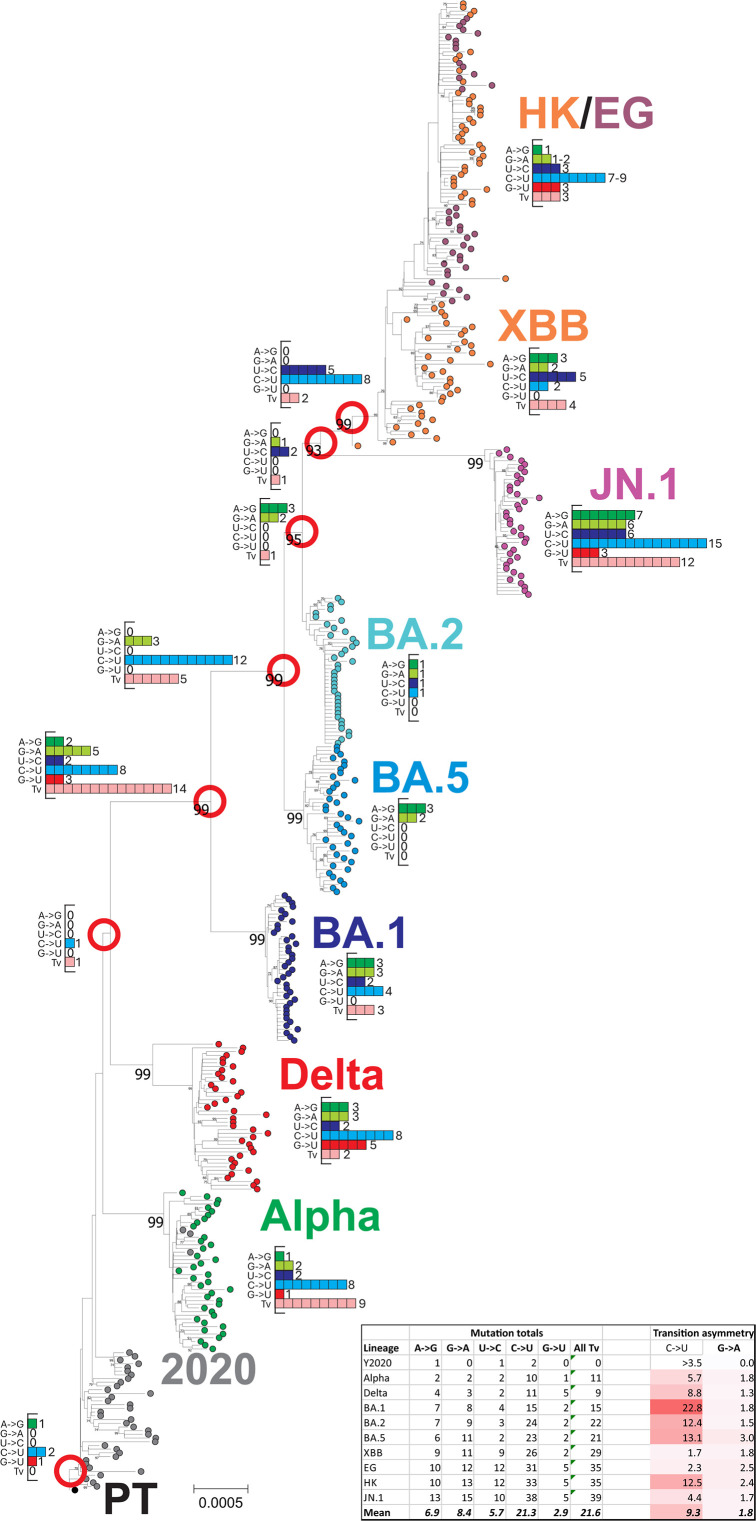
The evolution of severe acute respiratory syndrome coronavirus 2 (SARS-CoV-2) in the pandemic and post-pandemic periods has been characterized by rapid adaptive changes that confer immune escape and enhanced human-to-human transmissibility. Sequence change is additionally marked by an excess number of C→U transitions suggested as being due to host-mediated genome editing. To investigate how these influence the evolutionary trajectory of SARS-CoV-2, 2,000 high-quality, coding complete genome sequences of SARS-CoV-2 variants collected pre-September 2020 and from each subsequently appearing alpha, delta, BA.1, BA.2, BA.5, XBB, EG, HK, and JN.1 lineages were downloaded from NCBI Virus in April 2024. C→U transitions were the most common substitution during the diversification of SARS-CoV-2 lineages over the 4-year observation period. A net loss of C bases and accumulation of U's occurred at a constant rate of approximately 0.2%-0.25%/decade. C→U transitions occurred in over a quarter of all sites with a C (26.5%; range 20.0%-37.2%) around five times more than observed for the other transitions (5.3%-6.8%). In contrast to an approximately random distribution of other transitions across the genome, most C→U substitutions occurred at statistically preferred sites in each lineage. However, only the most C→U polymorphic sites showed evidence for a preferred 5'U context previously associated with APOBEC 3A editing. There was a similarly weak preference for unpaired bases suggesting much less stringent targeting of RNA than mediated by A3 deaminases in DNA editing. Future functional studies are required to determine editing preferences, impacts on replication fitness of SARS-CoV-2 and other RNA viruses, and impact on host tropism.
Severe acute respiratory syndrome coronavirus 2 (SARS-CoV-2) in the pandemic and post-pandemic periods has shown a remarkable capacity to adapt and evade human immune responses and increase its human-to-human transmissibility. The genome of SARS-CoV-2 is also increasingly scarred by the effects of multiple C→U mutations from host genome editing as a cellular defense mechanism akin to restriction factors for retroviruses. Through the analysis of large data sets of SARS-CoV-2 isolate sequences collected throughout the pandemic period and beyond, we show that C→U transitions have driven a base compositional change over time amounting to a net loss of C bases and accumulation of U's at a rate of approximately 0.2%-0.25%/decade. Most C→U substitutions occurred in the absence of the preferred upstream-base context or targeting of unpaired RNA bases previously associated with the host RNA editing protein, APOBEC 3A. The analyses provide a series of testable hypotheses that can be experimentally investigated in the future.
严重急性呼吸综合征冠状病毒2(SARS-CoV-2)在大流行和大流行后时期的进化特征是快速适应性变化,这些变化赋予了免疫逃逸能力并增强了人际传播能力。序列变化还以大量的C→U转换为特征,这些转换被认为是由宿主介导的基因组编辑引起的。为了研究这些变化如何影响SARS-CoV-2的进化轨迹,2024年4月从NCBI病毒数据库下载了2020年9月之前收集的以及随后出现的每个α、δ、BA.1、BA.2、BA.5、XBB、EG、HK和JN.1谱系的2000个高质量、编码完整的SARS-CoV-2变体基因组序列。在4年的观察期内,C→U转换是SARS-CoV-2谱系多样化过程中最常见的替换。C碱基净损失和U的积累以约0.2%-0.25%/十年的恒定速率发生。超过四分之一的含C位点发生了C→U转换(26.5%;范围为20.0%-37.2%),大约是其他转换(5.3%-6.8%)的五倍。与基因组中其他转换的大致随机分布不同,大多数C→U替换发生在每个谱系中具有统计学偏好的位点。然而,只有C→U多态性最高的位点显示出先前与载脂蛋白B mRNA编辑酶催化多肽样3A(APOBEC 3A)编辑相关的5' U偏好的证据。对未配对碱基的偏好同样较弱,这表明与DNA编辑中A3脱氨酶介导的靶向相比,对RNA的靶向要求不那么严格。未来需要进行功能研究,以确定编辑偏好、对SARS-CoV-2和其他RNA病毒复制适应性的影响以及对宿主嗜性的影响。
严重急性呼吸综合征冠状病毒2(SARS-CoV-2)在大流行和大流行后时期表现出了显著的适应和逃避人类免疫反应以及增加人际传播能力的能力。作为一种类似于逆转录病毒限制因子的细胞防御机制,宿主基因组编辑产生的多个C→U突变对SARS-CoV-2基因组的影响也越来越大。通过分析整个大流行期间及以后收集的SARS-CoV-2分离株序列的大数据集,我们表明C→U转换随着时间的推移推动了碱基组成变化,导致C碱基净损失和U的积累,速率约为0.2%-0.25%/十年。大多数C→U替换发生在缺乏先前与宿主RNA编辑蛋白APOBEC 3A相关的上游碱基偏好或未配对RNA碱基靶向的情况下。这些分析提供了一系列可在未来进行实验研究的可测试假设。