Department of Botany, PMAS-Arid Agriculture University Murree Road, Rawalpindi, Pakistan.
Biosystematics Group, Department of Plant Sciences, Wageningen University, Wageningen, 6708PB, Netherlands.
BMC Plant Biol. 2024 Oct 30;24(1):1031. doi: 10.1186/s12870-024-05730-0.
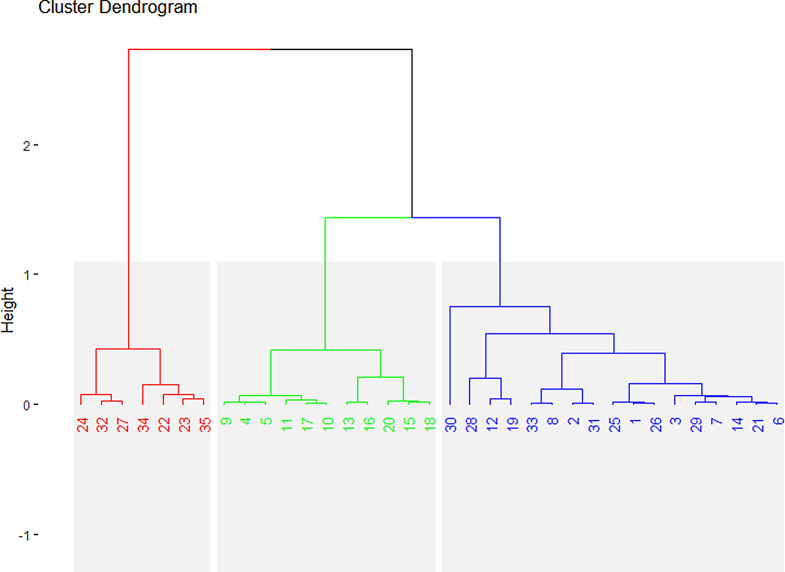
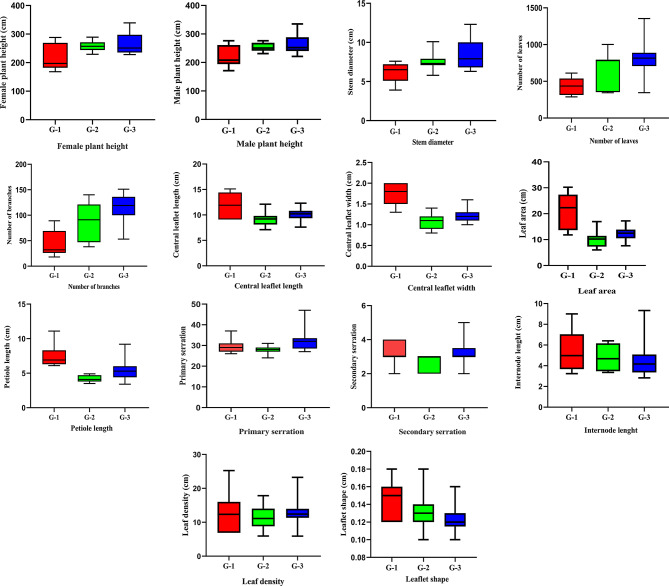
Hemp (Cannabis sativa L.) is an annual, and dioecious herb belonging to the Cannabaceae family. This plant is native to Central and Southeast Asia. The wild races of this species are commonly growing in Khyber Pakhtunkhwa and Punjab provinces, as well as in Islamabad, Pakistan. This study provides crucial insights into how environmental variables influence the wild hemp populations, which can be utilized in for conservation and breeding. The present study was aimed at evaluating the effects of key environmental factors such as altitude, geographical location, precipitation, relative humidity, maximum, minimum, and average temperature on 16 morpho-agronomic traits of a wild population of hemp growing in the Potohar Plateau and Lesser Himalayas. Our findings indicated that high relative humidity (> 64%), low average temperature (< 15 °C), intermediate average temperature (19-22 °C), and high average temperature (> 22 °C) played significant roles in determining the distribution pattern of the wild hemp. Correlation analysis demonstrated that average annual temperature contributed a higher percentage of variation in phenotypic diversity than geographic variables. Additionally, cluster analysis indicated three groups for the selected 35 populations. Clustering and Principal Component Analysis (PCA) of the morpho-agronomic traits indicated that group 1 from the Lesser Himalayas showed high relative humidity (> 64%) and low average temperature (< 15 °C). Conversely, Group 2 populations from the Potohar Plateau demonstrated intermediate average temperature (19-22 °C). There is an existence of Group 3 in the Potohar Plateau with a high average temperature (> 22 °C) compared to Group 1 and Group 2. Our examination highlights the complex interplay between ecological factors, and morphological attributes in native landraces of Cannabis sativa, giving significant insight into knowledge for preservation and breeding initiatives. A study of genetic diversity could complement morpho-agronomic traits in future research to learn more about how genetic variation affects environmental adaptation.
大麻(Cannabis sativa L.)是一种一年生雌雄异株植物,属于大麻科。该植物原产于中亚和东南亚。该物种的野生种群通常生长在开伯尔-普赫图赫瓦省和旁遮普省,以及巴基斯坦伊斯兰堡。本研究提供了有关环境变量如何影响野生大麻种群的重要见解,这可用于保护和繁殖。本研究旨在评估关键环境因素(如海拔、地理位置、降水、相对湿度、最高、最低和平均温度)对生长在波特瓦尔高原和小喜马拉雅山的野生大麻种群的 16 个形态农艺性状的影响。我们的研究结果表明,高相对湿度(>64%)、低平均温度(<15°C)、中等平均温度(19-22°C)和高平均温度(>22°C)对野生大麻的分布模式起着重要作用。相关分析表明,平均年温度对表型多样性的变异贡献百分比高于地理变量。此外,聚类分析表明,选择的 35 个种群分为三组。形态农艺性状的聚类和主成分分析(PCA)表明,来自小喜马拉雅山的第 1 组表现出高相对湿度(>64%)和低平均温度(<15°C)。相反,来自波特瓦尔高原的第 2 组种群表现出中等平均温度(19-22°C)。波特瓦尔高原存在第 3 组,与第 1 组和第 2 组相比,平均温度较高(>22°C)。我们的研究强调了生态因素和大麻本土品种形态特征之间的复杂相互作用,为保护和繁殖计划提供了重要的知识。未来的研究可以结合遗传多样性研究形态农艺性状,以了解遗传变异如何影响环境适应。