Overmiller Andrew M, Uchiyama Akihiko, Hope Emma D, Nayak Subhashree, O'Neill Christopher G, Hasneen Kowser, Chen Yi-Wen, Naz Faiza, Dell'Orso Stefania, Brooks Stephen R, Jiang Kan, Morasso Maria I
Laboratory of Skin Biology, National Institute of Arthritis and Musculoskeletal and Skin Diseases, NIH, Bethesda, Maryland, USA.
Department of Genomics and Precision Medicine, George Washington University School of Medicine and Health Sciences, Washington, DC, USA.
JCI Insight. 2024 Dec 20;9(24):e182844. doi: 10.1172/jci.insight.182844.
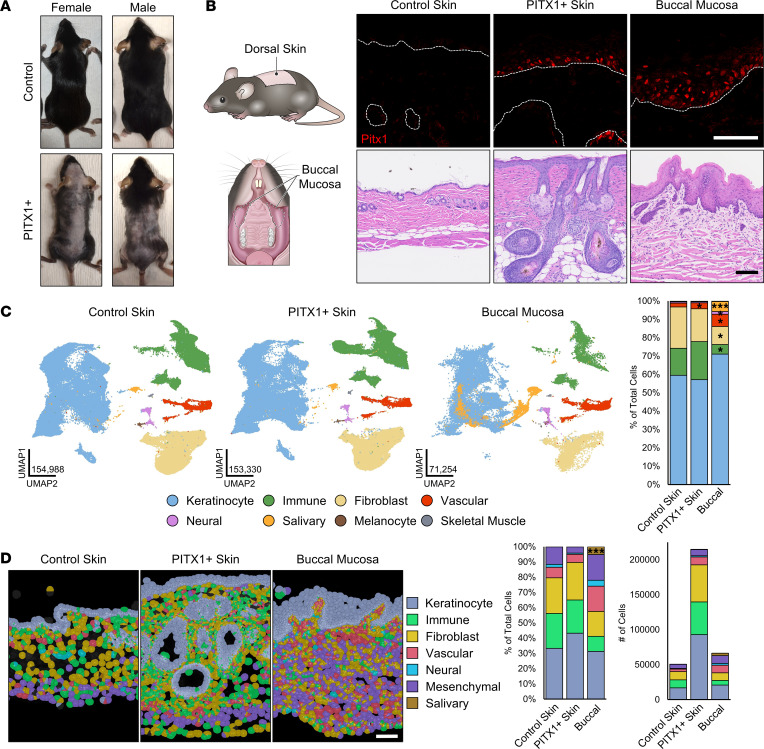
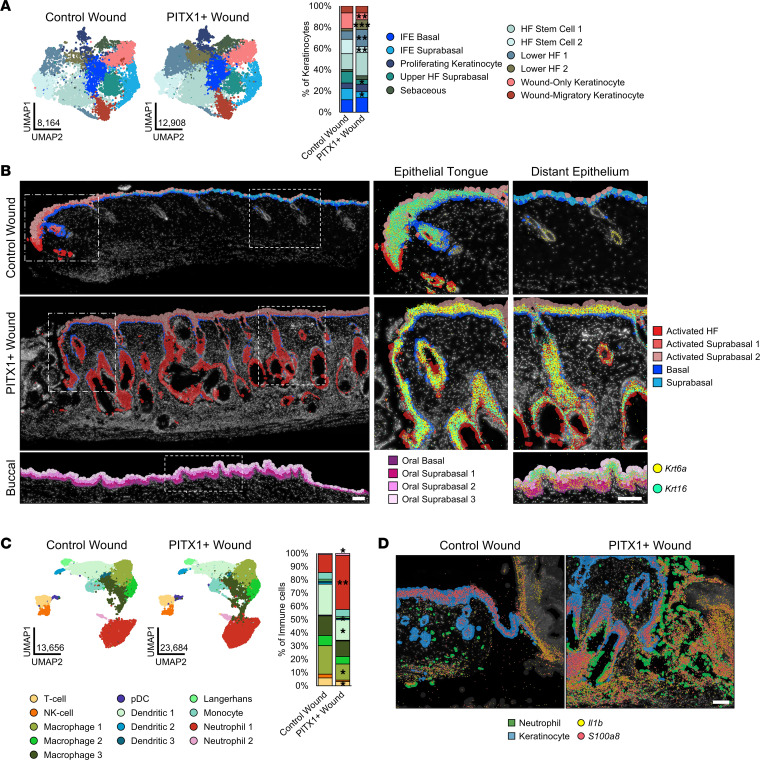
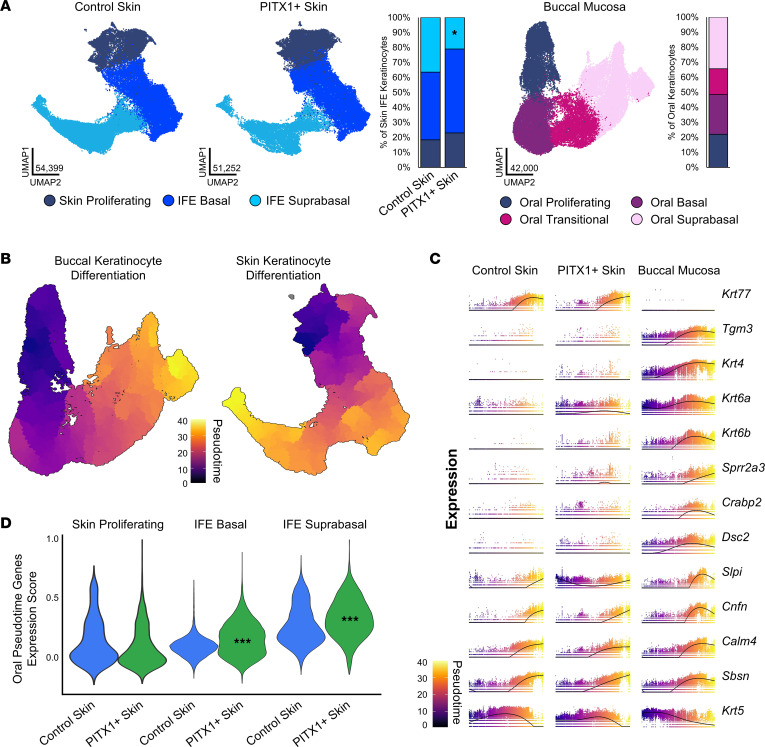
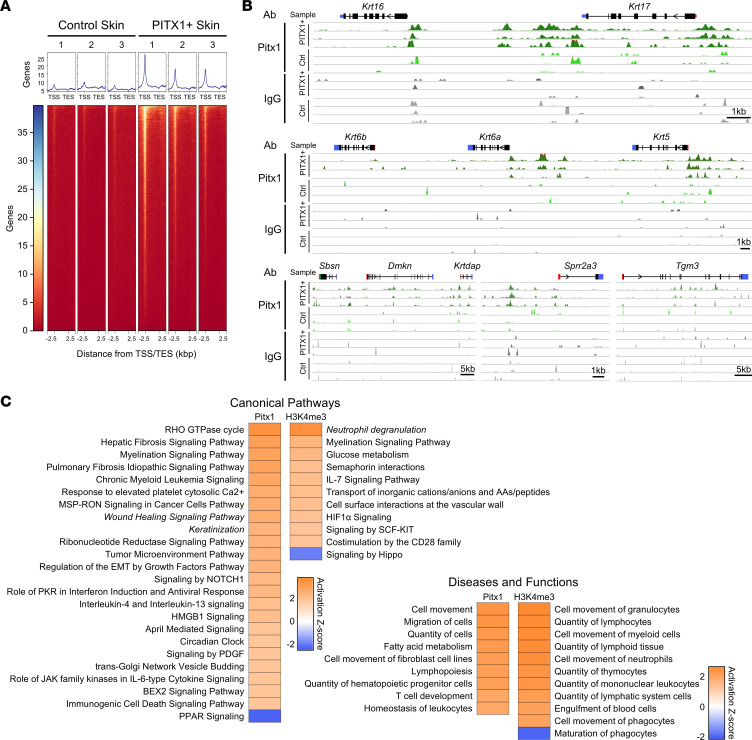
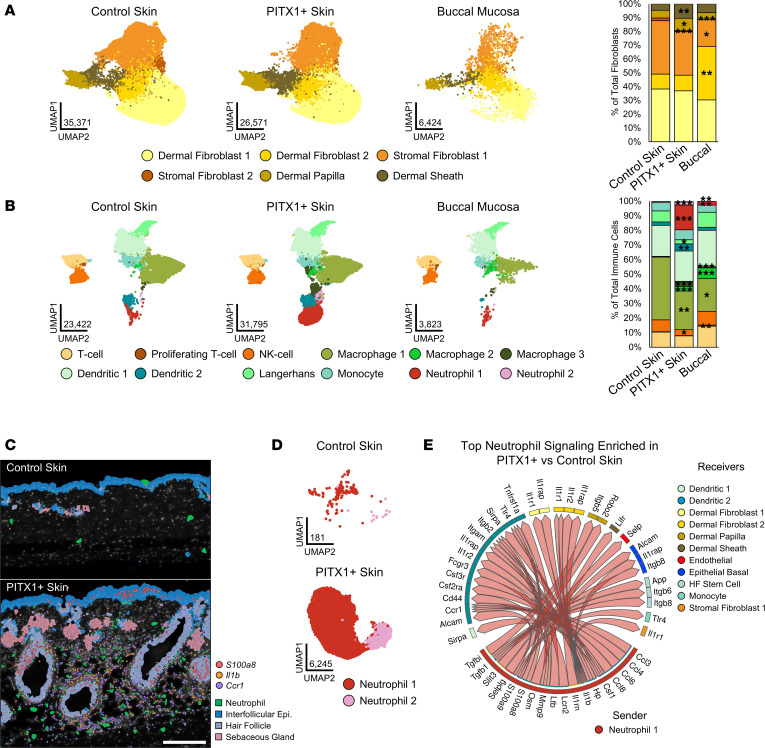
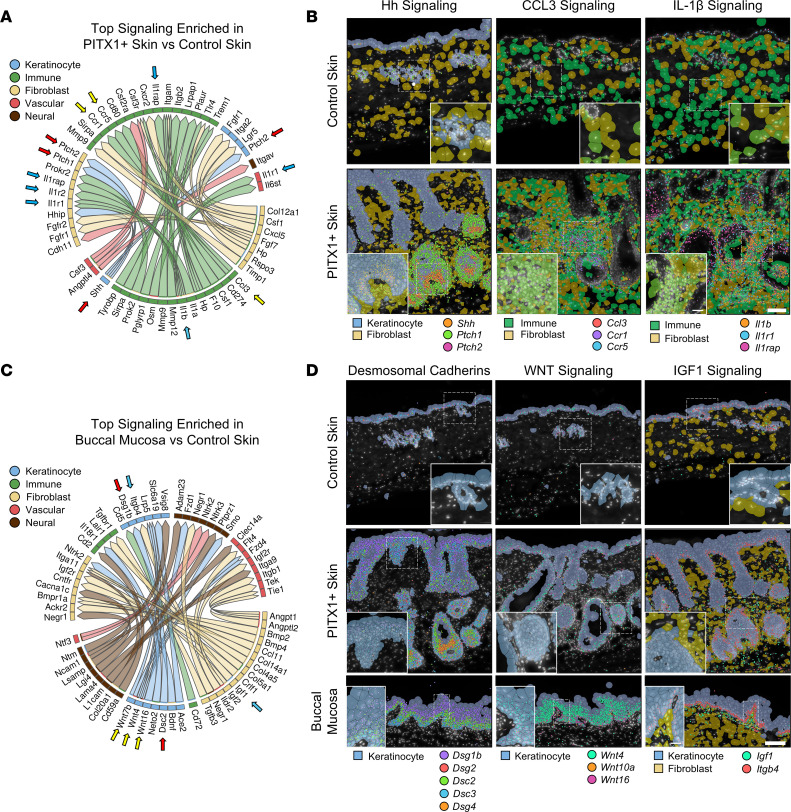
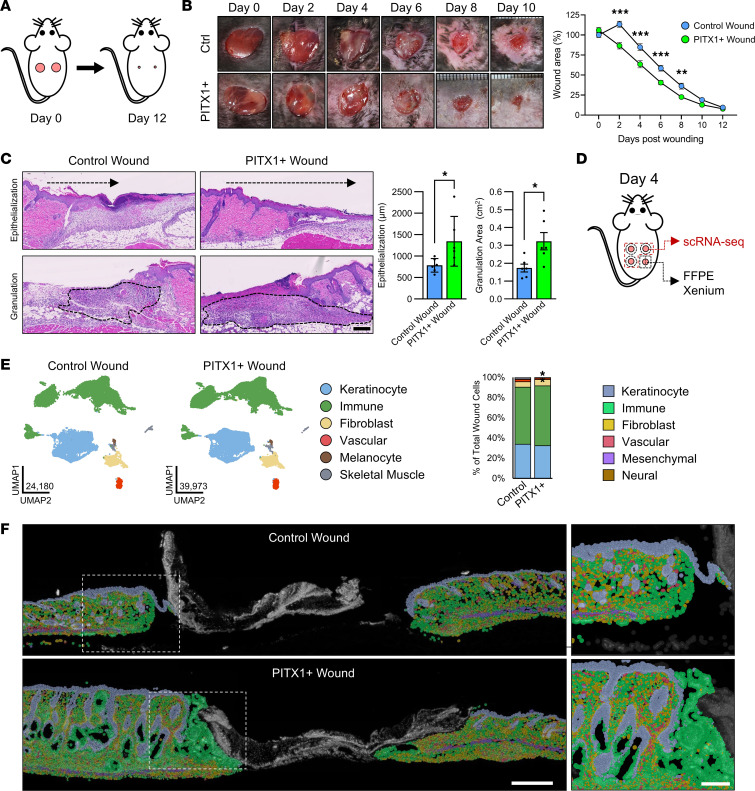
Cutaneous wound healing is a slow process that often terminates with permanent scarring while oral wounds, in contrast, regenerate after damage faster. Unique molecular networks in epidermal and oral epithelial keratinocytes contribute to the tissue-specific response to wounding, but key factors that establish those networks and how the keratinocytes interact with their cellular environment remain to be elucidated. The transcription factor PITX1 is highly expressed in the oral epithelium but is undetectable in cutaneous keratinocytes. To delineate if PITX1 contributes to oral keratinocyte identity, cell-cell interactions, and the improved wound healing capabilities, we ectopically expressed PITX1 in the epidermis of murine skin. Using comparative analysis of murine skin and oral (buccal) mucosa with single-cell RNA-Seq and spatial transcriptomics, we found that PITX1 expression enhances epidermal keratinocyte migration and proliferation and alters differentiation to a quasi-oral keratinocyte state. PITX1+ keratinocytes reprogrammed intercellular communication between skin-resident cells to mirror buccal tissue while stimulating the influx of neutrophils that establish a pro-inflammatory environment. Furthermore, PITX1+ skin healed significantly faster than control skin via increased keratinocyte activation and migration and a tunable inflammatory environment. These results illustrate that PITX1 programs oral keratinocyte identity and cellular interactions while revealing critical downstream networks that promote wound closure.
皮肤伤口愈合是一个缓慢的过程,通常以永久性瘢痕形成告终,而相比之下,口腔伤口在受损后能更快再生。表皮和口腔上皮角质形成细胞中独特的分子网络有助于组织对伤口的特异性反应,但建立这些网络的关键因素以及角质形成细胞如何与其细胞环境相互作用仍有待阐明。转录因子PITX1在口腔上皮中高度表达,但在皮肤角质形成细胞中无法检测到。为了确定PITX1是否有助于口腔角质形成细胞的特性、细胞间相互作用以及改善伤口愈合能力,我们在小鼠皮肤表皮中异位表达了PITX1。通过单细胞RNA测序和空间转录组学对小鼠皮肤和口腔(颊)黏膜进行比较分析,我们发现PITX1的表达增强了表皮角质形成细胞的迁移和增殖,并将分化改变为准口腔角质形成细胞状态。PITX1 +角质形成细胞重新编程皮肤驻留细胞之间的细胞间通讯,以反映颊组织,同时刺激建立促炎环境的中性粒细胞流入。此外,PITX1 +皮肤通过增加角质形成细胞的活化和迁移以及可调的炎症环境,愈合速度明显快于对照皮肤。这些结果表明,PITX1编程口腔角质形成细胞的特性和细胞间相互作用,同时揭示促进伤口闭合的关键下游网络。