Burke Gabrielle, Wongpan Pat, Lannuzel Delphine, Hayashida Hakase
Institute for Marine and Antarctic Studies, University of Tasmania, nipaluna, Hobart, TAS, Australia.
Australian Antarctic Program Partnership, Institute for Marine and Antarctic Studies, University of Tasmania, nipaluna, Hobart, TAS, Australia.
Sci Data. 2024 Oct 31;11(1):1185. doi: 10.1038/s41597-024-04038-w.
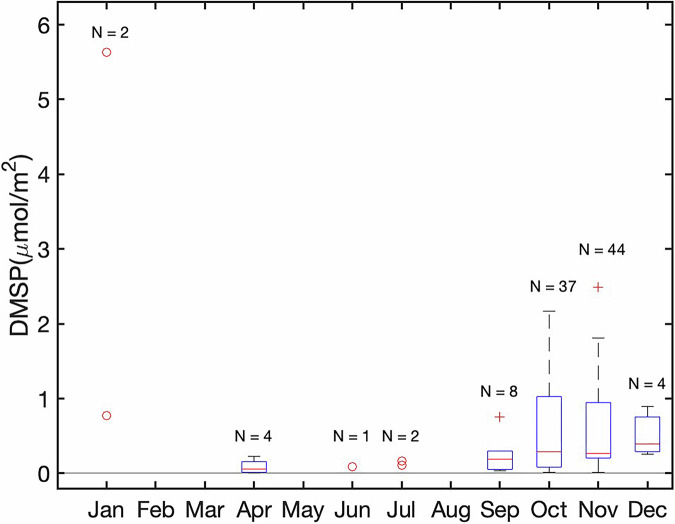
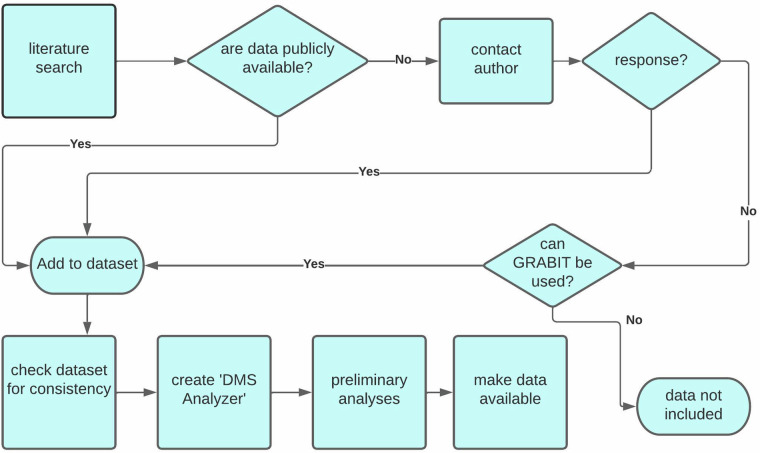
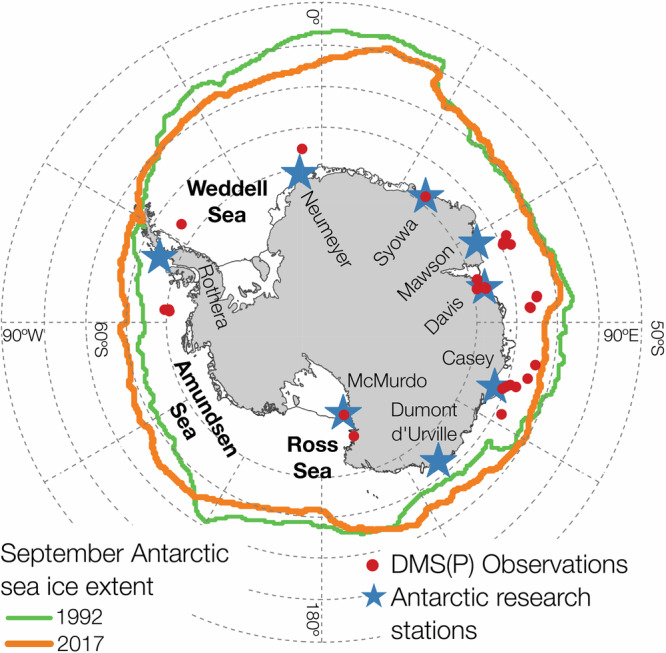
Dimethylsulfide (DMS) is a climatically active volatile sulfur compound found in Earth's oceans and atmosphere that plays an important role in cloud formation. DMS originates from its precursor dimethylsulfoniopropionate (DMSP), which is produced by several classes of phytoplankton. Concentrations of DMS and DMSP in Antarctic sea ice, snow and underlying seawater are not well documented and there is currently no dataset available to find the existing data. The purpose of this project was to compile historical measurements into a publicly available dataset. A total of 220 samples collected since 1992 were compiled using the Antarctic Sea ice Processes and Climate program template, in accordance with the existing datasets for chlorophyll-a, macronutrients, and dissolved iron. Analyses performed on the completed DMS dataset showed that the spatial and temporal coverages are limited; there are barely any measurements in autumn and winter, nor in the Amundsen or Ross seas. These findings provide a basis for future sampling efforts in the Antarctic region.
二甲基硫醚(DMS)是一种存在于地球海洋和大气中的具有气候活性的挥发性硫化合物,在云的形成中起着重要作用。DMS源自其前体二甲基磺基丙酸酯(DMSP),DMSP由几类浮游植物产生。南极海冰、雪和下层海水中DMS和DMSP的浓度记录不完善,目前没有可用于查找现有数据的数据集。该项目的目的是将历史测量数据汇编成一个可公开获取的数据集。自1992年以来收集的总共220个样本,按照叶绿素a、大量营养素和溶解铁的现有数据集,使用南极海冰过程与气候计划模板进行了汇编。对完成的DMS数据集进行的分析表明,其时空覆盖范围有限;秋季和冬季几乎没有测量数据,阿蒙森海或罗斯海也几乎没有。这些发现为未来在南极地区的采样工作提供了基础。