Division of Nephrology, Sichuan Provincial People's Hospital & Sichuan Academy of Sciences, University of Electronic Science and Technology, Chengdu, China.
Division of Nephrology, Tongji Hospital, Tongji Medical College, Huazhong University of Science and Technology, Wuhan, China.
Sci Rep. 2024 Oct 31;14(1):26216. doi: 10.1038/s41598-024-76825-9.
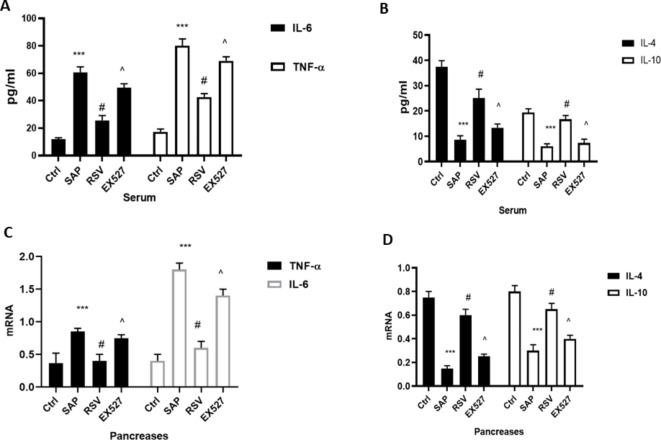
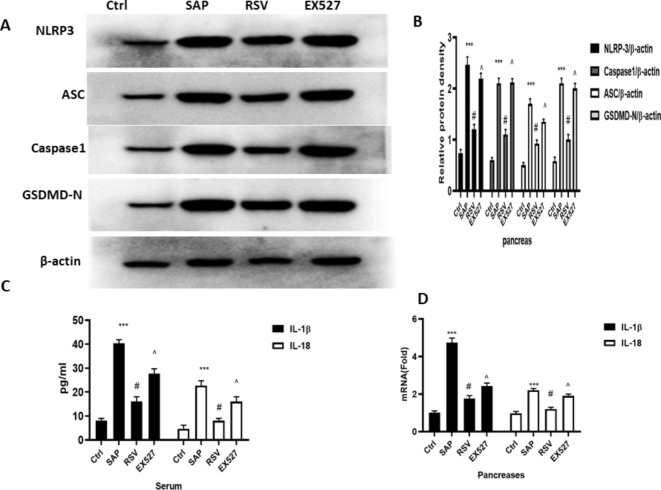
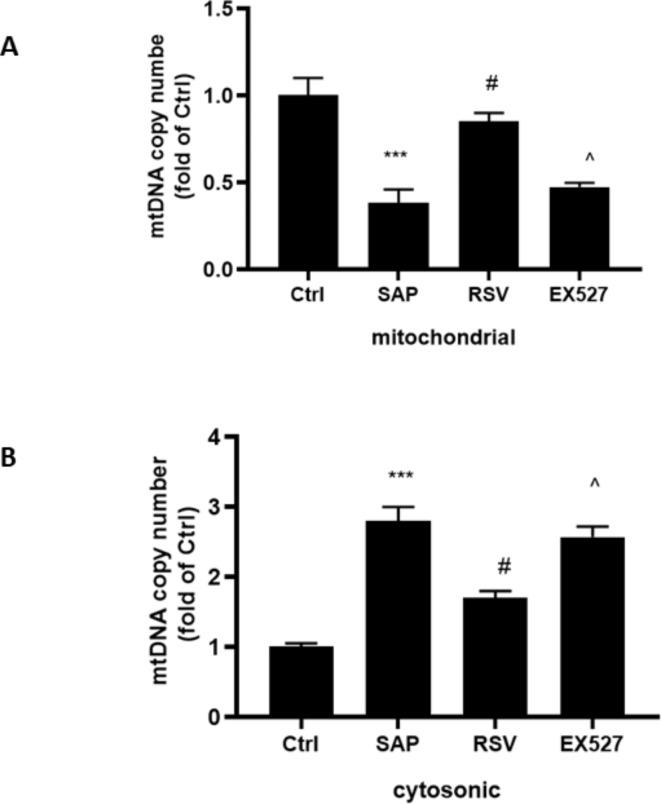
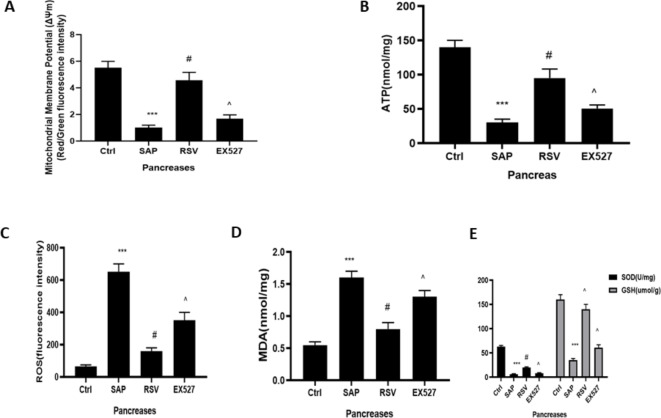
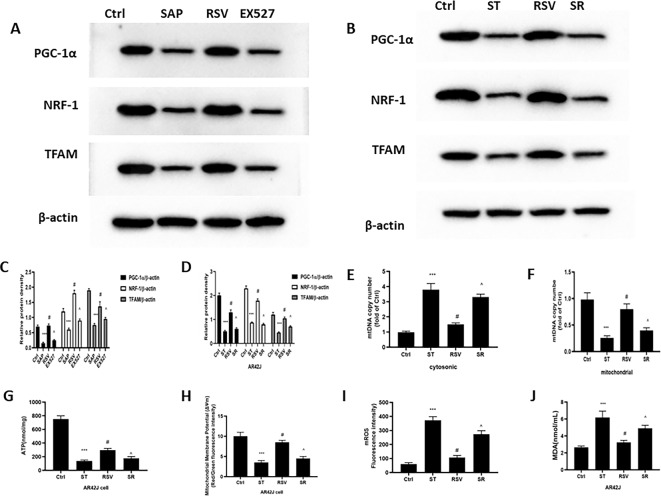
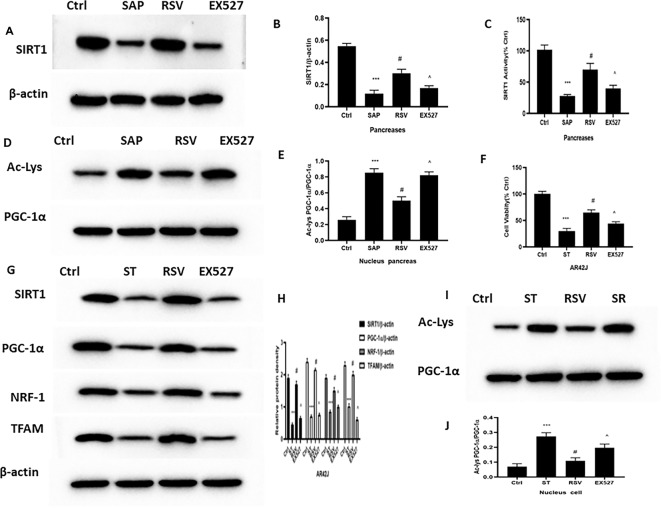
NLRP3 inflammasomes- pyroptosis axis is activated by microcirculation dysfunction and touched off severe acute pancreatitis (SAP). Activation of PGC-1α can improve microcirculation dysfunction by promoting mitochondrial biogenesis. Resveratrol (RSV), one typical SIRT1 agonist, possesses the ability of alleviating SAP and activing PGC-1α. Therefore, the study was designated to explore whether the protective effect of RSV in SAP was though suppressing NLRP3 inflammasomes- pyroptosis axis via advancing SIRT1/PGC-1α-dependent mitochondrial biogenesis. The models of SAP were induced by treating with sodium taurodeoxycholate in rats and AR42J cells. The pathological injury, water content (dry/wet ratio) and microcirculation function of pancreas, activity of lipase and amylase were used to evaluate pancreatic damage. The expression of inflammatory cytokine was measured by ELISA and RT-PCR. The damage of mitochondrial was evaluated by measuring the changes in Mitochondrial Membrane Potential (ΔΨm), mitochondrial ROS, ATP content and MDA as well as relocation of mtDNA and the activity of SOD and GSH. The expressions of NLRP3 inflammasomes- pyroptosis axis proteins were detected by Western blotting as well as SIRT1/PGC-1α/NRF1/TFAM pathway protein. Moreover, the modification of PGC-1α was measured by co-immunoprecipitation. The results displayed that RSV can significantly improve the damage of pancreas and mitochondrial, decrease the expression of pro-inflammatory factor and the activation of NLRP3 inflammasomes- pyroptosis axis, promote the expression of an-inflammatory factor and the deacetylation of PGC-1α together with facilitating SIRT1/PGC-1α-mediating mitochondrial biogenesis. Therefore, the protective effect of RSV in SAP is though inactivation of NLRP3 inflammasomes- pyroptosis axis via promoting mitochondrial biogenesis in a SIRT1/PGC-1α-dependent manner.
NLRP3 炎性小体-焦亡轴被微循环功能障碍激活,并引发严重急性胰腺炎 (SAP)。PGC-1α 的激活可以通过促进线粒体生物发生来改善微循环功能障碍。白藜芦醇 (RSV) 是一种典型的 SIRT1 激动剂,具有缓解 SAP 和激活 PGC-1α 的能力。因此,本研究旨在探讨 RSV 通过促进 SIRT1/PGC-1α 依赖性线粒体生物发生抑制 NLRP3 炎性小体-焦亡轴是否对 SAP 具有保护作用。采用牛磺胆酸钠处理大鼠和 AR42J 细胞建立 SAP 模型。通过测定胰腺的病理损伤、含水量(干/湿比)和微循环功能、脂肪酶和淀粉酶活性来评估胰腺损伤。通过 ELISA 和 RT-PCR 测定炎性细胞因子的表达。通过测量线粒体膜电位 (ΔΨm)、线粒体 ROS、ATP 含量和 MDA 的变化以及 mtDNA 的重定位和 SOD 和 GSH 的活性来评估线粒体损伤。通过 Western blot 检测 NLRP3 炎性小体-焦亡轴蛋白的表达以及 SIRT1/PGC-1α/NRF1/TFAM 通路蛋白的表达。此外,通过免疫共沉淀检测 PGC-1α 的修饰。结果显示,RSV 能明显改善胰腺和线粒体损伤,降低促炎因子的表达和 NLRP3 炎性小体-焦亡轴的激活,促进抗炎因子的表达和 PGC-1α 的去乙酰化,并促进 SIRT1/PGC-1α 介导的线粒体生物发生。因此,RSV 在 SAP 中的保护作用是通过促进 SIRT1/PGC-1α 依赖性线粒体生物发生来抑制 NLRP3 炎性小体-焦亡轴实现的。