Malcore Rebecca M, Samanta Milan Kumar, Kalantry Sundeep, Iwase Shigeki
Department of Human Genetics, University of Michigan Medical School, Ann Arbor, MI 48105, USA.
Lead contact.
bioRxiv. 2024 Oct 27:2024.10.24.620066. doi: 10.1101/2024.10.24.620066.
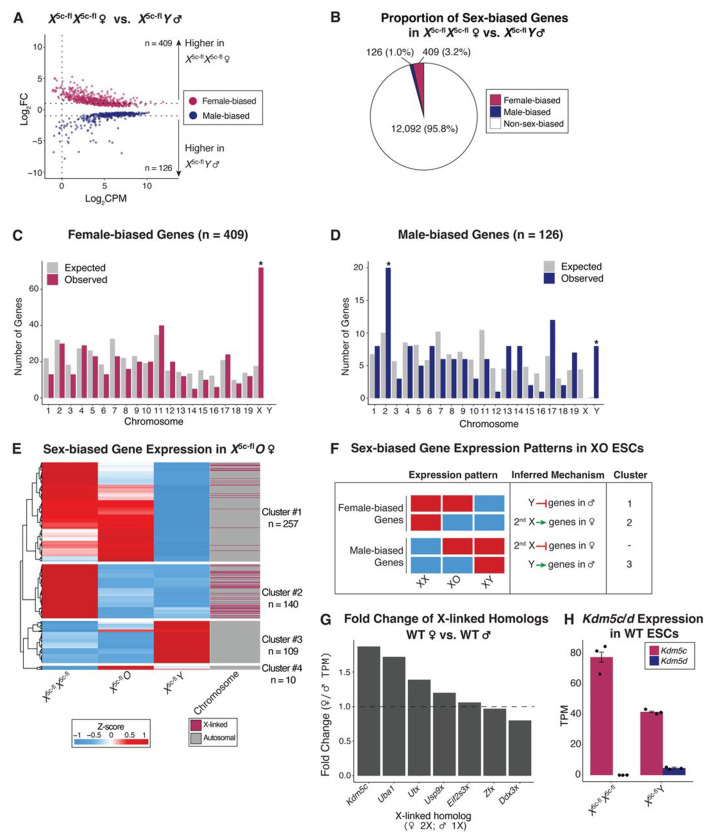
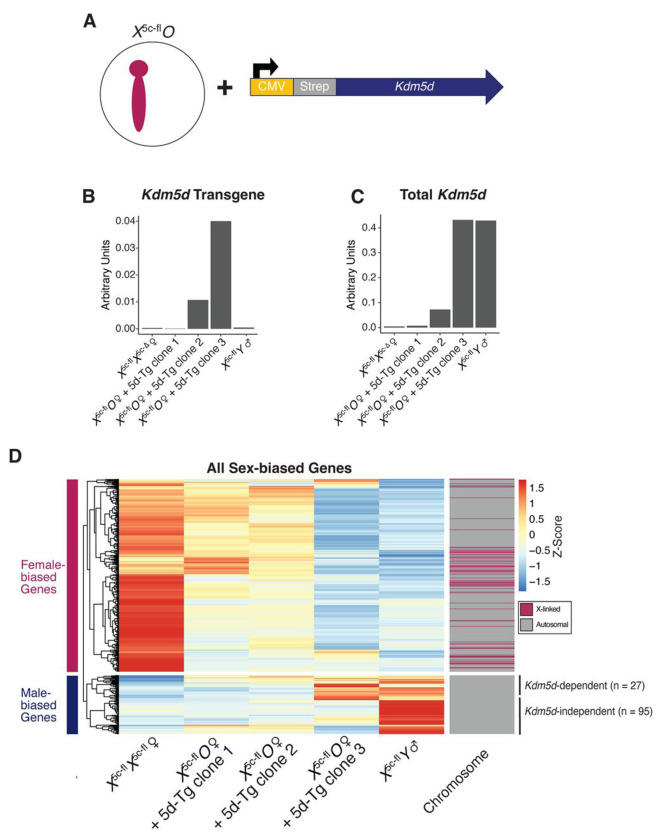
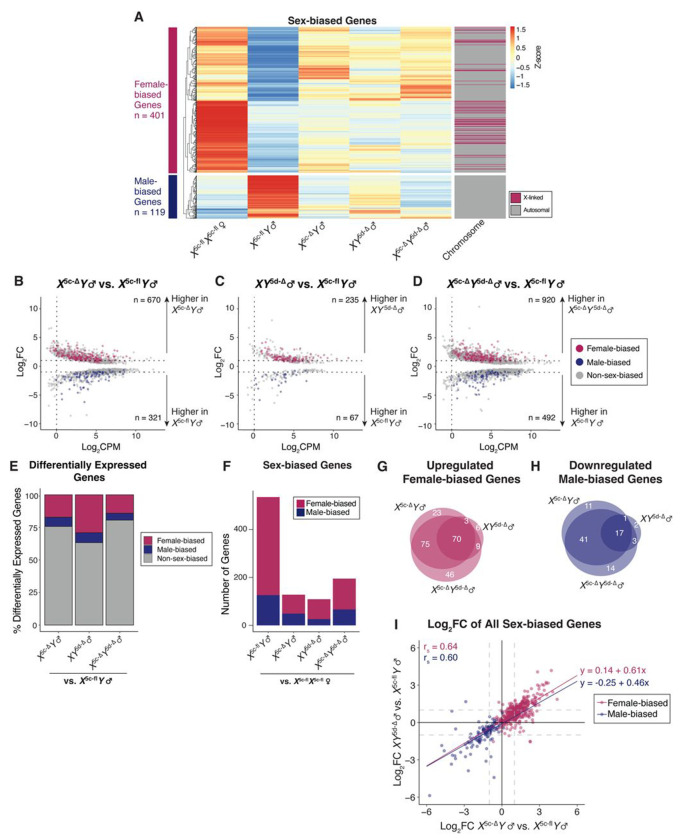
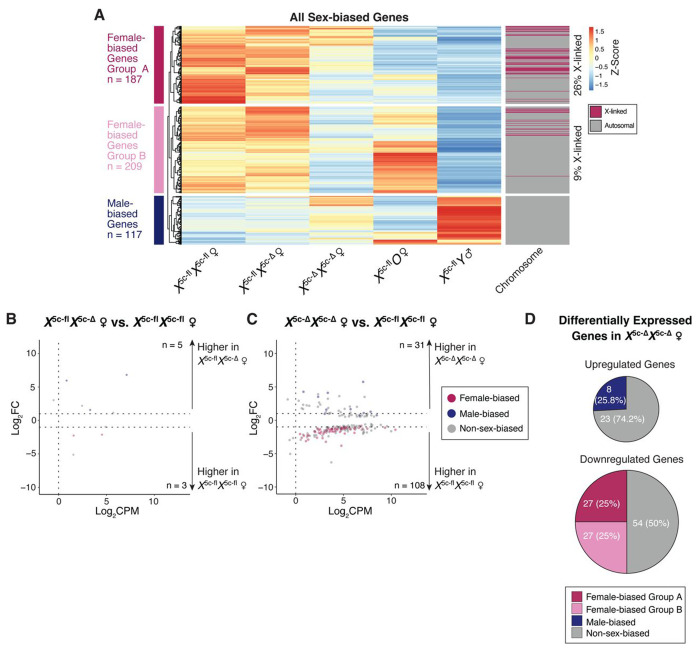
Conventionally, Y-linked is thought to drive sex differences by triggering differential hormone production. Ancestral X-Y gene pairs, however, are hypothesized to drive hormone-independent sex differences. Here, we show that the X-Y gene pair regulates sex-biased gene expression in pluripotent mouse embryonic stem cells (ESCs). Wild-type (WT) XX female ESCs exhibit >2-fold higher expression of 409 genes relative to WT XY male ESCs. Conversely, WT XY male ESCs exhibit >2-fold higher expression of 126 genes compared to WT XX female ESCs. Loss of in female ESCs downregulates female-biased genes. In contrast, loss of either or in male ESCs upregulates female-biased genes and downregulates male-biased genes, effectively neutralizing sex-biased gene expression. KDM5C promotes the expression of and several other Y-linked genes in male ESCs. Moreover, ectopic expression in female ESCs is sufficient to drive male-biased gene expression. These results establish as critical regulators of sex-biased gene expression.
传统上,人们认为Y染色体通过触发不同的激素产生来驱动性别差异。然而,据推测,祖先的X-Y基因对会驱动与激素无关的性别差异。在这里,我们表明X-Y基因对调节多能小鼠胚胎干细胞(ESC)中的性别偏向基因表达。野生型(WT)XX雌性ESC相对于WT XY雄性ESC表现出409个基因的表达水平高出两倍以上。相反,与WT XX雌性ESC相比,WT XY雄性ESC表现出126个基因的表达水平高出两倍以上。雌性ESC中该基因缺失会下调雌性偏向基因。相比之下,雄性ESC中该基因或另一基因缺失会上调雌性偏向基因并下调雄性偏向基因,有效地消除了性别偏向基因表达。KDM5C促进雄性ESC中该基因和其他几个Y连锁基因的表达。此外,雌性ESC中的异位该基因表达足以驱动雄性偏向基因表达。这些结果确立了该基因对作为性别偏向基因表达的关键调节因子。