Fels Institute for Cancer Research, Temple University School of Medicine, 3400 N. Broad St. PAHB Room 201, Philadelphia, PA, 19140, USA.
Biol Sex Differ. 2017 Aug 17;8(1):28. doi: 10.1186/s13293-017-0150-x.
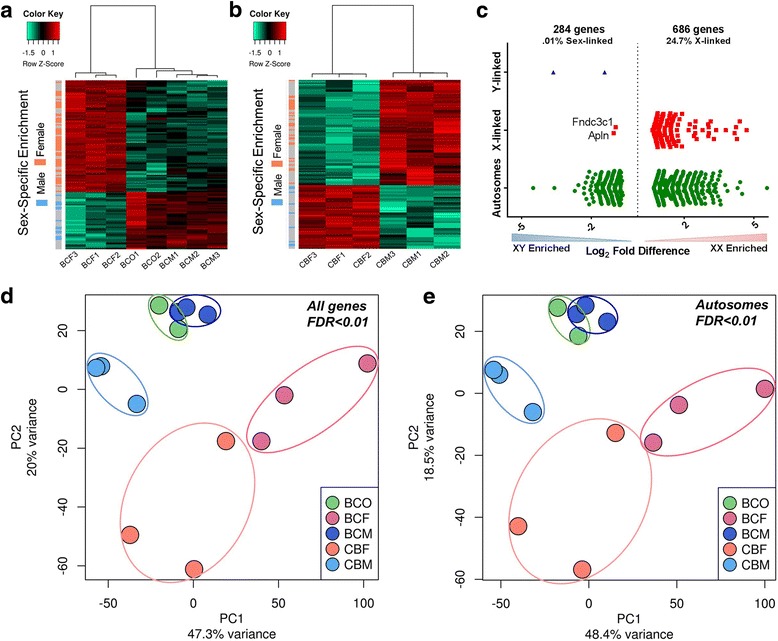
Pre-implantation embryos exhibit sexual dimorphisms in both primates and rodents. To determine whether these differences reflected sex-biased expression patterns, we generated transcriptome profiles for six 40,XX, six 40,XY, and two 39,X mouse embryonic stem (ES) cells by RNA sequencing.
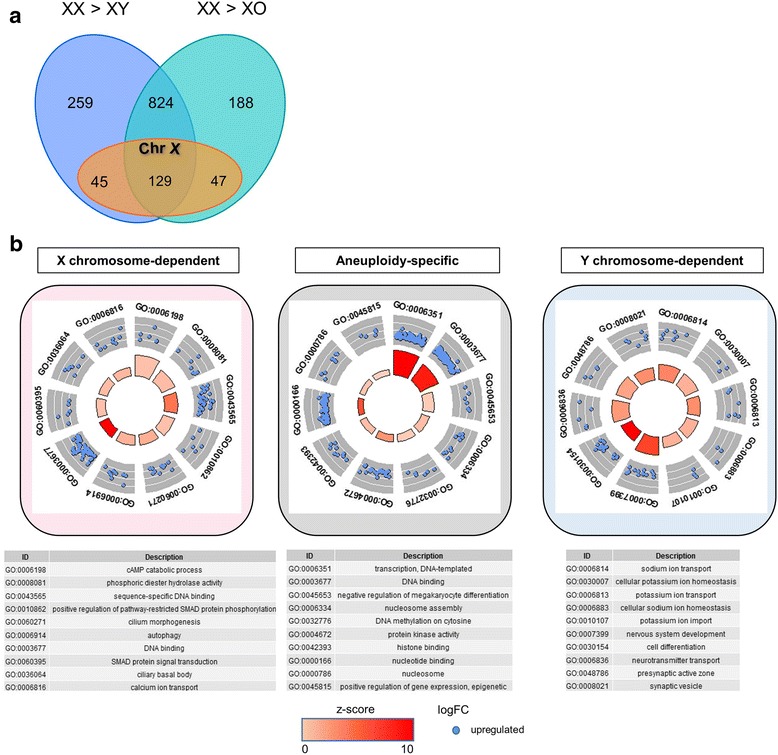
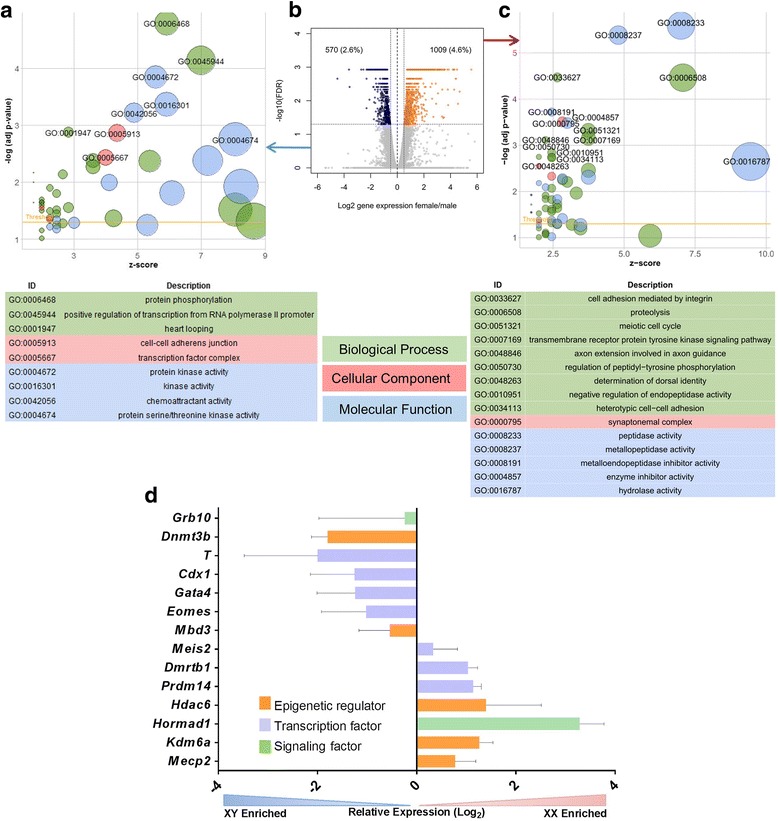
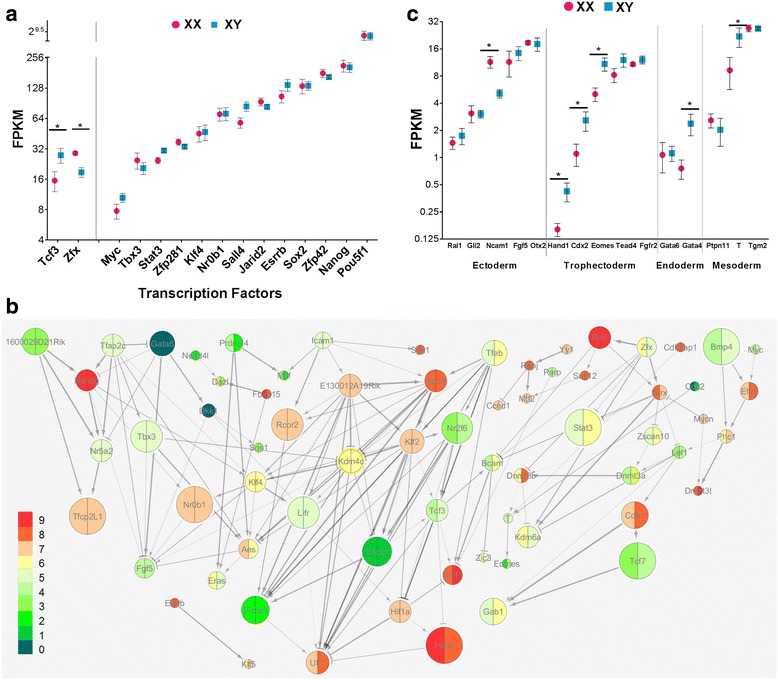
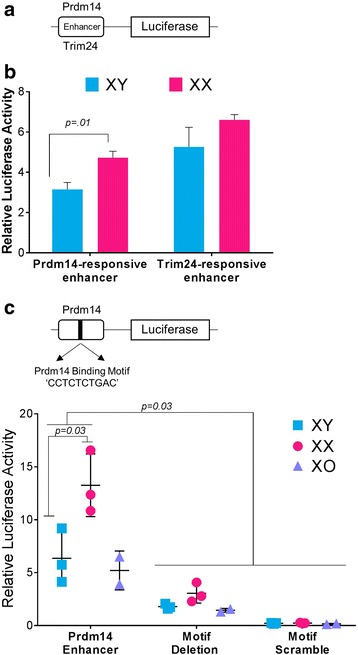
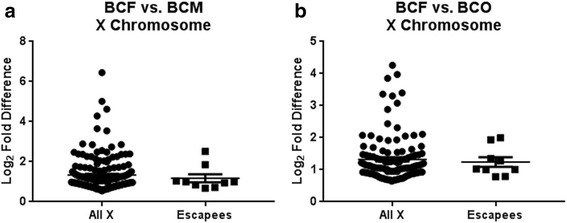
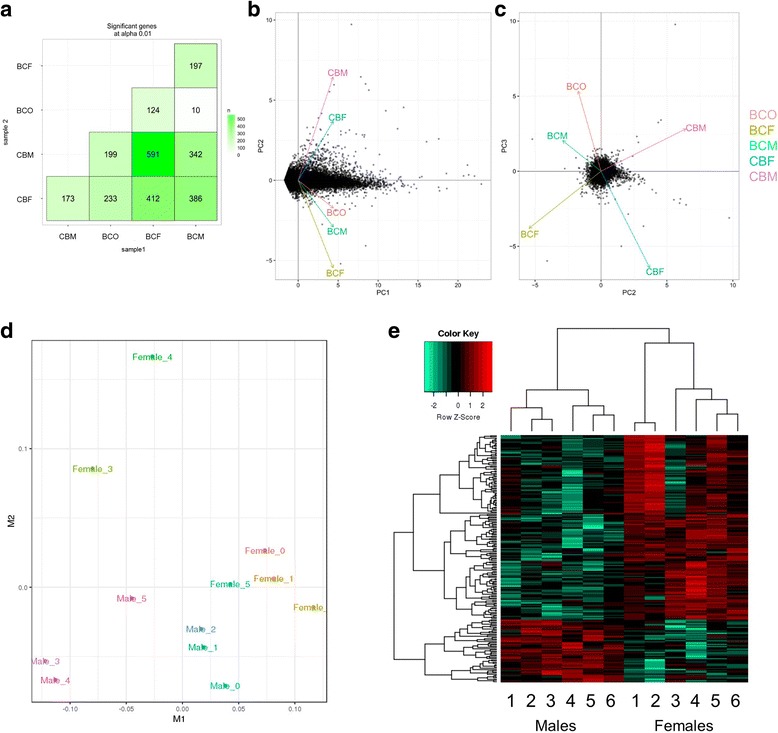
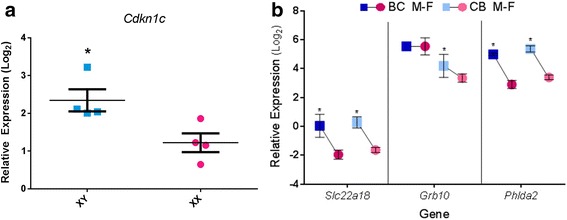
We found hundreds of coding and non-coding RNAs that were differentially expressed between male and female cells. Surprisingly, the majority of these were autosomal and included RNA encoding transcription and epigenetic and chromatin remodeling factors. We showed differential Prdm14-responsive enhancer activity in male and female cells, correlating with the sex-specific levels of Prdm14 expression. This is the first time sex-specific enhancer activity in ES cells has been reported. Evaluation of X-linked gene expression patterns between our XX and XY lines revealed four distinct categories: (1) genes showing 2-fold greater expression in the female cells; (2) a set of genes with expression levels well above 2-fold in female cells; (3) genes with equivalent RNA levels in male and female cells; and strikingly, (4) a small number of genes with higher expression in the XY lines. Further evaluation of autosomal gene expression revealed differential expression of imprinted loci, despite appropriate parent-of-origin patterns. The 39,X lines aligned closely with the XY cells and provided insights into potential regulation of genes associated with Turner syndrome in humans. Moreover, inclusion of the 39,X lines permitted three-way comparisons, delineating X and Y chromosome-dependent patterns.
Overall, our results support the role of the sex chromosomes in establishing sex-specific networks early in embryonic development and provide insights into effects of sex chromosome aneuploidies originating at those stages.
在灵长类动物和啮齿类动物中,胚胎在植入前就表现出性别二态性。为了确定这些差异是否反映了性别偏向的表达模式,我们通过 RNA 测序生成了六个 40,XX、六个 40,XY 和两个 39,X 小鼠胚胎干细胞(ES 细胞)的转录组图谱。
我们发现了数百个编码和非编码 RNA,它们在雄性和雌性细胞之间存在差异表达。令人惊讶的是,这些 RNA 大多数是常染色体的,包括编码转录和表观遗传及染色质重塑因子的 RNA。我们显示了雄性和雌性细胞中 Prdm14 反应性增强子活性的差异,这与 Prdm14 表达的性别特异性水平相关。这是首次报道 ES 细胞中性别特异性增强子活性。我们对 XX 和 XY 细胞系中 X 连锁基因表达模式的评估揭示了四个不同的类别:(1)在雌性细胞中表达增加两倍的基因;(2)一组在雌性细胞中表达水平远高于两倍的基因;(3)在雄性和雌性细胞中具有相当 RNA 水平的基因;(4)极少数基因在 XY 细胞系中表达更高。对常染色体基因表达的进一步评估显示,尽管存在适当的亲本来源模式,但印记基因座的表达存在差异。39,X 细胞系与 XY 细胞系紧密对齐,并提供了对与特纳综合征相关基因的潜在调控的见解。此外,包含 39,X 细胞系可以进行三种方式的比较,描绘出 X 和 Y 染色体依赖性模式。
总的来说,我们的结果支持性染色体在胚胎发育早期建立性别特异性网络的作用,并提供了对起源于这些阶段的性染色体非整倍性影响的见解。