Barron Samantha V, Egger Daniel J, Pelofske Elijah, Bärtschi Andreas, Eidenbenz Stephan, Lehmkuehler Matthis, Woerner Stefan
IBM Quantum, IBM Thomas J. Watson Research Center, Yorktown Heights, NY, USA.
IBM Quantum, IBM Research Europe-Zurich, Rueschlikon, Switzerland.
Nat Comput Sci. 2024 Nov;4(11):865-875. doi: 10.1038/s43588-024-00709-1. Epub 2024 Nov 1.
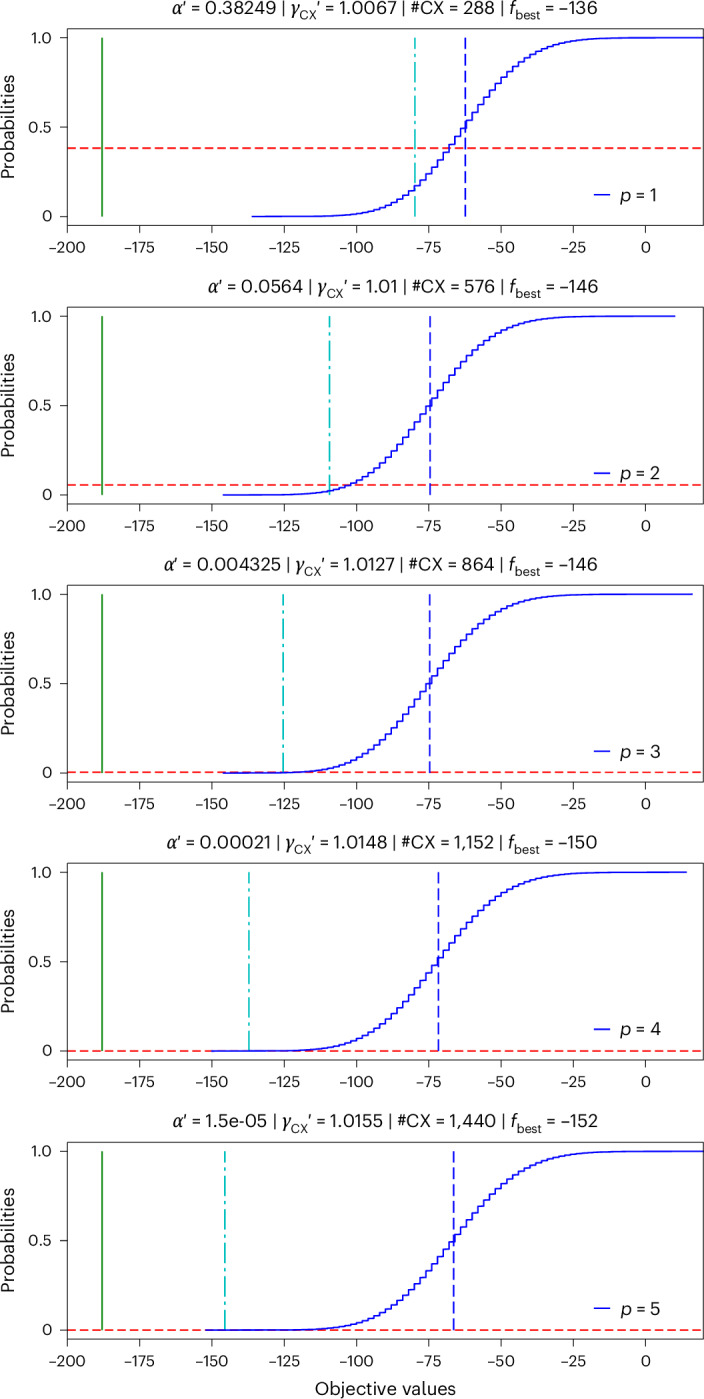
Quantum computing has emerged as a powerful computational paradigm capable of solving problems beyond the reach of classical computers. However, today's quantum computers are noisy, posing challenges to obtaining accurate results. Here, we explore the impact of noise on quantum computing, focusing on the challenges in sampling bit strings from noisy quantum computers and the implications for optimization and machine learning. We formally quantify the sampling overhead to extract good samples from noisy quantum computers and relate it to the layer fidelity, a metric to determine the performance of noisy quantum processors. Further, we show how this allows us to use the conditional value at risk of noisy samples to determine provable bounds on noise-free expectation values. We discuss how to leverage these bounds for different algorithms and demonstrate our findings through experiments on real quantum computers involving up to 127 qubits. The results show strong alignment with theoretical predictions.
量子计算已成为一种强大的计算范式,能够解决传统计算机无法企及的问题。然而,当今的量子计算机存在噪声,这给获得准确结果带来了挑战。在此,我们探讨噪声对量子计算的影响,重点关注从有噪声的量子计算机中采样比特串的挑战以及对优化和机器学习的影响。我们正式量化了从有噪声的量子计算机中提取良好样本的采样开销,并将其与层保真度相关联,层保真度是一种用于确定有噪声量子处理器性能的指标。此外,我们展示了如何利用这一点,通过有噪声样本的条件风险价值来确定无噪声期望值的可证明界限。我们讨论了如何针对不同算法利用这些界限,并通过在涉及多达127个量子比特的真实量子计算机上进行实验来展示我们的发现。结果与理论预测高度吻合。