Division of Pediatric Gastroenterology and Nutrition, Xinhua Hospital, Shanghai Jiao Tong University School of Medicine, Shanghai, People's Republic of China.
Shanghai Institute for Pediatric Research, Shanghai, People's Republic of China.
BMC Pediatr. 2024 Nov 1;24(1):697. doi: 10.1186/s12887-024-05174-3.
A wide variety of diseases mimic inflammatory bowel disease (IBD). This study aimed to reduce the misdiagnosis among children with colonic ulcers.
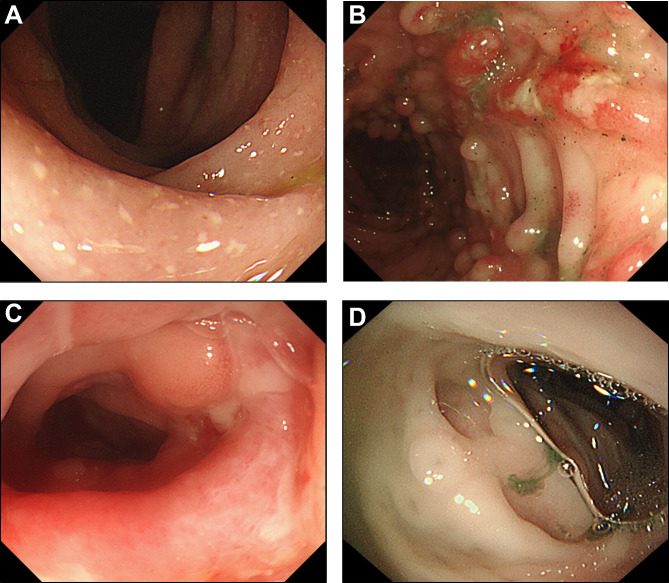
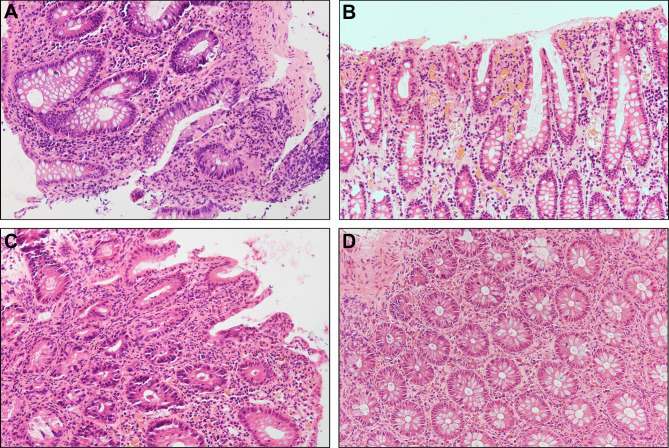
Eighty-six pediatric patients with colonic ulcers detected by colonoscopy were enrolled in the retrospective study. Children were divided into different groups according to the final diagnosis. The clinical characteristics, laboratory examinations, endoscopic findings, and histopathological results were compared.
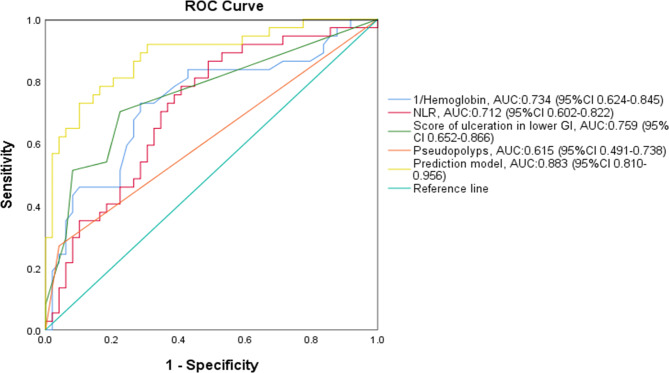
IBD (n = 37) was just responsible for 43% of patients with colonic ulceration. Other diagnosis included autoimmune diseases (n = 9), infectious enteritis (n = 13), gastrointestinal allergy (n = 8), and other diseases (n = 19). Comparing IBD and non-IBD groups, children with IBD had a higher frequency of symptoms like weight loss/failure to thrive (P < 0.001), perianal lesions (P = 0.001), and oral ulcers (P = 0.022), and higher expression levels of platelet (P = 0.006), neutrophil-to-lymphocyte ratio (NLR) (P = 0.001), erythrocyte sedimentation rate (P < 0.001), C-reactive protein (P < 0.001), Immunoglobulin G (P = 0.012), Interleukin-1β (P = 0.003), Interleukin-6 (P = 0.024) and TNF-α (P = 0.026), and a wider ulcer distribution in the lower gastrointestinal tract (LGIT) (P < 0.001). Expression levels of hemoglobin (P < 0.001) and albumin (P = 0.001) were lower in IBD patients. Multivariate analysis showed hemoglobin, NLR, Score of ulceration in LGIT, and pseudopolyps contributing to the diagnosis of pediatric IBD with colonic ulcers.
We displayed potential indicators to help diagnose pediatric IBD differentiating from other disorders with colonic ulcers more prudently.
许多疾病的表现与炎症性肠病(IBD)相似。本研究旨在减少儿童结肠溃疡的误诊。
本回顾性研究纳入了 86 例经结肠镜检查发现结肠溃疡的儿科患者。根据最终诊断,将患儿分为不同组。比较了临床特征、实验室检查、内镜表现和组织病理学结果。
IBD(n=37)仅占结肠溃疡患儿的 43%。其他诊断包括自身免疫性疾病(n=9)、感染性肠炎(n=13)、胃肠道过敏(n=8)和其他疾病(n=19)。与 IBD 组和非 IBD 组相比,IBD 患儿更常出现体重减轻/生长不良(P<0.001)、肛周病变(P=0.001)和口腔溃疡(P=0.022)等症状,血小板(P=0.006)、中性粒细胞与淋巴细胞比值(NLR)(P=0.001)、红细胞沉降率(P<0.001)、C 反应蛋白(P<0.001)、免疫球蛋白 G(IgG)(P=0.012)、白细胞介素-1β(IL-1β)(P=0.003)、白细胞介素-6(IL-6)(P=0.024)和 TNF-α(P=0.026)水平更高,且下消化道(LGIT)溃疡分布更广(P<0.001)。IBD 患儿的血红蛋白(P<0.001)和白蛋白(P=0.001)水平更低。多变量分析显示,血红蛋白、NLR、LGIT 溃疡评分和假息肉有助于诊断儿童结肠溃疡的 IBD。
我们展示了一些潜在的指标,可以更谨慎地帮助诊断儿童 IBD,与其他结肠溃疡疾病区分开来。