Department of Dermatology and Cutaneous Surgery, University of Miami Miller School of Medicine and Sylvester Comprehensive Cancer Center, 1600 NW 10th Ave, Miami, FL, 33136, USA.
Department of Microbiology and Immunology, University of Miami Miller School of Medicine and Sylvester Comprehensive Cancer Center, Miami, FL, 33136, USA.
J Exp Clin Cancer Res. 2024 Nov 4;43(1):295. doi: 10.1186/s13046-024-03214-5.
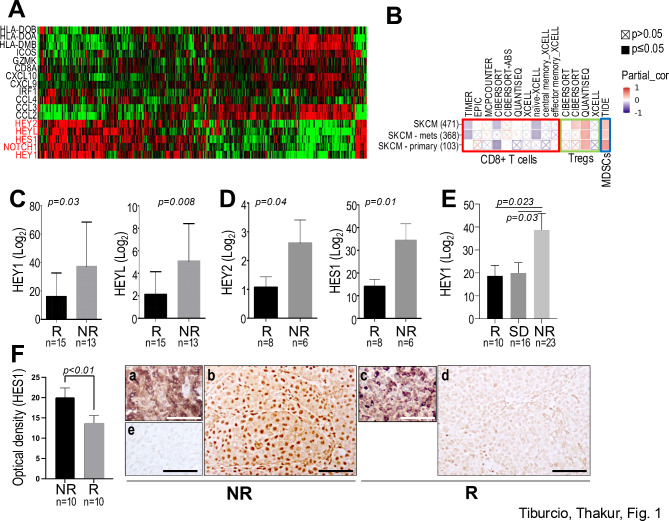
Immune checkpoint inhibitors (ICI) have dramatically improved the life expectancy of patients with metastatic melanoma. However, about half of the patient population still present resistance to these treatments. We have previously shown Notch1 contributes to a non-inflamed TME in melanoma that reduces the response to ICI. Here, we addressed the therapeutic effects of a novel anti-Notch1 neutralizing antibody we produced, alone and in combination with immune checkpoint inhibition in melanoma models.
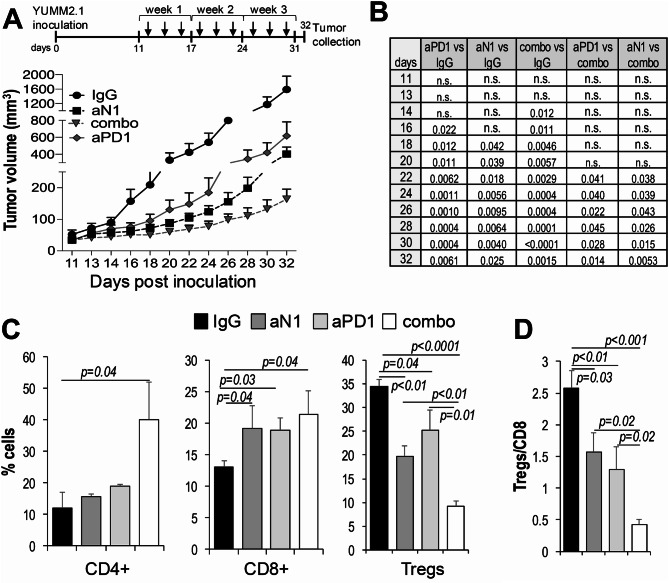
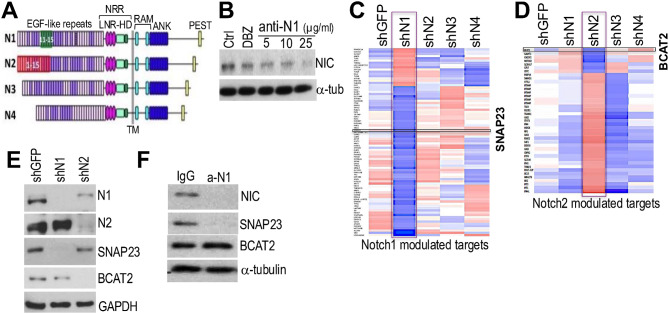
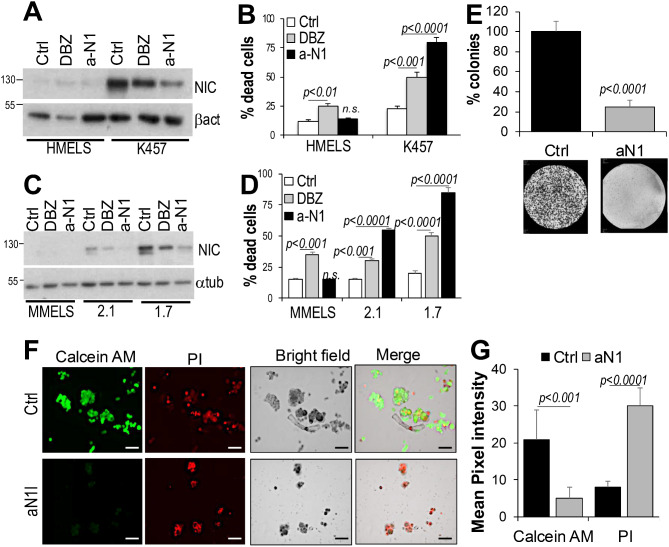
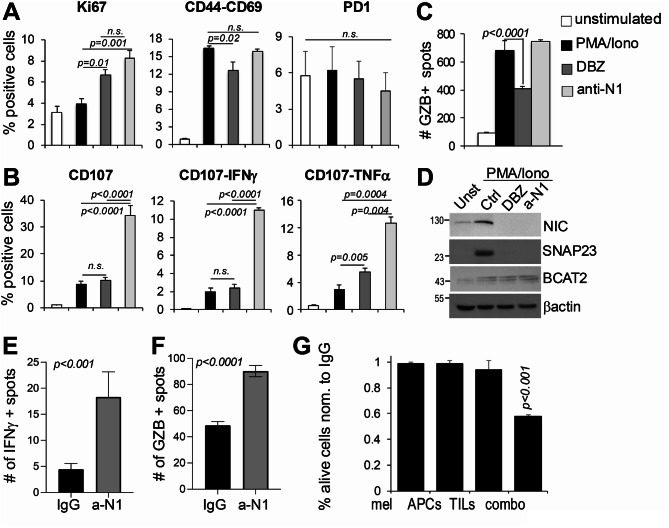
Anti-Notch1 was designed to interfere with ligand binding. Mice were immunized with a peptide encompassing EGF-like repeats 11-15 of human Notch1, the minimal required region that allows ligand binding and Notch1 activation. Positive clones were expanded and tested for neutralizing capabilities. Anti-Notch1-NIC was used to determine whether anti-Notch1 was able to reduce Notch1 cleavage; while anti-SNAP23 and BCAT2 were used as downstream Notch1 and Notch2 targets, respectively. K457 human melanoma cells and the YUMM2.1 and 1.7 syngeneic mouse melanoma cells were used. Cell death after anti-Notch1 treatment was determined by trypan blue staining and compared to the effects of the gamma-secretase inhibitor DBZ. 10 mg/kg anti-Notch1 was used for in vivo tumor growth of YUMM2.1 and 1.7 cells. Tumors were measured and processed for flow cytometry using antibodies against major immune cell populations.
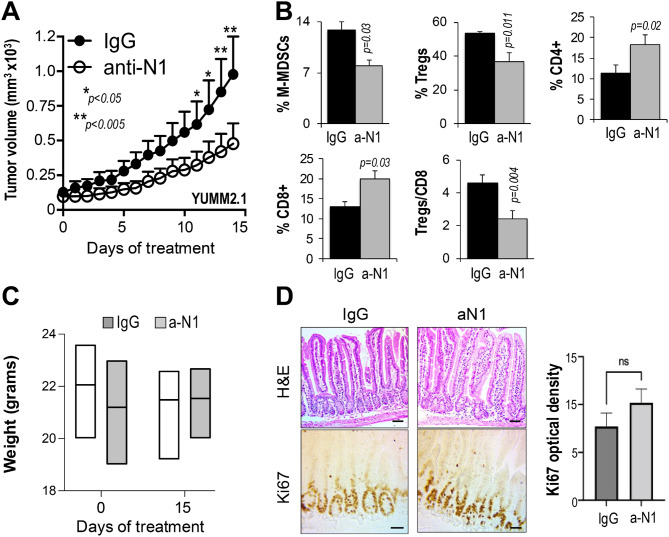
Anti-Notch1 selectively inhibited Notch1 but not Notch2; caused significant melanoma cell death in vitro but did not affect normal melanocytes. In vivo, it delayed tumor growth without evident signs of gastro-intestinal toxicities; and importantly promoted an inflamed TME by increasing the cytotoxic CD8 T cells while reducing the tolerogenic Tregs and MDSCs, resulting in enhanced efficacy of anti-PD-1.
Anti-Notch1 safely exerts anti-melanoma effects and improves immune checkpoint inhibitor efficacy. Thus, anti-Notch1 could represent a novel addition to the immunotherapy repertoire for melanoma.
免疫检查点抑制剂(ICI)显著延长了转移性黑色素瘤患者的预期寿命。然而,约有一半的患者人群仍然对这些治疗方法产生耐药性。我们之前已经表明 Notch1 有助于黑色素瘤中无炎症的 TME,从而降低了对 ICI 的反应。在这里,我们研究了我们生产的一种新型抗 Notch1 中和抗体单独使用和与免疫检查点抑制联合使用在黑色素瘤模型中的治疗效果。
抗 Notch1 被设计为干扰配体结合。用包含人 Notch1 的 EGF 样重复 11-15 的肽免疫小鼠,这是允许配体结合和 Notch1 激活的最小必需区域。扩展阳性克隆并测试其中和能力。使用抗 Notch1-NIC 来确定抗 Notch1 是否能够减少 Notch1 裂解;而抗 SNAP23 和 BCAT2 分别用作 Notch1 和 Notch2 的下游靶标。使用 K457 人黑色素瘤细胞和 YUMM2.1 和 1.7 同源小鼠黑色素瘤细胞。通过台盼蓝染色测定抗 Notch1 处理后的细胞死亡,并与 γ-分泌酶抑制剂 DBZ 的作用进行比较。使用 10mg/kg 的抗 Notch1 用于 YUMM2.1 和 1.7 细胞的体内肿瘤生长。测量肿瘤并使用针对主要免疫细胞群体的抗体进行流式细胞术处理。
抗 Notch1 选择性地抑制 Notch1 但不抑制 Notch2;在体外显著导致黑色素瘤细胞死亡,但不影响正常黑素细胞。在体内,它延迟肿瘤生长而没有明显的胃肠道毒性迹象;并且重要的是通过增加细胞毒性 CD8 T 细胞同时减少耐受的 Tregs 和 MDSCs 来促进炎症性 TME,从而增强抗 PD-1 的疗效。
抗 Notch1 安全地发挥抗黑色素瘤作用并提高免疫检查点抑制剂的疗效。因此,抗 Notch1 可能成为黑色素瘤免疫治疗的新选择。