Ahmed Sheikh Farhana Binte, Amin Md Ruhul, Islam Md Kafiul
Islamic University of Technology, Gazipur, Bangladesh.
Independent University Bangladesh, Dhaka, Bangladesh.
Data Brief. 2024 Oct 5;57:110994. doi: 10.1016/j.dib.2024.110994. eCollection 2024 Dec.
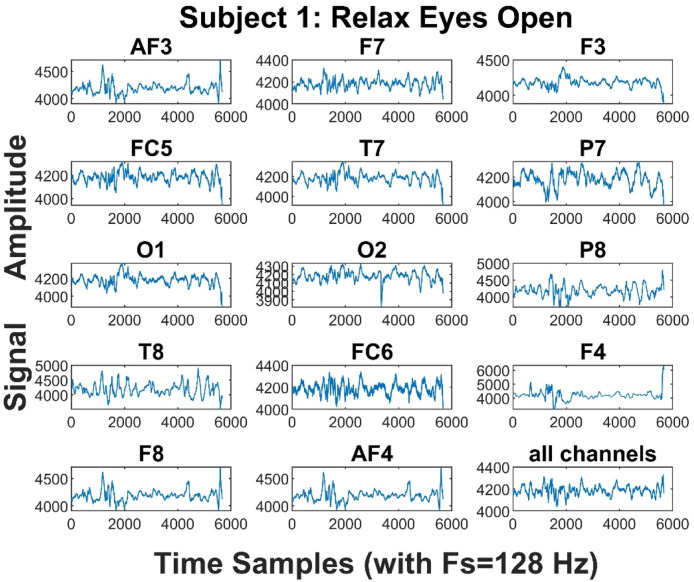
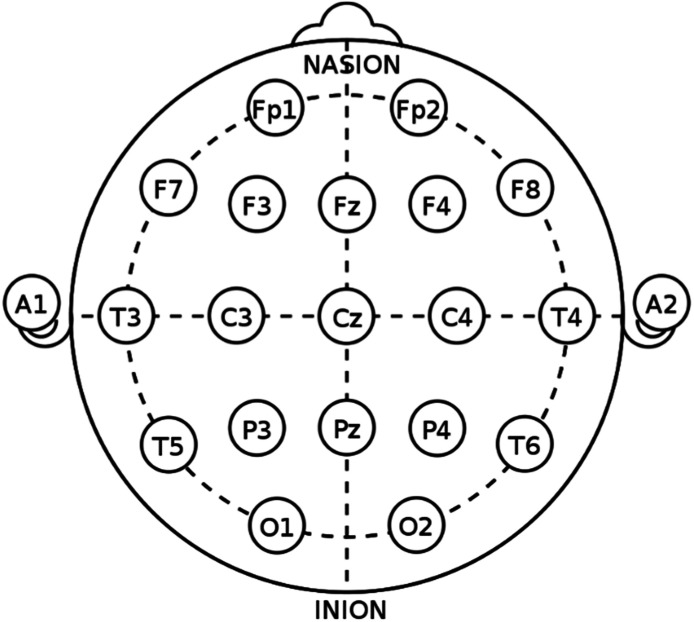
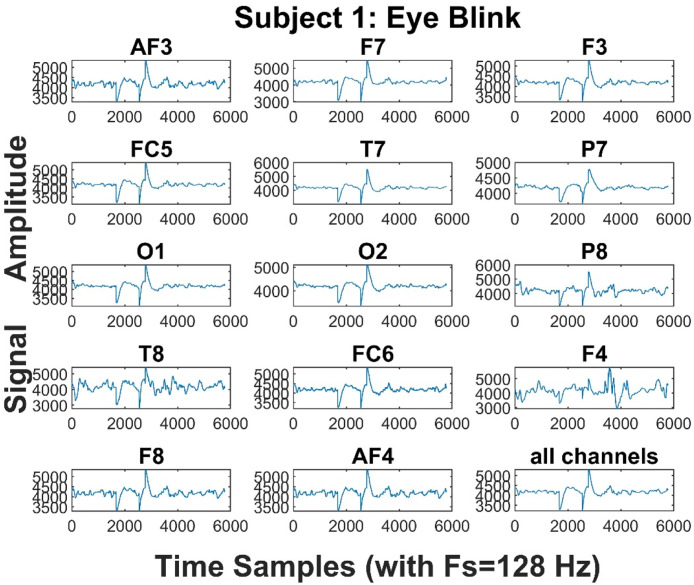
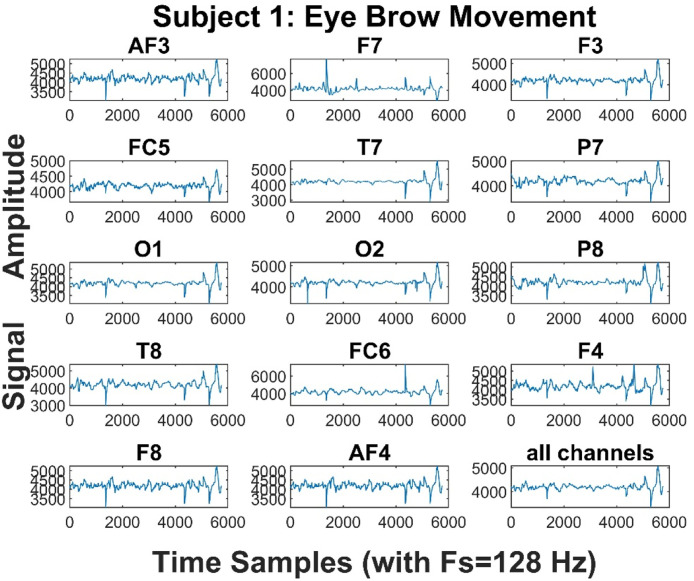
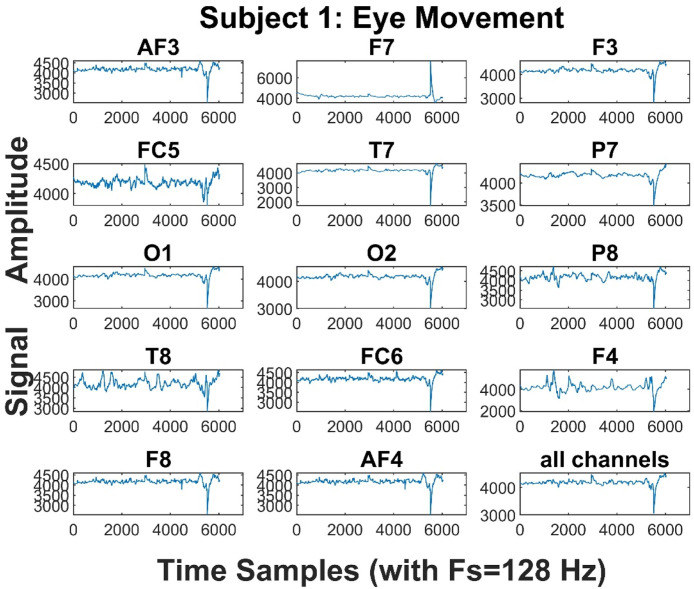
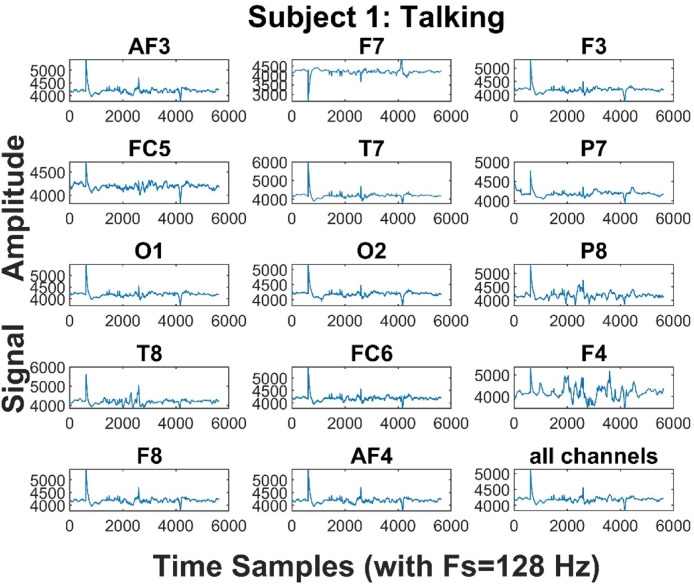
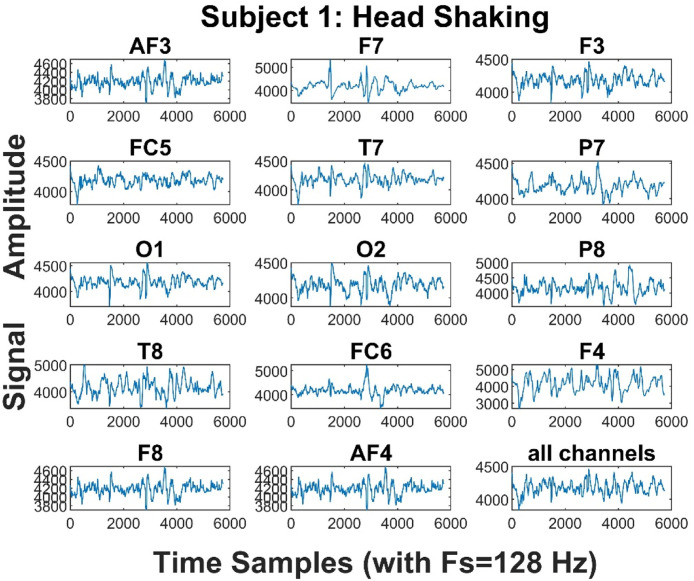
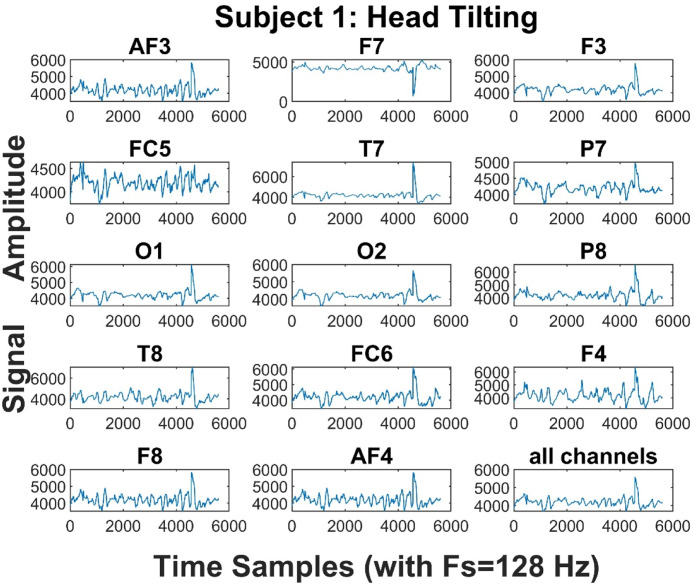
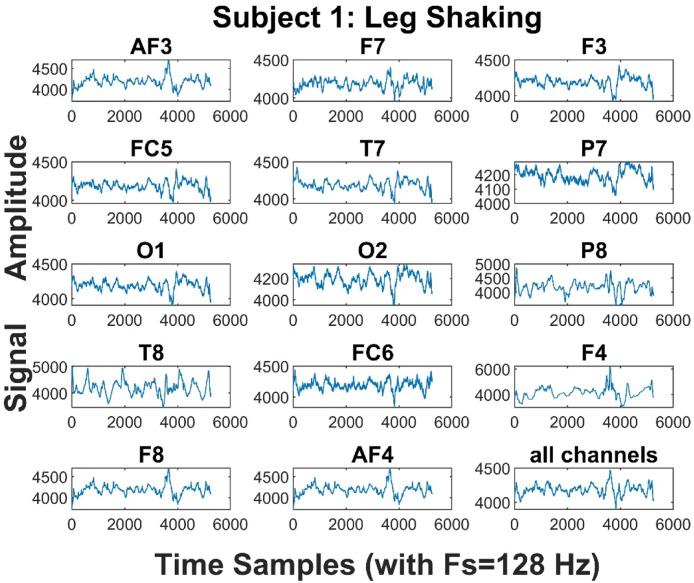
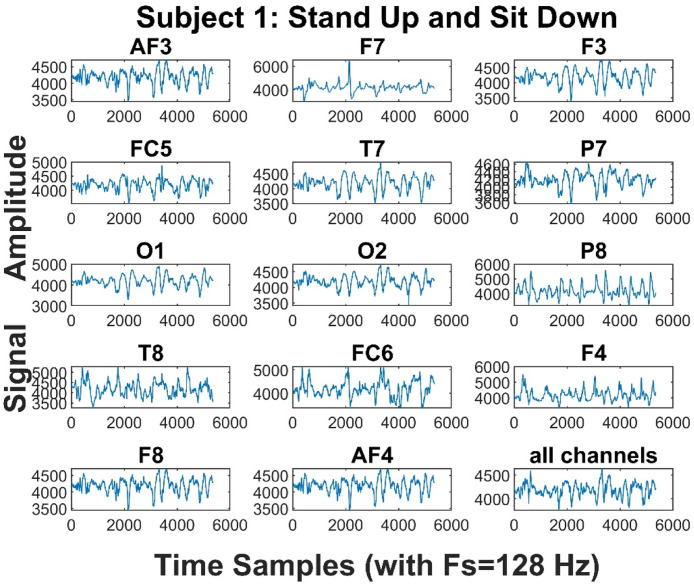
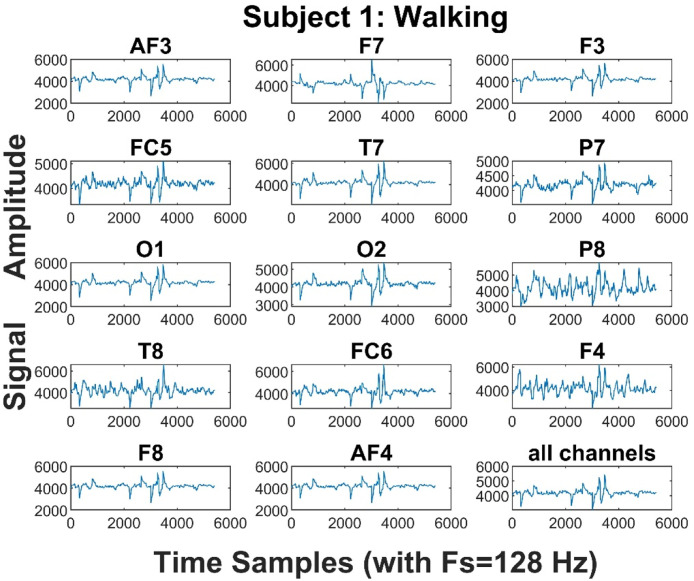
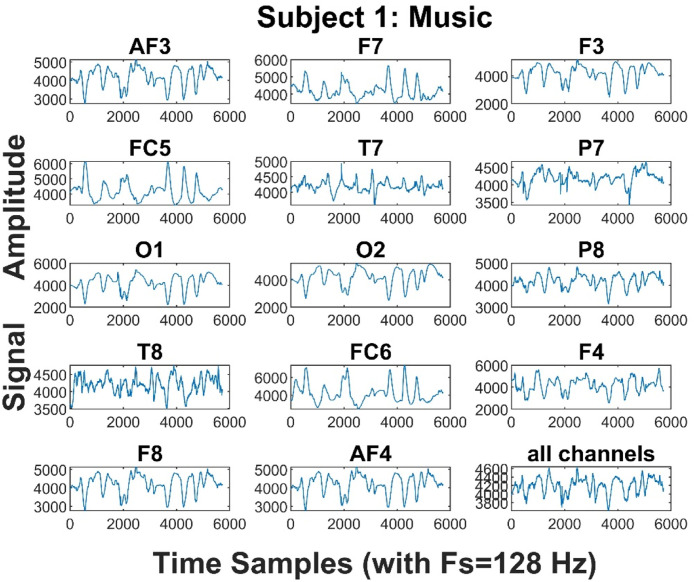
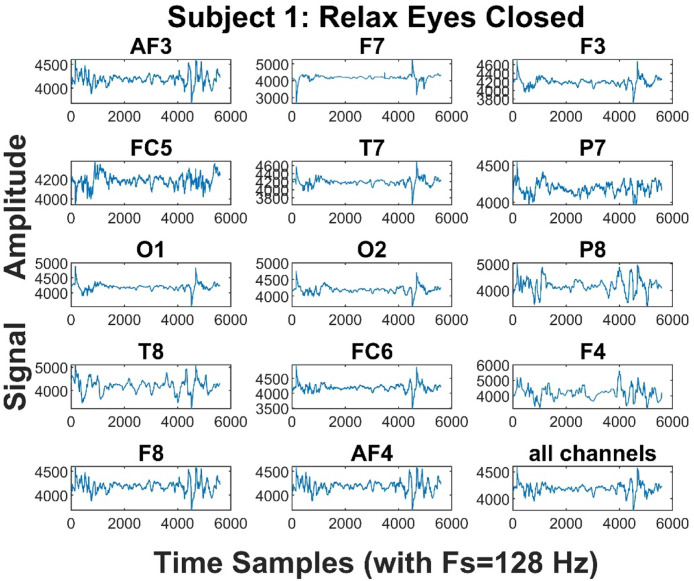
Wearable EEG suffers from motion artifact contamination due to the subject's movement in an ambulatory environment. Signal processing techniques pose promising solutions for the detection and removal of motion artifacts from ambulatory EEG, but relevant open-access datasets are not available, which is detrimental to the development of wearable EEG applications. This article showcases open-access electroencephalography (EEG) recordings, while a subject is performing different upper-body, lower-body, and full-body movements. One healthy male subject volunteered to record his EEG data using a 14-channel EMOTIV EPOCH EEG headset device. This device's electrode placement is in accordance with the international 10-20 system, and the data was stored using the EMOTIV Pro application. We used the MATLAB software to visualize the captured brain waveforms. The venue of the data collection was the Biomedical Instrumentation and Signal Processing Laboratory (BISPL) at the Independent University, Bangladesh (IUB). The EMOTIV Pro application extracted the recorded EEG data in the CSV file format, while the MATLAB software converted it to a .mat extension file afterward. The first 14 columns of this file represent the 14-channel EEG data, and the subsequent nine columns are for the motion sensor data. The list of recorded movements includes blinking of eyes, eyebrow movement, and also horizontal and vertical eye movements. Afterward, the head shook and nodded. Later, the leg trembled, followed by listening to music, talking, walking, and standing and sitting down. Before the recording ended, the subject relaxed on a chair with both eyes open and closed. This dataset is one of its kind, allowing us to explore further research for wearable EEG while denoising motion artifacts arising from subject movement.
在动态环境中,由于受试者的移动,可穿戴式脑电图(EEG)会受到运动伪迹的干扰。信号处理技术为检测和去除动态脑电图中的运动伪迹提供了有前景的解决方案,但相关的开放获取数据集并不存在,这不利于可穿戴式脑电图应用的发展。本文展示了一位受试者在进行不同的上半身、下半身和全身运动时的开放获取脑电图记录。一名健康男性受试者自愿使用14通道EMOTIV EPOCH脑电图头戴设备记录其脑电图数据。该设备的电极放置符合国际10 - 20系统,数据通过EMOTIV Pro应用程序存储。我们使用MATLAB软件可视化捕获的脑电波波形。数据收集地点是孟加拉国独立大学(IUB)的生物医学仪器与信号处理实验室(BISPL)。EMOTIV Pro应用程序以CSV文件格式提取记录的脑电图数据,随后MATLAB软件将其转换为扩展名为.mat的文件。该文件的前14列代表14通道脑电图数据,随后的九列用于运动传感器数据。记录的运动列表包括眨眼、眉毛运动以及水平和垂直眼球运动。之后,头部摇晃和点头。随后,腿部颤抖,接着是听音乐、说话、行走以及站立和坐下。在记录结束前,受试者在椅子上放松,眼睛睁开和闭上。这个数据集独一无二,使我们能够在去除因受试者运动产生的运动伪迹的同时,进一步探索可穿戴式脑电图的研究。