van Tuijl Julia, van Heck Julia I P, Bahrar Harsh, Broeders Wieteke, Wijma Johan, Ten Have Yvonne M, Giera Martin, Zweers-van Essen Heidi, Rodwell Laura, Joosten Leo A B, Netea Mihai G, Afman Lydia A, Bekkering Siroon, Riksen Niels P
Department of Internal Medicine, Radboud University Medical Center Nijmegen, Nijmegen 6525 GA, the Netherlands.
Center for Proteomics and Metabolomics, Leiden University Medical Center, Leiden 2333 ZA, the Netherlands.
iScience. 2024 Oct 5;27(11):111103. doi: 10.1016/j.isci.2024.111103. eCollection 2024 Nov 15.
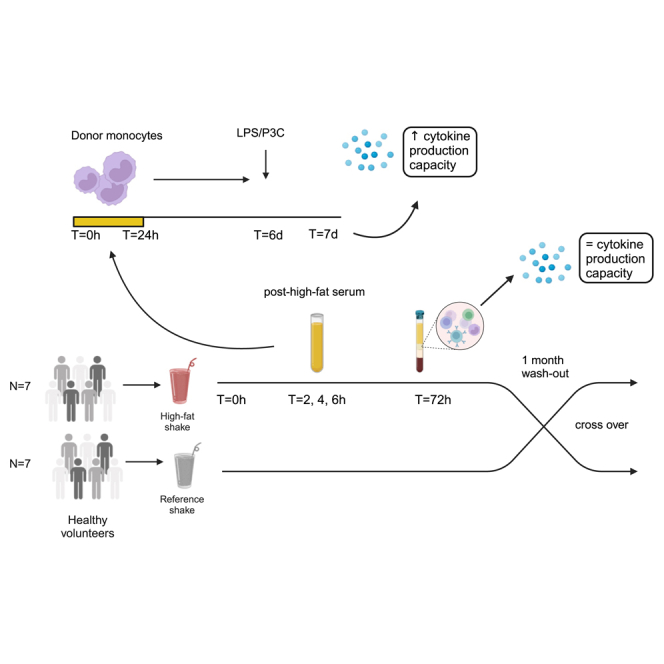
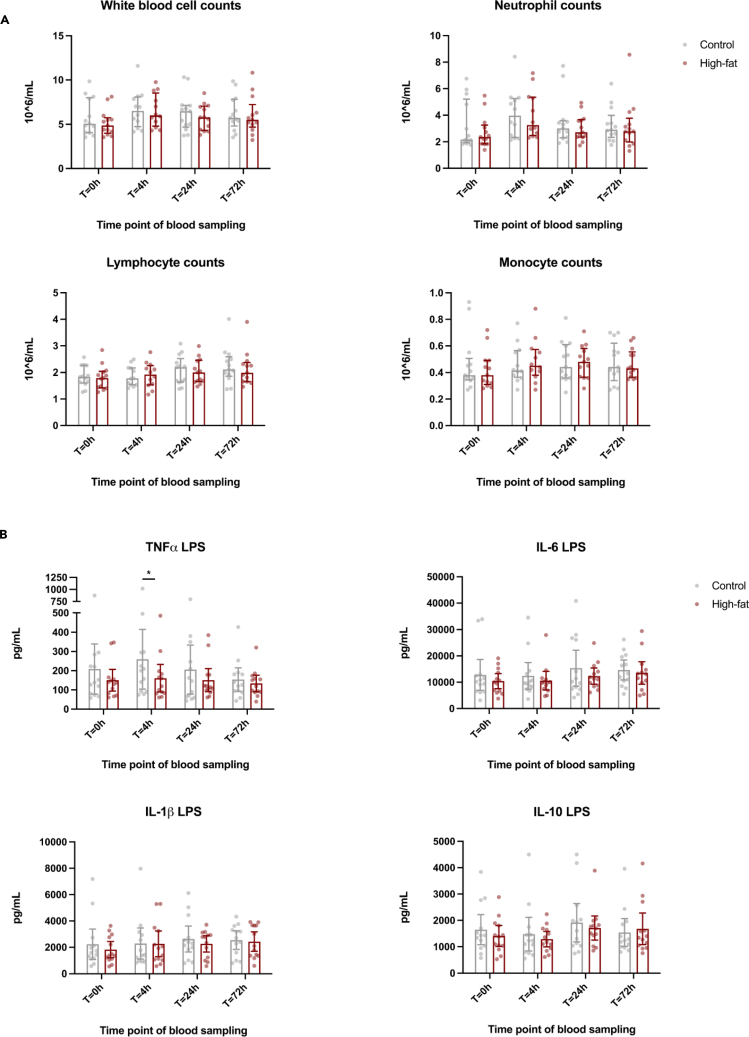
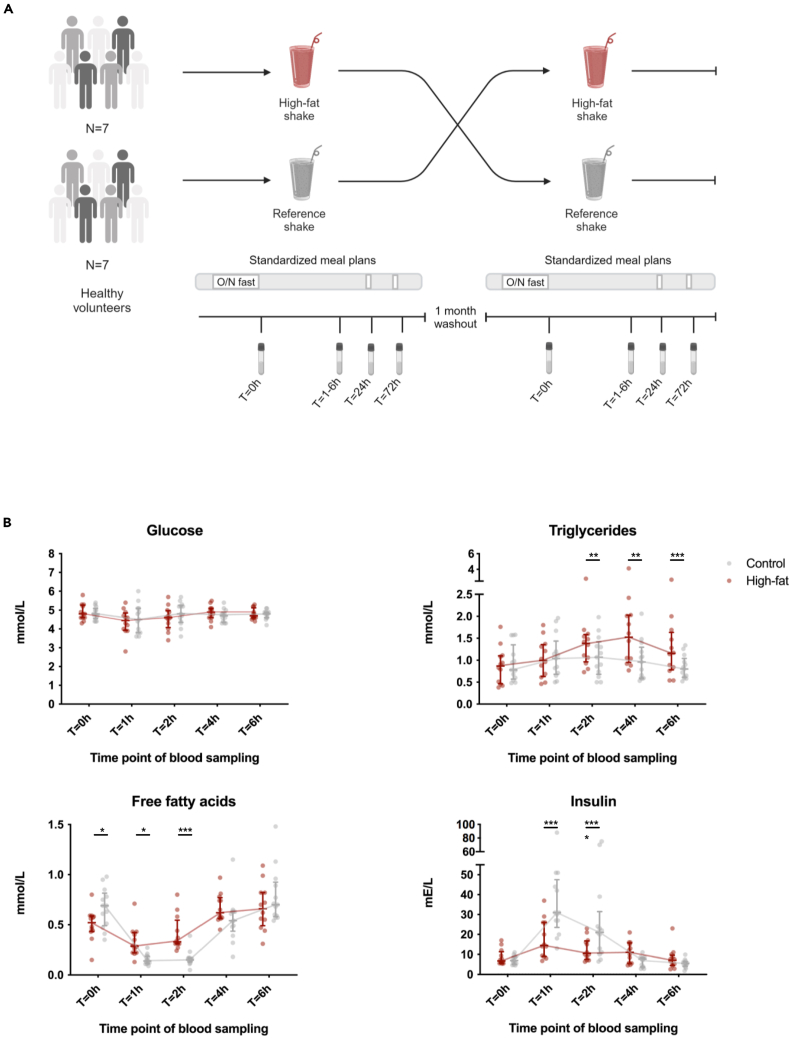
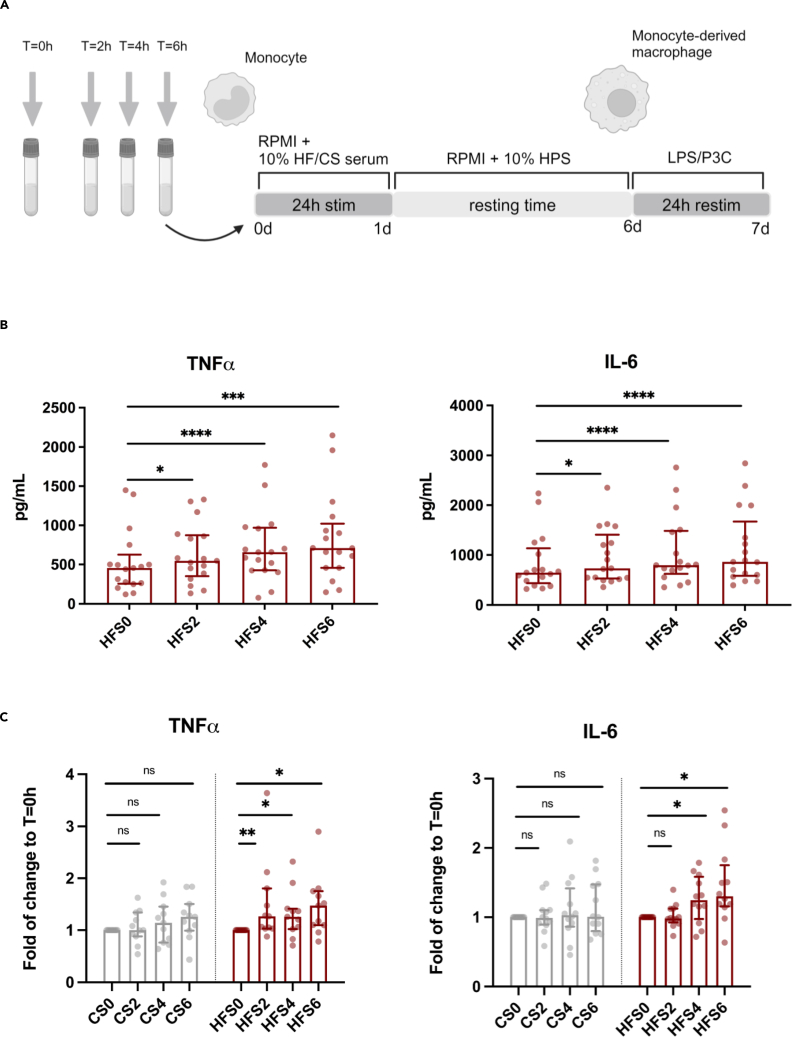
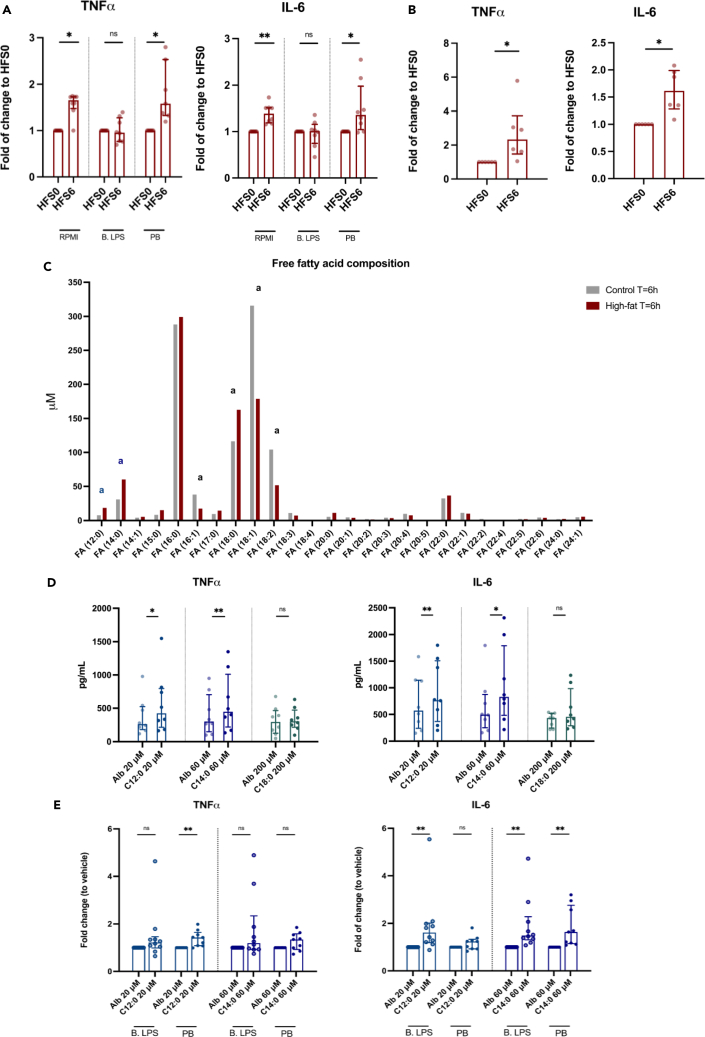
Brief exposure of monocytes to atherogenic molecules, such as oxidized lipoproteins, triggers a persistent pro-inflammatory phenotype, named trained immunity. In mice, transient high-fat diet leads to trained immunity, which aggravates atherogenesis. We hypothesized that a single high-fat challenge in humans induces trained immunity. In a randomized controlled cross-over study, 14 healthy individuals received a high-fat or reference shake, and blood was drawn before and after 1, 2, 4, 6, 24, and 72 h. Incubation of donor monocytes with the post-high-fat-shake serum induced trained immunity, regulated via Toll-like receptor 4. This was not mediated via triglyceride-rich lipoproteins, C12, 14, and 16, or metabolic endotoxemia. , however, the high-fat challenge did not affect monocyte phenotype and function. We conclude that a high-fat challenge leads to alterations in the serum composition that have the potential to induce trained immunity . However, this does not translate into a (persistent) hyperinflammatory monocyte phenotype .
单核细胞短暂暴露于致动脉粥样硬化分子,如氧化脂蛋白,会引发一种持续的促炎表型,称为训练免疫。在小鼠中,短暂的高脂饮食会导致训练免疫,从而加剧动脉粥样硬化的发生。我们推测,人类单次高脂刺激会诱导训练免疫。在一项随机对照交叉研究中,14名健康个体分别接受高脂奶昔或对照奶昔,并在1、2、4、6、24和72小时前后采集血液。用高脂奶昔后的血清孵育供体单核细胞可诱导训练免疫,其通过Toll样受体4调节。这不是通过富含甘油三酯的脂蛋白、C12、14和16或代谢性内毒素血症介导的。然而,高脂刺激并未影响单核细胞的表型和功能。我们得出结论,高脂刺激会导致血清成分改变,有可能诱导训练免疫。然而,这并未转化为(持续的)高炎症单核细胞表型。