Department of Cardiology I, Coronary and Peripheral Vascular Disease, Heart Failure, University Hospital Münster, Münster, Germany.
Department of Internal Medicine I-Cardiology, University Hospital Aachen, Aachen, Germany.
Front Immunol. 2019 Jan 23;10:13. doi: 10.3389/fimmu.2019.00013. eCollection 2019.
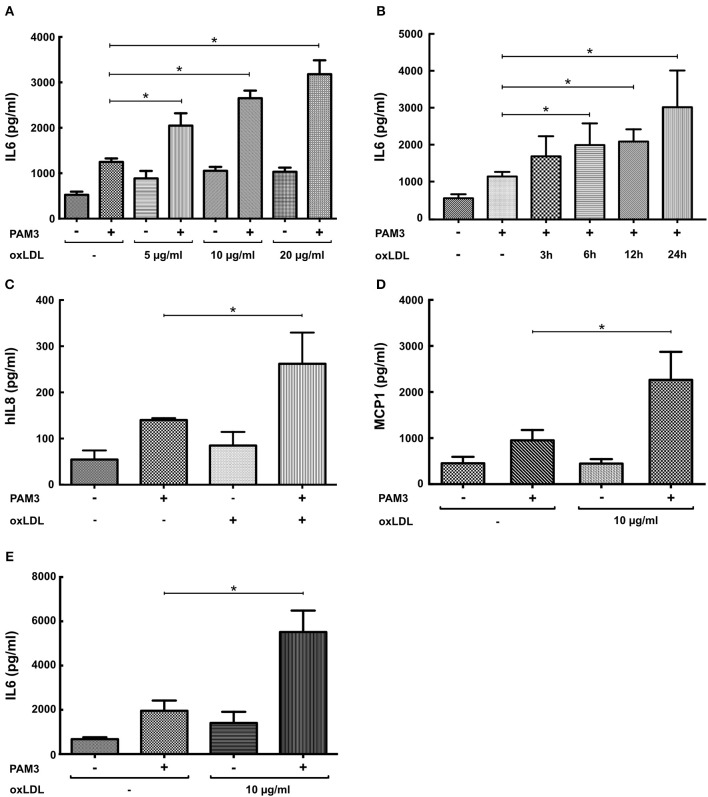
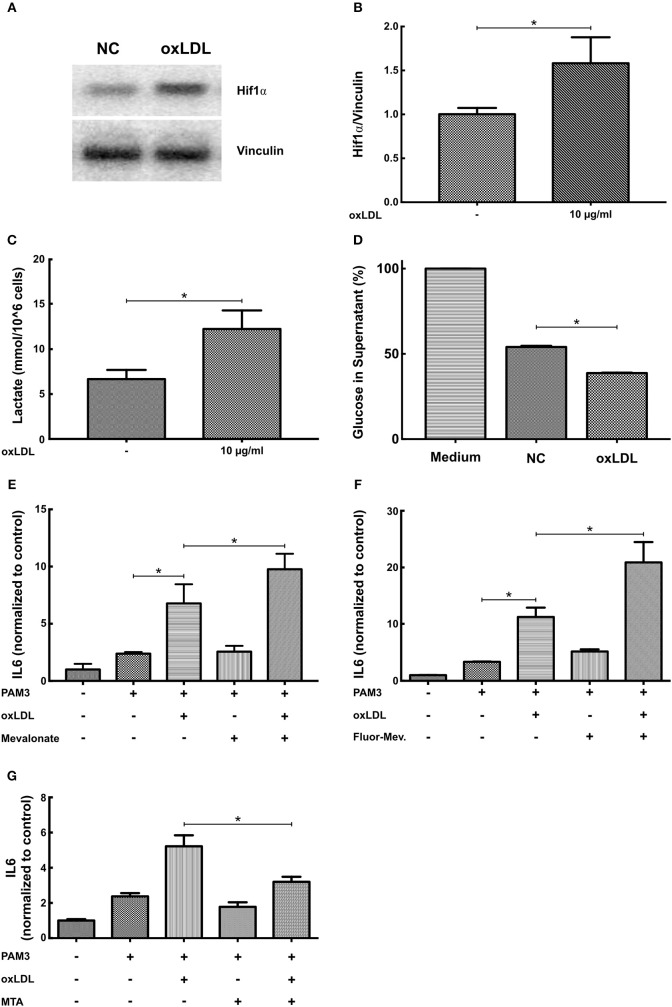
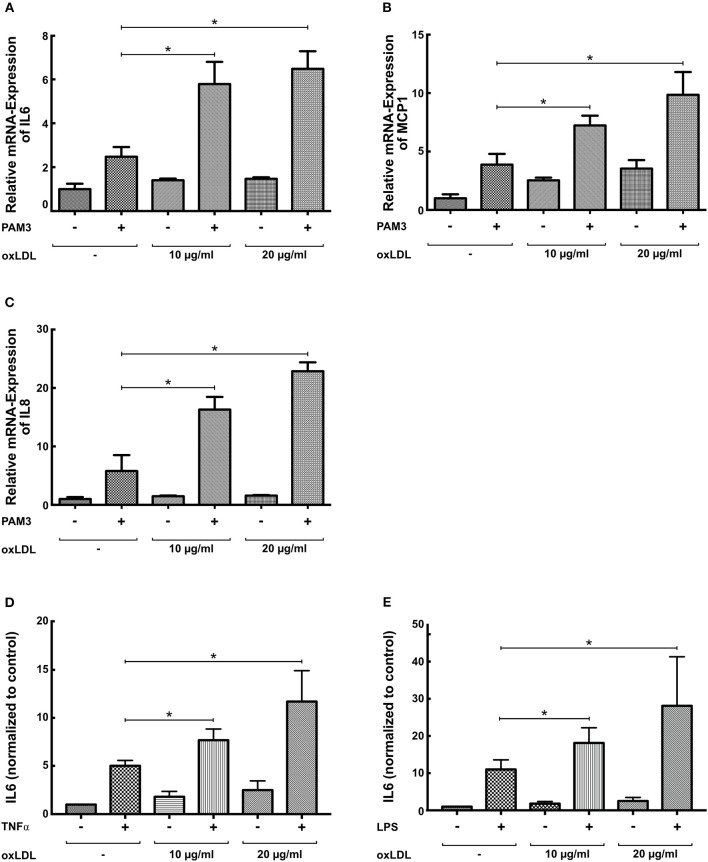
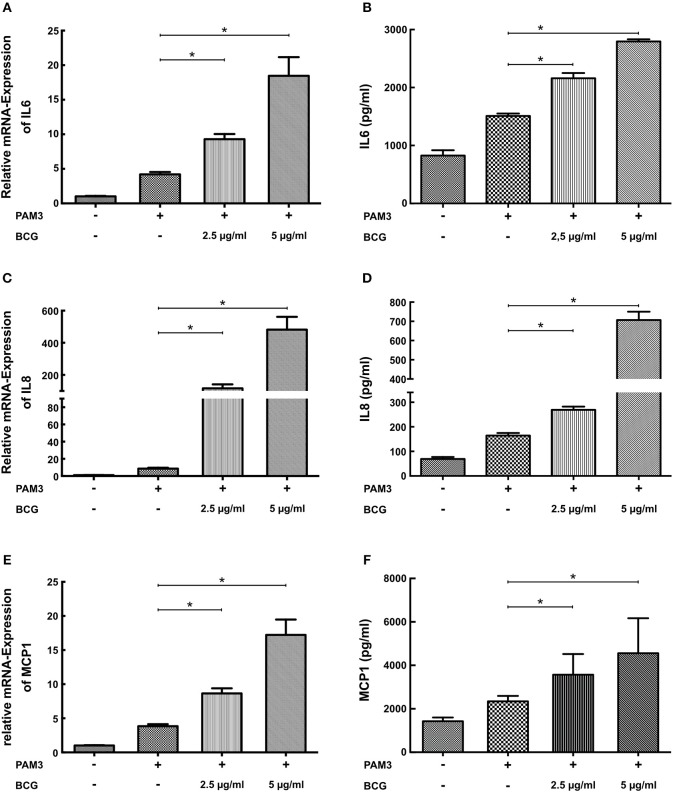
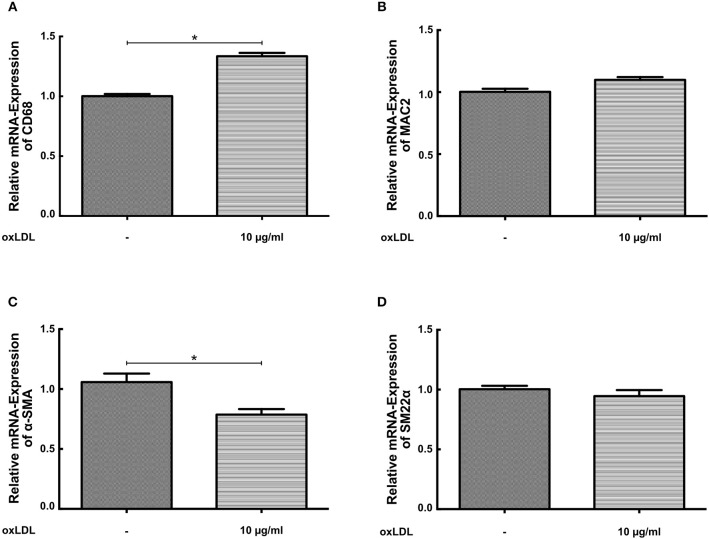
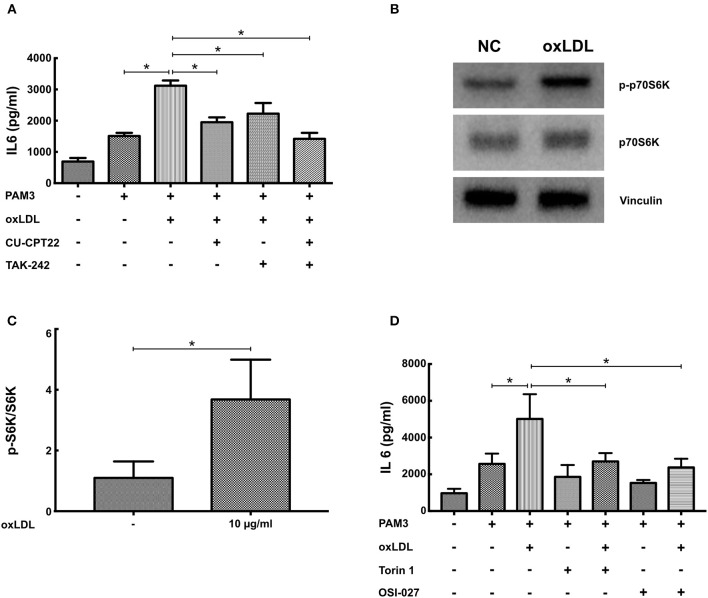
Damage and pathogen associated molecular patterns such as oxidized low-density lipoprotein (oxLDL) or bacillus Calmette-Guerin (BCG) vaccine can induce long term pro-inflammatory priming in monocytes and macrophages due to metabolic and epigenetic reprogramming-an emerging new concept called trained innate immunity. Vascular smooth muscle cells express pattern recognition receptors involved in trained innate immunity in monocytes. Here we investigated whether the mechanisms of trained innate immunity also control a proinflammatory phenotype in human coronary smooth muscle cells. Human coronary smooth muscle cells were primed with oxLDL or BCG for 24 h. After a resting time of 4 to 7 days, the cells were restimulated with either PAM3cys4, LPS or TNFα and cytokine production or mRNA expression were measured. Then, mechanisms of monocyte trained innate immunity were analyzed in smooth muscle cells, including receptors, intracellular pathways as well as metabolic and epigenetic reprogramming. Priming with oxLDL or BCG lead to a significantly increased production of IL6, IL8 and MCP-1 following restimulation. OxLDL priming had little effect on the expression of macrophage or SMC marker genes. Proinflammatory priming of smooth muscle cells induced mTOR-HIF1α-signaling and could be blocked by mTOR-, TLR2-, and TLR4-inhibition. Finally, metabolic and epigenetic mechanisms of trained innate immunity in monocytes could be replicated in smooth muscle cells, including increased glucose consumption, lactate production, responsiveness to 6-fluoromevalonate and mevalonate treatment and inhibition of priming by the histone methyltransferase inhibitor methylthioadenosine (MTA). We demonstrate for the first time that mechanisms of the so called trained innate immunity control a proinflammatory phenotype in non-immune cells of the vascular wall. Our findings warrant further research into the specificity of trained innate immunity as an immune cell response as well as the mechanisms of vascular smooth muscle cells inflammation.
损伤和病原体相关分子模式,如氧化低密度脂蛋白(oxLDL)或卡介苗(BCG)疫苗,可通过代谢和表观遗传重编程诱导单核细胞和巨噬细胞的长期促炎预刺激,这是一个新兴的新概念,称为训练性先天免疫。血管平滑肌细胞表达参与单核细胞训练性先天免疫的模式识别受体。在这里,我们研究了训练性先天免疫的机制是否也控制了人冠状动脉平滑肌细胞的促炎表型。人冠状动脉平滑肌细胞用 oxLDL 或 BCG 预刺激 24 小时。在休息 4 至 7 天后,用 PAM3cys4、LPS 或 TNFα 再次刺激细胞,并测量细胞因子的产生或 mRNA 表达。然后,分析了平滑肌细胞中单核细胞训练性先天免疫的机制,包括受体、细胞内途径以及代谢和表观遗传重编程。oxLDL 或 BCG 的预刺激导致 restimulation 后 IL6、IL8 和 MCP-1 的产生显著增加。oxLDL 预刺激对巨噬细胞或 SMC 标记基因的表达几乎没有影响。平滑肌细胞的促炎预刺激诱导 mTOR-HIF1α 信号通路,可被 mTOR、TLR2 和 TLR4 抑制阻断。最后,单核细胞中训练性先天免疫的代谢和表观遗传机制可以在平滑肌细胞中复制,包括增加葡萄糖消耗、乳酸生成、对 6-氟甲瓦龙酸和甲瓦龙酸处理的反应性以及组蛋白甲基转移酶抑制剂甲基硫代腺苷(MTA)对预刺激的抑制。我们首次证明,所谓的训练性先天免疫机制控制了血管壁中非免疫细胞的促炎表型。我们的发现需要进一步研究训练性先天免疫作为免疫细胞反应的特异性以及血管平滑肌细胞炎症的机制。