Jayaprakash Ramprasath, Natarajan Krishnaraj, Daniel J Alfred, Chinnappan Chandru Vignesh, Giri Jayant, Qin Hong, Mallik Saurav
Department of Information Technology, Dr. Mahalingam College of Engineering and Technology, Pollachi, India.
School of Computer Science and Engineering, Vellore Institute of Technology, Vellore, India.
Front Artif Intell. 2024 Oct 21;7:1414122. doi: 10.3389/frai.2024.1414122. eCollection 2024.
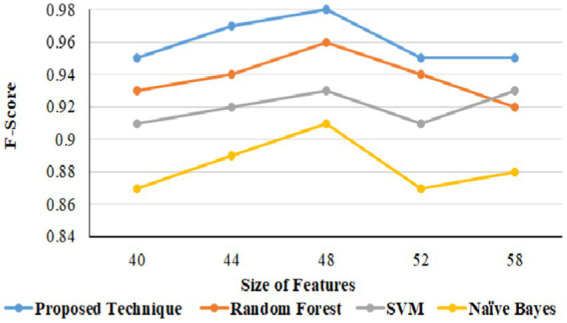
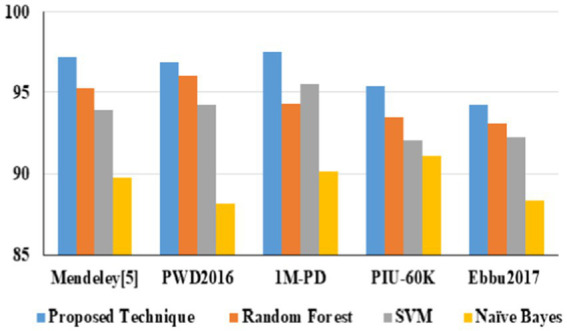
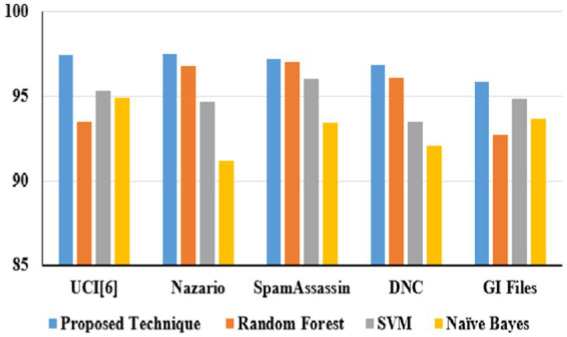
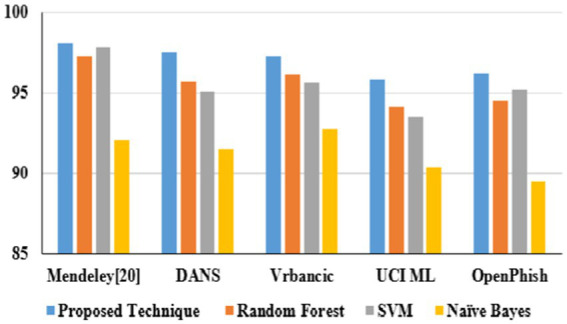
Life has become more comfortable in the era of advanced technology in this cutthroat competitive world. However, there are also emerging harmful technologies that pose a threat. Without a doubt, phishing is one of the rising concerns that leads to stealing vital information such as passwords, security codes, and personal data from any target node through communication hijacking techniques. In addition, phishing attacks include delivering false messages that originate from a trusted source. Moreover, a phishing attack aims to get the victim to run malicious programs and reveal confidential data, such as bank credentials, one-time passwords, and user login credentials. The sole intention is to collect personal information through malicious program-based attempts embedded in URLs, emails, and website-based attempts. Notably, this proposed technique detects URL, email, and website-based phishing attacks, which will be beneficial and secure us from scam attempts. Subsequently, the data are pre-processed to identify phishing attacks using data cleaning, attribute selection, and attacks detected using machine learning techniques. Furthermore, the proposed techniques use heuristic-based machine learning to identify phishing attacks. Admittedly, 56 features are used to analyze URL phishing findings, and experimental results show that the proposed technique has a better accuracy of 97.2%. Above all, the proposed techniques for email phishing detection obtain a higher accuracy of 97.4%. In addition, the proposed technique for website phishing detection has a better accuracy of 98.1%, and 48 features are used for analysis.
在这个竞争激烈的世界中,先进技术时代让生活变得更加舒适。然而,也出现了一些有害技术构成威胁。毫无疑问,网络钓鱼是一个日益严重的问题,它通过通信劫持技术从任何目标节点窃取密码、安全码和个人数据等重要信息。此外,网络钓鱼攻击包括发送来自可信来源的虚假消息。而且,网络钓鱼攻击旨在诱使受害者运行恶意程序并泄露机密数据,如银行凭证、一次性密码和用户登录凭证。其唯一目的是通过嵌入在URL、电子邮件和基于网站的尝试中的基于恶意程序的手段来收集个人信息。值得注意的是,本文提出的技术可检测基于URL、电子邮件和网站的网络钓鱼攻击,这将对我们有益并使我们免受诈骗企图的侵害。随后,对数据进行预处理,通过数据清理、属性选择来识别网络钓鱼攻击,并使用机器学习技术检测攻击。此外,本文提出的技术使用基于启发式的机器学习来识别网络钓鱼攻击。诚然,使用56个特征来分析URL网络钓鱼结果,实验结果表明该技术具有97.2%的较高准确率。最重要的是,本文提出的电子邮件网络钓鱼检测技术获得了97.4%的更高准确率。此外,本文提出的网站网络钓鱼检测技术具有98.1%的较高准确率,并且使用48个特征进行分析。