Strathclyde Institute of Pharmacy and Biomedical Sciences, University of Strathclyde, Glasgow, G4 0RE, UK.
School of Infection and Immunity, University of Glasgow, Glasgow, G12 8TA, UK.
Microb Genom. 2024 Nov;10(11). doi: 10.1099/mgen.0.001313.
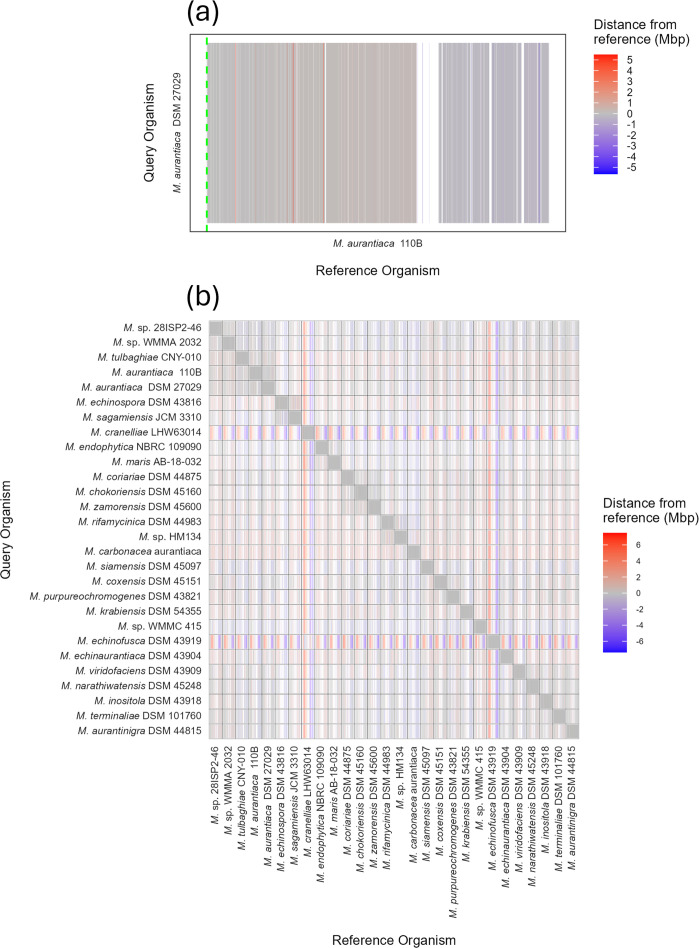
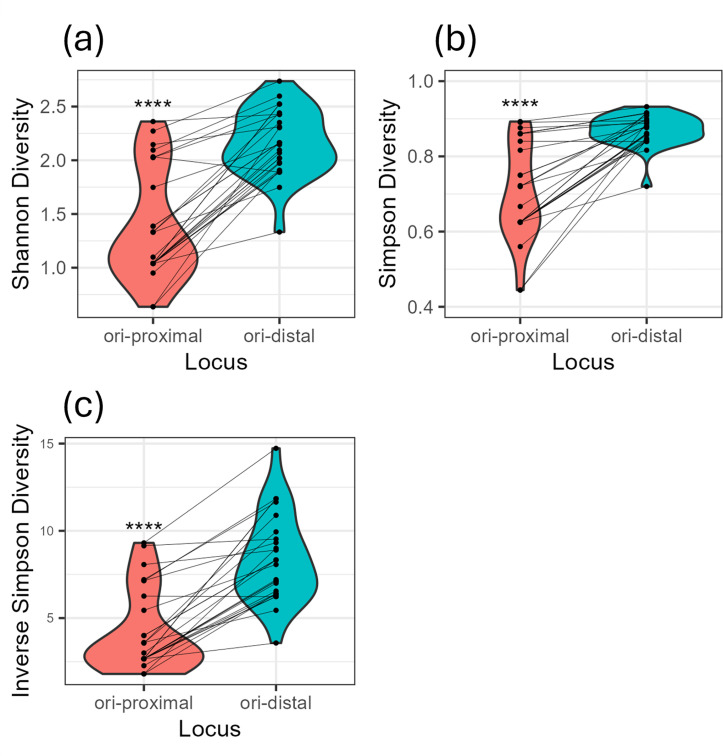
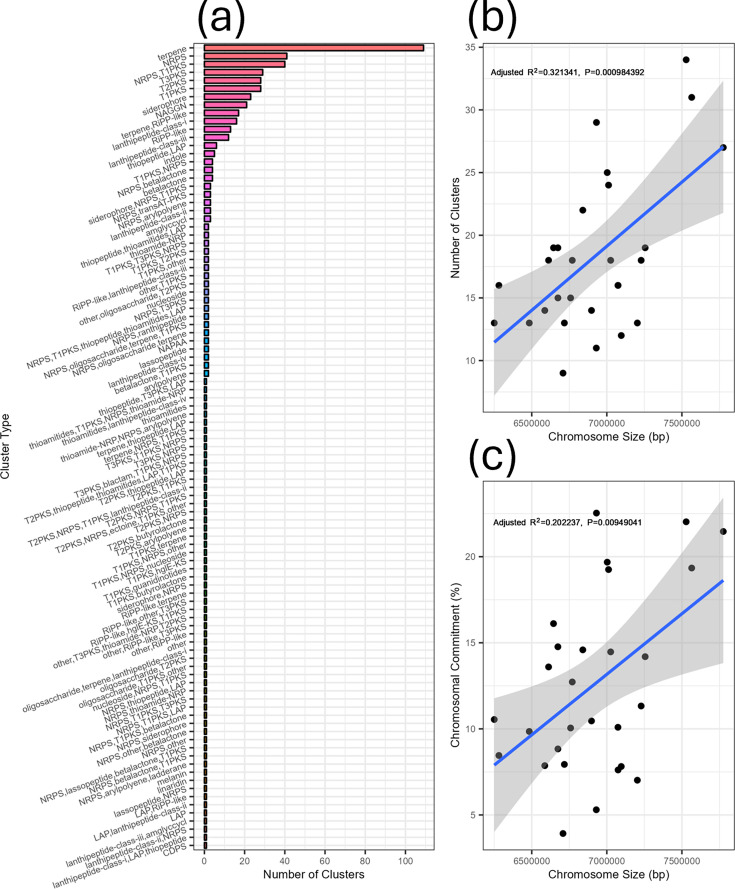
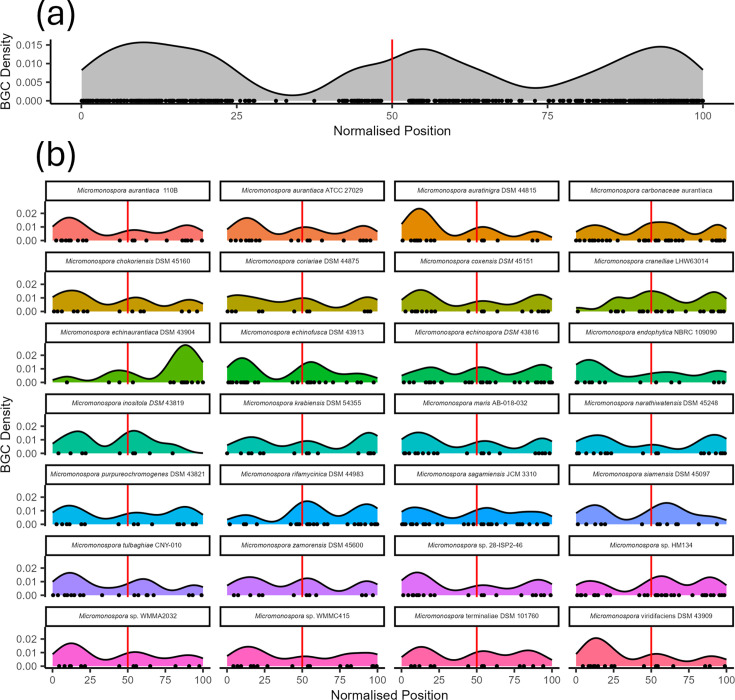
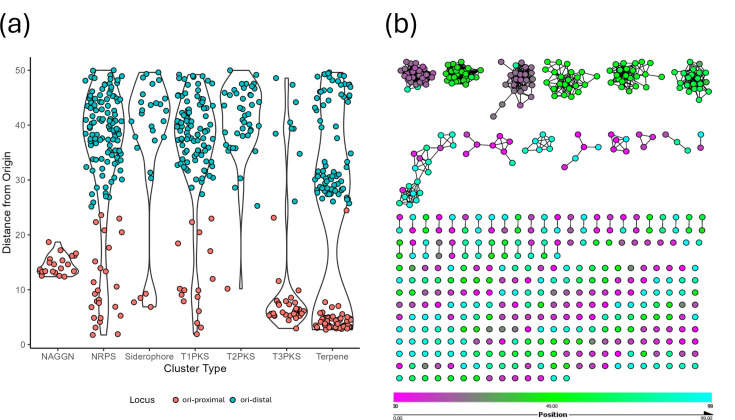
Natural products - small molecules generated by organisms to facilitate ecological interactions - are of great importance to society and are used as antibacterial, antiviral, antifungal and anticancer drugs. However, the role and evolution of these molecules and the fitness benefits they provide to their hosts in their natural habitat remain an outstanding question. In bacteria, the genes that encode the biosynthetic proteins that generate these molecules are organised into discrete loci termed biosynthetic gene clusters (BGCs). In this work, we asked the following question: How are biosynthetic gene clusters organised at the chromosomal level? We sought to answer this using publicly available high-quality assemblies of , an actinomycete genus with members responsible for biosynthesizing notable natural products, such as gentamicin and calicheamicin. By orienting the chromosome around the origin of replication, we demonstrated that has a conserved origin-proximal region, which becomes progressively more disordered towards the antipodes of the origin. We then demonstrated through genome mining of these organisms that the conserved origin-proximal region and the origin-distal region of have distinct populations of BGCs and, in this regard, parallel the organization of , which possesses linear chromosomes. Specifically, the origin-proximal region contains highly syntenous, conserved BGCs predicted to biosynthesize terpenes and a type III polyketide synthase. In contrast, the ori-distal region contains a highly diverse population of BGCs, with many BGCs belonging to unique gene cluster families. These data highlight that genomic plasticity in is locus-specific, and highlight the importance of using high-quality genome assemblies for natural product discovery and guide future natural product discovery by highlighting that biosynthetic novelty may be enriched in specific chromosomal neighbourhoods.
天然产物——生物体产生的有助于生态相互作用的小分子——对社会具有重要意义,被用作抗菌、抗病毒、抗真菌和抗癌药物。然而,这些分子的作用和进化以及它们在其自然栖息地为宿主提供的适应度优势仍然是一个悬而未决的问题。在细菌中,编码生成这些分子的生物合成蛋白的基因被组织成离散的称为生物合成基因簇(BGCs)的基因座。在这项工作中,我们提出了以下问题:生物合成基因簇在染色体水平上是如何组织的?我们试图通过使用放线菌属成员负责生物合成著名天然产物(如庆大霉素和卡利奇霉素)的高质量公开可用的高分辨率组装来回答这个问题。通过围绕复制起点定向 染色体,我们证明了 具有保守的起始近端区域,该区域朝着起始点的对跖点逐渐变得更加无序。然后,我们通过对这些生物体的基因组挖掘证明,保守的起始近端区域和 的起始远端区域具有不同的 BGC 种群,并且在这方面,与具有线性染色体的 的组织平行。具体而言,起始近端区域包含高度同系、保守的 BGCs,预测其生物合成萜类和 III 型聚酮合酶。相比之下,ori-distal 区域包含高度多样化的 BGC 种群,许多 BGC 属于独特的基因簇家族。这些数据表明, 中的基因组可塑性是特定基因座的,并且强调了使用高质量基因组组装进行天然产物发现的重要性,并通过突出生物合成新颖性可能在特定染色体邻域中富集来指导未来的天然产物发现。