Gé Lorraine Gaenaelle, Møller Mads Sondrup, Chen Catherine, Castillo Virginia Cendán, Langkjaer Niels, McKee Vickie, Dam Johan Hygum, McKenzie Christine J, Thisgaard Helge
Department of Nuclear Medicine, Odense University Hospital, Kløvervaenget 47, Odense, DK-5000, Denmark.
Department of Clinical Research, University of Southern Denmark, Odense, Denmark.
EJNMMI Radiopharm Chem. 2024 Nov 5;9(1):75. doi: 10.1186/s41181-024-00297-5.
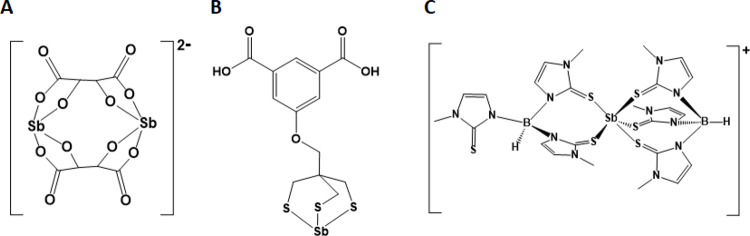
The highly potent Auger electron emitter antimony-119 (Sb) and the SPECT-isotope antimony-117 (Sb) comprise a true theranostic pair particularly suitable for cancer theranostics. Harnessing this potential requires development of a chelator that can rapidly form a stable complex with radioactive antimony ions at the low concentrations typical of radiopharmaceutical preparations. Stable Sb(III) complexes of hydrotris(methimazolyl)borate (TMe) are known, prompting our investigation of this chelator. Additionally, the production of radioantimony was optimized and the SPECT imaging properties of Sb was investigated, in an attempt to move towards biomedical implementation of the theranostic isotope pair of antimony.
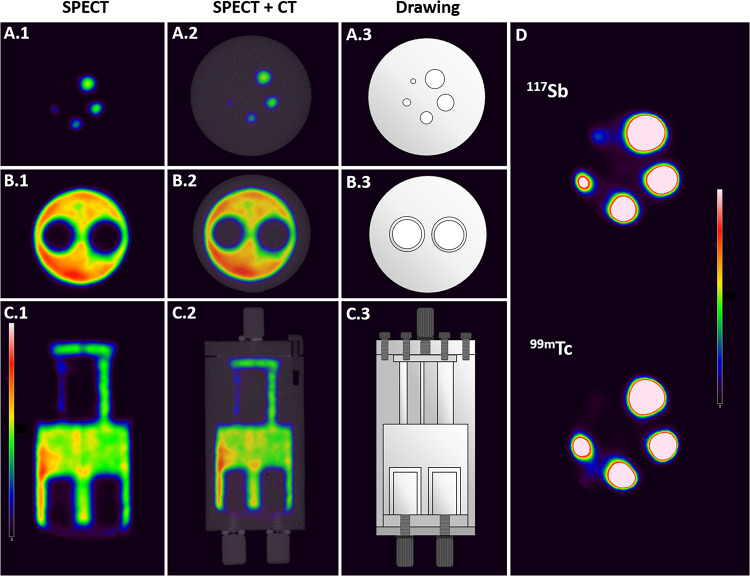
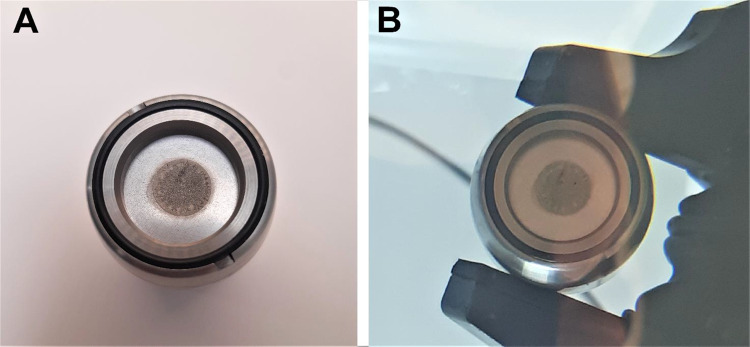
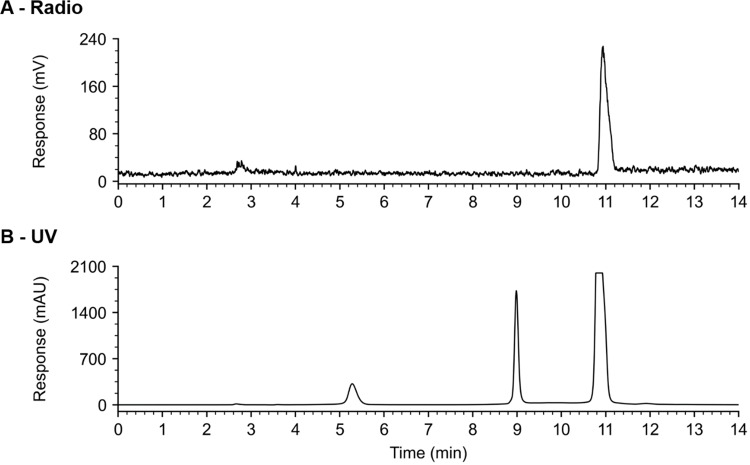
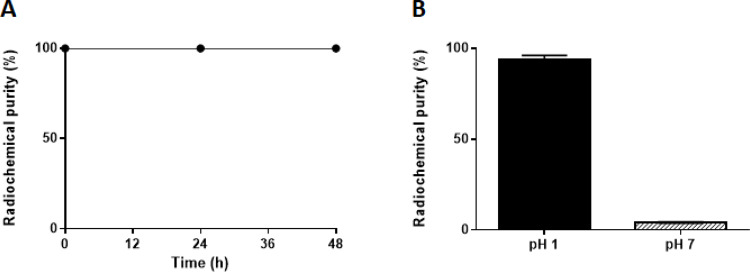
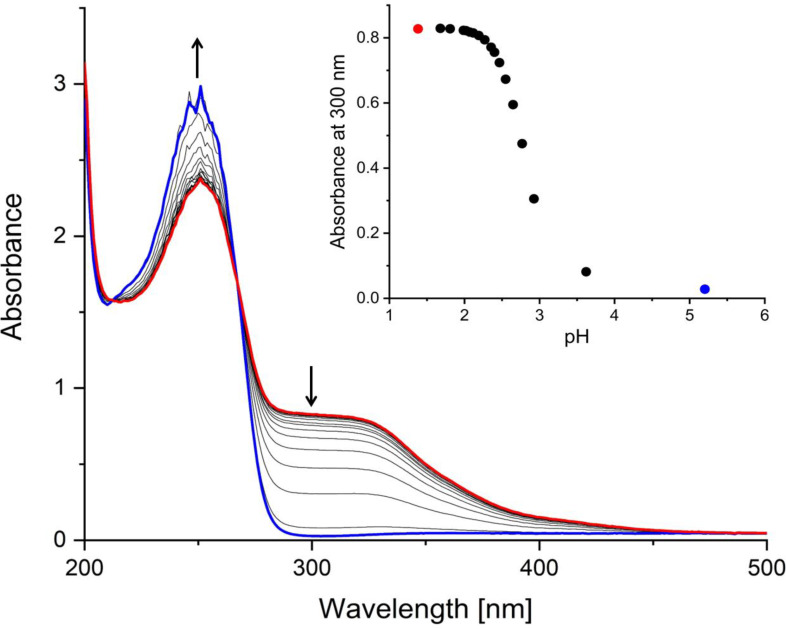
A method for rapid and effective labelling of TMe using Sb was developed, yielding high radiochemical purities of 98.5 ± 2.7% and high radionuclidic purities exceeding 99%. Radiolabelling yielded an Sb(III) complex directly from the acidic Sb(V) solution. [Sb]Sb-TMe in aqueous acidic solution showed high stability in the presence of cysteine, however, the stability of the radiocomplex at increased pH was significantly decreased. The production method of Sb was optimized, enabling a production yield of up to 19.6 MBq/µAh and the production of up to 564 MBq at end of bombardment, following irradiation of a thin Sn-enriched solid target. Preclinical SPECT/CT scanning of a mouse phantom containing purified Sb demonstrated excellent SPECT imaging properties of Sb with high spatial resolution comparable to that of technetium-99m.
We have explored the TMe chelator for complexation of radioantimony and devised a rapid chelation protocol suitable for the short half-life of Sb (T = 2.8 h). [Sb]Sb-TMe (Sb = Sb, Sb, Sb and Sb) demonstrated a high stability in presence of cysteine, although low stability was observed at pH > 4. We have achieved a production yield of Sb high enough for clinical applications and demonstrated the excellent SPECT-imaging properties of Sb. The results contribute valuable information for the development of suitable chelators for radioantimony and is a step further towards implementation of the antimony theranostic pair in biomedical applications.
高活性俄歇电子发射体锑 - 119(¹¹⁹Sb)和单光子发射计算机断层显像(SPECT)同位素锑 - 117(¹¹⁷Sb)构成了一对特别适用于癌症诊疗的真正的诊疗同位素对。要利用这一潜力,需要开发一种螯合剂,它能够在放射性药物制剂典型的低浓度下迅速与放射性锑离子形成稳定的络合物。已知三(甲基咪唑基)硼酸氢盐(TMe)的稳定Sb(III)络合物,这促使我们对这种螯合剂进行研究。此外,优化了放射性锑的生产,并研究了¹¹⁷Sb的SPECT成像特性,试图朝着锑诊疗同位素对的生物医学应用迈进。
开发了一种使用¹¹⁹Sb快速有效标记TMe的方法,放射性化学纯度高达98.5±2.7%,放射性核素纯度超过99%。放射性标记直接从酸性Sb(V)溶液中产生了一种Sb(III)络合物。在水性酸性溶液中的[¹¹⁹Sb]Sb - TMe在存在半胱氨酸的情况下显示出高稳定性,然而,在pH值升高时放射性络合物的稳定性显著降低。优化了¹¹⁷Sb的生产方法,在用富含锡的薄固体靶照射后,生产产率可达19.6 MBq/µAh,轰击结束时产量可达564 MBq。对含有纯化¹¹⁷Sb的小鼠模型进行临床前SPECT/CT扫描,结果表明¹¹⁷Sb具有出色的SPECT成像特性,空间分辨率高,与锝 - 99m相当。
我们探索了用于放射性锑络合的TMe螯合剂,并设计了一种适用于¹¹⁷Sb短半衰期(T = 2.8小时)的快速螯合方案。[¹¹⁷Sb]Sb - TMe(Sb = ¹¹⁹Sb、¹¹⁷Sb、¹²¹Sb和¹²³Sb)在存在半胱氨酸的情况下显示出高稳定性,尽管在pH > 4时观察到稳定性较低。我们实现了¹¹⁷Sb的高生产产率,足以用于临床应用,并证明了¹¹⁷Sb出色的SPECT成像特性。这些结果为开发适用于放射性锑的螯合剂提供了有价值的信息,是朝着在生物医学应用中实施锑诊疗同位素对又迈进了一步。