Department of Physiology and Pharmacology, (FYFA), Karolinska Institute, C3, PA Lönnqvist Group- Section of Anesthesiology and Intensive Care, Anestesi-och Intensivvårdsavdelningen,, 171 76, Stockholm, Sweden.
Pediatric Perioperative Medicine and Intensive Care, Karolinska University Hospital, Eugenivägen 23, 171 64, Stockholm, Sweden.
Sci Rep. 2024 Nov 5;14(1):26807. doi: 10.1038/s41598-024-77483-7.
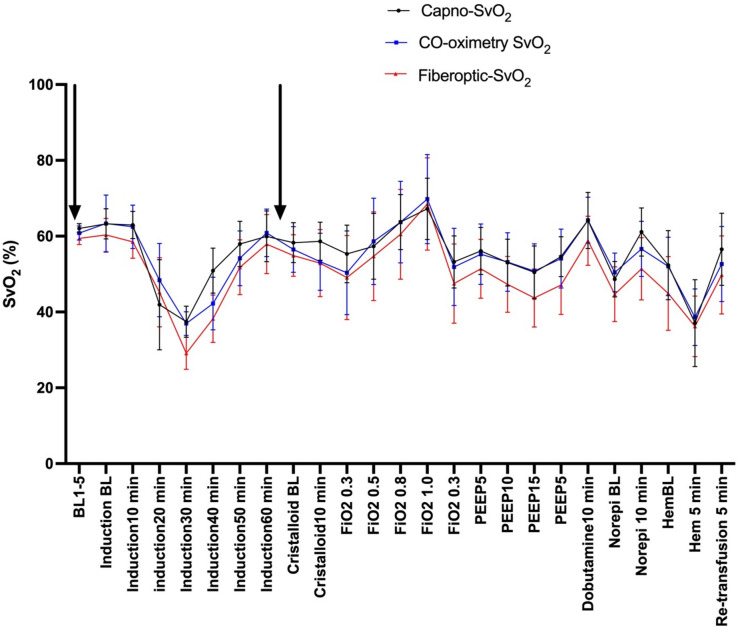
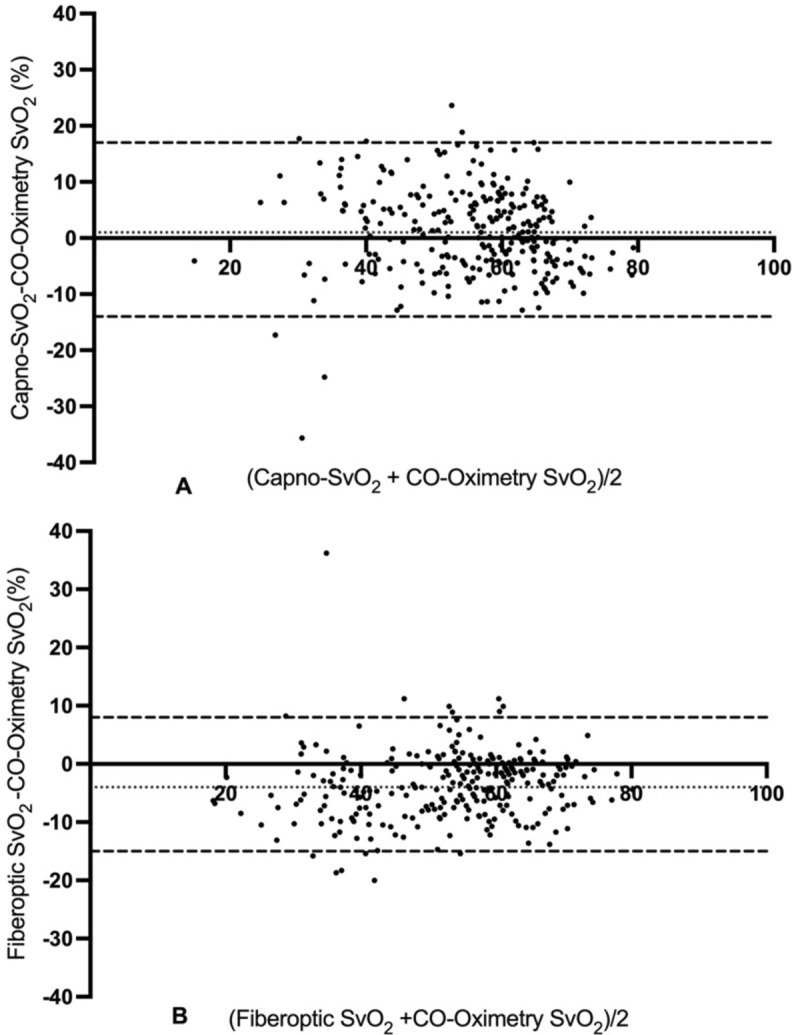
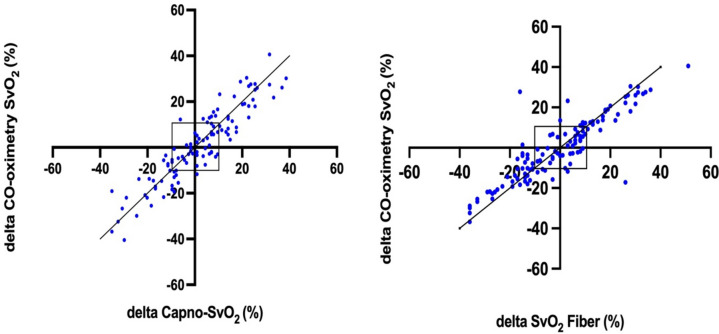
Sepsis continues to be a major cause of death and illness globally, posing significant challenges for healthcare professionals. In the pursuit of more accurate and timely monitoring tools, the concept of capnodynamically derived mixed venous oxygen saturation (Capno-SvO) has emerged as a promising method. Capno-SvO provides a non-invasive way to assess and track SvO and could serve as an additional tool alongside more invasive methods like the pulmonary artery catheter. This could potentially be of great value in the care of critically ill patients with sepsis, where alternative minimal invasive monitoring methods may vary in reliability. The aim of the current study was to compare capno-SvO against values obtained through pulmonary artery blood sample CO-oximetry and continuous fiberoptic SvO monitoring, using a well-established porcine experimental sepsis model. Anesthetized pigs were exposed to a standardized endotoxin infusion sepsis protocol, followed by a series of maneuvers typically applied in sepsis care. Simultaneous recordings were done throughout the experiment for all three monitoring methods. Bland-Altman analysis corrected for repeated measurements was used to assess the agreement of absolute values between the paired recording of CO-oximetry and Capno-SvO as well as between CO-oximetry and fiberoptic SvO. The ability of Capno-SvO and fiberoptic SvO2 to track changes was assessed by concordance rate. A total of 10 animals and 275 paired datapoints were included in the study. The majority of the animals displayed pronounced hemodynamical instability in response to endotoxin exposure and subsequent treatment interventions. Analysis of all paired data points showed a bias between Capno-SvO and CO-oximetry SvO of + 1% with 95% limits of agreement of -14% to + 17%. The corresponding numbers for fiberoptic SvO and CO-oximetry SvO were -4% and -15% to + 8%. The concordance rate as compared to CO-oximetry, were 97% and 93% for Capno-SvO and fiberoptic SvO, respectively. In this experimental sepsis model, continuous, non-invasive Capno-SvO generates average absolute values comparable to the gold standard CO-oximetry albeit with relatively wide limits of agreement. Capno-SvO displayed a concordance rate of 97% against CO-oximetry and exhibits better trending ability compared to invasive fiberoptic SvO.
脓毒症仍然是全球范围内主要的死亡和发病原因,给医疗保健专业人员带来了重大挑战。在寻求更准确和及时的监测工具的过程中,基于二氧化碳动力学的混合静脉血氧饱和度(Capno-SvO)的概念已经成为一种很有前途的方法。Capno-SvO 提供了一种非侵入性的评估和跟踪 SvO 的方法,可以作为一种额外的工具,与肺动脉导管等更具侵入性的方法一起使用。在治疗脓毒症危重患者时,这可能具有很大的价值,因为替代的微创监测方法的可靠性可能有所不同。本研究的目的是使用经过验证的猪实验性脓毒症模型,将 Capno-SvO 与通过肺动脉血样 CO 血氧饱和度和连续光纤 SvO 监测获得的值进行比较。麻醉猪接受标准化的内毒素输注脓毒症方案,然后进行一系列通常应用于脓毒症治疗的操作。所有三种监测方法在整个实验过程中都进行了同步记录。采用重复测量校正的 Bland-Altman 分析来评估 CO 血氧饱和度和 Capno-SvO 以及 CO 血氧饱和度和光纤 SvO 之间配对记录的绝对值的一致性。Capno-SvO 和光纤 SvO2 跟踪变化的能力通过一致性率来评估。共有 10 只动物和 275 对数据点纳入研究。大多数动物在对内毒素暴露和随后的治疗干预作出反应时表现出明显的血流动力学不稳定。对所有配对数据点的分析显示,Capno-SvO 和 CO 血氧饱和度 SvO 之间存在 1%的偏差,95%的一致性界限为-14%至 17%。光纤 SvO 和 CO 血氧饱和度 SvO 的相应数值分别为-4%和-15%至 8%。与 CO 血氧饱和度相比,Capno-SvO 和光纤 SvO 的一致性率分别为 97%和 93%。在这个实验性脓毒症模型中,连续的、非侵入性的 Capno-SvO 产生的平均绝对数值与金标准 CO 血氧饱和度相当,尽管一致性界限相对较宽。Capno-SvO 与 CO 血氧饱和度的一致性率为 97%,与侵入性光纤 SvO 相比,具有更好的趋势能力。