Shinjo Keiko, Umehara Takashi, Niwa Hideaki, Sato Shin, Katsushima Keisuke, Sato Shinya, Wang Xingxing, Murofushi Yoshiteru, Suzuki Miho M, Koyama Hiroo, Kondo Yutaka
Division of Cancer Biology, Center for Neurological Diseases and Cancer, Nagoya University Graduate School of Medicine, Nagoya, Japan.
Laboratory for Epigenetics Drug Discovery, RIKEN Center for Biosystems Dynamics Research, Yokohama, Japan.
Cancer Gene Ther. 2024 Dec;31(12):1884-1894. doi: 10.1038/s41417-024-00847-8. Epub 2024 Nov 5.
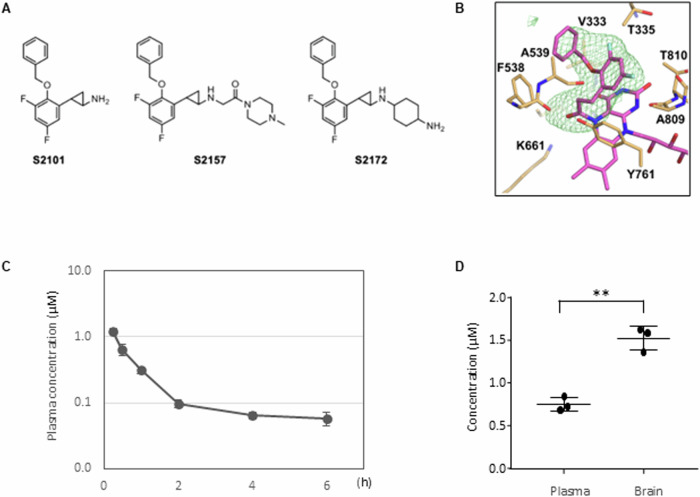
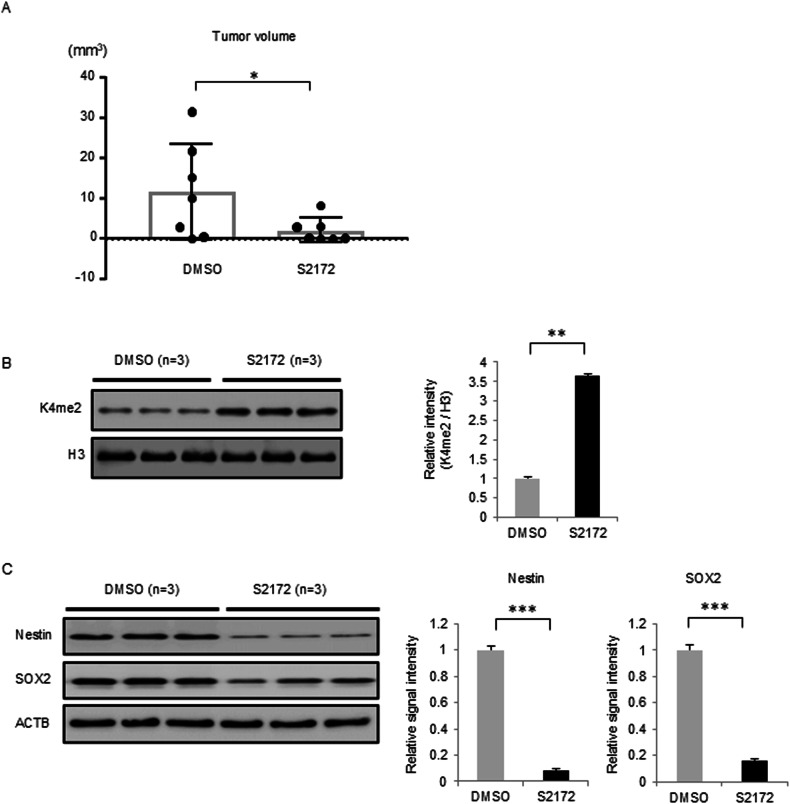
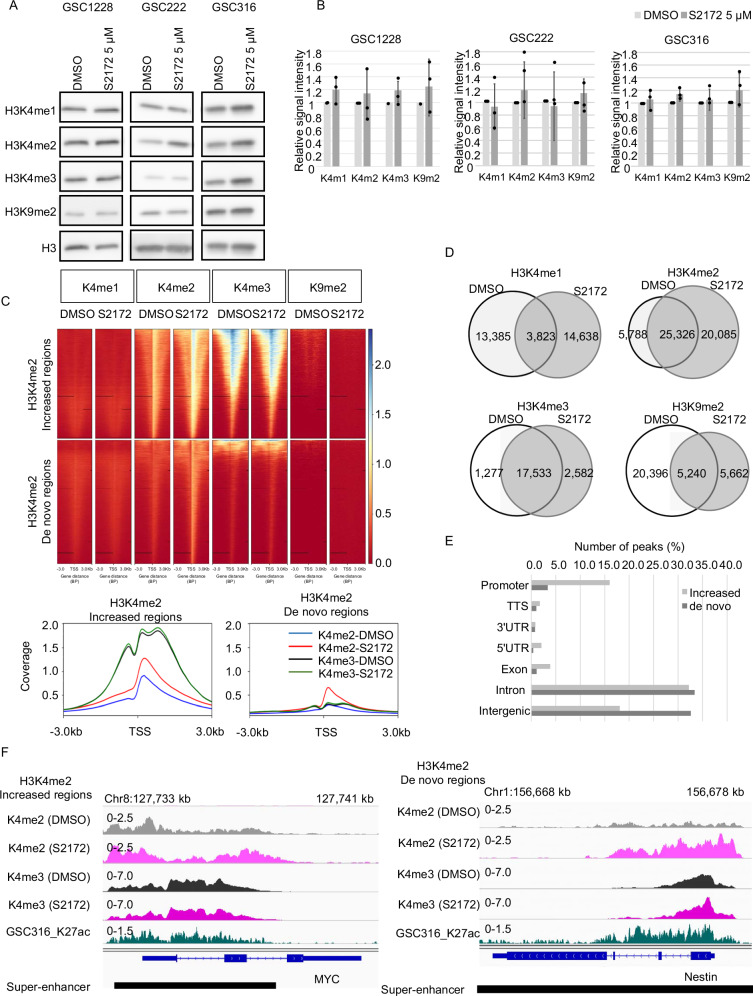
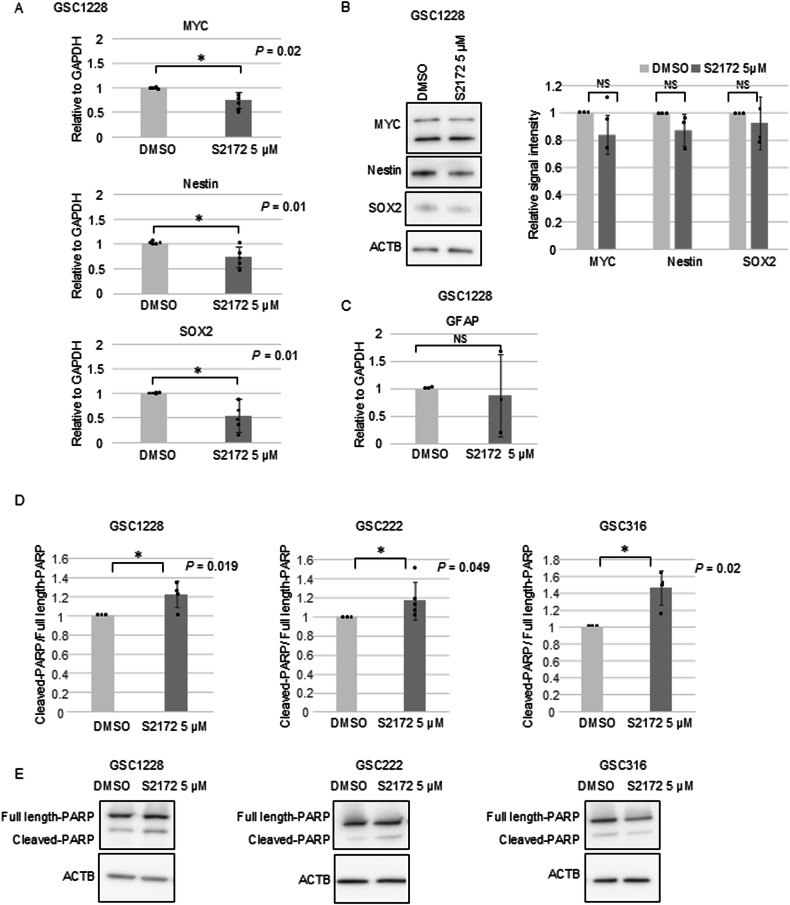
Lysine-specific demethylase 1 (LSD1/KDM1A) is a pivotal epigenetic enzyme that contributes to several malignancies including malignant glioma. LSD1 is a flavin adenine dinucleotide dependent histone demethylase that specifically targets histone H3 lysine (K) 4 mono- (me1) and di-methylation (me2) and H3K9me1/2 for demethylation. Herein we report the development of an LSD inhibitor, S2172, which efficiently penetrates the blood-brain barrier. S2172 effectively suppresses LSD1 enzymatic activity, resulting in the depletion of cell growth both in vitro in glioma stem cells (GSCs) (mean half-maximal inhibitory concentration (IC) of 13.8 μM) and in vivo in a GSC orthotopic xenograft mouse model. Treatment with S2172 robustly reduced the expression of the stemness-related genes MYC and Nestin in GSC cells. Consistent with this, chromatin immunoprecipitation-sequencing revealed a significant S2172-dependent alteration in H3K4me2/H3K4me3 status. Furthermore, we identified 284 newly acquired H3K4me2 peak regions after S2172 treatment, which were encompassed within super-enhancer regions. The altered H3K4me2/H3K4me3 status induced by S2172 treatment affected the expression of genes related to tumorigenesis. Our data suggest that targeting LSD1 with S2172 could provide a promising treatment option for glioblastomas, particularly due to targeting of GSC populations.
赖氨酸特异性去甲基化酶1(LSD1/KDM1A)是一种关键的表观遗传酶,与包括恶性胶质瘤在内的多种恶性肿瘤有关。LSD1是一种黄素腺嘌呤二核苷酸依赖性组蛋白去甲基化酶,特异性靶向组蛋白H3赖氨酸(K)4单甲基化(me1)和二甲基化(me2)以及H3K9me1/2进行去甲基化。在此我们报告了一种LSD抑制剂S2172的研发情况,该抑制剂能有效穿透血脑屏障。S2172有效抑制LSD1酶活性,导致胶质瘤干细胞(GSCs)体外细胞生长受抑制(平均半数最大抑制浓度(IC)为13.8 μM),并且在GSC原位异种移植小鼠模型体内也有此效果。用S2172处理能显著降低GSC细胞中与干性相关基因MYC和巢蛋白的表达。与此一致的是,染色质免疫沉淀测序显示H3K4me2/H3K4me3状态存在显著的S2172依赖性改变。此外,我们在S2172处理后鉴定出284个新获得的H3K4me2峰区域,这些区域包含在超级增强子区域内。S2172处理诱导的H3K4me2/H3K4me3状态改变影响了与肿瘤发生相关基因的表达。我们的数据表明,用S2172靶向LSD1可能为胶质母细胞瘤提供一种有前景的治疗选择,特别是由于其对GSC群体的靶向作用。