Otto Loewi Research Center, Division of Immunology, Medical University of Graz, Neue Stiftingtalstraße 6, 8010, Graz, Austria.
Department of Medicine, Section of General Pathology, University of Verona, Strada le Grazie 8, 37134, Verona, Italy.
J Neuroinflammation. 2024 Nov 5;21(1):287. doi: 10.1186/s12974-024-03270-w.
Immune cell metabolism governs the outcome of immune responses and contributes to the development of autoimmunity by controlling lymphocyte pathogenic potential. In this study, we evaluated the metabolic profile of myelin-specific murine encephalitogenic T cells, to identify novel therapeutic targets for autoimmune neuroinflammation.
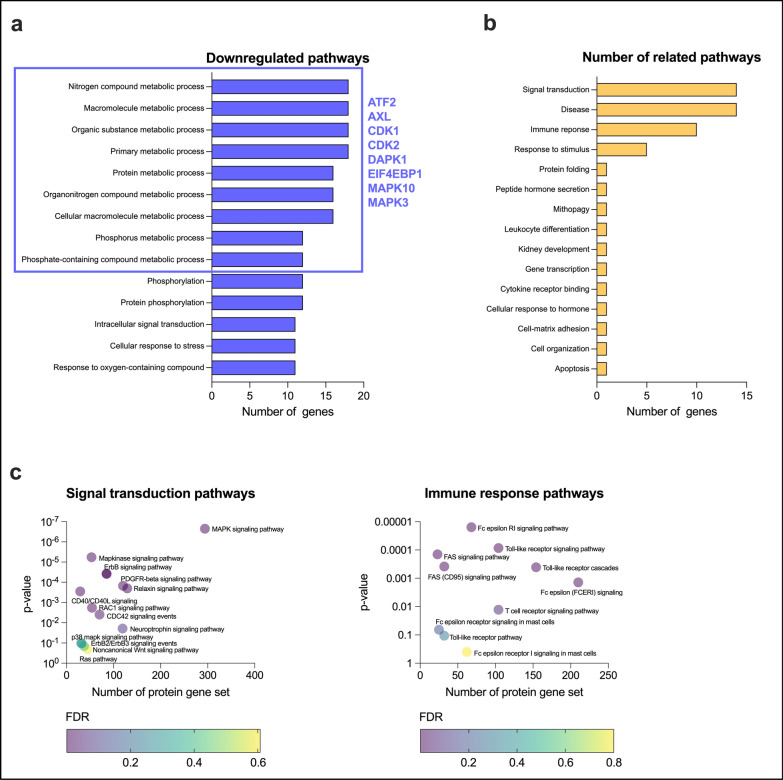
We performed metabolomics analysis on actively-proliferating encephalitogenic T cells to study their overall metabolic profile in comparison to resting T cells. Metabolomics, phosphoproteomics, in vitro functional assays, and in vivo studies in experimental autoimmune encephalomyelitis (EAE), a mouse model of multiple sclerosis (MS), were then implemented to evaluate the effect of metabolic targeting on autoreactive T cell pathogenicity. Finally, we confirmed the translational potential of our targeting approach in human pro-inflammatory T helper cell subsets and in T cells from MS patients.
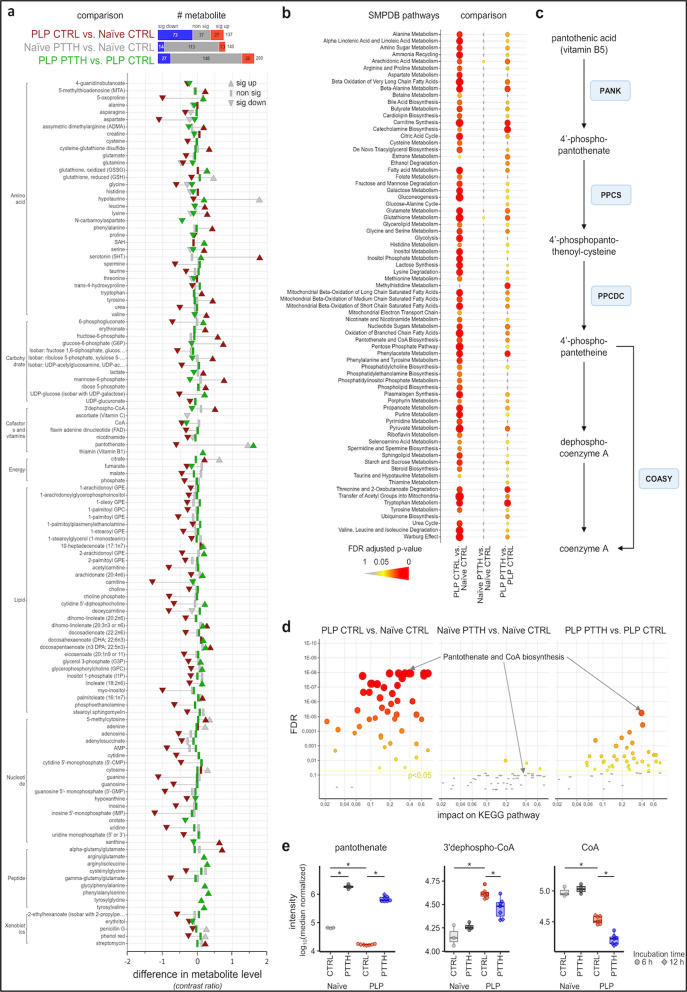
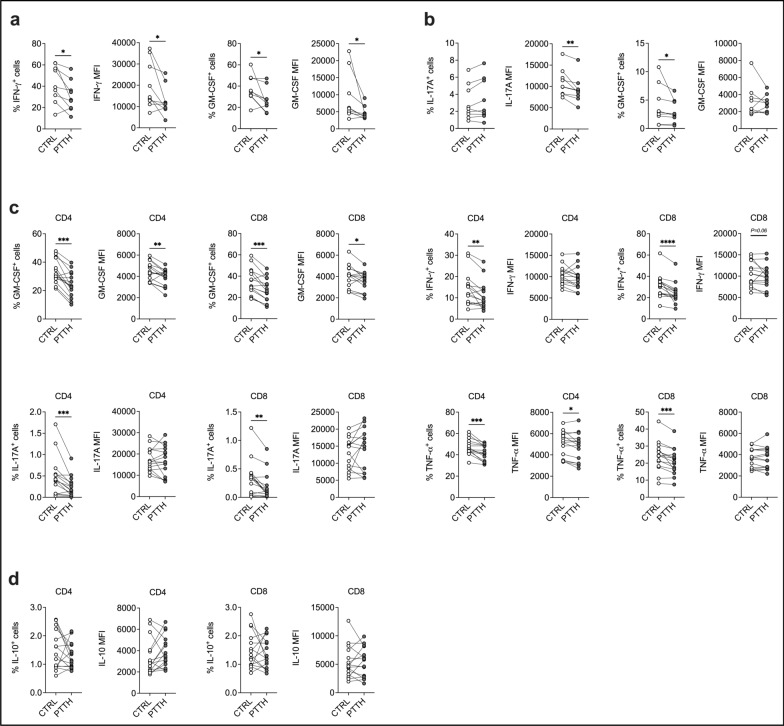
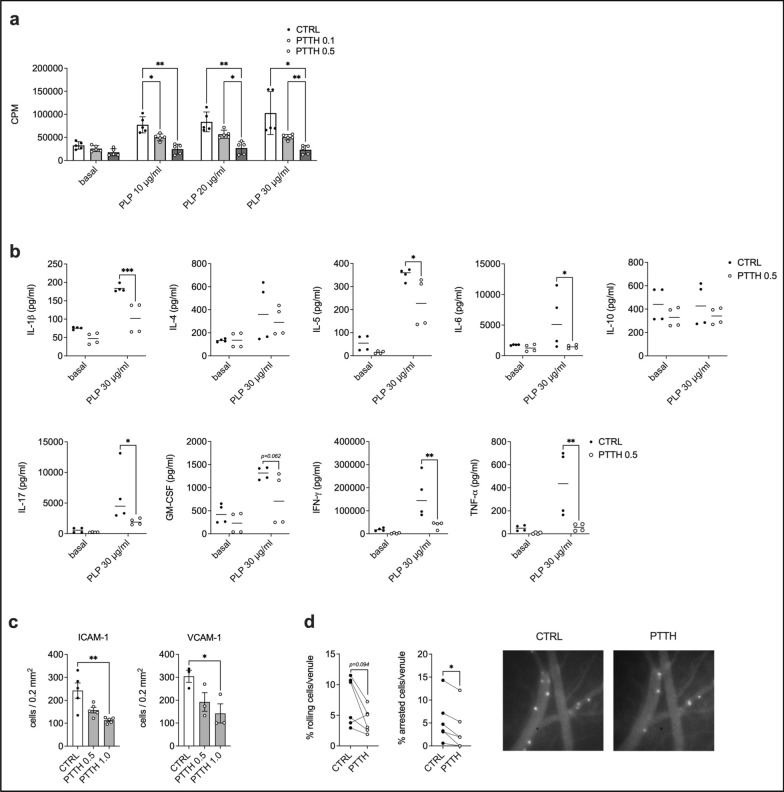
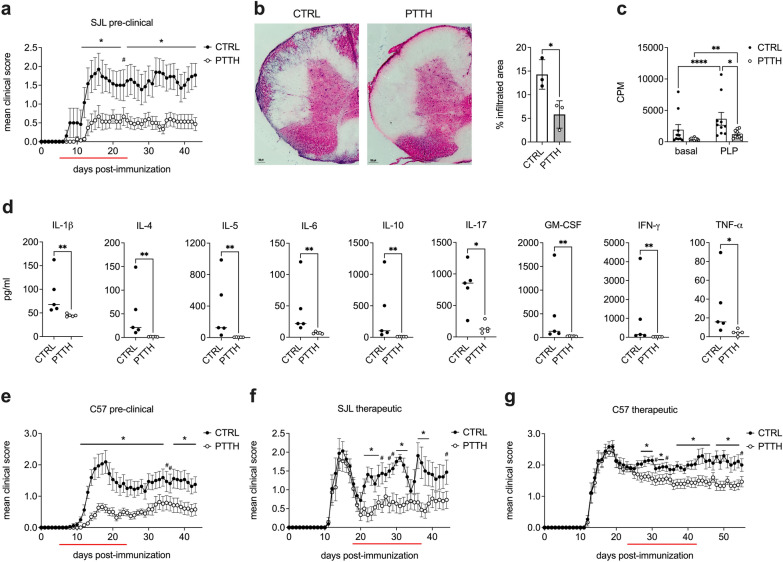
We found that autoreactive encephalitogenic T cells display an altered coenzyme A (CoA) synthesis pathway, compared to resting T cells. CoA fueling with the CoA precursor pantethine (PTTH) affected essential immune-related processes of myelin-specific T cells, such as cell proliferation, cytokine production, and cell adhesion, both in vitro and in vivo. Accordingly, pre-clinical treatment with PTTH before disease onset inhibited the development of EAE by limiting T cell pro-inflammatory potential in vivo. Importantly, PTTH also significantly ameliorated the disease course when administered after disease onset in a therapeutic setting. Finally, PTTH reduced pro-inflammatory cytokine production by human T helper 1 (Th1) and Th17 cells and by T cells from MS patients, confirming its translational potential.
Our data demonstrate that CoA fueling with PTTH in pro-inflammatory and autoreactive T cells may represent a novel therapeutic approach for the treatment of autoimmune neuroinflammation.
免疫细胞代谢控制免疫反应的结果,并通过控制淋巴细胞致病潜力促进自身免疫的发展。在这项研究中,我们评估了髓鞘特异性鼠致病性 T 细胞的代谢特征,以确定自身免疫性神经炎症的新治疗靶点。
我们对活跃增殖的致病性 T 细胞进行代谢组学分析,以研究其与静止 T 细胞相比的整体代谢特征。然后,我们实施代谢组学、磷酸化蛋白质组学、体外功能测定和实验性自身免疫性脑脊髓炎(EAE)体内研究,EAE 是多发性硬化症(MS)的小鼠模型,以评估代谢靶向对自身反应性 T 细胞致病性的影响。最后,我们在人类促炎性 T 辅助细胞亚群和 MS 患者的 T 细胞中证实了我们的靶向方法的转化潜力。
与静止 T 细胞相比,我们发现自身反应性致病性 T 细胞显示出改变的辅酶 A(CoA)合成途径。CoA 燃料与辅酶 A 前体泛硫乙胺(PTTH)一起影响髓鞘特异性 T 细胞的基本免疫相关过程,如细胞增殖、细胞因子产生和细胞黏附,无论是在体外还是体内。因此,在疾病发作前用 PTTH 进行临床前治疗通过限制体内 T 细胞促炎性潜力来抑制 EAE 的发展。重要的是,在治疗设置中疾病发作后给予 PTTH 也显著改善了疾病进程。最后,PTTH 减少了人类辅助性 T 细胞 1(Th1)和 Th17 细胞以及 MS 患者 T 细胞的促炎性细胞因子产生,证实了其转化潜力。
我们的数据表明,在促炎性和自身反应性 T 细胞中用 PTTH 补充 CoA 可能代表治疗自身免疫性神经炎症的一种新的治疗方法。