Han Jennie, Kadani Zehra, Price Laura C, Kempny Aleksander, Rawal Bhavin, Wort Stephen J, McCabe Colm
National Pulmonary Hypertension Centre, Royal Brompton Hospital, Part of GSTT Foundation Trust, Sydney Street, London SW3 6NP, UK.
National Heart and Lung Institute, Imperial College, London SW7 2AZ, UK.
Eur Heart J Case Rep. 2024 Oct 7;8(11):ytae538. doi: 10.1093/ehjcr/ytae538. eCollection 2024 Nov.
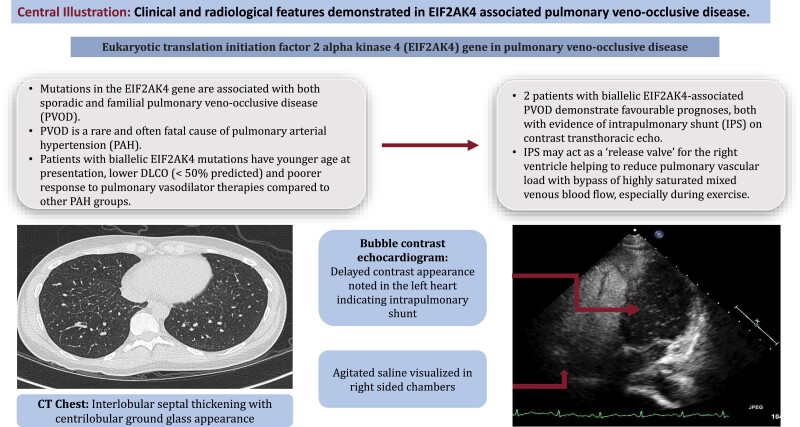
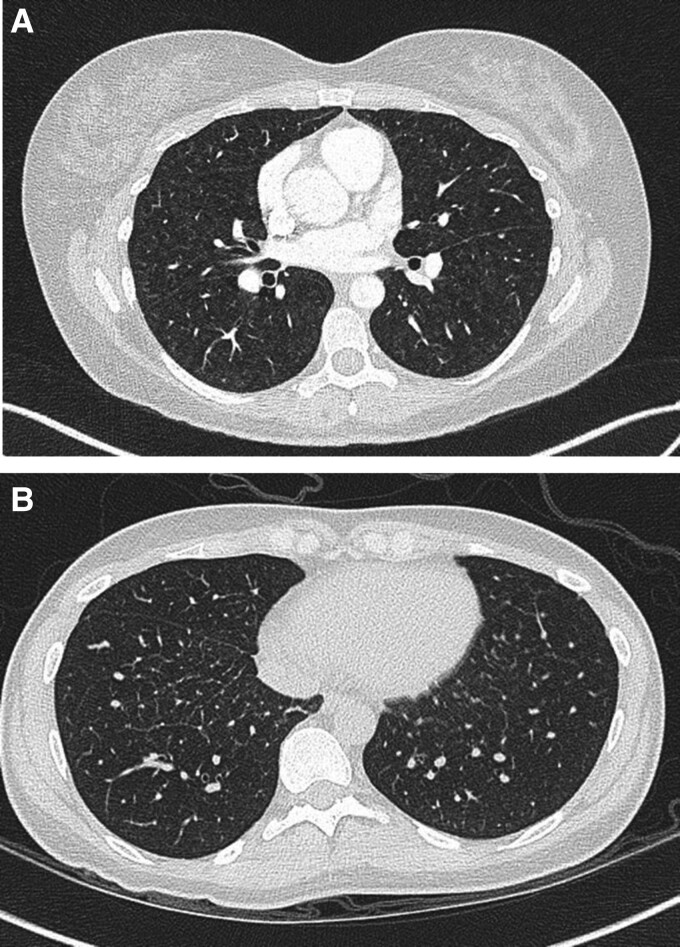
Pulmonary veno-occlusive disease (PVOD) is a rare cause of pulmonary arterial hypertension (PAH) characterized by widespread fibrous intimal proliferation of pre-septal pulmonary venules and a lower lung diffusion capacity for carbon monoxide when compared to classical PAH. Mutations in the eukaryotic translation initiation factor 2 alpha kinase 4 (EIF2AK4) gene have been linked to the development of PVOD, with the worst prognosis seen in homozygous mutation carriers.
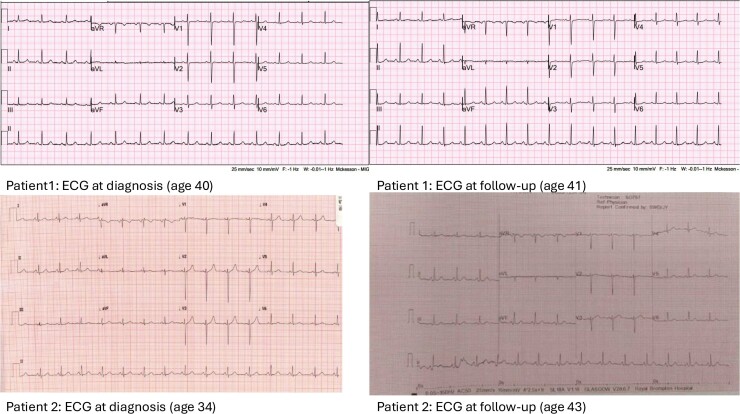
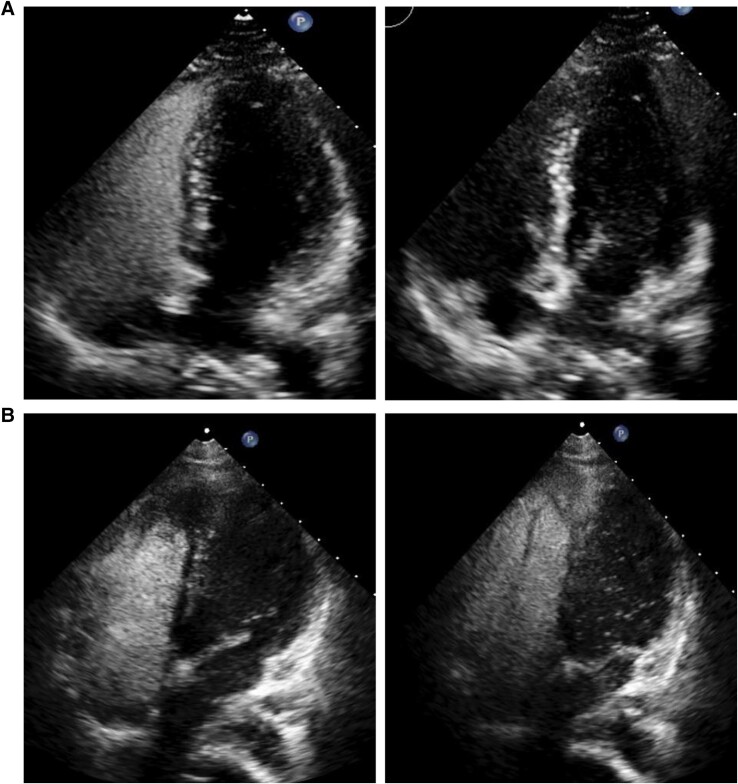
We describe two patients with homozygous EIF2AK4-associated PVOD, who despite typical clinical features at presentation have demonstrated a remarkable response to pulmonary vasodilator therapy and comparatively benign clinical courses. Intrapulmonary shunt (IPS) was evident on resting contrast transthoracic echocardiography (CTTE) in both patients undertaken 4 and 36 months following diagnosis. At 2 and 10 years of follow-up, respectively, both patients retain preserved right heart function and remain in the World Health Organization functional class II. This case series contrasts strikingly with prior reports of patients with classical PAH where IPS that develops in response to pulmonary vasodilator treatment has been associated with dramatic reduction in systemic oxygen saturations, necessitating withdrawal of therapy.
In two patients with PVOD associated with homozygous EIF2AK4 mutations, IPS may act to offload the right ventricle with relative preservation of systemic exercise saturations and a more favourable prognosis. Greater use of CTTE in patients with PVOD as well as PAH with lower lung diffusion capacity may lend insight into the clinical and prognostic relevance of IPS in these patient subgroups with otherwise poor prognosis.
肺静脉闭塞病(PVOD)是肺动脉高压(PAH)的一种罕见病因,其特征是肺前间隔小静脉广泛的纤维内膜增生,与经典PAH相比,一氧化碳肺弥散能力较低。真核翻译起始因子2α激酶4(EIF2AK4)基因突变与PVOD的发生有关,纯合突变携带者的预后最差。
我们描述了两名患有纯合EIF2AK4相关PVOD的患者,他们尽管在就诊时具有典型的临床特征,但对肺血管扩张剂治疗表现出显著反应,临床病程相对良性。在诊断后4个月和36个月进行的静息对比经胸超声心动图(CTTE)检查中,两名患者均显示肺内分流(IPS)明显。分别在随访2年和10年时,两名患者的右心功能均保持良好,仍处于世界卫生组织功能分级II级。该病例系列与先前关于经典PAH患者的报道形成鲜明对比,在经典PAH患者中,因肺血管扩张剂治疗而出现的IPS与全身氧饱和度显著降低有关,需要停止治疗。
在两名患有与纯合EIF2AK4突变相关的PVOD患者中,IPS可能起到减轻右心室负荷的作用,同时相对保留全身运动时的饱和度,预后更有利。在PVOD以及肺弥散能力较低的PAH患者中更多地使用CTTE,可能有助于深入了解IPS在这些预后较差的患者亚组中的临床和预后相关性。