Derafa Wassila, Moustafa Bassant S, Mohamed Gehad G, Taha Rania H, Farhana Aisha
Department of Chemistry, College of Science, Jouf University, Aljouf, Saudi Arabia.
Central Laboratories of Egyptian Mineral Resources Authority, Ahmed El-Zayat Str., Giza, Egypt.
Int J Health Sci (Qassim). 2024 Nov-Dec;18(6):31-47.
Schiff bases are versatile chemical compounds extensively used in various applications, including as catalysts, polymer stabilizers, pigments, dyes, and building blocks for organic synthesis. In addition, they exhibit a wide range of biological activities, such as antifungal, antibacterial, antiviral, antiproliferative, anti-inflammatory, and antipyretic effects.
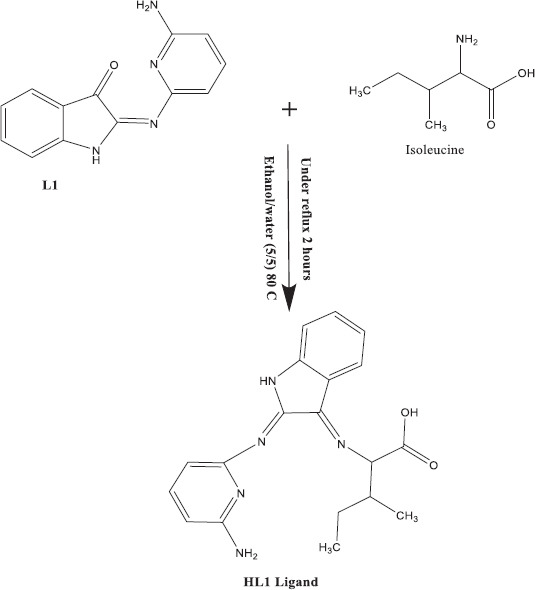
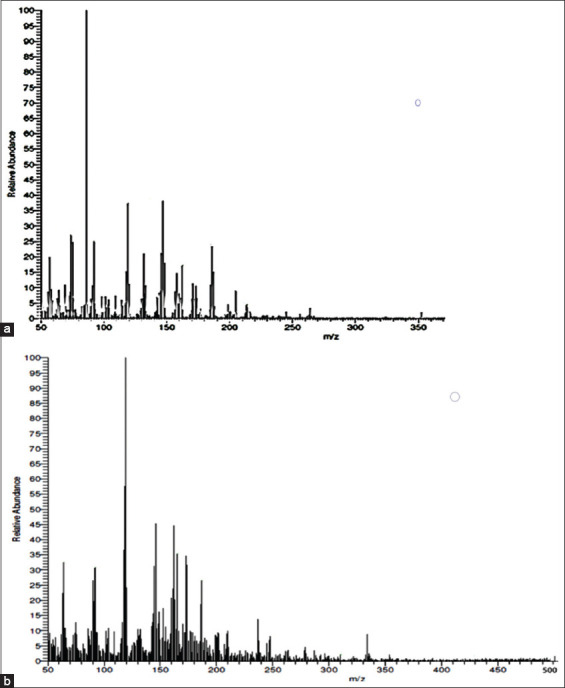
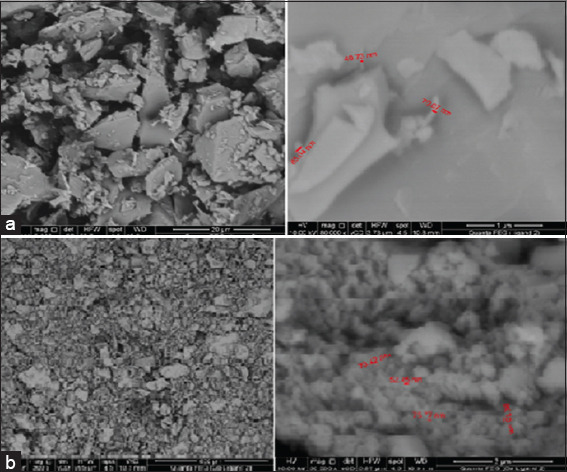
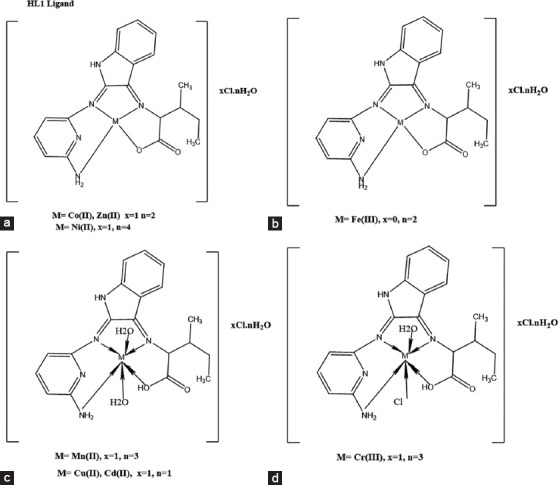
A novel Schiff base ligand (HL) was synthesized by condensing isatin with 2,6-diaminopyridine and isoleucine, followed by the preparation of transition metal complexes. The ligand and complexes were characterized using techniques such as elemental analysis, IR, 1H-NMR, UV-vis spectroscopy, mass spectrometry, and thermal analysis. Antimicrobial, antiproliferative activities, and structural investigations through X-ray diffraction and scanning electron microscopy were also evaluated.
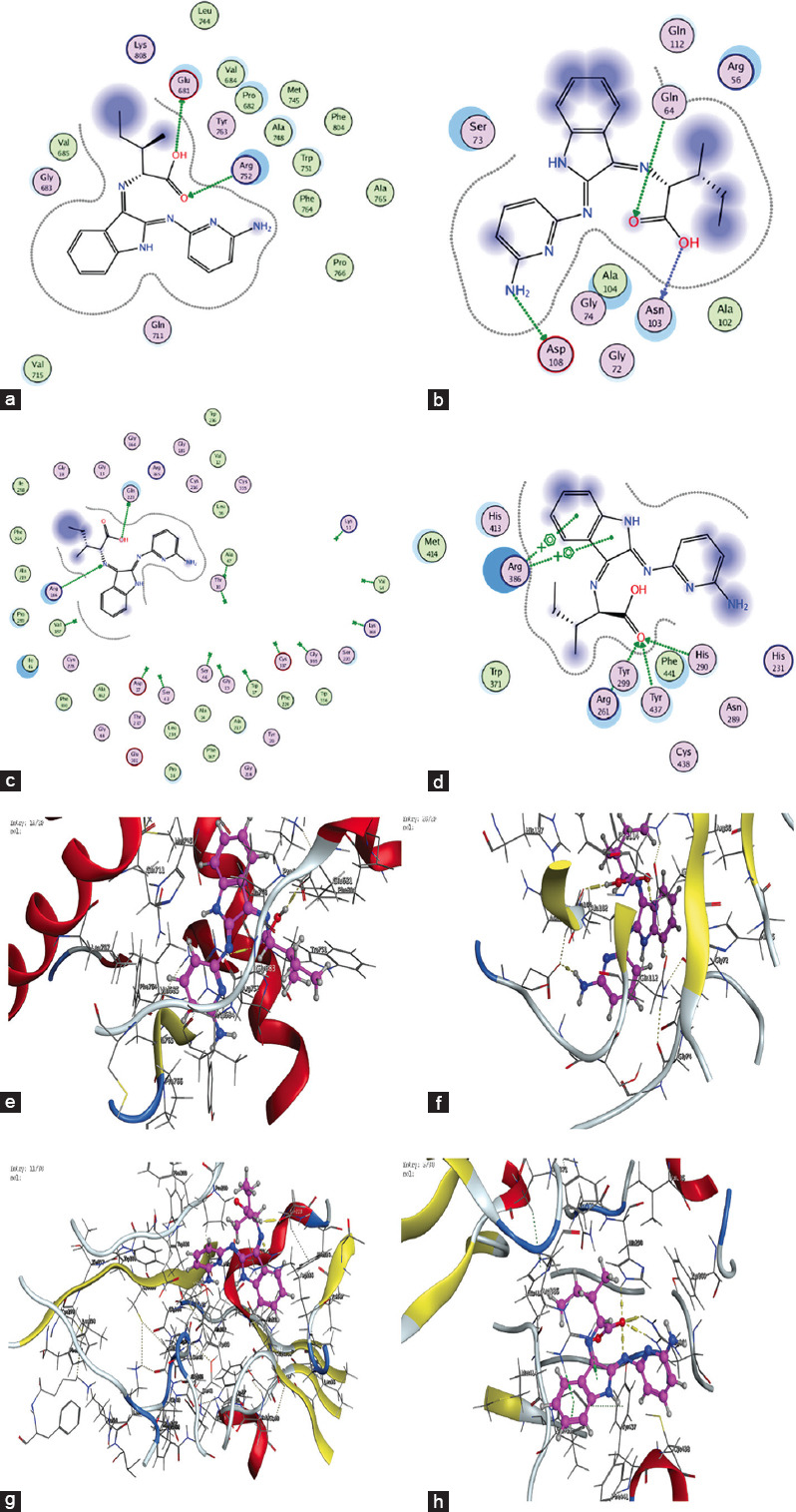
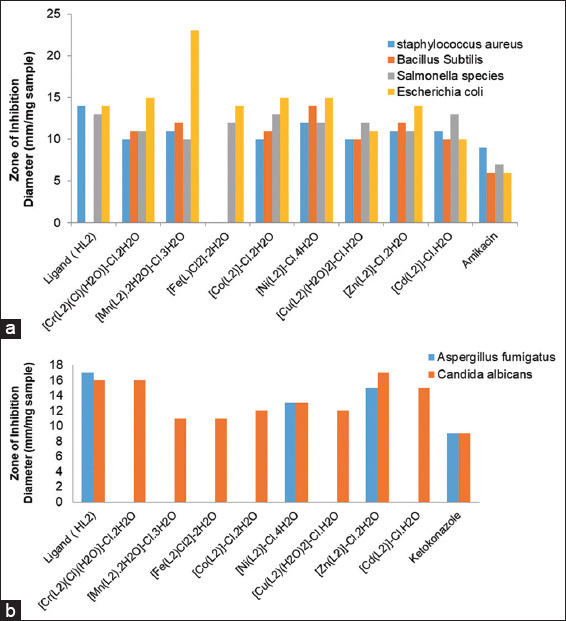
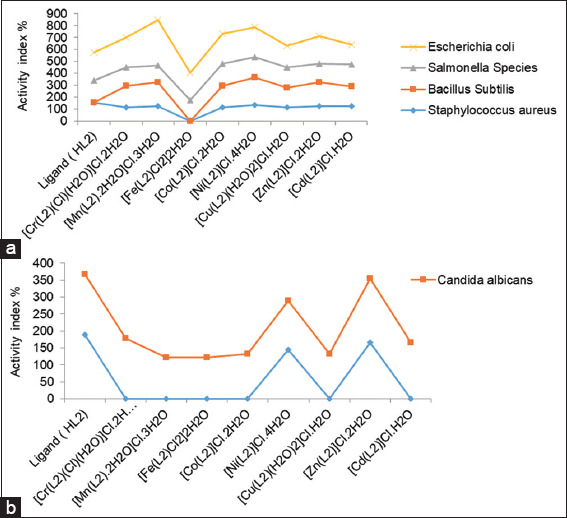
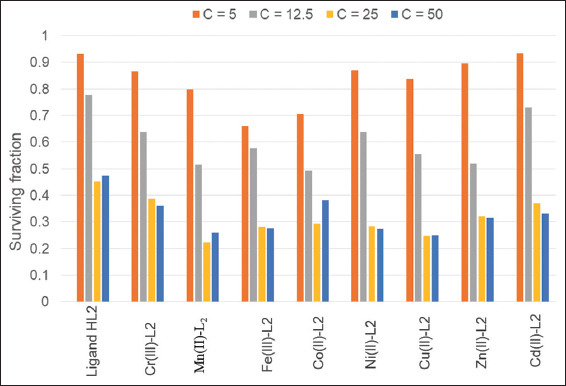
The complexes were identified as [Cr(L)Cl(HO)]Cl·2HO, [Fe(L)Cl], [M(L)]Cl·nHO, and [M(L)(HO)]Cl, where M represents Mn(II), Cu(II), Cd(II), Co(II), Zn(II), and Ni(II). Thermogravimetric analysis showed initial water loss, followed by decomposition of anionic compounds and ligands. The ligand forms a uninegative-tetradentate bond with the metal ions, and all complexes, except Fe(III), exhibit electrolytic behavior. Most complexes displayed tetrahedral geometry, while Ni(II), Co(II), and Zn(II) had octahedral geometry. The metal complexes showed enhanced antibacterial, antifungal, and antiproliferative activity against MCF-7 breast cancer cells compared to the free ligand. Molecular docking studies indicated inhibitory potential against receptors 1GS4, 2HQ6, 3DJD, and 5JPE.
These newly synthesized ligands and complexes show promise as therapeutic agents against infections and cancer, though further studies are needed to understand their mechanisms.
席夫碱是用途广泛的化合物,广泛应用于各种领域,包括作为催化剂、聚合物稳定剂、颜料、染料以及有机合成的构建单元。此外,它们还具有广泛的生物活性,如抗真菌、抗菌、抗病毒、抗增殖、抗炎和解热作用。
通过异吲哚酮与2,6 - 二氨基吡啶和异亮氨酸缩合合成了一种新型席夫碱配体(HL),随后制备了过渡金属配合物。使用元素分析、红外光谱、1H - NMR、紫外 - 可见光谱、质谱和热分析等技术对配体和配合物进行了表征。还评估了抗菌、抗增殖活性以及通过X射线衍射和扫描电子显微镜进行的结构研究。
配合物被鉴定为[Cr(L)Cl(HO)]Cl·2HO、[Fe(L)Cl]、[M(L)]Cl·nHO和[M(L)(HO)]Cl,其中M代表Mn(II)、Cu(II)、Cd(II)、Co(II)、Zn(II)和Ni(II)。热重分析表明最初有水分损失,随后阴离子化合物和配体分解。配体与金属离子形成单负四齿键,除Fe(III)外的所有配合物都表现出电解行为。大多数配合物呈现四面体几何构型,而Ni(II)、Co(II)和Zn(II)具有八面体几何构型。与游离配体相比,金属配合物对MCF - 7乳腺癌细胞显示出增强的抗菌、抗真菌和抗增殖活性。分子对接研究表明对受体1GS4、2HQ6、3DJD和5JPE具有抑制潜力。
这些新合成的配体和配合物有望作为抗感染和抗癌的治疗剂,不过需要进一步研究以了解其作用机制。