Department of Cardiology, The Second Affiliated Hospital of Chongqing Medical University, Chongqing, China.
Department of Cardiology, Bishan Hospital of Chongqing Medical University, Chongqing, China.
Front Immunol. 2024 Oct 22;15:1488853. doi: 10.3389/fimmu.2024.1488853. eCollection 2024.
This study aimed to elucidate the differential immunological mechanisms and characteristics of hypertension induced by VEGF inhibitors (VEGFi) and VEGF receptor inhibitors (VEGFRi), with the goal of optimizing monitoring strategies and treatment protocols.
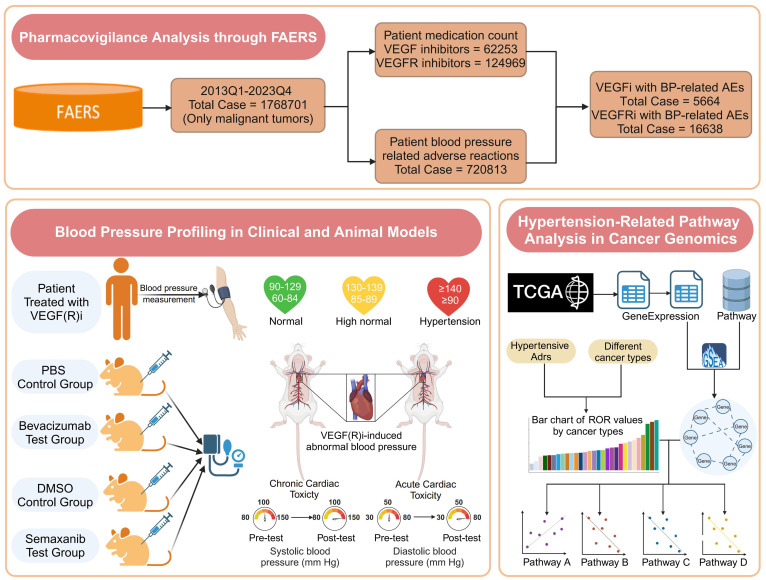
We investigated the risk of immune-related adverse events associated with VEGFi/VEGFRi-induced hypertension by analyzing the FDA Adverse Event Reporting System (FAERS) database. Findings were corroborated with blood pressure characteristics observed in clinical patients and preclinical models exposed to various VEGF/VEGFRi. Clinical and preclinical studies were conducted to compare immunological responses and hypertension profiles between inhibitor classes. An integrative analysis across cancer types and species was performed, focusing on key signaling pathways.
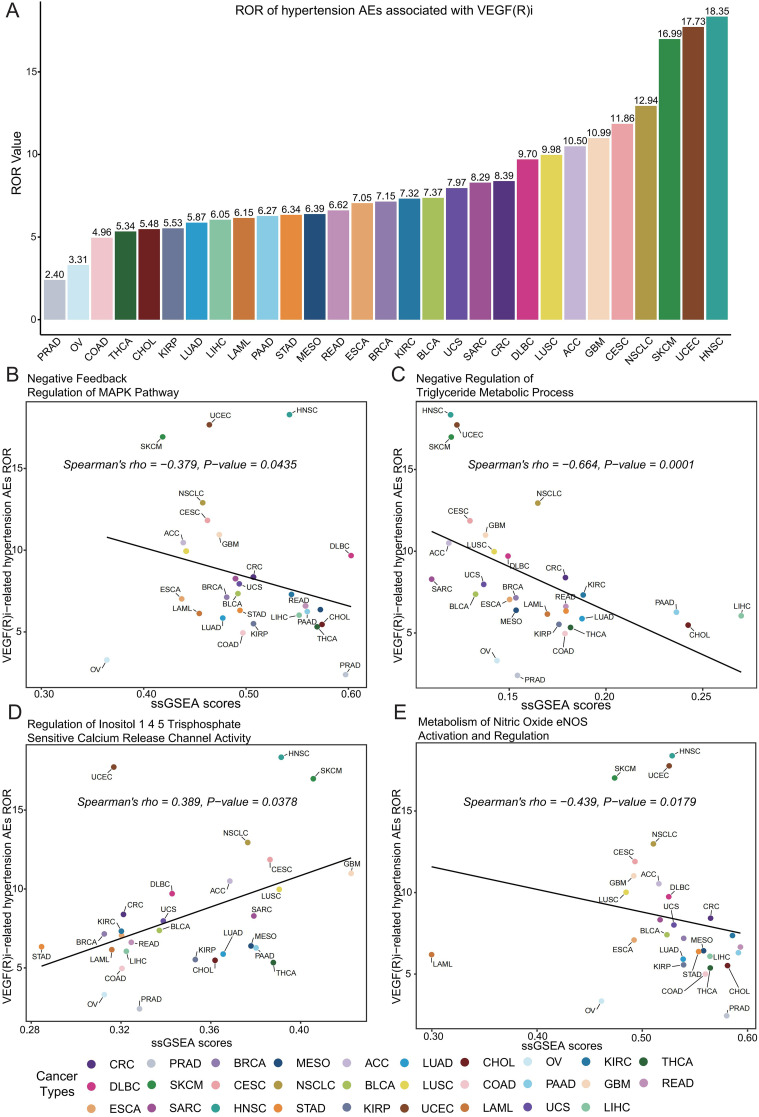
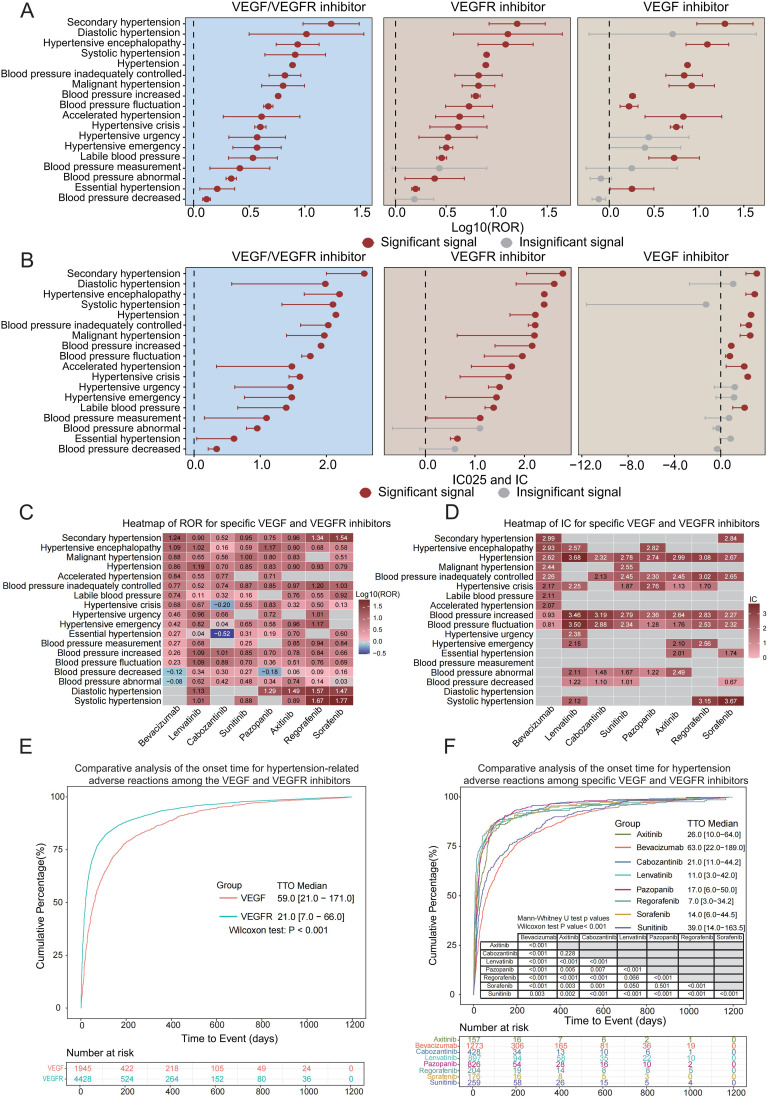
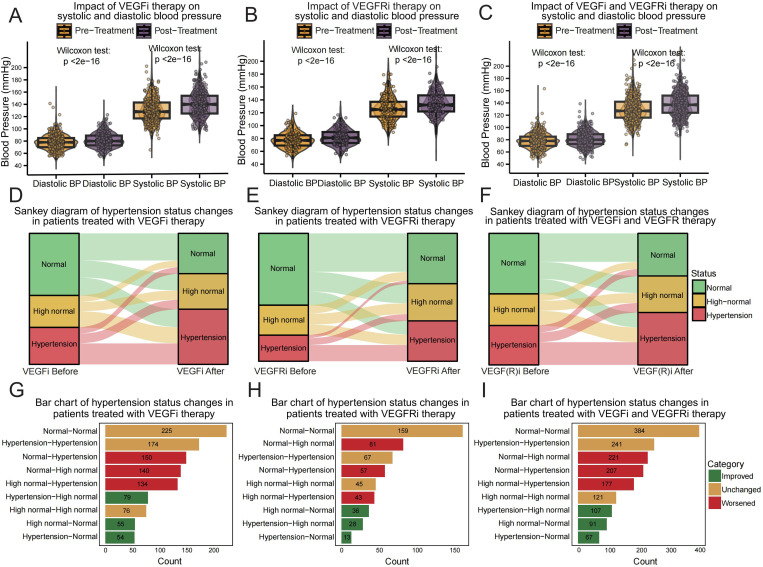
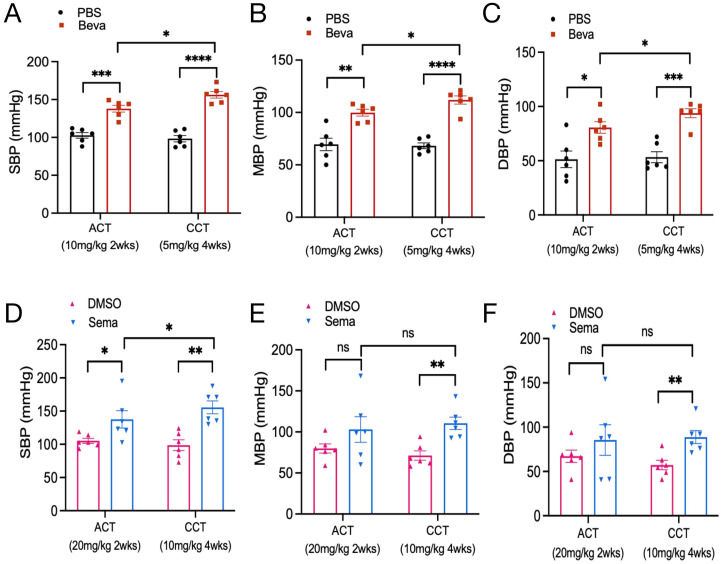
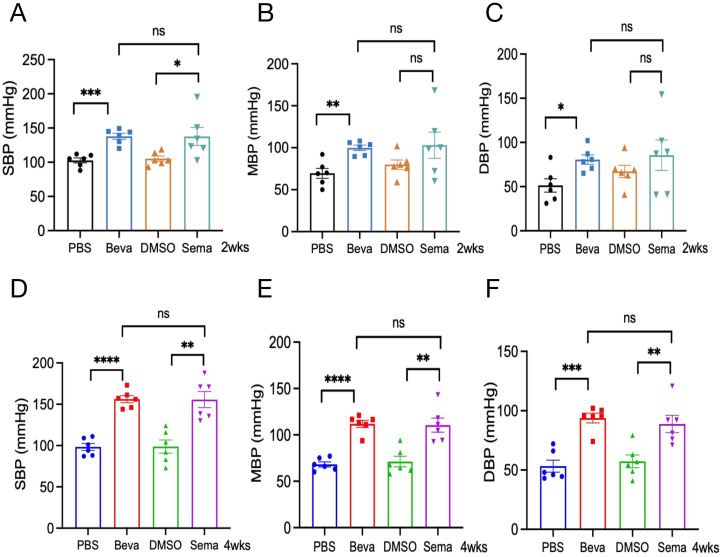
Analysis of FAERS data, in conjunction with clinical observations, revealed that both VEGFi and VEGFRi significantly elevated the risk of immune-mediated, blood pressure-related adverse events (ROR=7.75, 95% CI: 7.76-7.95). Subsequent clinical and preclinical studies demonstrated differential immunological responses and hypertension profiles between inhibitor classes. VEGFRi exhibited a more rapid onset, greater blood pressure elevation, and higher incidence of immune-mediated adverse events compared to VEGFi (Systolic BP: ROR=0 for VEGFi vs. ROR=12.25, 95% CI: 6.54-22.96 for VEGFRi; Diastolic BP: ROR=5.09, 95% CI: 0.60-43.61 for VEGFi vs. ROR=12.90, 95% CI: 3.73-44.55 for VEGFRi). Integrative analysis across cancer types and species, focusing on key signaling pathways, revealed that VEGF/VEGFRi-induced blood pressure elevation was associated with immunomodulation of the mitogen activated protein kinase (MAPK) pathway (R=-0.379, P=0.0435), alterations in triglyceride metabolism (R=-0.664, P=0.0001), modulation of myo-inositol 1,4,5-trisphosphate-sensitive calcium release channel activity (R=0.389, P=0.0378), and dysregulation of nitric oxide eNOS activation and metabolism (R=-0.439, P=0.0179).
The temporal dynamics of these effects demonstrated greater significance than dose-dependent responses. Both VEGFi and VEGFRi significantly augmented the risk of immune-mediated, blood pressure-related adverse events, with VEGFRi inducing a more rapid and pronounced onset of blood pressure elevation and a higher incidence of immune-related, blood pressure-associated adverse events compared to VEGFi.
本研究旨在阐明血管内皮生长因子抑制剂(VEGFi)和血管内皮生长因子受体抑制剂(VEGFRi)引起的高血压的不同免疫机制和特征,旨在优化监测策略和治疗方案。
我们通过分析 FDA 不良事件报告系统(FAERS)数据库,研究了与 VEGFi/VEGFRi 诱导的高血压相关的免疫相关不良事件的风险。通过分析临床患者和暴露于各种 VEGF/VEGFRi 的临床前模型中的血压特征,对结果进行了证实。进行了临床和临床前研究,以比较抑制剂类别之间的免疫反应和高血压特征。对不同癌症类型和物种进行了综合分析,重点关注关键信号通路。
对 FAERS 数据的分析以及临床观察结果表明,VEGFi 和 VEGFRi 均显著增加了免疫介导的与血压相关的不良事件的风险(ROR=7.75,95%CI:7.76-7.95)。随后的临床和临床前研究表明,抑制剂类别之间存在不同的免疫反应和高血压特征。与 VEGFi 相比,VEGFRi 表现出更快的发病时间、更高的血压升高和更高的免疫介导的不良事件发生率(Systolic BP:ROR=0 用于 VEGFi 与 ROR=12.25,95%CI:6.54-22.96 用于 VEGFRi;Diastolic BP:ROR=5.09,95%CI:0.60-43.61 用于 VEGFi 与 ROR=12.90,95%CI:3.73-44.55 用于 VEGFRi)。对不同癌症类型和物种的综合分析,重点关注关键信号通路,揭示了 VEGF/VEGFRi 诱导的血压升高与丝裂原激活蛋白激酶(MAPK)通路的免疫调节(R=-0.379,P=0.0435)、甘油三酯代谢的改变(R=-0.664,P=0.0001)、肌醇 1,4,5-三磷酸敏感钙释放通道活性的调节(R=0.389,P=0.0378)和一氧化氮 eNOS 激活和代谢的失调(R=-0.439,P=0.0179)有关。
这些影响的时间动态比剂量依赖性反应更具意义。VEGFi 和 VEGFRi 均显著增加了免疫介导的与血压相关的不良事件的风险,与 VEGFi 相比,VEGFRi 诱导血压升高的发病时间更快、更明显,并且免疫相关的、与血压相关的不良事件的发生率更高。