Joko Tri, Ava Sheila, Putri Isna Nurifa Sasmita, Subandiyah Siti, Rohman Muhammad Saifur, Ogawa Naoto
Department of Plant Protection, Faculty of Agriculture, Universitas Gadjah Mada, Yogyakarta 55281, Indonesia.
Department of Microbiology, Faculty of Agriculture, Universitas Gadjah Mada, Yogyakarta 55281, Indonesia.
Scientifica (Cairo). 2024 Oct 28;2024:8837149. doi: 10.1155/2024/8837149. eCollection 2024.
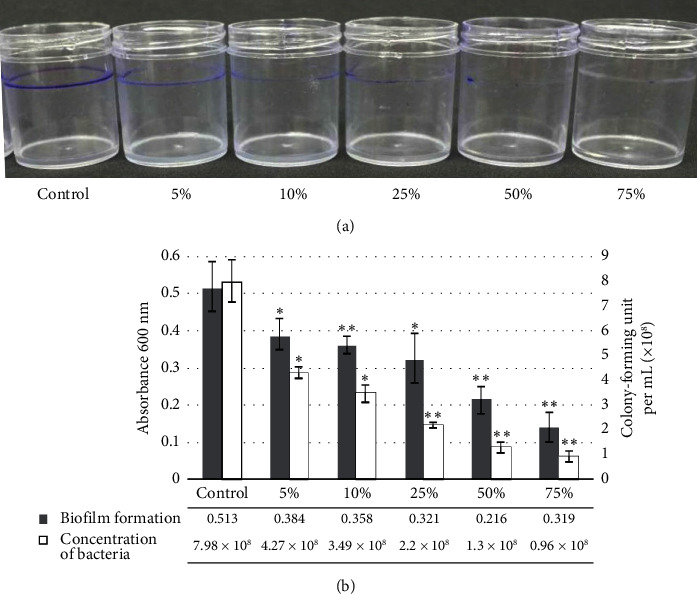
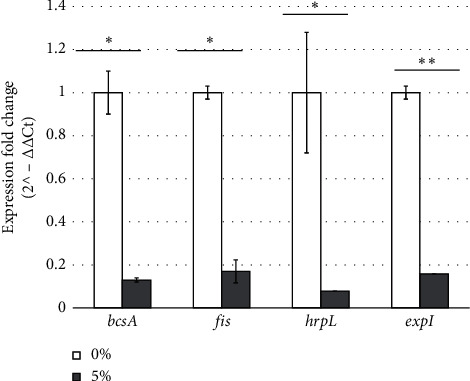
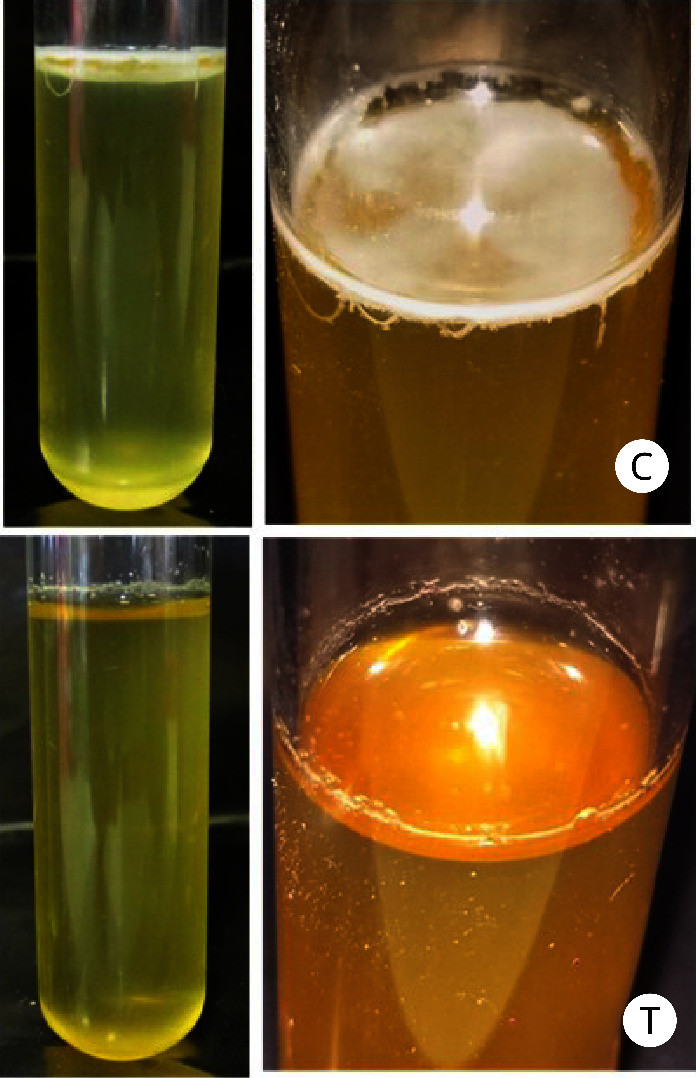
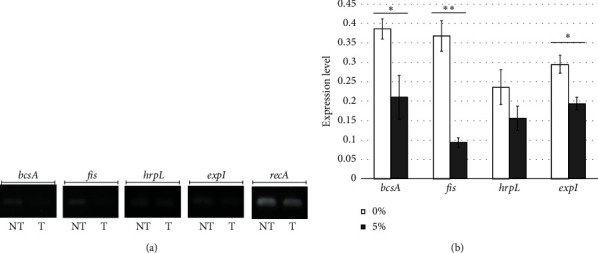
Biofilms are major virulence factors formed by pathogenic bacteria to invade their host and maintain their colony. While biofilms usually develop on diverse solid surfaces, floating biofilms, also called pellicles, are formed at the air-liquid interface. To address the problem of biofilm formation by bacterial pathogens, honey has been extensively studied. However, information on the effect of honey on biofilm formation by plant pathogens is scarce. This study aimed to determine the effects of manuka honey on biofilm and pellicle formation by and analyze the expression of genes encoding proteins needed to form biofilm by using semiquantitative PCR and RT-qPCR. Treatment with 5% (w/v) of manuka honey significantly decreased biofilm and pellicle formation by . RT-qPCR results showed that the expression of , , , and decreased 7.07-fold, 5.71-fold, 13.11-fold, and 6.26-fold, respectively, after exposure to 5% (w/v) manuka honey. Our findings reveal that manuka honey may effectively inhibit biofilm and pellicle formation.
生物膜是病原菌形成的主要毒力因子,用于侵入宿主并维持其菌落。虽然生物膜通常在各种固体表面形成,但漂浮生物膜,也称为菌膜,是在气液界面形成的。为了解决细菌病原体形成生物膜的问题,人们对蜂蜜进行了广泛研究。然而,关于蜂蜜对植物病原体形成生物膜的影响的信息却很少。本研究旨在确定麦卢卡蜂蜜对[具体细菌名称未给出]生物膜和菌膜形成的影响,并通过半定量PCR和RT-qPCR分析编码形成生物膜所需蛋白质的基因的表达。用5%(w/v)的麦卢卡蜂蜜处理显著降低了[具体细菌名称未给出]生物膜和菌膜的形成。RT-qPCR结果显示,在暴露于5%(w/v)的麦卢卡蜂蜜后,[具体基因名称未给出]、[具体基因名称未给出]、[具体基因名称未给出]和[具体基因名称未给出]的表达分别下降了7.07倍、5.71倍、13.11倍和6.26倍。我们的研究结果表明,麦卢卡蜂蜜可能有效抑制生物膜和菌膜的形成。