Papantoniou Michail, Rentzos Michail, Anagnostou Evangelos, Tzavellas Elias, Paparrigopoulos Thomas, Kokotis Panagiotis
Laboratory of Clinical Neurophysiology, First Department of Neurology, National and Kapodistrian University of Athens, Aeginition Hospital, Athens, GRC.
First Department of Neurology, National and Kapodistrian University of Athens, Aeginition Hospital, Athens, GRC.
Cureus. 2024 Oct 6;16(10):e70941. doi: 10.7759/cureus.70941. eCollection 2024 Oct.
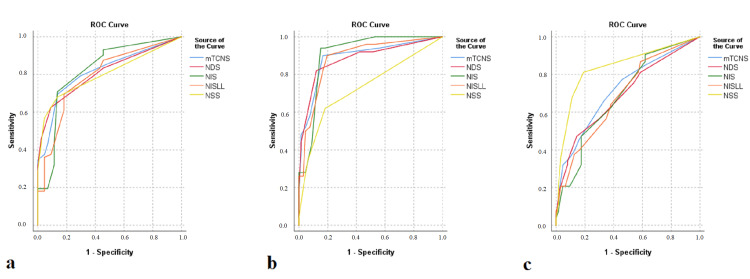
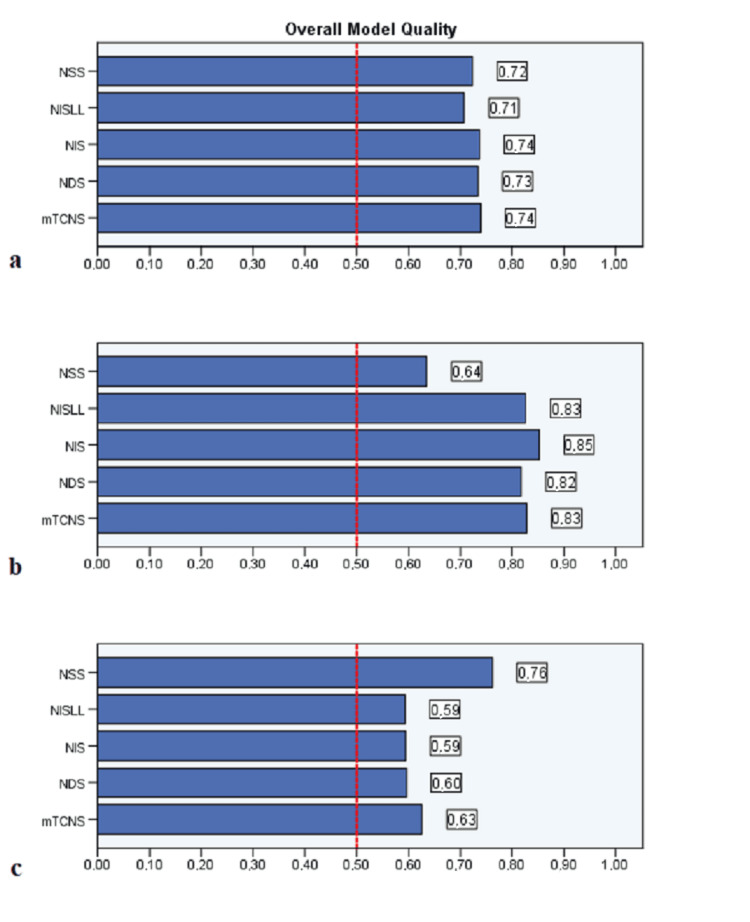
Introduction Peripheral neuropathy is a well-known manifestation of alcohol overconsumption, but neurophysiological confirmation of peripheral nerve damage is costly and sometimes involves invasive procedures. The aim of this study was to investigate the ability of commonly used clinical scales to detect the presence of neuropathy in patients with alcohol use disorder (AUD). Methods Data were collected retrospectively on 116 patients diagnosed with AUD and treated voluntarily in a detoxification special unit. Ninety-eight age and gender-matched healthy subjects without a diagnosis of AUD were used as the control group. The five tested clinical neuropathy scales were the Neuropathy Symptoms Score (NSS), the Neuropathy Disability Score, the Neuropathy Impairment Score (NIS), the Neuropathy Impairment Score of the Lower Limbs, and the modified Toronto Clinical Neuropathy Scale. Results The mean values of all tested clinical scales of the patients with AUD were significantly higher than the control group. All examined clinical scales were determined to be useful in discriminating between patients with neuropathy from patients without neuropathy. The strongest discrimination was seen with the NIS, including the best sensitivity and specificity for the range of scores obtained. All scales, except NSS, showed a stronger correlation with measures of large (LFN) than small fiber neuropathy (SFN). Conclusion Our study suggests that clinical scales could be used to detect peripheral neuropathy in patients with AUD when neurophysiological testing is not available. Moreover, we suggest that the NIS and the NSS scales would be most helpful in assessing LFN and SFN, respectively, in patients with AUD.
引言 周围神经病变是过度饮酒的一种众所周知的表现,但周围神经损伤的神经生理学确认成本高昂,有时还涉及侵入性操作。本研究的目的是调查常用临床量表检测酒精使用障碍(AUD)患者神经病变的能力。方法 回顾性收集了116例在戒毒专科病房自愿接受治疗的AUD患者的数据。98名年龄和性别匹配、未诊断为AUD的健康受试者作为对照组。所测试的五个临床神经病变量表分别是神经病变症状评分(NSS)、神经病变残疾评分、神经病变损害评分(NIS)、下肢神经病变损害评分以及改良的多伦多临床神经病变量表。结果 AUD患者所有测试临床量表的平均值均显著高于对照组。所有检查的临床量表都被确定可用于区分有神经病变的患者和无神经病变的患者。NIS表现出最强的区分能力,在所获得的评分范围内具有最佳的敏感性和特异性。除NSS外,所有量表与大纤维神经病变(LFN)测量值的相关性均强于小纤维神经病变(SFN)。结论 我们的研究表明,在无法进行神经生理学检测时,临床量表可用于检测AUD患者的周围神经病变。此外,我们建议NIS和NSS量表分别对评估AUD患者的LFN和SFN最有帮助。