School of Life Sciences, Hubei University, Wuhan, 430062, China.
State Key Laboratory of Virology, College of Life Sciences, Wuhan University, Wuhan, 430072, China.
Nat Commun. 2024 Nov 6;15(1):9578. doi: 10.1038/s41467-024-54010-w.
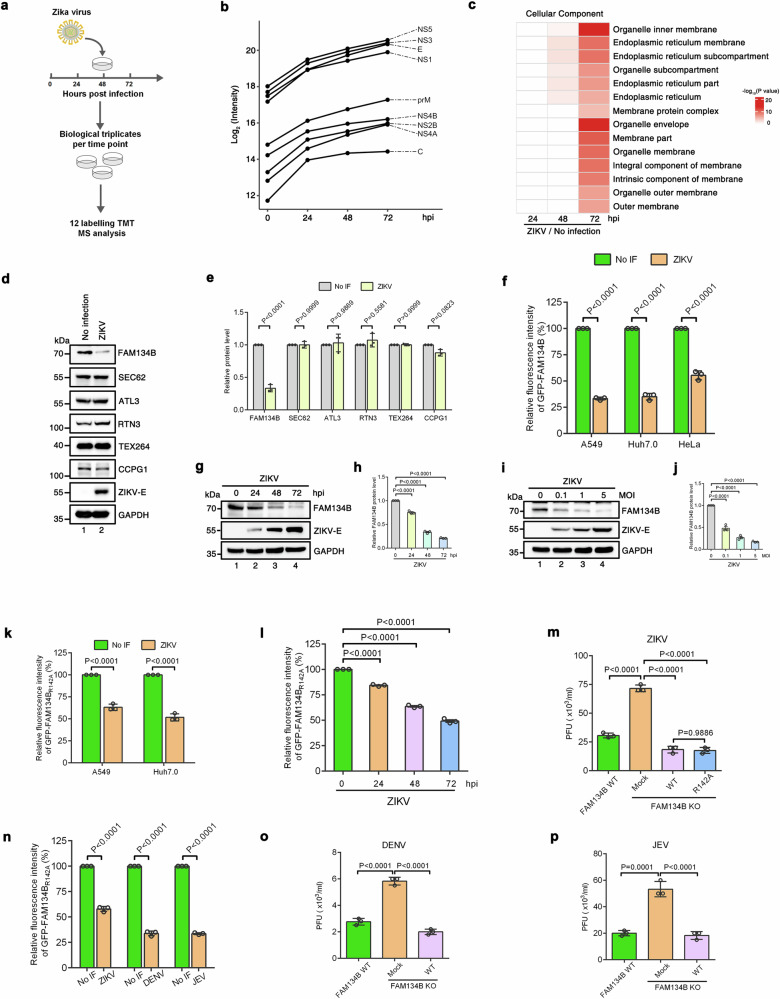
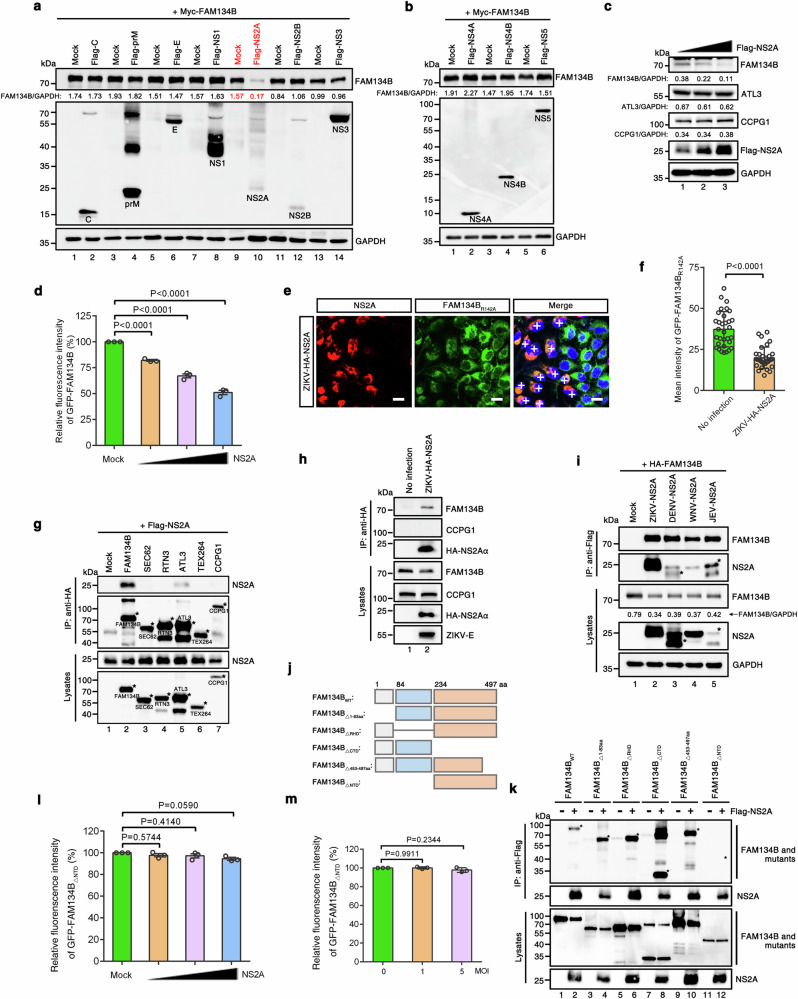
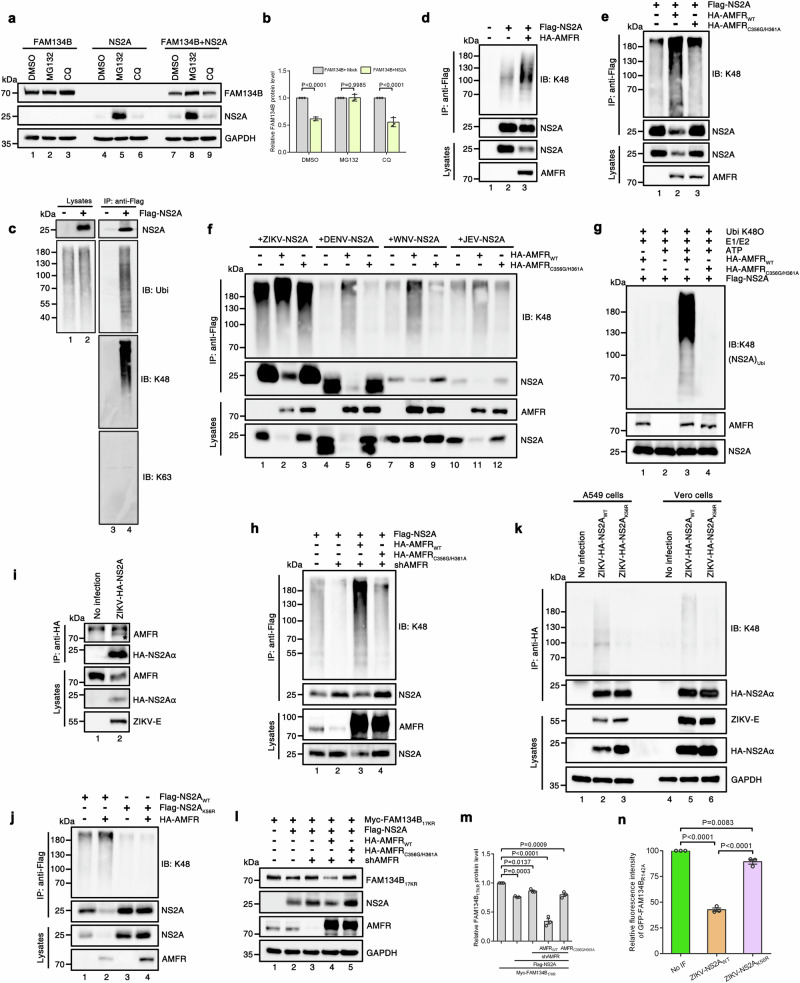
Flaviviruses strategically utilize the endoplasmic reticulum (ER) in their replication cycles. However, the role of ER autophagy (ER-phagy) in viral replication process remains poorly understood. Here, we reveal that prolonged Zika virus (ZIKV) infection results from the degradation of ER-phagy receptor FAM134B, facilitated by viral NS2A protein. Mechanistically, ER-localized NS2A undergoes K48-linked polyubiquitination at lysine (K) 56 by E3 ligase AMFR. Ubiquitinated NS2A binds to FAM134B and AMFR orchestrates the degradation of NS2A-FAM134B complexes. AMFR-catalyzed NS2A ubiquitination not only targets FAM134B degradation but also hinders the FAM134B-AMFR axis. Notably, a recombinant ZIKV mutant (ZIKV-NS2A), lacking ubiquitination and ER-phagy inhibition, exhibits attenuation in ZIKV-induced microcephalic phenotypes in human brain organoids and replicates less efficiently, resulting in weakened pathogenesis in mouse models. In this work, our mechanistic insights propose that flaviviruses manipulate ER-phagy to modulate ER turnover, driving viral infection. Furthermore, AMFR-mediated flavivirus NS2A ubiquitination emerges as a potential determinant of viral pathogenecity.
黄病毒在其复制周期中巧妙地利用内质网(ER)。然而,ER 自噬(ER-phagy)在病毒复制过程中的作用仍知之甚少。在这里,我们揭示了 Zika 病毒(ZIKV)感染的持续时间是由于 ER-phagy 受体 FAM134B 的降解,这是由病毒 NS2A 蛋白促成的。从机制上讲,定位于 ER 的 NS2A 在赖氨酸(K)56 处通过 E3 连接酶 AMFR 进行 K48 连接的多泛素化。泛素化的 NS2A 与 FAM134B 结合,AMFR 协调 NS2A-FAM134B 复合物的降解。AMFR 催化的 NS2A 泛素化不仅靶向 FAM134B 降解,还阻碍 FAM134B-AMFR 轴。值得注意的是,缺乏泛素化和 ER-phagy 抑制的重组 ZIKV 突变体(ZIKV-NS2A)在人类脑类器官中引起的小头畸形表型和复制效率降低,导致小鼠模型中的致病性减弱。在这项工作中,我们的机制见解表明,黄病毒操纵 ER-phagy 来调节 ER 周转,从而驱动病毒感染。此外,AMFR 介导的黄病毒 NS2A 泛素化成为病毒致病性的潜在决定因素。