Institute of Translational Medicine, Shanghai University, Shanghai, 200444, China.
Organoid Research Center, Shanghai University, Shanghai, 200444, China.
J Nanobiotechnology. 2024 Nov 6;22(1):679. doi: 10.1186/s12951-024-02917-3.
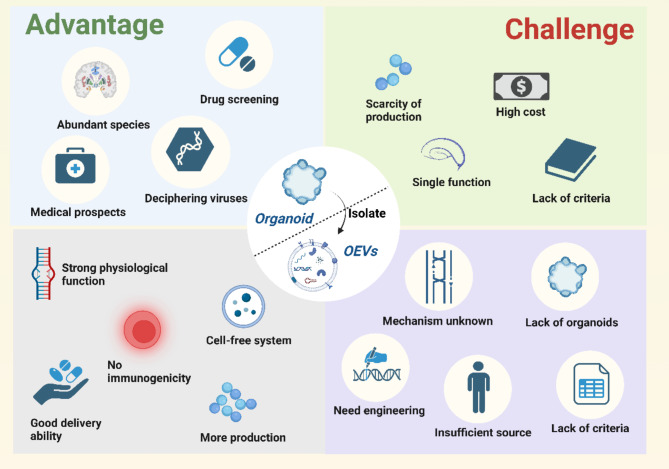
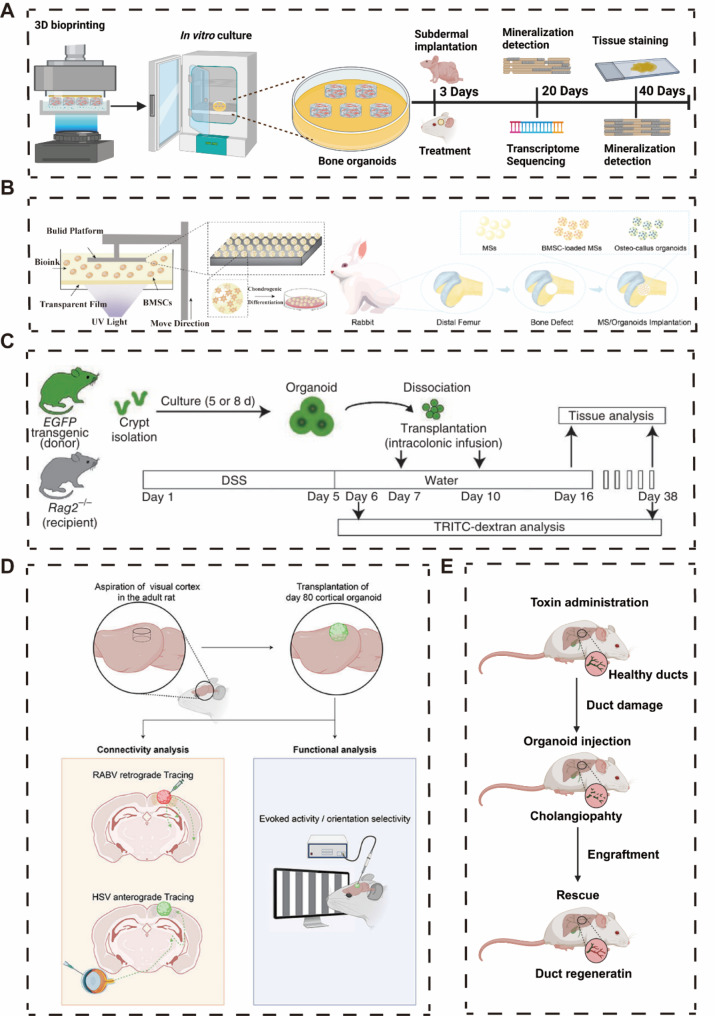
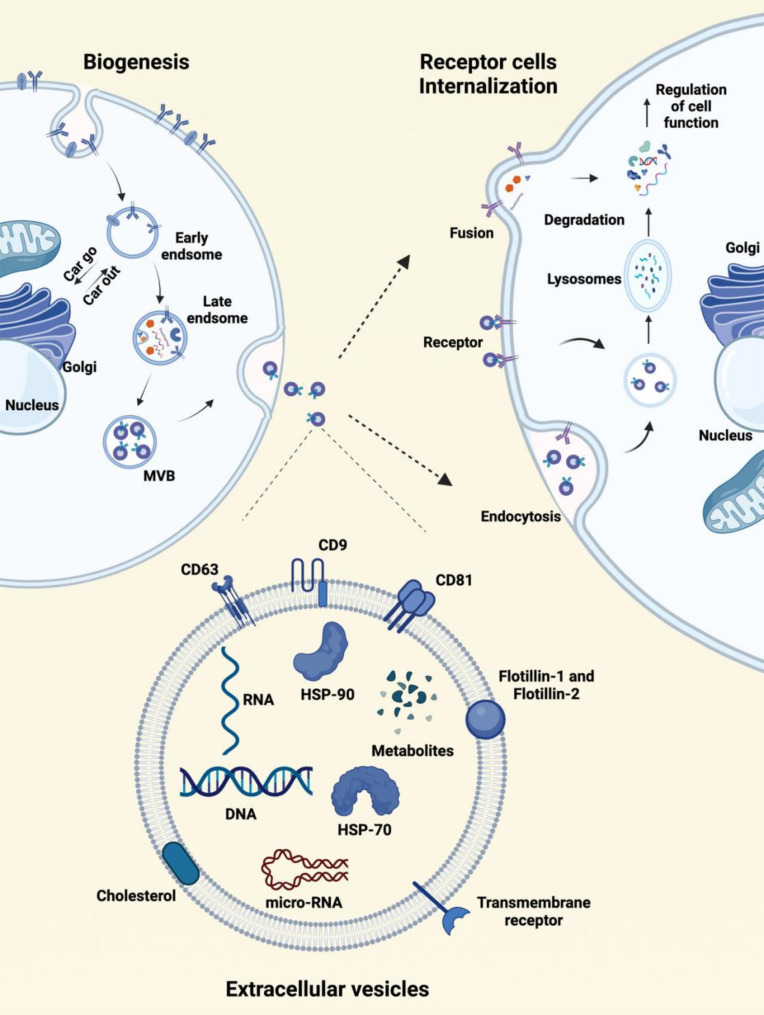
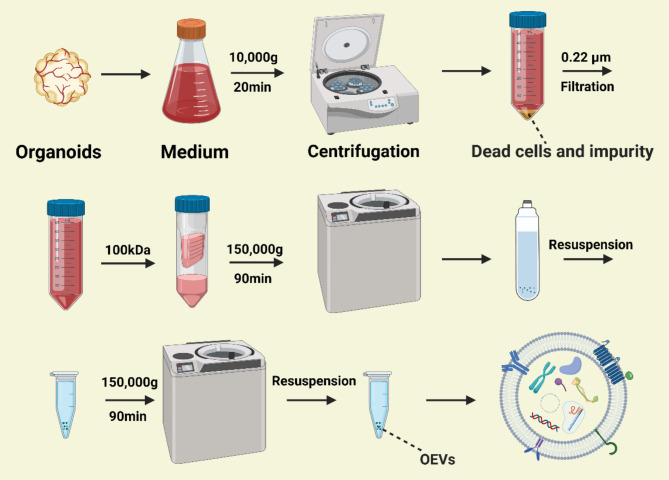
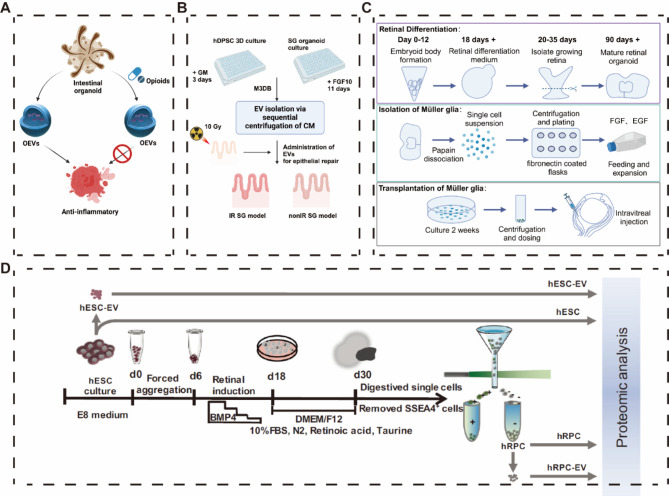
Organoids are "mini-organs" that self-organize and differentiate from stem cells under in vitro 3D culture conditions, mimicking the spatial structure and function of tissues in vivo. Extracellular vesicles (EVs) are nanoscale phospholipid bilayer vesicles secreted by living cells, rich in bioactive molecules, with excellent biocompatibility and low immunogenicity. Compared to EVs, organoid-derived EVs (OEVs) exhibit higher yield and enhanced biological functions. Organoids possess stem cell characteristics, and OEVs are capable of delivering active substances, making both highly promising for medical applications. In this review, we provide an overview of the fundamental biological principles of organoids and OEVs, and discuss their current applications in disease treatment. We then focus on the differences between OEVs and traditional EVs. Subsequently, we present methods for the engineering modification of OEVs. Finally, we critically summarize the advantages and challenges of organoids and OEVs. In conclusion, we believe that a deeper understanding of organoids and OEVs will provide innovative solutions to complex diseases.
类器官是在体外 3D 培养条件下自组织并从干细胞中分化而来的“微型器官”,模拟了体内组织的空间结构和功能。细胞外囊泡 (EVs) 是由活细胞分泌的富含生物活性分子的纳米级磷脂双层囊泡,具有极好的生物相容性和低免疫原性。与 EVs 相比,类器官衍生的 EVs (OEVs) 具有更高的产量和增强的生物学功能。类器官具有干细胞特性,而 OEVs 能够递送活性物质,两者在医学应用方面都具有巨大的潜力。在这篇综述中,我们概述了类器官和 OEVs 的基本生物学原理,并讨论了它们在疾病治疗中的当前应用。然后,我们重点介绍了 OEVs 与传统 EVs 的区别。随后,我们介绍了 OEVs 的工程修饰方法。最后,我们批判性地总结了类器官和 OEVs 的优缺点。总之,我们相信对类器官和 OEVs 的深入了解将为复杂疾病提供创新的解决方案。