Huang Chi-Chen, Tsai Sheng-Feng, Liu Shu-Cheng, Yeh Mei-Chen, Hung Hao-Chang, Lee Chu-Wan, Cheng Ching-Li, Hsu Pei-Ling, Kuo Yu-Min
Division of Neurosurgery, Department of Surgery, National Cheng Kung University Hospital, College of Medicine, National Cheng Kung University, Tainan, 70403, Taiwan.
Department of Cell Biology and Anatomy, College of Medicine, National Cheng Kung University, Tainan, 70101, Taiwan.
J Inflamm Res. 2024 Nov 2;17:7993-8008. doi: 10.2147/JIR.S481101. eCollection 2024.
Insulin, the key hormone for glucose regulation, has garnered attention for its role as an immune modulator. Impaired insulin signaling in the central nervous system is linked to neuroinflammation and neurodegenerative diseases. Microglia, the resident macrophage-like immune cells in the brain, are key regulators of neuroinflammation. However, the mechanisms by which insulin influences microglial immune responses remain relatively unknown.
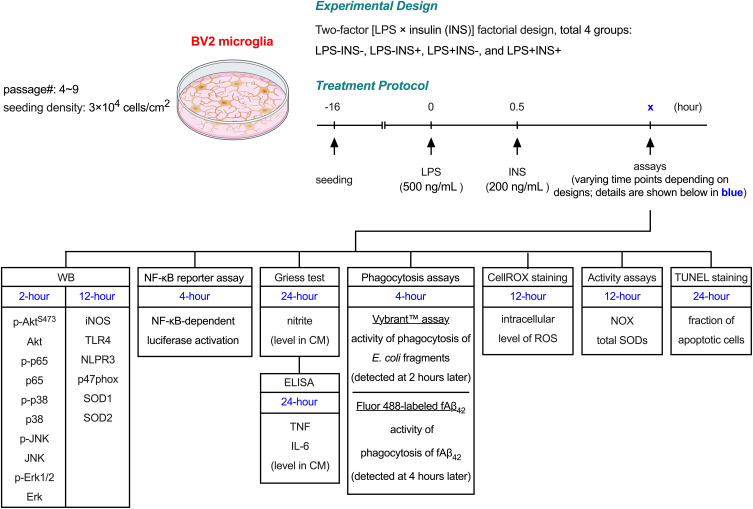
This study aimed to assess the effects of post-treatment with insulin [30 minutes after lipopolysaccharide (LPS) exposure] on LPS-induced inflammatory responses in BV2 microglial cells.
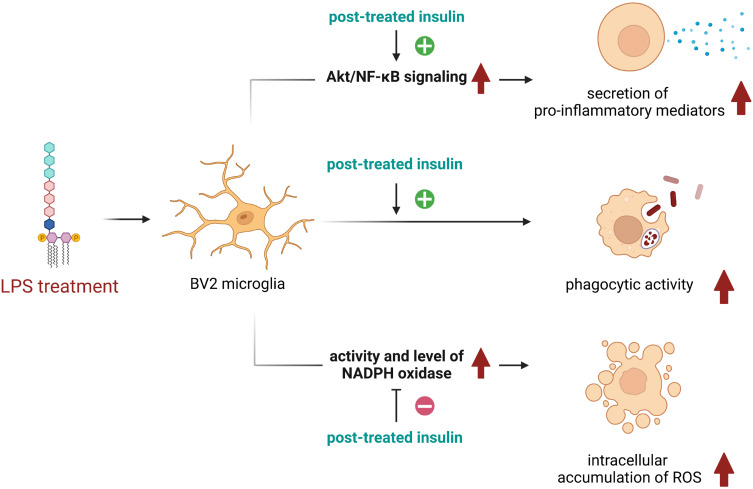
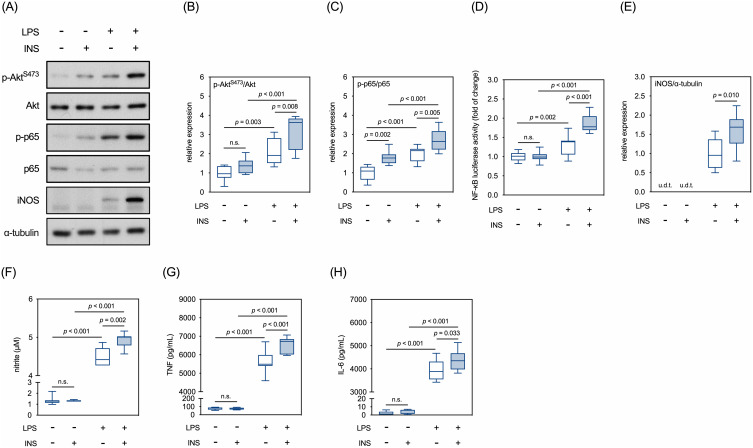
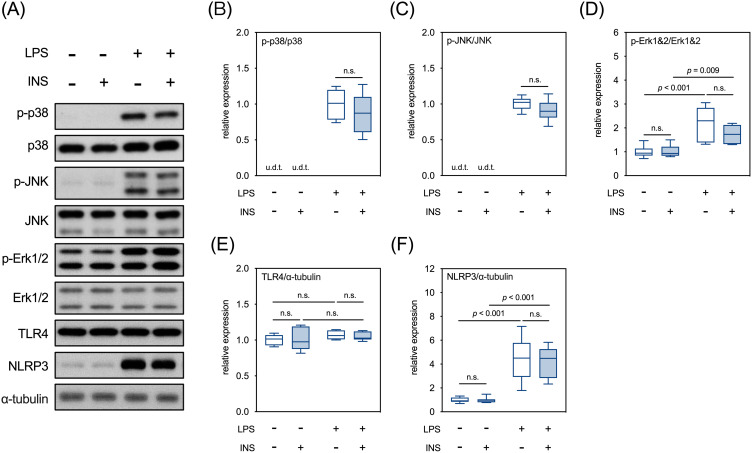
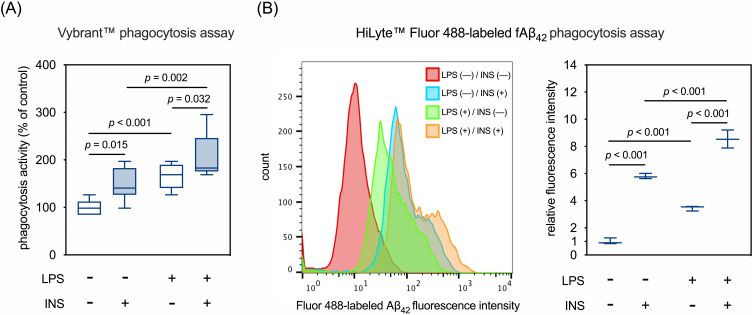
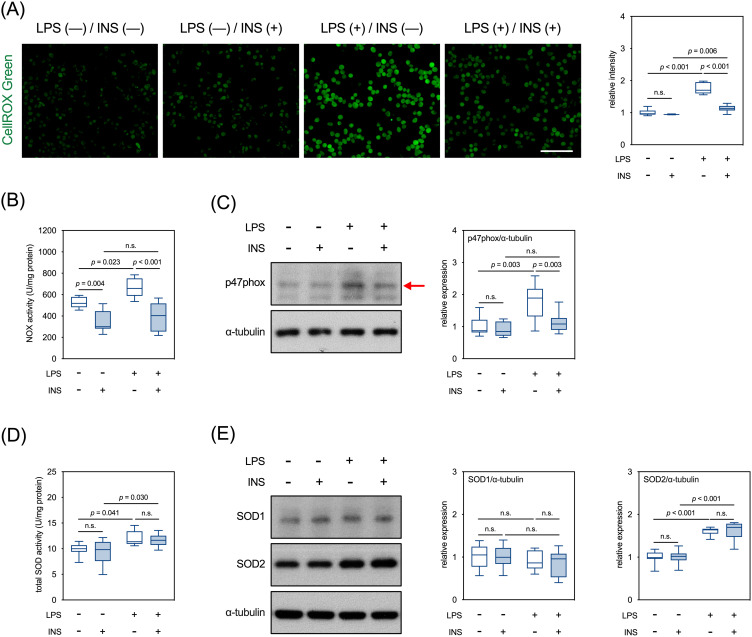
Post-treatment with insulin potentiated LPS-induced production of nitric oxide and pro-inflammatory cytokines, such as TNF and IL-6, through activation of the Akt/NF-κB pathway. Insulin also enhanced the ability of BV2 cells to phagocytose bacteria particles and β-amyloid fibrils. Conversely, insulin inhibited activation of NADPH oxidase and reduced intracellular levels of reactive oxygen species in LPS-treated BV2 cells.
Insulin enhances microglial immune competence when challenged by endotoxins but mitigates oxidative stress in these cells.
胰岛素作为调节血糖的关键激素,其作为免疫调节剂的作用已受到关注。中枢神经系统中胰岛素信号传导受损与神经炎症和神经退行性疾病有关。小胶质细胞是大脑中驻留的巨噬细胞样免疫细胞,是神经炎症的关键调节因子。然而,胰岛素影响小胶质细胞免疫反应的机制仍相对未知。
本研究旨在评估胰岛素(脂多糖暴露30分钟后)后处理对BV2小胶质细胞中脂多糖诱导的炎症反应的影响。
胰岛素后处理通过激活Akt/NF-κB途径增强了脂多糖诱导的一氧化氮和促炎细胞因子(如TNF和IL-6)的产生。胰岛素还增强了BV2细胞吞噬细菌颗粒和β-淀粉样纤维的能力。相反,胰岛素抑制了NADPH氧化酶的激活,并降低了脂多糖处理的BV2细胞中的细胞内活性氧水平。
在内毒素刺激时,胰岛素增强小胶质细胞的免疫能力,但减轻这些细胞中的氧化应激。