Nappi Francesco
Department of Cardiac Surgery, Centre Cardiologique du Nord, Saint-Denis, France.
Ann Transl Med. 2024 Oct 20;12(5):91. doi: 10.21037/atm-24-39. Epub 2024 Sep 13.
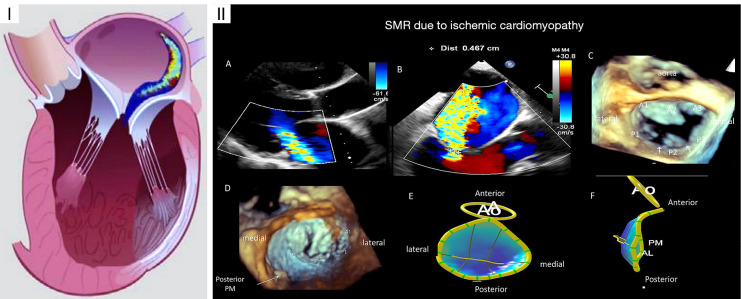
Surgery for mitral valve disease is a developing area with a wide range of surgical options. There is growing evidence on the best approach for secondary ischemic mitral regurgitation (SIMR) when the pathology is within the ventricle. The goal of this literature review is to provide a comprehensive comparison of surgical treatments for SIMR.
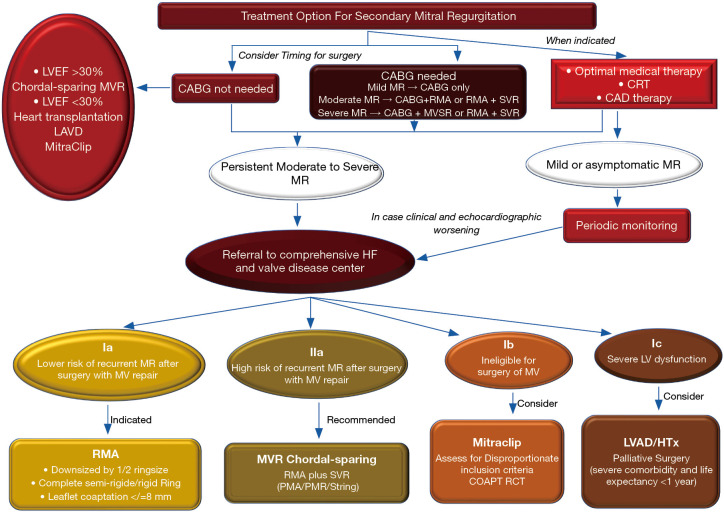
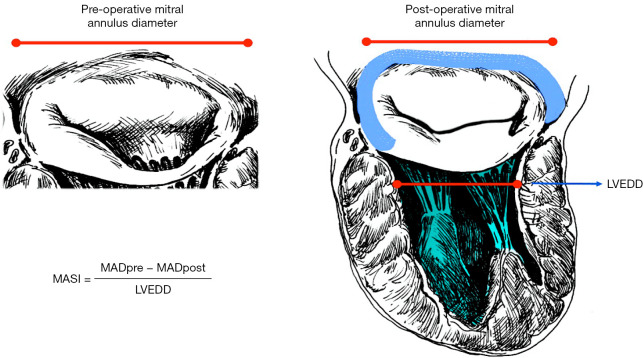
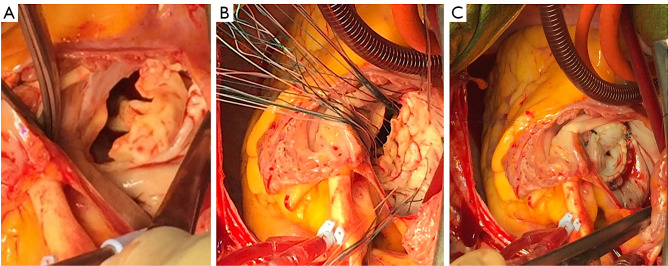
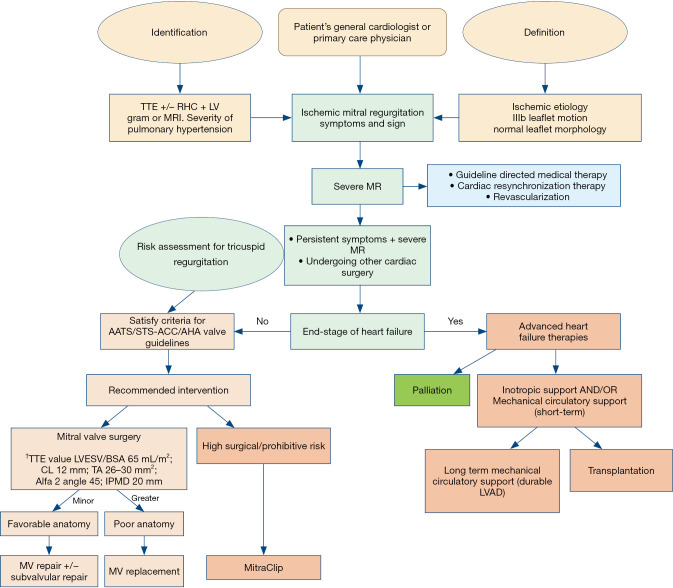
The initial screening process included PubMed, Medline and Embase to identify randomized controlled trials, propensity-matched observational series, meta-analyses and unmatched observational series. The terms used were 'mitral valve disease', 'secondary mitral regurgitation', 'secondary ischemic mitral regurgitation', 'functional mitral regurgitation', 'restrictive mitral annuloplasty', 'subvalvular repair', 'Trans Catheter Edge to Edge Repair and echocardiography coupled with secondary mitral regurgitation', 'secondary ischemic mitral regurgitation', and 'functional mitral regurgitation'. Six strategies have been identified for treating SIMR. These include mitral valve replacement (MVR), restrictive mitral annuloplasty, surgical revascularisation (with and without mitral annuloplasty), subvalvular procedures [papillary muscle (PM) approximation, PM relocation, ring and string procedure], procedures directly targeting the mitral valve (edge-to-edge repair and anterior leaflet enlargement), and transcatheter heart valve therapy.
There is a deficiency of robust empirical data to enable meaningful comparisons between MVR, mitral valve repair (including subvalvular repair), and transcatheter mitral valve procedure. This review will definitively analyze the current outcomes of transcatheter mitral valve procedure using the edge-to-edge mitral valve repair technique and standard surgical mitral valve procedures in patients with secondary mitral regurgitation (MR). In addition, the seminar highlights the role of left ventricular assist devices in managing SIMR. It discusses the advantages and limitations of each intervention.
Currently, there is no consensus on the optimal management strategy for patients with SIMR. Therefore, a multidisciplinary cardiac team should manage patients with secondary MR to ensure the best outcome by matching the ideal intervention with the patient.
二尖瓣疾病的外科治疗是一个不断发展的领域,有多种手术选择。当病变位于心室内时,关于继发性缺血性二尖瓣反流(SIMR)的最佳治疗方法的证据越来越多。这篇文献综述的目的是对SIMR的外科治疗进行全面比较。
初始筛选过程包括在PubMed、Medline和Embase数据库中检索,以确定随机对照试验、倾向匹配观察系列、荟萃分析和非匹配观察系列。使用的检索词有“二尖瓣疾病”“继发性二尖瓣反流”“继发性缺血性二尖瓣反流”“功能性二尖瓣反流”“限制性二尖瓣环成形术”“瓣下修复”“经导管缘对缘修复与超声心动图联合继发性二尖瓣反流”“继发性缺血性二尖瓣反流”和“功能性二尖瓣反流”。已确定六种治疗SIMR的策略。这些包括二尖瓣置换术(MVR)、限制性二尖瓣环成形术、外科血运重建(伴或不伴二尖瓣环成形术)、瓣下手术(乳头肌(PM)靠拢、PM重新定位、环和索带手术)、直接针对二尖瓣的手术(缘对缘修复和前叶扩大)以及经导管心脏瓣膜治疗。
缺乏有力的实证数据,无法在MVR、二尖瓣修复(包括瓣下修复)和经导管二尖瓣手术之间进行有意义的比较。本综述将明确分析采用缘对缘二尖瓣修复技术的经导管二尖瓣手术以及标准外科二尖瓣手术治疗继发性二尖瓣反流(MR)患者的当前疗效。此外,研讨会强调了左心室辅助装置在治疗SIMR中的作用。它讨论了每种干预措施的优缺点。
目前,对于SIMR患者的最佳管理策略尚无共识。因此,多学科心脏团队应管理继发性MR患者,通过为患者匹配理想的干预措施来确保最佳治疗效果。