Bagolini Laboratory: Archaeology, Archaeometry, Photography (LaBAAF), Department of Humanities, University of Trento, Trento, Italy.
Research Unit: Anthropology and Human Genetics, Department of Biology of Organisms and Ecology, Université Libre de Bruxelles (ULB), Brussels, Belgium.
PLoS One. 2024 Nov 7;19(11):e0309649. doi: 10.1371/journal.pone.0309649. eCollection 2024.
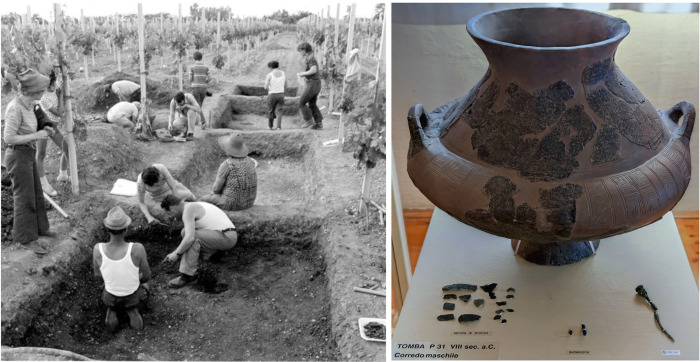
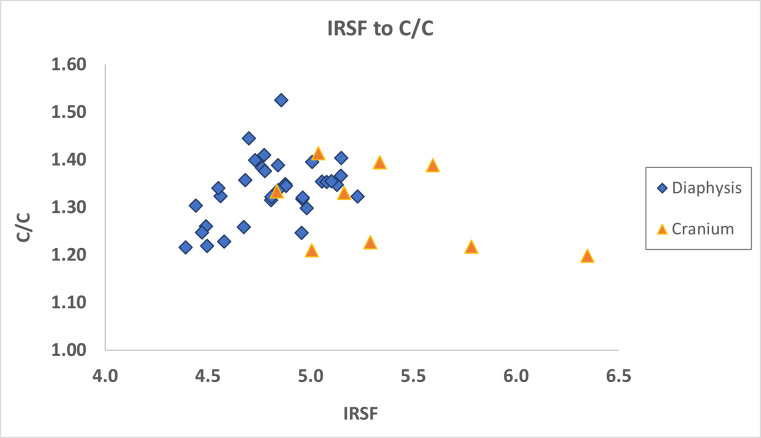
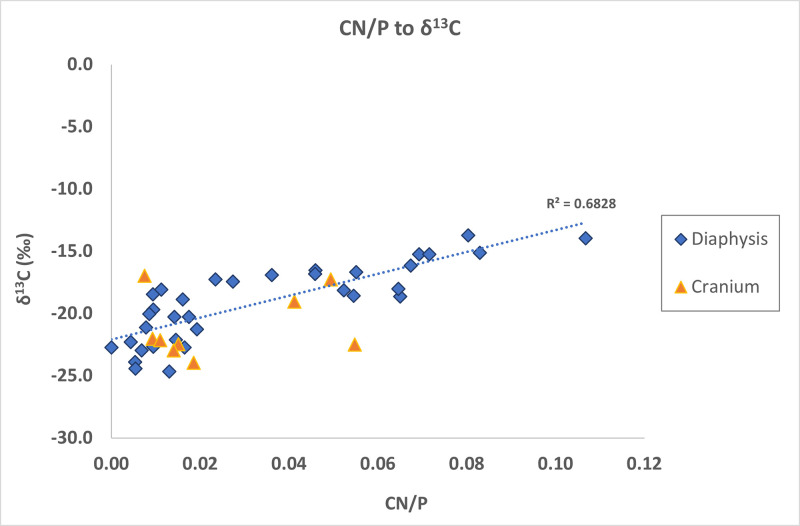
The site of San Valentino in San Vito al Tagliamento is one of the main urnfield cemeteries in northeastern Italy. Archaeological excavations carried out in the seventies brought to light a cremation cemetery consisting of mainly urn graves with pottery and metal artefacts as grave goods. These materials suggest that the individuals buried in San Valentino were not an isolated local community but had intense contacts with other north-Adriatic communities, in particular with the neighbouring Veneto area, as suggested by the close similarity of the biconical vessels with those recovered in the graves of Este. This paper provides the first osteological study of a preserved sample of individuals buried at San Valentino and uses an innovative multi-proxy approach to refine the chronology of the site through radiocarbon dating of bone apatite, investigate human mobility using strontium isotopes on calcined human remains, and reconstruct the funerary practices by combining FTIR-ATR data with carbon and oxygen isotope ratios on cremated bones. The results date the cemetery to the end of the Late Bronze Age and the Early Iron Age, with a sporadic occupation in the fourth century BC. Strontium isotopes and concentrations show the analysed individuals buried at San Valentino were a local community that exploited nearby food resources. Interestingly, variations in cremation conditions were detected between San Valentino and the contemporary sites of Velzeke, Blicquy, Grand Bois, and Herstal, located in Belgium, by using FTIR-ATR and carbon and oxygen isotope data. This multi-proxy approach applied to the study of cremated human remains can open new research possibilities, being potentially extendable to the study of many pre- and proto-historic and historic communities that practised cremation.
意大利东北部的圣维托阿尔塔格利亚门托的圣瓦伦蒂诺遗址是主要骨灰瓮墓地之一。七十年代的考古发掘揭示了一个火葬墓地,主要由骨灰瓮墓组成,随葬品有陶器和金属制品。这些材料表明,埋葬在圣瓦伦蒂诺的人并不是一个孤立的当地社区,而是与其他北亚得里亚海社区,特别是与邻近的威尼托地区,有着密切的联系,因为在这里发现的双锥形容器与在埃斯特的坟墓中发现的那些非常相似。本文首次对保存在圣瓦伦蒂诺的一组个体进行了骨骼考古学研究,并使用创新的多探针方法,通过对骨灰中的磷灰石进行放射性碳测年来细化遗址的年代,通过对煅烧人类遗骸中的锶同位素来研究人类的流动性,并通过将 FTIR-ATR 数据与火化骨的碳和氧同位素比值相结合来重建丧葬习俗。研究结果将该墓地的年代确定为晚青铜时代和铁器时代早期,公元前 4 世纪有零星的居住。锶同位素和浓度表明,在圣瓦伦蒂诺和同时代的比利时弗泽克、布利奎、格朗博伊斯和埃斯特尔遗址的分析个体是一个利用附近食物资源的当地社区。有趣的是,通过使用 FTIR-ATR 和碳和氧同位素数据,在圣瓦伦蒂诺和当代的弗利泽克、布利奎、格朗博伊斯和埃斯特尔遗址之间检测到火化条件的变化。这种应用于火化人类遗骸研究的多探针方法可以开辟新的研究可能性,并且可能扩展到研究许多实行火化的史前和历史社区。